Shallow-mount subwoofer boxes matter most when your cabin space is tight but you still want fuller low end. You may be fitting a truck, hatchback, or compact car, and the wrong enclosure can eat up legroom or sound thin. The six picks below focus on enclosure shape, depth, and build style, so you can match the box to your woofer and vehicle without guesswork.
Quick Look At The Shortlist

QPower QTW12 Sealed Sub Box Pair

Q-Power Shallow Single 12 Inch Sealed MDF Box
QPower Single 12-Inch Vented Shallow Box

QPower Single 12-Inch Downfire Speaker Box

Belva 1TRUCK12 Angled Truck Sub Box

Rockville RDSM12 Dual 12 Shallow Mount Enclosure
More Details On Our Top Picks
Dual enclosures like this suit compact installs where you want a matched pair without turning the cargo area into a storage sacrifice. The sealed design, meaning the cabinet is closed rather than ported, usually leans toward tighter bass and simpler placement, which helps in everyday driving.
That trade-off shows up in output style, since sealed boxes tend to feel cleaner than boomy, but they often ask more from the amplifier. For a small trunk or a restrained audio build, the QPower QTW12 pair keeps the footprint straightforward, and that plain approach is the point.
Strong Points
- Two enclosures make it easy to build a mirrored setup.
- Sealed construction suits music that benefits from controlled low end.
- Simple shape helps with placement in tighter cargo spaces.
- Works well for a daily driver where space matters.
Things To Consider
- Sealed alignment can feel less forceful than a vented cabinet.
- Pair format means you need room for two enclosures, not one.
- Finish maintenance is basic, so dust and scuffs may show over time.
Feature Snapshot
Who It Suits Best
You get the most value here with a smaller car audio project that needs twin boxes and a clean, predictable install.
Where A Sibling Pick Shines
Rockville RDSM12 suits you better when a dual-driver enclosure makes more sense than two separate sealed boxes.
Truck cabins usually punish bulky audio gear, and this sealed MDF enclosure is aimed at exactly that problem. MDF, short for medium-density fiberboard, gives the box a dense cabinet feel that many truck audio setups rely on for a steadier structure than thin plastic alternatives.
The charcoal carpet finish helps it blend into a work truck or everyday pickup, although carpet can still collect lint and needs occasional attention. Compared with the QPower QTW12 pair, this one is the more natural fit for a single-sub build that needs one solid box instead of two separate cabinets.
What We Like
- Single-box layout keeps the install simple.
- MDF construction gives the enclosure a sturdier feel.
- Carpeted exterior blends into truck interiors more easily.
- Sealed design suits compact cabins and everyday listening.
Minor Gripes
- Carpet needs occasional brushing to stay tidy.
- Sealed tuning prioritizes control over sheer output.
- Truck-specific sizing makes it less flexible outside that use.
Core Details
Whose Shelf It Belongs On
You should look at this one for a pickup build where a single shallow 12-inch sub needs an enclosure that stays out of the way.
Another Choice May Suit
Belva 1TRUCK12 fits better for hatchback or angled-placement needs, since its shape is aimed at a different cabin layout.
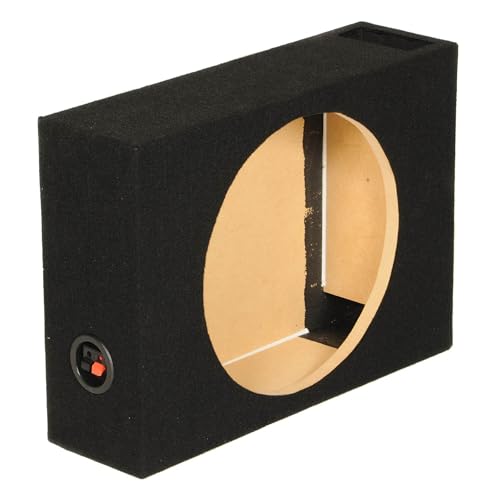
The vented layout sets this QPower apart from the sealed picks above, because a ported cabinet uses an opening to move air and usually bring more energy to the lower range. The 11-inch cutout gives a clear fit target for 12-inch shallow-mount woofers, which reduces the usual guesswork during installation.
For a hatchback, truck, or daily driver that needs a bit more presence, this enclosure has a more lively character than the sealed QPower models. The honest read is that vented boxes can be less forgiving about woofer match and placement, so you’ll want your sub and amp pairing to be sensible.
Reasons To Buy
- Vented design can bring a fuller bass feel.
- 11-inch cutout gives a clearer fit target.
- 5/8-inch MDF construction adds cabinet substance.
- Black carpet finish keeps the look understated.
Points To Note
- Ported enclosures ask for better matching with the woofer.
- It can take more tuning judgment than a sealed box.
- Carpet still needs routine dusting in daily use.
Details At A Glance
Built With In Mind
You’ll appreciate this most in a setup where you want stronger low-end presence without moving to a much larger box.
Swap It Out When
QPower QTW12 makes more sense for a simpler sealed approach, especially in a compact trunk where tuning flexibility matters less than easy placement.
This enclosure is built for truck cabins where behind-seat room is scarce and a low-profile box solves more problems than it creates. Its 0.75 cubic feet of airspace gives you a clear sizing reference, and airspace is simply the internal volume the woofer sees inside the cabinet.
Compared with the vented QPower above, this one is more about fitting into awkward spaces than chasing extra cabinet motion. The GM, Chevrolet, and Ford compatibility note is helpful for common truck layouts, though a precise fit still depends on your cab shape and seat clearance.
Upsides
- Low-profile orientation helps in tight behind-seat spaces.
- 0.75 cubic feet gives a useful install target.
- Fits several common truck families.
- Works well for a clean, tucked-away audio build.
Areas To Watch
- Truck fit still depends on your cab dimensions.
- Downfire placement can limit where you place cargo.
- It is more space-focused than output-focused.
Technical Sheet
Right Fit For
You should look here for a truck build that needs the box to stay low and stay out of the way.
Look Elsewhere When
Belva 1TRUCK12 is the better call for angled placement in a hatchback or a truck where the cabin layout favors a slanted enclosure.
Angled enclosures solve a very real truck and hatchback problem, since the sloped shape can make awkward cargo areas behave better. This Belva uses 5/8-inch MDF and polyfill, which is loose fiber material inside the cabinet that can soften the internal sound response and make the box feel more acoustically considered.
Its 0.75 cubic feet of air space keeps the footprint modest, and the black carpet finish helps it disappear visually in a utility-focused cabin. Compared with the QPower downfire model, the Belva is the more shape-aware choice when your interior rewards an angled face instead of a flat back.
Bright Spots
- Angled shape helps it sit naturally in tricky spaces.
- Polyfill adds a more tuned-in enclosure feel.
- 5/8-inch MDF supports a sturdier cabinet body.
- Black carpet finish keeps the box visually calm.
- CARB-compliant build is a useful sourcing note for some shoppers.
Softer Spots
- Angled geometry can reduce placement flexibility.
- Carpeted surfaces still benefit from routine cleaning.
- Polyfill may not appeal to people who want a simpler box interior.
Core Details
Perfect Match For
You get the most out of this in a truck or hatchback that benefits from an angled enclosure instead of a box with a straight profile.
Reach For A Different Pick When
QPower Single 12-Inch Downfire Speaker Box is the better fit for behind-seat truck installs that need a lower, flatter footprint.
Rockville takes a different route from the single-box models above, because this enclosure is built for two shallow 12-inch subs in one sealed cabinet. The 4.625-inch mounting depth is especially useful for shallow-mount drivers, and mounting depth means the front-to-back room the woofer needs inside the box.
Stapled and glued joints point to a more construction-focused approach, and the made-in-USA note may matter to some shoppers who care about origin. In a space-limited build, that dual-driver layout can be persuasive, though you’ll need to make peace with the larger commitment compared with the QPower single-box options.
Best Bits
- Dual-sub capacity supports a bigger system plan.
- 4.625-inch mounting depth helps shallow drivers fit more cleanly.
- Sealed enclosure keeps the design straightforward.
- Stapled and glued joints suggest a more solid cabinet assembly.
- Made in the USA may matter to some shoppers.
Room For Improvement
- Dual-driver format needs more planning than a single box.
- It asks for enough room to justify the larger layout.
- Sealed tuning may not satisfy someone chasing maximum boom.
At A Glance
The Right Fit
You should grab this for a dual-sub build where space is tight but you still want two shallow woofers in one cabinet.
Where Another Pick Suits Better
QPower QTW12 is a cleaner fit for a simpler single-pair setup that does not need a dual-driver enclosure.
How To Choose The Right 12 Shallow Mount Subwoofer Boxes
Match The Box To The Cabin
Cabin shape matters more here than many shoppers expect. A truck with limited behind-seat depth usually benefits from a low-profile or downfire enclosure, while a hatchback can sometimes handle an angled cabinet better. The box has to fit the space first, then the woofer has to fit the box.
Sealed enclosures suit people who want a compact cabinet with predictable behavior. Vented boxes need more room and more attention to woofer matching, but they can sound more lively in the right setup. That choice sets the tone before you even look at finish or branding.
Read The Material And Build Style
MDF, short for medium-density fiberboard, is the common cabinet material in this group because it offers density without excessive complexity. Thicker MDF and joint styles like stapled-and-glued construction usually point to a firmer enclosure that feels less flimsy in a vibrating car cabin. Carpeted finishes help the box blend into the interior, though they do collect dust.
Polyfill can matter too, especially in angled or sealed cabinets. It changes the internal acoustic behavior a little, which can be useful in a carefully planned system, but it also means the box is trying to do more than just hold a sub.
Check Depth, Airspace, And Layout
Mounting depth tells you how much room the sub needs from front to back inside the enclosure. Shallow-mount drivers need this number to stay within the box design, or the install turns awkward fast. Airspace, the internal volume of the box, also matters because it affects how the woofer behaves once mounted.
Single-box designs are easier for most everyday installs, while dual-driver enclosures suit larger plans and more committed builds. For daily driving, the simpler enclosure often wins on convenience, even when a bigger cabinet looks tempting on paper.
Think About Maintenance And Daily Use
Carpeted surfaces need occasional vacuuming or brushing, especially in trucks that see work boots, pets, or cargo dust. Bare MDF edges are less common in this list, but any enclosure benefits from a clean, dry install area and secure mounting. A box that shifts around can become annoying long before it becomes a sound issue.
Also look at how you load the cargo area. A downfire box or an angled cabinet may help protect the sub and fit more neatly, but it can also reduce usable storage space. The better choice is usually the one that disappears into your routine instead of forcing you to rearrange the cabin every week.
What To Weigh Before You Click
Hidden Buying Traps
Shallow mount doesn’t automatically mean universal fit. You still need to match the cabinet style, mounting depth, and vehicle shape, especially in trucks where seat clearance can be tight.
Another common miss is choosing a vented box for a sub that really wants a sealed home, or the reverse. That mismatch can make a good driver feel out of place.
Where The Extra Money Goes
Higher-tier enclosures usually pay for denser materials, tighter joinery, smarter shapes, or more tailored fit notes. That extra work can matter in a cramped cabin where the box has to fit cleanly and hold together under vibration.
The upgrade is worth it for you when the install space is awkward, the system is staying in the vehicle for the long haul, or you care about a more finished look. For a simple daily setup, the basic box often does the job just fine.
Frequently Asked Questions
What makes a shallow mount subwoofer box different?
A shallow mount box is built around limited mounting depth, so the sub can fit in tighter spaces. It usually suits trucks, hatchbacks, and compact cars where full-depth enclosures would crowd the cabin.
Is sealed or vented better for everyday driving?
Sealed boxes usually feel simpler and more controlled, which suits most daily setups. Vented boxes can sound more energetic, but they ask for better matching and a little more space.
How much airspace should you look for?
The right airspace depends on the subwoofer’s design, so the enclosure has to match the driver instead of guessing. The product page or sub documentation usually gives the cleanest target.
Can you use a truck box in a hatchback?
Sometimes, but shape matters more than the label alone. An angled or compact box usually makes more sense in a hatchback than a behind-seat truck enclosure.
Why do MDF boxes remain so common?
MDF gives the cabinet a dense, steady feel that works well for car audio. It also helps enclosure makers keep shapes consistent without making the box overly complicated.