
Bass tone lives or dies on control, and the right equalizer can sort out muddy lows, boxy mids, or a top end that feels too flat. The seven picks below cover car audio processors and pedalboard staples, so the list fits commuters, gigging musicians, and home setups with very different needs. Some favor detailed tuning, while others keep things simple and compact. The common thread is clear, usable adjustment without guesswork.
Quick Look At Our Shortlist

Taramps PRO 2.4S Car Audio DSP Equalizer

JOYO 6-Band EQ Guitar Pedal JF-11

Donner EQ Pedal EQ Seeker
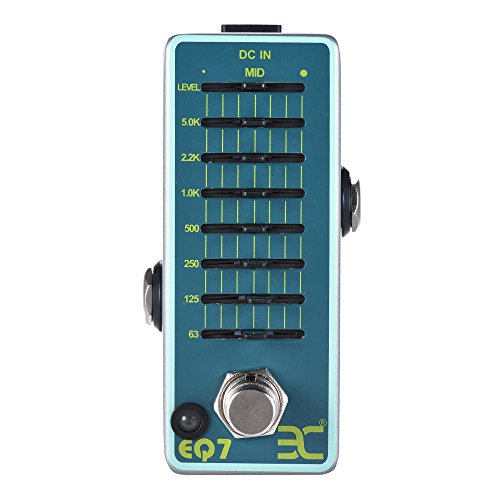
EX 7 Band EQ Mini Guitar Pedal
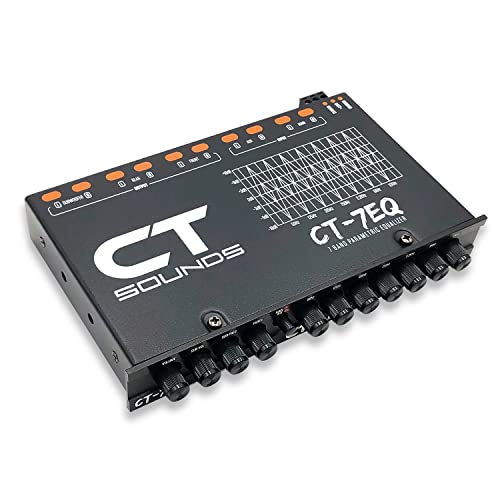
CT Sounds CT-7EQ 7 Band Parametric Equalizer

BOSS GEB-7 Seven-Band Bass Equalizer

STRICH 10-Band EQ Pedal for Guitar and Bass
More Details On Our Top Picks
Car audio systems that need tighter control usually benefit from a digital signal processor, and this Taramps unit fits that role. The 15-band equalizer gives fine adjustment, while active crossover control and delay alignment help organize output across multiple speakers.
RCA and high-level inputs make it easier to match different factory or aftermarket setups, which matters in busy daily-driver installs. The trade-off is added complexity, so this suits hands-on tuners more than someone looking for a simple knob-and-go fix.
Strong Points
- 15-band EQ gives detailed control over problem frequencies.
- Active crossover support helps separate bass, mids, and highs cleanly.
- Delay alignment can improve left-right timing in a car cabin.
- RCA and high-level inputs broaden compatibility with common systems.
Things To Consider
- DSP tuning calls for more setup time than a basic graphic EQ.
- The feature set may feel excessive for simple factory correction.
- Complex installs often benefit from careful cable management and planning.
Feature Snapshot
Who It Suits Best
Car audio enthusiasts building a tuned system around multiple speakers and sub-bass control will get the most from this DSP.
A Better Fit Elsewhere
CT Sounds CT-7EQ 7 Band Parametric Equalizer suits a cleaner dash install better for drivers who want simpler front-panel control.
Pedalboards with limited space tend to favor a compact graphic EQ, and this JOYO model keeps the layout straightforward. The six bands are centered around guitar-friendly ranges from 100Hz to 3.2kHz, so the control point sits where pick attack, body, and presence usually need attention.
Illuminated sliders help make the settings easier to read on a dim stage, and true bypass means the pedal is designed to stay out of the way when disengaged. The honest trade-off is range, since six bands give less surgical control than the 10-band Donner and the 15-band Taramps unit.
What We Like
- Six-band layout keeps adjustment quick and direct.
- 100Hz to 3.2kHz focus suits common guitar shaping tasks.
- Illuminated sliders help visibility in dark venues.
- True bypass is a clean fit for pedalboards that value signal transparency.
Worth Noting
- Six bands leave less precision than wider EQ layouts.
- Guitar-centered frequency range makes it less flexible for bass-first rigs.
- Small pedal formats can require tidy power and patch-cable planning.
Core Details
Who Should Grab It
Gigging guitarists who want compact, legible tone control without a crowded pedalboard will find the layout easy to live with.
Skip It When
Donner EQ Pedal EQ Seeker makes more sense for players who want broader 10-band shaping and shared guitar-bass use.
The Donner EQ Seeker sits in the middle ground between the JOYO’s compact six-band layout and the more specialized car units. Ten bands usually mean a better balance between broad tonal moves and narrower corrections, which helps on both guitar and bass rigs.
Its compact footprint and true bypass design make it a practical pedalboard fit, especially for players who need one EQ pedal to serve different instruments. One thing worth considering is that a 10-band layout invites more adjustment, so settings can take a little longer to dial in than a simpler pedal.
Highlights
- Ten bands give more shaping range than a smaller EQ pedal.
- Works for both guitar and bass, which improves versatility.
- Compact size suits boards that already feel crowded.
- True bypass helps preserve the dry signal when the pedal is off.
Areas To Watch
- More bands mean more chances to over-adjust a tone shape.
- Compact enclosures can make cable routing tighter on busy boards.
- Sound quality depends heavily on thoughtful band choices, not just the pedal itself.
Details At A Glance
Made For
Multi-instrument setups and home rigs that need one compact EQ for both guitar and bass are the clearest match here.
Another Choice May Suit
BOSS GEB-7 Seven-Band Bass Equalizer fits bassists who want a bass-first pedal from a long-established pedal format.
Small pedalboards often need the simplest possible footprint, and the EX mini format leans hard into that idea. Seven bands provide enough room for basic tone correction without the wider control surface of the Donner or STRICH options.
The trade-off is straightforward, because a mini enclosure usually leaves less physical space for hands and feet. That makes this a better match for set-and-forget adjustments than for players who like constant mid-song tweaks.
Best Bits
- Mini format keeps the pedalboard layout compact.
- Seven bands cover the basics without feeling excessive.
- Simple layout helps first-time EQ users stay oriented.
Small Caveats
- Smaller controls can be less convenient in live use.
- Seven bands offer less room for deep correction than 10-band or 15-band designs.
- Mini pedals usually reward careful placement on crowded boards.
Feature Rundown
Right Fit For
Compact boards, backup rigs, and guitarists who want a low-profile EQ slot are the strongest match for this pedal.
Where A Sibling Pick Shines
JOYO 6-Band EQ Guitar Pedal JF-11 suits stage players who want illuminated sliders and a slightly more defined guitar-centered layout.
Dash-mounted equalizers work best when the layout stays readable, and this CT Sounds unit leans into that kind of installation. The 1/2 DIN format is a familiar car-audio size, so it usually fits cleanly into custom dash work and organized center-console builds.
The parametric design matters because it gives more precise frequency shaping than a very simple graphic layout. That extra control helps when a vehicle cabin highlights certain bass notes, although the setup does ask for more tuning patience than a basic slider bank.
Positives
- Half-DIN sizing suits many custom car installs.
- Parametric control helps target problem frequencies more precisely.
- Seven-band layout keeps the front panel manageable.
- Good fit for drivers who want in-dash access rather than a hidden processor.
Softer Spots
- Parametric tuning asks for more attention than a plain graphic EQ.
- Car integration may involve more planning than a pedalboard setup.
- Best results usually come from careful placement in the dash.
Spec Overview
Whose Shelf It Belongs On
Car audio installers and drivers who want a front-panel tuning hub instead of a hidden box will appreciate this format.
Look Elsewhere When
Taramps PRO 2.4S Car Audio DSP Equalizer suits serious tuning projects that need delay alignment and crossover control.
Bass-first pedals usually need center frequencies that make sense for low-end shaping, and the BOSS GEB-7 is built around that idea. The seven-band graphic layout gives enough reach for most stage and rehearsal rigs without crowding the pedalboard too badly.
Its long-standing form factor matters for working bassists who want a familiar control layout that can slot into an effects chain easily. The trade-off is not dramatic, but seven bands still leave less room for ultra-fine correction than the 10-band Donner or the 15-band Taramps processor.
Bright Spots
- Bass-focused band layout suits low-end tone work.
- Seven bands make live adjustments straightforward.
- Compact pedal format fits standard bass rigs.
- Clear graphic controls help quick stage changes.
Points To Note
- Seven bands are solid, but not ultra-fine.
- Players seeking expanded shaping may prefer a wider-band model.
- Like most compact pedals, it rewards neat cabling on crowded boards.
Technical Sheet
The Right Fit
Gigging bassists who want direct tone shaping without a complex menu or rack system are the clearest match.
Reach For A Different Pick When
Donner EQ Pedal EQ Seeker fits players who want one pedal for both guitar and bass with a broader 10-band layout.
Wide frequency coverage tends to matter for players who want more than broad bass boost or simple mid trim, and this STRICH pedal gives that kind of reach. The 31.25Hz to 16kHz span is broad for a pedal in this class, so it can handle both deep low-end and brighter presence shaping.
Each band allows ±12dB adjustment, which keeps the controls useful without encouraging extreme swings. That balance makes sense for guitar and bass alike, although players who want the most surgical control may still lean toward the Taramps or CT Sounds car units.
Plus Points
- Ten bands give broader control than the 7-band options.
- 31.25Hz to 16kHz coverage spans low bass to upper clarity.
- ±12dB per band keeps adjustment practical.
- Works across guitar and bass setups.
Minor Gripes
- More bands can mean more time spent dialing a tone.
- Players who prefer bass-only voicing may want a more specialized layout.
- Dense pedalboards still call for careful spacing around the enclosure.
Core Details
Built With In Mind
Players who split time between guitar and bass, or who want a broad frequency map in one pedal, are the clearest fit.
Swap It Out When
BOSS GEB-7 Seven-Band Bass Equalizer suits bass-centered rigs that value a more traditional dedicated pedal shape.
How To Choose The Right Equalizers For Bass
Match The Control Style To The Job
Graphic EQ pedals work like a row of faders for specific frequency bands, which makes them easier to understand at a glance. Parametric designs go a step further by letting the user aim at a chosen frequency with more precision, a better fit for car cabins that exaggerate certain notes.
A 7-band layout usually keeps things straightforward, while 10-band and 15-band units allow finer correction. More bands help when a bass line needs detailed shaping, but they also increase the chance of chasing tiny problems that never mattered much in the first place.
Separate Home Rig Needs From Car Audio Needs
Pedalboard equalizers suit bassists and guitarists who want tone control inside an effects chain. Car audio equalizers, especially DSP units, are built for the larger job of integrating speakers, sub-bass, and cabin timing.
That difference matters because a car equalizer may include crossover and delay functions, while a pedal usually focuses on tone alone. Commuters who want cleaner bass on the road need different tools from stage players who just need a fast foot-operated tweak.
Check The Frequency Range Before The Band Count
Band count sounds important, but the actual frequency points tell the fuller story. A pedal that reaches into the low bass region is more useful for bass guitar, while a guitar-focused range often starts higher and concentrates on mids and presence.
Adjustment range matters too, since ±18dB gives broader swing than ±12dB. Wider range can be useful, but it can also tempt overcorrection, so restrained control is often easier to live with during rehearsals and late-night practice.
Think About Size, Setup, And Everyday Handling
A mini enclosure saves room on a pedalboard, though it can feel cramped during fast adjustments. Full-size and half-DIN car units demand more installation planning, but they often reward that extra effort with cleaner access and better system integration.
Maintenance is usually simple, mostly limited to keeping sliders, jacks, and knobs clear of dust and cable strain. In busy setups, the more sensible choice is often the one that fits the space without forcing awkward routing or crowded access.
A Quick Reality Check Before You Choose
Common Shopping Slip Ups
A common mistake is buying by band count alone and ignoring where those bands sit. A six-band guitar pedal can sound useful on paper, yet a bass-heavy rig may need lower-frequency control than that layout offers.
Another miss is treating a car DSP like a quick tone fix. The extra flexibility is real, but it comes with setup time and more dependence on correct wiring, so the easy path is not always the right path.
Why Top Tier Costs More
Higher-tier equalizers usually pay for extra processing, more precise frequency control, and broader connectivity. In car audio, that often means crossover management, delay tools, and input flexibility that basic pedals do not attempt.
That extra spend makes sense for custom installs and demanding stage rigs. For a simple correction job, a smaller graphic EQ often gives enough control without adding setup complexity.
Frequently Asked Questions
What does an equalizer do for bass?
An equalizer lets specific frequencies be boosted or reduced, which helps shape low-end punch, midrange clarity, and overall balance. In practice, that can reduce muddiness or bring definition back into a dark-sounding rig.
How many bands are enough for bass?
Seven bands covers basic tone shaping, while ten bands gives more room for finer correction. Car audio DSP units go further because they need broader system control than a pedalboard EQ.
Is a parametric equalizer better than a graphic one?
Parametric units give more precise control over the frequency being adjusted, which helps in tricky car installations. Graphic EQs stay simpler and are usually easier to read quickly during a set or drive.
Do bass equalizers work with guitar too?
Some do, especially pedals labeled for both guitar and bass. Bass-focused models often lean toward lower frequencies, so guitar players may prefer a broader or more mid-focused layout.
What matters more, band count or frequency range?
Frequency range usually matters more because it shows where the control actually sits. Band count still counts, but the placement of those bands determines how useful the EQ feels in real use.