


Music-first subwoofers need more than sheer volume. Tight low-end control, usable input options, and a cabinet size that fits the room all matter more than flashy claims, especially in studios, apartments, and mixed-use living spaces.
This roundup focuses on compact and full-size models that suit listening rooms, desktop setups, and nearfield studio systems. The strongest choices here add bass without smearing vocals or crowding the rest of the mix.
The Shortlist At A Glance

Yamaha HS8 W 8-Inch Powered Studio Monitor Speaker, White
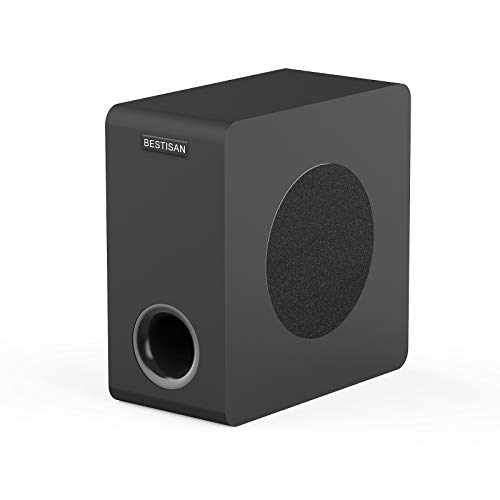
BESTISAN Powered Subwoofer 6.5-Inch Side-Firing
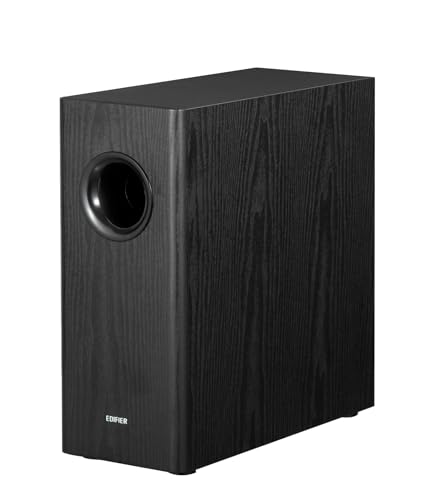
Edifier T5s Powered Subwoofer 70W RMS 8-Inch

Yamaha HS8 Studio Subwoofer Black

PreSonus Eris Sub 8BT 8-Inch Powered Subwoofer

Audioengine S6 Mini Subwoofer 210W Black
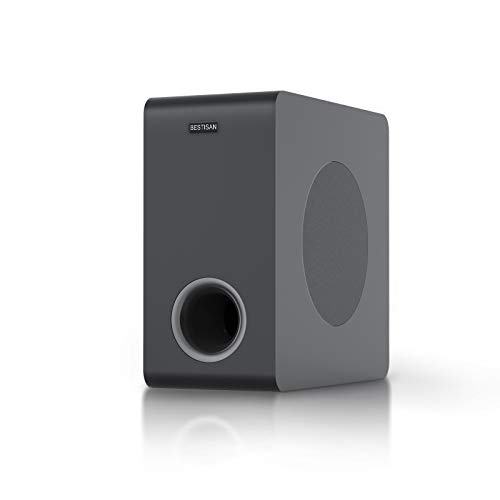
BESTISAN Powered Subwoofer 6.5-Inch Wired
More Details On Our Top Picks
The HS8 W sits in studio territory first, so the appeal is control rather than theater-style weight. An 8-inch cone woofer and 1-inch dome tweeter suit nearfield listening, and the white finish gives a cleaner visual read in a desk setup or small control room.
Compared with the more compact BESTISAN choices below, this Yamaha leans toward accuracy and room-filling presence. That makes sense in spaces where bass needs to stay separate from kick drum and bass guitar detail, not just feel thick.
Strong Points
- Bi-amplified design keeps bass and highs handled separately, which helps clarity in music playback.
- 8-inch woofer gives enough reach for full-range monitoring in a modest studio or dedicated listening room.
- White cabinet suits clean desk layouts and light-colored workspaces.
- Natural fit for recording, mixing, and monitoring tasks where low-end balance matters.
Things To Consider
- Studio voicing can feel restrained beside more entertainment-tuned subs.
- The larger cabinet asks for more space than the mini options here.
- Placement takes more care in small rooms, since bass build-up shows up fast near walls.
Key Specs
Who It Suits Best
Music producers, mixing setups, and home studios get the most from this one.
Where A Sibling Pick Shines
Yamaha HS8 Studio Subwoofer Black fits better for a dedicated low-end companion in an HS-based monitor chain.
This BESTISAN model is built for rooms that need bass support without taking over the floor plan. The 6.5-inch side-firing layout pushes sound sideways rather than straight ahead, a useful detail in TV nooks and tighter living rooms.
Compared with the Yamaha picks, it leans more toward easy home integration than studio strictness. RCA, LFE, AUX, and high-level speaker connections make it more forgiving for older systems, soundbars, and mixed-source setups.
Highlights
- Side-firing woofer helps the cabinet fit neatly into compact layouts.
- Multiple input and output paths simplify pairing with TVs, speakers, and receivers.
- Built-in amplifier reduces the need for separate external gear.
- Compact format works well for apartments and secondary listening rooms.
- High-level speaker input and output widen compatibility with older audio gear.
Worth Noting
- 6.5-inch size is a space saver, but it will not move air like the bigger 8-inch options.
- Side-firing placement rewards a little planning, especially near cabinets or corners.
- Multi-input convenience can still mean more cable sorting during setup.
Feature Snapshot
Made For
Apartment setups, secondary rooms, and mixed home theater systems suit this model well.
Reach For A Different Pick When
Audioengine S6 Mini Subwoofer 210W Black is a better fit for desk listeners who need smaller-scale bass in a tighter footprint.
The T5s reads like a practical middle ground, with an 8-inch woofer and a stated 35Hz reach that suits music libraries with real sub-bass content. In most living rooms, that is enough to give bass guitar and synth lines proper shape without pushing the room into overhang.
Compared with the BESTISAN 6.5-inch options, this Edifier gives a little more physical scale while staying focused on home audio and studio use. The built-in amp, phase selector, and long-throw driver point to a setup that rewards careful placement, though the black finish keeps the look simple.
Upsides
- 70W RMS rating gives a clear reference point for everyday listening setups.
- 8-inch woofer and 35Hz reach support fuller low-end extension for music.
- Phase selector helps match bass timing to the main speakers.
- Long-throw driver and built-in amp suit rooms where controlled output matters.
Small Caveats
- Low-frequency performance still depends heavily on placement and room size.
- The black cabinet is unobtrusive, though it does not stand out visually.
- Music-first tuning may feel less dramatic for casual movie use.
Technical Sheet
Whose Shelf It Belongs On
Music listeners who want deeper bass without stepping into a studio-first shell should look here first.
Swap It Out When
Yamaha HS8 Studio Subwoofer Black is the stronger match for monitor-based rooms that need a more dedicated studio voice.
For a monitor chain that already leans serious, this HS8 sub keeps the Yamaha family’s studio-first character intact. It is aimed at low-end support rather than theatrical punch, which helps in rooms where bass accuracy matters more than spectacle.
That puts it in a different lane from the BESTISAN and Audioengine options, both of which lean harder into versatility or compact convenience. In a dedicated workspace, the plain black cabinet and purpose-built role make more sense than extra features that can distract from monitoring.
Best Bits
- Designed as a studio subwoofer, so it fits naturally with monitor setups.
- Black finish keeps the look understated in control rooms and desks.
- Pairs well with other HS-series gear for a matched visual and functional setup.
Areas To Watch
- Studio focus means it is less about flashy bass than about control.
- Works best in a system already centered on serious monitoring.
- Minimalist design leaves room for fewer convenience extras.
Core Details
Right Fit For
Engineers, producers, and monitor-based home studios get the clearest benefit here.
Look Elsewhere When
Edifier T5s Powered Subwoofer 70W RMS 8-Inch suits music listeners who want a little more home-friendly flexibility.
The Eris Sub 8BT brings a more flexible connection story than the stripped-back studio options above. Bluetooth adds wireless convenience, while the 8-inch driver keeps it within the same size class as the Yamaha and Edifier picks.
That mix makes sense for music production spaces that also handle casual listening or gaming. The honest read is that convenience features matter most here, so this model is strongest in rooms where one sub has to serve more than one routine.
What We Like
- Bluetooth adds a neat wireless path for secondary listening setups.
- 8-inch format keeps it substantial without becoming oversized for many rooms.
- Well suited to music production desks that also double as media spaces.
- Fits comfortably into mixed-use setups with home audio and gaming gear.
Room For Improvement
- Wireless convenience can be less important in a wired studio chain.
- The extra features bring more setup choices, which can slow first-time installation.
- Music and home use sharing the same box may call for more placement compromise.
Details At A Glance
Best Suited To
Hybrid setups in bedrooms, dorms, or small studios benefit most from this model.
Not Your Match When
Yamaha HS8 Studio Subwoofer Black makes more sense for a dedicated monitoring chain with no need for wireless extras.
The S6 Mini is the smallest-looking option in this lineup, but the 210W rating gives it a more serious brief than the name suggests. That makes it useful for desks, shelves, and home office corners where a larger box would feel out of place.
Compared with the Yamaha and Edifier units, this one is the cleanest fit for compact rooms that still need solid bass support. The black finish and small footprint help it disappear visually, almost like a dark stone tucked under the desk.
Bright Spots
- Compact size fits easily under desks or beside media furniture.
- 210W power rating suggests ample headroom for small-room listening.
- Works across music, gaming, and home office setups.
- Black finish keeps the visual profile simple and discreet.
Minor Gripes
- Compact subs still depend on good placement for the cleanest bass.
- Small cabinets are easier to place, but they do not replace larger-room output.
- Shared-use setups can still require a little cable management.
Feature Card
The Right Fit
Desk-based music listeners and home office setups with limited floor space fit this model well.
Skip It When
Yamaha HS8 Studio Subwoofer Black is the stronger choice for larger monitor rooms that need a more studio-specific low-end anchor.
This BESTISAN keeps the formula straightforward, with a 6.5-inch side-firing woofer, a built-in amplifier, and wired RCA connection support. For a TV room or simple speaker chain, that means fewer moving parts and a setup path that stays easy to follow.
Relative to the other compact picks, it is the more old-school option, and that can be a plus in systems that do not need Bluetooth or extra frills. The LED display and rounded cabinet edges add a little polish, though the real value sits in its no-nonsense layout.
Positives
- Built-in amplifier keeps the setup self-contained.
- Wired RCA connection suits simple home theater and speaker systems.
- 6.5-inch side-firing woofer fits neatly in tighter spaces.
- LED display helps with quick mode or status checks.
Points To Note
- Wired-only focus means fewer connection paths than Bluetooth-equipped options.
- Compact bass design works best with realistic expectations in larger rooms.
- Round-corner cabinet styling is tidy, though it remains a utility-first piece.
Core Details
Built With In Mind
Simple TV rooms, compact speaker rigs, and budget-conscious home setups suit this model best.
Another Choice May Suit
PreSonus Eris Sub 8BT 8-Inch Powered Subwoofer is the smarter fit for setups that need wireless flexibility alongside wired use.
How To Choose The Right Subwoofers For Music Only
Match The Driver Size To The Room
Driver size shapes how much air a sub can move, and that matters more than raw drama in music playback. A 6.5-inch cabinet suits desks, apartments, and small media corners, while an 8-inch model usually gives bass notes more body in a medium room. Larger cabinets demand better placement, so room size should guide the choice before any feature list does.
Nearfield listening, common in studios and desk setups, rewards control over brute force. A compact sub can sound cleaner at lower volumes, while a bigger box can feel more complete at normal listening distance. The trade-off is simple: smaller models are easier to place, larger ones usually have more authority.
Count The Connection Paths
Wired RCA, LFE, AUX, and high-level speaker inputs solve different setup problems. RCA suits straightforward home audio, LFE fits theater-style bass management, AUX helps with simpler sources, and high-level inputs matter in systems that lack a dedicated sub output. A model with more than one route is easier to integrate, though extra options can also mean extra cable sorting.
Bluetooth changes the picture only for mixed-use rooms. It helps a bedroom, office, or casual listening area where one sub may serve a phone one day and a receiver the next. Pure studio chains rarely need wireless convenience, so extra connectivity only matters where flexibility is part of daily use.
Think About Tuning Before Output
Some music listeners want bass that feels broad and warm, while others need low frequencies to stay tightly separated from the rest of the mix. A phase selector can help align the sub with the mains, and a stated crossover range tells how much control the setup offers over the handoff between speakers. Those controls matter most in rooms with awkward boundaries or near walls.
Power ratings and driver size tell only part of the story. Cabinet design, port layout, and the sub’s intended use all shape how bass lands in a real room. For focused music use, cleaner integration usually beats sheer weight.
Choose By Use Case, Not Hype
Music producers, studio hobbyists, and critical listeners tend to benefit from Yamaha and Edifier models that lean toward control. Casual home setups often do better with BESTISAN or PreSonus units that balance flexibility with straightforward operation. The Audioengine model fits the space-constrained desk crowd, where size and visual restraint matter as much as output.
A good shortlist starts with room size, then moves to connection needs, then to the kind of bass presentation that feels right. That order avoids mismatched gear and keeps the choice grounded in daily use rather than headline numbers.
A Quick Reality Check
Wrong Turns To Avoid
One common mistake is choosing a sub for theater-style punch and then expecting tidy music playback in a small room. Another is buying a model with the wrong input set, which usually leads to adapters, extra cables, or a setup that never feels clean. Placement matters too, since even a well-made sub can sound heavy or thin when shoved into a bad corner.
Skipping the room size question is the fastest way to end up with bass that overwhelms the rest of the system. Matching the sub to the rest of the chain keeps the sound coherent and the setup easier to live with.
The Case For Spending Up
Higher-tier models usually cost more because of cabinet engineering, driver quality, and better control over low-frequency behavior. That extra spend tends to matter most in rooms where bass detail, timing, and placement flexibility all have to work together. Studio users feel that difference first, but focused home listeners notice it too.
Spending up also makes sense when the sub has to stay in service for years in a main listening room. Better materials and more thoughtful tuning often make day-to-day use less fussy, even if the setup itself takes a little more care.
Frequently Asked Questions
What makes a subwoofer better for music than movies?
Music-focused subs usually put more emphasis on control, timing, and clean integration with the main speakers. Movie-oriented models often lean harder into impact, which can blur bass lines in songs.
Is an 8-inch subwoofer enough for a living room?
For many medium rooms, an 8-inch model is enough to add depth without overwhelming the space. Larger open layouts often benefit from more careful placement or a bigger cabinet.
Do wireless features matter for music listening?
Wireless support helps in mixed-use rooms where a sub may serve several sources. A wired setup still makes more sense for dedicated listening spaces and studio chains.
What input types matter most?
RCA and LFE cover the most common home audio paths, while high-level inputs help with older gear that lacks a sub output. AUX can also be useful in simpler setups.
How important is placement?
Placement matters a great deal because room boundaries change the way bass is heard. A sub that sounds controlled in one corner can feel boomy in another.