
A squealing startup, a fluttering belt, or a struggling accessory often appears before the tensioner fails. A weak spring or worn pulley lets the serpentine belt slip, rattle, or wander, and that can affect charging, steering, and cooling before the part fully fails.
This overview covers the main warning signs, how to tell tensioner trouble from belt wear, and what to check next on the engine accessory drive if the symptoms show up.
The Noises That Start The Story
Squeal is often the first sound you notice. When a belt tensioner loses spring force or the pulley bearing wears, the serpentine belt can act like a loose violin string, and the pitch often changes with engine speed or accessory load.
Chirping, rattling, and grinding each point to a different kind of trouble. A chirp can come from belt slip at the pulley face, a rattle can come from a weak tensioner arm, and a grind usually means a rough bearing in the pulley or an adjacent idler pulley. That is why bad tensioner pulley noise is more than a nuisance; it’s a clue.
Squeal and Chirp Under Load
Headlights, the A/C compressor, and a cold morning start all add drag to the accessory belt path. That extra load can make a weak tensioner sound worse because the spring can’t keep steady pressure on the belt.
Ford and Toyota owners often report the same pattern: noise at idle that fades as rpm rises, then returns with the A/C on. Gates, Dayco, and Continental all build replacement tensioners around the same basic idea: a spring-loaded arm that keeps belt tension in a narrow range.
Rattle and Grind Point to the Hardware
A loose rattle near the front of the engine can come from a worn pivot or an arm that no longer moves smoothly. A grinding sound usually means the pulley bearing has rough spots, and the metal rollers inside the bearing aren’t rolling cleanly.
That distinction matters because the belt itself can squeal even with a healthy tensioner, but a rough bearing can take out both the belt and the pulley face. Once noise starts, the next clue is often visible movement at the belt.
And that visible movement is easier to catch than you might think, which brings the focus to belt behavior at idle.
That extra motion often means the belt is no longer being held steady by the spring-loaded arm.
How A Weak Tensioner Shows Up On The Belt
Belt flutter at idle is one of the clearest serpentine belt tensioner symptoms. You may see the belt pulse, chatter, or lift and settle as the engine idles, especially with the hood open and the A/C cycling on and off.
Slack changes the way the belt rides across each pulley. A belt with uneven tracking can slide sideways, scuff one edge, and leave dark dust around the tensioner path. Over time, that slippage spreads wear across the whole drive system.
Visible Flutter And Slack
Stand near the front of the car with the engine running and watch the long belt spans. A steady belt should look calm, not like a skipped film reel. Flutter at idle, then a brief tug when you tap the throttle, points to tension loss.
One common clue is a belt that looks fine on top but sits low in the grooves on one pulley. That mismatch can come from engine misalignment, a worn pulley flange, or a tensioner arm that no longer holds the belt square.
Dust And Glazing Along The Path
Fresh black dust around the tensioner pulley isn’t normal housekeeping dirt. It comes from rubber wear, and it often collects near the front of the engine, on the radiator support, or in a crescent around the pulley path.
Glazing tells a similar story. A shiny belt surface means heat and slip have polished the rubber, and a glazed belt can lose grip even faster. That’s where vibration and idle complaints start to show up.
Once the belt starts to move unevenly, the engine front end often begins to shake along with it.
A wavering belt rarely stays isolated, and the engine’s own rhythm can start to echo it.
Vibration, Bounce, And Irregular Idling
A healthy tensioner keeps the belt steady through small changes in engine speed. Once the spring weakens, the belt can oscillate instead of staying flat, and that bounce can feed vibration back into the engine front cover and the cabin.
Accessory chatter is another clue. A loose belt can make the alternator pulley, power steering pump, or air conditioning compressor sound busy at idle, then settle for a moment as rpm rises. Cold starts and heavy electrical load make the pattern easier to spot.
Cold Start Behavior
Cold rubber is stiffer, and a tired tensioner has less margin to keep tension steady. That’s why the first minute after start can reveal the problem better than a warm afternoon drive.
A cold engine also puts more drag on the system while fluids are thick. The belt sees that drag all at once, so a marginal spring or a sticky arm shows its weakness right away.
Rough Idle And Accessory Chatter
Engine idle should be steady even with the accessories on. When the belt surges, the alternator load changes, and the idle can feel uneven even though the engine itself is fine.
That chain reaction is mechanical, not mysterious. The belt transfers torque by friction, and friction falls when tension falls, so the whole accessory drive starts to hunt for grip.
Heads up: a little bounce in the belt can turn into a much bigger repair. Once the belt starts slipping hard enough to overheat or shed rubber, the damage moves beyond the tensioner.
From there, the symptoms often spread from sound and vibration into the systems the belt keeps alive.
Those disturbances can reach beyond the belt itself, showing up in charging, cooling, and steering performance.
Accessory Problems That Follow
Dim lights, weak charging, and a steering wheel that feels heavy at parking speeds all point to belt slip. The alternator depends on steady belt speed, and the power steering pump needs enough drive force to keep assist consistent.
Cooling problems are the more serious follow-on. On many engines, the water pump rides the serpentine belt path, so a slipping belt can reduce coolant flow and push engine temperature up fast. What happens if a belt tensioner goes bad is straightforward: the belt can slip, derail, or fail altogether.
Electrical Load Drops First
The alternator is a strong clue because it reacts quickly to belt loss. Headlamps can dim at idle, dash voltage can sag, and the battery light can flicker when the belt can’t keep the alternator spinning at the right speed.
An intermittent power steering effort points in the same direction. On some cars, you will feel the steering assist fade at a stoplight, then return after a short rev, which fits belt slippage more than a hydraulic leak.
Cooling System Risk Rises Fast
A water pump that turns unevenly can’t move coolant with the same consistency. That can matter in traffic, in summer heat, or on a long uphill pull where the engine already carries more thermal load.
You may first hear a harmless noise in a parking lot, then hear it again five miles later as a charging fault and hot smell. That is why bad belt tensioner symptoms deserve attention before the belt throws itself off the pulleys.
To avoid chasing the wrong part, it helps to compare a worn tensioner with a belt that has simply aged out.
A noisy belt can be misleading, which is why the worn part has to be identified with care.
What Separates A Tensioner Issue From A Belt Problem
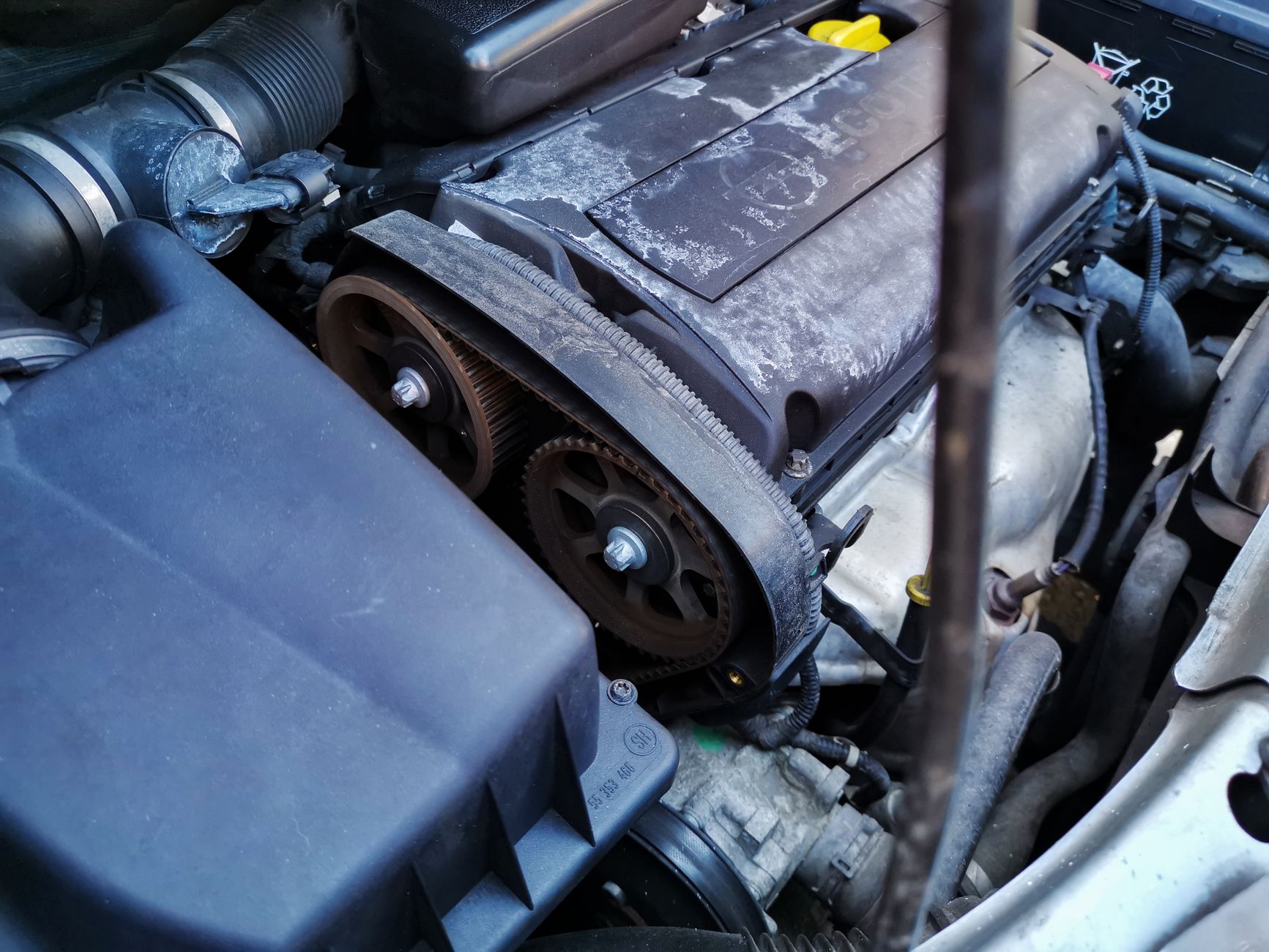
A cracked belt and a worn tensioner can look similar from the outside, but they fail in different ways. Belt wear shows up as edge fraying, cracked ribs, and shiny glazing. A tensioner problem shows up as loss of arm pressure, pulley wobble, or a spring that no longer returns smoothly.
Inspection starts with the arm, not just the belt. The tensioner should move with firm resistance and settle back without sticking. A pulley that tilts, wobbles, or feels gritty by hand points to a bad bearing rather than a simple belt age issue.
Belt Damage Looks Different
A worn serpentine belt can be dry, cracked, or ribbed at the edges, and the wear tends to match the pulley surfaces it runs across. Heat marks and glazing point to slip, but they don’t tell you whether the slip started with the belt or the tensioner.
That’s why technicians check the whole path. One weak idler pulley can mimic a weak tensioner, and one misaligned accessory bracket can make both parts look guilty. The diagnostic tree can get narrow fast, which is why a careful look saves time.
Arm Motion Tells The Truth
A healthy arm should move through a controlled arc and return without a snap or pause. A tired spring can feel lazy, and a worn pivot can hang in one spot before the pulley settles back.
That movement test matters because it separates a part that is wearing out from a belt that has only reached the end of its service life. Once that distinction is clear, the replacement plan gets much simpler.
| Symptom | What You See Or Hear | Likely Source |
|---|---|---|
| Squeal at startup | Short burst of high noise after ignition | Weak spring or belt slip |
| Belt flutter | Visible bounce at idle | Tension loss or misalignment |
| Grinding sound | Rough mechanical noise near pulley | Worn pulley bearing |
| Charging drop | Dim lights or battery warning | Belt slip at alternator |
| Heavy steering | Stiffer wheel at low speed | Accessory drive loss |
Once you know which part is at fault, the next step is timing the repair before the rest of the drive system starts to wear.
With the culprit narrowed down, attention shifts to replacement intervals and the nearby components worth checking.
Replacement Timing And What To Inspect Next
Belt tensioners usually last longer than a belt interval, but they don’t last forever. Heat, road grit, and repeated spring cycling wear the pivot and bearing, so the part can look fine until the load changes and the failure shows itself.
Once wear is obvious, belt tensioner replacement makes more sense as a full job. The belt, pulley, and related hardware share the same stress, and replacing them together reduces the chance that a fresh belt rides on a tired pulley surface.
Replace The Wear Set Together
A new belt on an old pulley can still squeal, and an old belt on a new tensioner can still slip. That pairing wastes time because the remaining weak part keeps the noise alive.
Many repair shops fit the belt and tensioner as a set, then check the belt routing diagram, the alternator pulley, and the power steering pulley for rough rotation. That extra step catches a bad idler before it turns into the next repair.
Check The Rest Of The Path
Spin each adjacent pulley by hand with the engine off. A smooth pulley should glide quietly; a dry bearing will feel notchy, and a wobble at the edge can point to a bent bracket or a worn hub.
Look at the belt path from the crank pulley to the last accessory in line. A clean, straight run helps the new tensioner hold steady, and that final check can keep the same noise from coming back a week later.
At this point, the pattern is clear enough to sum up without adding extra drama.
The takeaway is straightforward: catch the warning signs early and the whole drive system stays happier longer.
Final Thoughts
The clearest warning is rarely a full breakdown. It’s noise, flutter, and accessory trouble arriving in that order, with the belt tensioner acting like the small part that sets the whole system off balance. Catch it there, and you protect the belt, the pulleys, and the accessories they drive.
FAQ
How do I know if my belt tensioner is bad?
Look for belt flutter, squeal, pulley wobble, or a spring arm that moves without firm resistance. A bad tensioner also leaves black belt dust near the pulley path and can make accessory noise come and go with engine load.
What noise does a failing belt tensioner make?
A failing unit can squeal, chirp, rattle, or grind. Squeal usually points to belt slip, while rattle and grind point more toward a worn pulley bearing or a loose arm pivot.
What happens when a belt tensioner fails?
The belt can slip, wander off track, or come off the pulleys. That can cut charging output, reduce steering assist, and slow coolant flow on some vehicles.
How long do belt tensioners last?
Service life varies by engine, heat, and mileage, but many tensioners outlast one belt and still wear out before the next major service. A rough pulley or a weak spring means the part is already past its best working range.
Can I drive with a bad belt tensioner?
Short trips can be possible, but the risk rises fast once the belt starts slipping or the pulley bearing gets rough. A sudden loss of belt drive can stop charging, steering assist, or coolant circulation on some vehicles.