
At the pump, the ethanol content depends on the label, not the grade number, for 87, 89, 91, and 93 octane gas. In the U.S., those grades are often E10, meaning up to 10% ethanol, and some premium fuel is ethanol-free in certain markets.
This guide explains what drivers should check at the pump when comparing regular, midgrade, and premium fuel, and why ethanol levels can vary from one station to the next.
Octane Rating And Ethanol Content Are Not The Same
Grade numbers tell you about knock resistance, not alcohol content. That difference matters because two fuels can share the same ethanol blend while still carrying different octane ratings.
Octane measures how well fuel resists pinging under heat and pressure in the combustion chamber. Ethanol can raise octane because it behaves differently from straight gasoline, but the same octane level can come from several blend recipes. So the number on the handle alone can’t show how much ethanol is in 87, 89, 91, and 93 octane gas.
AAA and the EPA treat octane and blend content as separate fuel details. AAA focuses on what matches your engine, while the EPA sets blend limits and labeling rules. You need both pieces to know what’s in the nozzle and what your engine actually wants.
Octane serves the engine, ethanol serves the blend
High-compression engines, turbochargers, and some direct-injection setups may need higher octane to avoid knocking. Ethanol changes the blend and the oxygen content of the fuel, but it doesn’t map one-to-one to 87, 89, 91, or 93.
A small chemical detail matters here. Ethanol contains oxygen in its molecule, so it changes combustion behavior and can trim fuel economy by a few percent compared with pure gasoline. That chemistry is why E10 gas ethanol percentage and octane rating vs ethanol content are related topics, yet still separate choices at the pump.
Once those jobs are separated, the fuel grades start making more sense, and the usual pattern at the pump becomes easier to spot.
That split explains why the familiar grades at the pump follow a pattern that is more practical than precise.
Where Regular, Midgrade, And Premium Gas Usually Land
Most U.S. regular fuel is E10, and much of midgrade and premium is too. E10 means the fuel contains up to 10% ethanol, not a fixed 10% every time.
That pattern matters because 87 octane is commonly E10, but 87 is not a shorthand for ethanol content in regular unleaded gas. The same goes for 89, 91, and 93. A station can sell all four grades with the same ethanol blend and change only the octane level.
Regular fuel often starts at 87
At many U.S. stations, 87 octane is the standard regular grade, and it is very often sold as E10. For a commuter car, that usually means the fuel contains ethanol unless the pump label says otherwise.
Flex-fuel vehicles can run on higher ethanol blends such as E85, but that doesn’t change the rule for ordinary unleaded gasoline. The grade number still points to knock resistance, not to the amount of ethanol in the tank.
Midgrade and premium can share the same blend
89, 91, and 93 can all be E10 depending on the station and local supply. A premium label doesn’t promise a different ethanol percentage, and it doesn’t mean the fuel is cleaner or richer in a way your engine can feel right away.
That’s the part many drivers miss. The octane grade and ethanol blend travel on separate tracks, which is why the pump sticker matters more than the number on the handle.
That split becomes even clearer when midgrade is made from two base fuels instead of one, because the blending process changes the octane but not always the ethanol story.
Because blending changes the recipe, midgrade often ends up as a mix of two fuels rather than a distinct product.
Why Midgrade Often Blends Two Different Fuels
89 octane is often made by mixing 87 with 91 or 93, either at the pump or earlier in the supply chain. That mix raises the octane rating without changing the ethanol percentage in any simple, fixed way.
In practical terms, the station may be blending two base fuels that already carry the same E10 label. Your 89 grade can still land at the same ethanol level as the 87 and premium nozzles next to it. The label tells you very little about the blend on its own.
Pump blending changes octane, not the ethanol rule
When two gasoline streams meet, the octane result changes because the anti-knock behavior averages out. Ethanol content, though, depends on what each stream carried before the mix. A blended midgrade can still sit at E10 even while its octane sits between regular and premium.
That’s why gasoline ethanol blend by octane is a poor shortcut. The station may mix 87 and premium to make 89, but the ethanol level can stay flat across all three grades. You gain a smoother octane ladder, not a reliable ethanol clue.
Midgrade labels hide the chemistry you actually need
Many stations place the same ethanol disclosure on every unleaded handle, then vary only the octane label. That setup makes the display tidy, but it also means 89 tells you almost nothing about the ethanol inside.
Once you see that pattern, the question shifts from grade to disclosure. The next section shows why premium fuel can be the most misleading label of the group.
That ambiguity carries over to premium, where a higher number still says nothing certain about ethanol content.
Premium Gasoline Is Not Automatically Ethanol-Free
Premium fuel gets a reputation it hasn’t earned. A 91 or 93 label does not mean ethanol-free gas, and at many U.S. stations premium is still E10 just like regular and midgrade.
Some markets do sell 91 or 93 without ethanol, especially where marinas, performance shops, or specialty stations cater to older engines and small equipment. In other places, the same octane grade arrives as E10 because the supplier and local rules favor that blend.
Local fuel rules shape what you see at the pump
Fuel content depends on state rules, regional formulation plans, and station sourcing. The EPA allows different blending paths in different places, and that is one reason ethanol content varies by country, state, station, and season.
Seasonal changes matter too. Winter gasoline and summer gasoline use different vapor-pressure targets, so suppliers may shift components and ethanol placement within legal limits. A station a few miles away can sell the same 93 grade with a different ethanol disclosure.
Premium can mean different things in different markets
At one station, premium may be E10. At another, premium may be ethanol-free. A third may sell a premium blend aimed at older motorcycles, boats, or collector cars, and that nozzle can look identical until you read the sticker.
That is the answer to does premium gas have more ethanol. The octane grade gives you no reliable clue, and premium fuel doesn’t guarantee a lower or higher ethanol share. You need the local label, not the marketing language on the pump fascia.
Local supply rules and seasonal changes explain the variation, and the same logic shows up in the smaller details that change from station to station.
Those differences rarely happen by accident, since supply choices and weather rules can shift ethanol levels block by block.
The Variables That Change Ethanol Levels From Station To Station

Two stations on the same road can sell the same octane grade and still disclose different ethanol content. Local supply contracts, storage tanks, and seasonal formulation rules all affect what gets pumped into your vehicle.
Regional fuel blends matter because refiners don’t ship a single national recipe. California, the Midwest, the Rocky Mountain states, and coastal markets can all use different gasoline formulations. The result is simple and annoying: the same grade name can hide different blend content a few miles apart.
| Factor | What it changes | What you see at the pump |
|---|---|---|
| State rules | Blend limits and disclosure | E10, E15, or ethanol-free labels |
| Station sourcing | Which base fuel arrives | Same octane, different blend note |
| Seasonal formulation | Vapor pressure and component mix | Different supply mix in summer and winter |
| Local availability | Which nozzles a retailer stocks | Some stations offer ethanol-free premium, others do not |
E15 and E85 add more context. E15 is a higher-ethanol blend allowed for certain vehicles, while E85 is a flex-fuel product for vehicles built to handle it. Those grades are not the same as 87, 89, 91, or 93, yet their presence in a market can change how retailers label the rest of the island.
One practical example helps. A station in one suburb may sell 87 E10, 89 E10, and 93 E10. Another station five miles away may sell 91 ethanol-free premium for motorcycles and storage use. Same city, same day, different answer to how much ethanol is in 87, 89, 91, and 93 octane gas.
A closer look at the pump label reveals the real clue, and the octane number is only part of it.
The Label On The Pump Tells You More Than The Octane Number
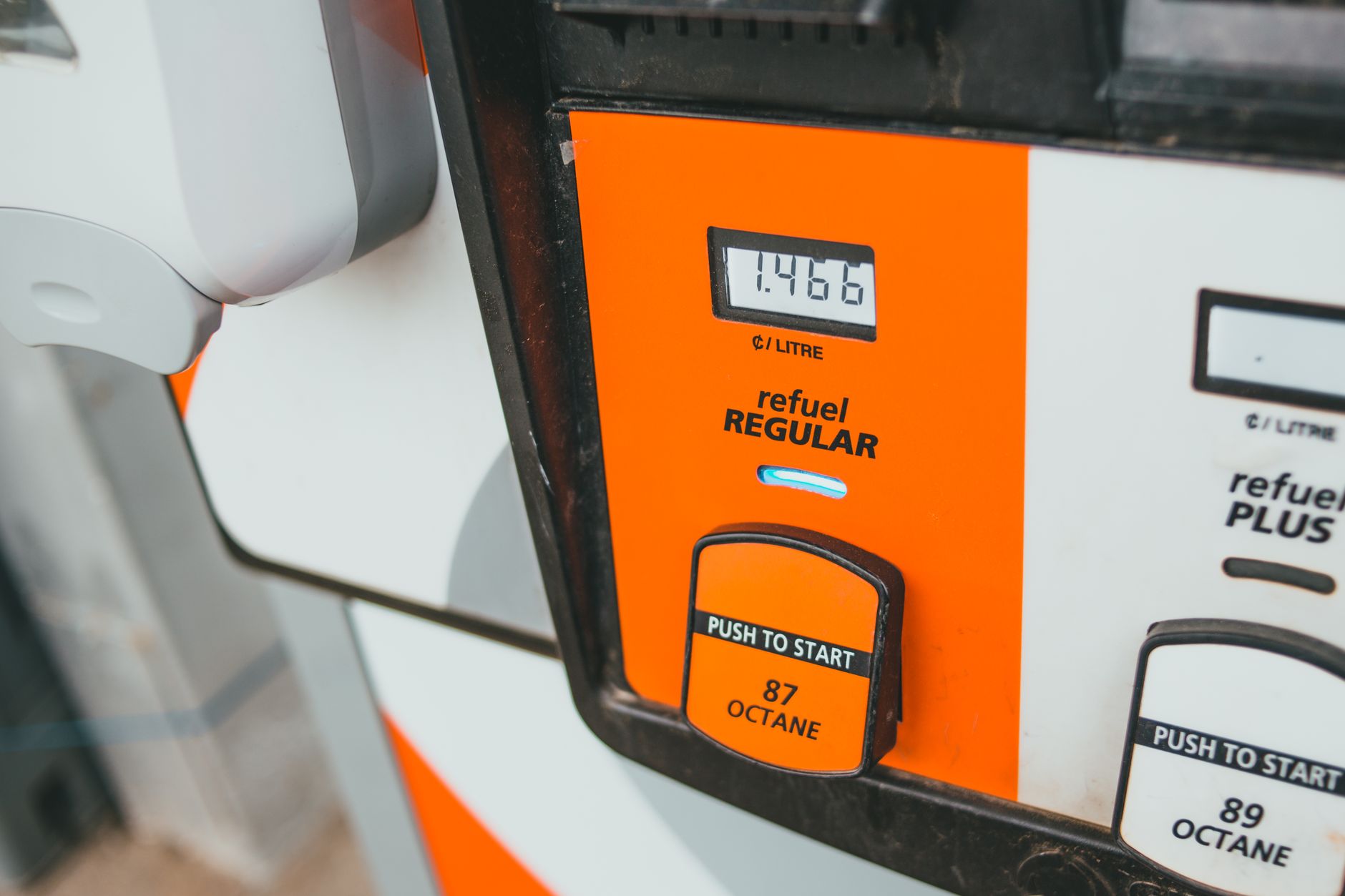
The pump sticker is the part you trust. It usually states the ethanol blend, such as E10, E15, or ethanol-free, and that disclosure tells you more than the octane number ever will.
Look for the small placard near the nozzle or on the face of the dispenser. That label is the direct source for how to tell if gas contains ethanol, and it beats guessing from the grade name. A station brochure or website can help, but the pump itself is the clearest answer.
The signs that matter at a glance
- E10 label shows up on fuel with up to 10% ethanol.
- Ethanol-free label signals straight gasoline for markets that stock it.
- E15 label means a higher ethanol blend for approved vehicles.
- Flex-fuel label points to E85 or another high-ethanol product.
- Octane number tells knock resistance, not ethanol share.
Check the placard before you squeeze the handle. A premium label can still hide E10, and a regular label can still be the right choice for an engine that wants 87 octane.
That simple habit helps you avoid mixing up fuel economy, engine knock, and ethanol content. The grade you buy should match the engine manual, while the blend label should match your need for ethanol-free storage or a standard daily-driver fill.
In many U.S. stations, each grade is E10, some premium is ethanol-free in select markets, and the pump label is the only reliable source. The number on the handle and the blend inside the nozzle are related, but they are not the same thing.
That distinction is the key takeaway, because the pump’s grade and the fuel’s ethanol content can point in different directions.
What To Remember
Octane and ethanol answer different questions. One tells you how the fuel resists knock, and the other tells you how much alcohol is blended into it. Once you separate those two jobs, the pump display starts making sense, and your next fill-up becomes a cleaner choice.
FAQ
How much ethanol is in 87 octane gas?
In the U.S., 87 octane gas is very often E10, which means up to 10% ethanol. The exact blend depends on the station and local supply, so the pump label is the only reliable source.
Does 89 octane have more ethanol than 87?
No fixed rule ties 89 to a higher ethanol share. A station can sell 87 and 89 with the same E10 blend, while the octane changes from how the base fuels are blended.
Is 91 or 93 premium gas ethanol free?
Sometimes, but not by default. Many 91 and 93 grades are still E10, while select stations in certain markets sell ethanol-free premium for specialty use.
What percentage of ethanol is allowed in regular gasoline?
Regular unleaded gasoline in the U.S. is often sold as E10, which means up to 10% ethanol. Some areas also sell E15 or ethanol-free products, but those are separate pump labels.
How can I find out if gas contains ethanol?
Read the pump sticker or the station fuel information panel. The label should name the blend, such as E10, E15, or ethanol-free, and that tells you more than the octane grade alone.
Does octane rating tell you ethanol content?
No. Octane rating measures knock resistance, while ethanol content measures the blend share of alcohol in the gasoline. The two can move together, but they are not the same number.