
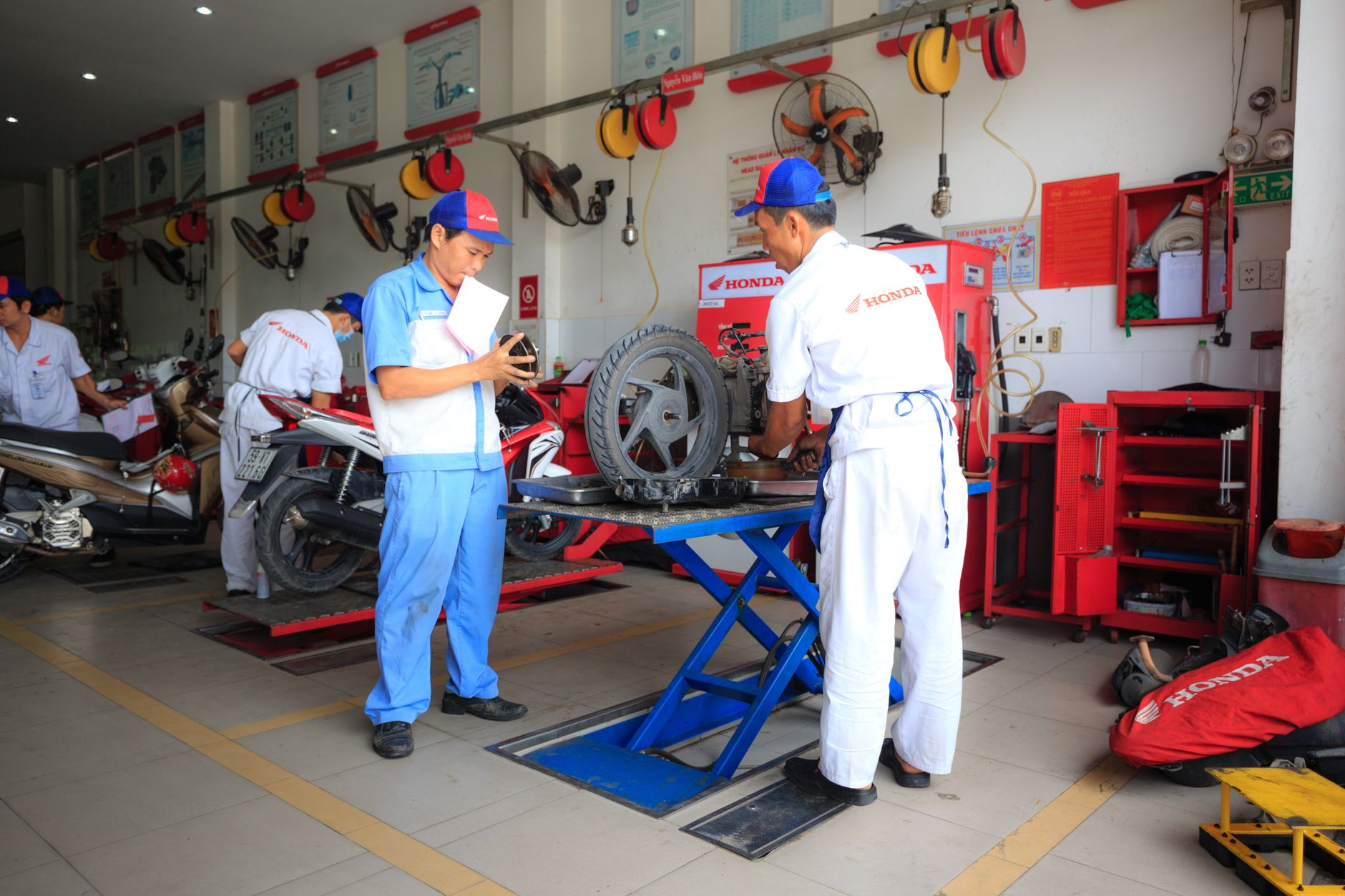

When the Maintenance Minder calls for B service plus subcodes 1 and 2, the dash is flagging this combination of tasks. That points to scheduled upkeep: an oil and filter change, tire rotation, and air filter replacement, along with a basic inspection before wear starts to pile up.
This article covers the Honda B12 service notice, breaking down the code, what maintenance it triggers, when to schedule it, and what usually affects the bill for a Civic, Accord, or CR-V owner.
Decoding The B12 Maintenance Minder Code
Dashboard reminders work differently from warning lights, and that difference matters. The Maintenance Minder tracks oil life and service intervals, then shows a code such as B12 when maintenance is due.
The Honda B12 service meaning becomes clear once the code is split apart. B calls for the main service group, 1 calls for tire rotation, and 2 calls for the engine and cabin air filters.
B service and subcodes work together
B12 usually means the car wants a broader inspection plus two add-ons. Honda uses the code to show that oil service, rotation, and filter work belong in the same visit.
That layout keeps the dash easy to read. A Maintenance Minder code is a maintenance cue, while a true diagnostic trouble code points to a fault stored in the vehicle computer.
Service reminder and fault code are different signals
The oil life monitor in your Honda watches driving patterns, engine temperature, run time, and other wear factors. It doesn’t mean a part has failed; it means the service interval has reached a point where maintenance fits the car’s condition.
That difference matters because it changes your next move. A service code asks for routine work, while a fault code may call for scanning and diagnosis before you drive far again, which leads straight into the core B service items.
That warning can mean simple service, but it can also point to issues that need diagnosis.
The Core Work Behind B Service
Fresh oil sits at the center of B service. The engine oil and oil filter change removes contaminated oil that has picked up soot, fuel dilution, and microscopic wear particles.
Oil change and filter replacement
B service commonly includes draining the old oil and installing a new engine oil filter. The filter traps particles that would otherwise circulate through bearings, cam lobes, and variable valve timing passages.
That’s more than a paperwork step. Oil film thickness affects metal contact, heat transfer, and hydraulic control inside the engine, so a late oil service can stress parts that never make noise until wear has already advanced.
Multi-point inspection and fluid checks
During a B service, technicians inspect major systems, brake condition, fluid levels, belts, hoses, tires, and underbody parts. A technician may check brake pad thickness, rotor condition, steering boots, leaks, and suspension joints during the same visit.
Exact items can vary by model, year, and service history. A CR-V, Civic, Accord, or Pilot can wear differently, and a car with prior dealer service may need less overlap than one that has missed intervals.
Brake fluid absorbs moisture over time, and that water lowers its boiling point. Hard stops can then create a soft pedal sooner than you expect, which is why inspection and fluid review belong together.
Honda Owner’s Manual references help here because they show the maintenance schedule tied to your engine, transmission, and drive layout. Once that baseline is clear, the subcodes tell you what extra work belongs on the same ticket.
Those basics cover the essentials, yet every vehicle brings a few extra maintenance needs.
What Codes 1 And 2 Add To The Visit
Code 1 points to tire rotation. That keeps wear closer across the tread, which helps your car track straighter and can delay early tire replacement.
Tire rotation and wear balance
Front tires on many Hondas work harder because they steer, brake, and carry more load during turning. Rotating them moves wear to a different corner of the car, which smooths out cupping and shoulder wear.
You may notice the difference most on long highway runs, where a set of tires with uneven wear can hum or pull. A rotation done at the right interval keeps that pattern from setting in.
Engine air filter and cabin air filter replacement
A code 2 callout points to replacing both the engine air filter and the cabin air filter. The engine filter keeps dust out of the intake stream, while the cabin filter screens the air that reaches the heater and air conditioner vents.
That matters in different ways. A loaded engine air filter can restrict airflow and nudge fuel trim and throttle response, while a dirty cabin filter can weaken airflow at the vents and leave dust on the filter media itself.
A city commuter, a dusty rural driver, and a family SUV near construction traffic can wear those filters at different speeds. The code tells you what your car needs, but your driving environment decides how fast the parts load up.
Different roads and habits change how quickly those items age, which makes timing less uniform than it seems.
Service Timing, Urgency, And Driving With Low Oil Life
B12 is routine maintenance, not an emergency repair notice. Your car is telling you that service is due soon, not that the engine is failing right now.
What 15 percent oil life means
By the time the display reaches 15 percent, the oil life warning has usually become hard to ignore. That 15 percent mark is a schedule cue, not a panic alarm, and it gives you time to book service before the system stays on longer than it should.
Driving a short distance with low oil life is common, but stretching it too far raises wear risk. Old oil loses some of its additive reserve, and the base oil can shear down under heat and load, which weakens film strength between moving parts.
Why delay shortens component life
Delayed oil service can leave varnish and deposits inside the engine, especially around hot spots near the turbo on certain models or in tight oil passages on modern four-cylinder engines. Deposits change how oil moves, and that can affect lifter noise, timing response, and seal life.
That pattern shows up in service bays all the time: a driver waits until the reminder has been on for months, then a simple oil change turns into a deeper inspection because the oil has darkened and the filter has loaded with debris.
Schedule the visit before the reminder stays on for too long. A car can run with the light showing, but overdue service gives wear more time to spread across the engine and the tires.
That is why the Honda B12 service notice deserves attention even though it is not urgent in the way a warning lamp is. Once the timing makes sense, the next decision is cost.
That schedule matters because delays turn a routine visit into a pricier catch-up appointment.
Typical B12 Maintenance Cost And What Drives It
Dealer pricing for Honda B12 maintenance often lands in the low hundreds, while independent shops may come in lower depending on labor rate, oil type, and parts source. The final number shifts with model, engine size, and whether the service includes extra inspection findings.
| Service Item | What It Covers | What Moves The Price |
|---|---|---|
| Oil service | Engine oil and oil filter change | Oil grade, engine capacity, labor rate |
| Code 1 work | Tire rotation | Wheel size, tire type, access time |
| Code 2 work | Engine air filter and cabin air filter | Filter design, cabin access, part pricing |
| Inspection items | Brake, fluid, and underbody checks | Wear findings, corrosion, needed adjustments |
The oil service often sets the baseline charge, and the filters add a smaller layer on top. Inspection work can stay within the same visit unless the technician finds brake wear, fluid seepage, or uneven tire wear that needs a separate repair decision.
What pushes the total up or down
All-wheel drive can raise labor time on some models because the driveline layout is tighter and the rotation pattern may take longer. Synthetic oil requirements also matter, since most late-model Hondas use oil that costs more than older conventional blends.
Regional labor rates matter too. A dealership in a high-rent metro area may price the same Honda service code B12 higher than a shop in a smaller market, even when the work list is identical.
Service history matters as well. A car with clean records may need only the scheduled items, while a missed interval can bring extra attention to brakes, belt condition, or fluid age, which changes the final bill.
A careful inspection beforehand helps separate routine work from anything that has started to wear further.
A Practical Checklist Before You Book
Start with the owner paperwork and the car’s prior service records. The Honda Owner’s Manual and maintenance history tell you whether the code matches the model’s current needs or whether a previous repair already covered part of the list.
- Check the manual. Confirm the exact maintenance schedule for your year, engine, and drivetrain.
- Review past service. Look for a recent tire rotation, filter change, or oil change that may affect what is still due.
- Confirm the code. Ask the service advisor to verify the dashboard code before any work starts.
- Ask for line items. Get each task spelled out so you know what B, 1, and 2 cover on your vehicle.
- Book early. Set the visit before the reminder goes overdue, especially when tires or filters already look tired.
You can also use the appointment to ask for a brake inspection photo or wear measurement. That small request gives you a clearer picture of pad thickness, rotor condition, and whether the next visit will be simple or more involved.
Service advisors see mismatches every day, especially on used Hondas. A previous owner may have reset the minder without doing the work, so confirming the listed code protects you from paying twice for the same oil service or rotation.
That final check saves time and keeps the maintenance record clean, which matters later when you sell the car. A documented Honda B12 service notice visit helps show that your vehicle got routine care on schedule, not after wear had already spread.
Keeping those records makes future maintenance easier and helps prevent small issues from quietly growing.
Wrap Up
Honda B12 is a maintenance reminder with a clear job: oil service, tire rotation, and filter replacement, plus inspection work that shows wear before it turns into a bigger repair. Treat it as scheduled upkeep, book it before the reminder lingers, and your car stays easier to own and easier to sell.
FAQ
What does Honda B12 service mean?
A dashboard reminder for B service plus codes 1 and 2 is Honda’s way of bundling several maintenance items together. That usually includes an oil change, oil filter change, tire rotation, engine air filter replacement, cabin air filter replacement, and a multi-point inspection.
Is Honda B12 service necessary?
Yes, because it is part of Honda’s scheduled maintenance plan. Skipping it lets oil age, tires wear unevenly, and filters load with debris, which can shorten component life and make the car feel less settled on the road.
How much does Honda B12 maintenance cost?
The cost depends on dealer labor, oil grade, filter pricing, and model layout. A realistic service visit often lands in the low hundreds, with extra charges possible if the inspection finds brake wear, tire issues, or other added work.
Can I drive my Honda if the B12 service notice is on?
Yes, short-term driving is usually fine because B12 is a service reminder rather than a fault warning. The safer move is to schedule the visit soon, since extended delay lets wear build across the engine, tires, and filters.
What is included in Honda B12 service?
The usual list includes engine oil and oil filter replacement, tire rotation, engine air filter replacement, cabin air filter replacement, and a multi-point inspection of major systems. Exact items can vary by model year and service history.
What does Honda service code B12 mean?
On the service screen, B12 combines the main B service with subcodes 1 and 2. In plain terms, the car wants oil service, rotation, filter work, and a check of key systems before the next interval starts.