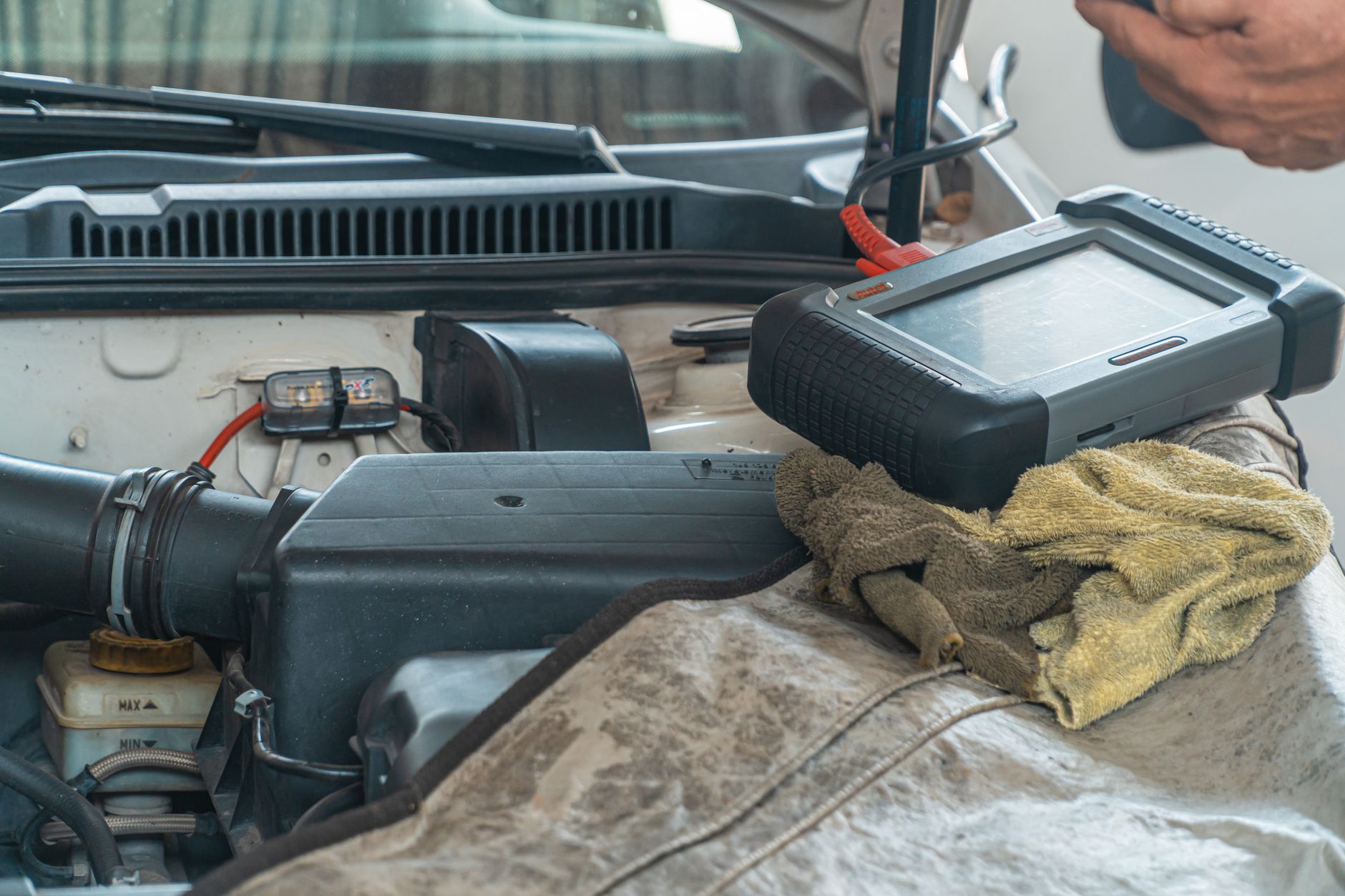

A proper repair starts with finding the fault that triggered the warning, not with masking the light. A loose gas cap, a failing oxygen sensor, or a misfire can make the lamp come right back after the next drive cycle.
Here’s the scope: what the MIL is signaling, why quick resets don’t hold, what the law allows, and how to keep the light off for real if you’re dealing with a stubborn code.
What The Check Engine Light Is Really Telling You
A stored diagnostic trouble code sits behind that dash warning. The ECU can flag an evaporative emissions leak, a misfire, a sensor fault, or a catalytic converter problem, and the light may stay steady, flash, or return after a reset.
The number on the dash is only the symptom. The code behind it is what matters, because turning off the light without diagnosis only hides the evidence for a short time.
Steady light versus flashing light
A steady MIL often points to an emissions fault that still lets the car run, though fuel economy and drivability can suffer. A flashing lamp means the ECU sees a condition that can damage the catalytic converter, such as raw fuel entering the exhaust.
That difference matters right away. A steady light can wait for proper scanning, but a flashing one calls for a short drive and a fast diagnosis before heat builds in the exhaust.
The stored code is the clue
OBD-II records a DTC after a sensor signal falls outside the expected range long enough to meet its rules. The engine control unit compares that signal against programmed limits across drive cycles, not on a single glitch.
Think of it like a guard checking the same door twice. A single bump may not matter, but repeated bad readings convince the system the fault is real, which is why the lamp can reappear after a reset.
That same pattern explains why a reset only clears the warning, not the underlying fault.
Why Quick Resets Only Buy Time
A code reader can erase stored codes, yet the underlying cause stays in place. The ECU keeps watching the same circuit, so the warning can return after the next cold start, highway run, or refuel.
Disconnecting the battery may clear memory for a while, but it does not repair a loose connector, a cracked vacuum line, or a worn sensor. A battery disconnect also risks radio loss, idle relearn issues, and other small headaches that save no time in the end.
How a scan tool clears memory
An OBD2 scanner sends a reset command to the control module and wipes stored and pending codes. The moment the car repeats the same fault condition, the monitor can set the lamp again.
That is why how to turn off a check engine light and how to clear engine warning light are not the same task. One erases the record, the other fixes the cause that wrote it.
Why the battery trick fades fast
A battery disconnect can erase volatile memory and some readiness data for a short period. Once the ECU relearns operating values and the fault returns, the light comes back with the same complaint.
For a car with a weak gas cap seal, that cycle can repeat after every refuel. For a misfire, it can return as soon as the engine load rises on a climb or merge.
Because the problem can return under load, the real issue is whether it is safe to ignore.
Use a reset only after you know what code is present. Clearing a light before diagnosis is like emptying a filing cabinet while the paperwork is still being delivered.
The Legal And Safety Limits Of Disabling It
Removing the bulb, taping over the lamp, or altering the instrument cluster is unsafe and can be illegal. Many jurisdictions forbid tampering with emissions controls or warning systems, and that includes actions that hide a malfunction instead of repairing it.
Permanent disablement is not a legitimate repair method. A warning light exists to flag a problem that can affect tailpipe emissions, engine damage, or both, and the car still carries the fault even when the dash is quiet.
Why hiding the lamp backfires
Masking the indicator blocks the one signal that tells you the car has moved out of spec. A bad oxygen sensor can cause rich fuel trim, which raises hydrocarbon output and can foul a catalytic converter over time.
That is not theory. The exhaust system depends on feedback from the sensor pair and the ECU’s trim logic, so hiding the alert leaves the control loop blind.
Why emissions tampering draws attention
Federal and state emissions rules treat tampering differently from repair. The EPA and state inspection programs focus on the integrity of the emissions system, which means a hidden lamp can create inspection failure or a legal issue during resale.
For your own records, that matters as much as the dashboard. A vehicle that passes only because the warning was hidden still carries the same defect and the same repair bill later.
A hidden warning may calm the dash, but the underlying defect still needs a closer look.
Finding The Real Fault Behind The Warning
The cleanest path is to read the code before touching the reset button. A DTC points you toward a system, not always a single part, so you start with the code, then inspect the related wiring, hoses, and sensors around that system.
A loose gas cap can trigger an evaporative emissions fault. So can a bad purge valve, an intake air leak, an ignition coil failure, or an oxygen sensor that has aged out of range. Proper diagnosis is the only reliable way to keep the light off.
Read the code and check the related system
Pull the code with an OBD2 scanner and write it down before clearing anything. P0455 points toward a large EVAP leak, P0302 points toward a cylinder misfire, and P0420 points toward catalyst efficiency trouble.
Those code families tell you where to look next. A scanner does not fix the car, but it narrows the search enough that you do not waste time swapping parts at random.
Start with the common culprits
- Gas cap seal A damaged cap gasket can let vapor escape and trigger an EVAP fault.
- Oxygen sensor wear An aging sensor can report slow or biased readings to the ECU.
- Ignition coil trouble A weak coil can create a misfire under load or during cold starts.
- Vacuum leak A cracked hose can upset air-fuel trim and set mixture codes.
- Catalytic converter decline A tired converter can fail efficiency checks after long-term contamination.
Each of those faults produces a different pattern in live data. Fuel trims, misfire counts, and oxygen sensor switching speed tell you more than the dash lamp ever will, which is why a real diagnosis beats guesswork every time.
One detail matters here: an oxygen sensor does not merely sense oxygen. It creates a voltage signal from the oxygen difference across a zirconia element, and the ECU uses that signal to trim fuel delivery. That small electrochemical change is why a tired sensor can upset drivability long before the car stalls.
That signal can point to more than one failing part, making diagnosis the crucial next step.
Repairing The Issue So The Light Stays Off

A fix only matters once the failed part or leak is gone. Tightening a loose fuel cap, replacing a cracked hose, fitting a new coil, or swapping a failed sensor gives the reset procedure something real to hold on to.
Some vehicles need several drive cycles before the warning clears fully. The monitors run their own checks after repair, and the lamp can stay on until the ECU sees enough normal operation to trust the new result.
Verify the repair instead of guessing
Rescan after the repair to confirm the code is gone and no pending code remains. That step matters because a cleared code with no verification can hide a second fault that was sitting in the same system.
A simple example helps here. Replace a loose gas cap, clear the code, then drive the car through a few cold starts and one highway trip. A P0455 that stays gone tells you the seal held; a return visit means the EVAP leak is elsewhere.
Use drive cycles as the final check
Drive cycles are the ECU’s own proof test. The system watches coolant temperature, idle behavior, fuel trim, catalyst response, and oxygen sensor activity before it marks the monitor ready again.
Because of that, a repair that feels fine in the driveway can still fail the next emission monitor. The light should stay off only after the car proves it can run within range across normal use.
Once the fault is fixed, attention shifts to whether the system can prove it consistently.
Do not assume a reset means success. Rescan after a few trips, then inspect readiness status so you know the fault is gone and the monitor has passed.
The Safer Way To Handle A Persistent Code
A permanent check engine light code is a sign that the vehicle keeps seeing the same failure pattern. That calls for troubleshooting, not bypasses, because a repeated code means the control system still detects the problem in its normal test routine.
When the code returns, or several systems are involved, a professional scan tool helps because it reads freeze-frame data, live data, and monitor status more deeply than a cheap code reader. That extra detail can show whether the fault appears at idle, under load, or during closed-loop operation.
Use a better scanner when the fault repeats
A shop-grade scan tool can read manufacturer-specific data that an entry-level unit may miss. On a Ford, GM, Toyota, or Honda, that can point you to a misfire count, purge command, or fuel trim pattern that changes the repair path.
That kind of detail helps with stubborn problems. A bad crankshaft position signal, a sticking purge valve, or an intermittent wiring break can hide from a basic reset but show up in live data.
Let the system stay on only when it should
After a scan, repair, and verification cycle, the lamp should remain dark only when the ECU has nothing to report. That is the only honest answer to how to disable check engine light permanently.
And that is the part worth keeping in view. The lamp should go out because the vehicle has returned to normal operation, not because the warning has been silenced. That same rule is what separates a real fix from a temporary check engine light reset.
Consistency, not silence, is what finally separates a lasting repair from a temporary workaround.
Final Thoughts
The lasting fix is not a hidden bulb or a cleared memory. The MIL stays off by finding the fault code, repairing the cause, and confirming the repair with another scan and a few drive cycles. That process gives you a car that stays quiet for the right reason.
FAQ
How do I clear a permanent check engine light code?
Clear the stored code with an OBD2 scanner only after you repair the cause. A true permanent code keeps returning until the ECU sees the fault stop during normal monitor checks.
Can I turn off my own check engine light?
You can erase a code with a scan tool or a battery disconnect, but that does not fix the car. The light returns whenever the same fault detection runs again.
Is there a way to bypass a check engine light?
Bypass methods like bulb removal, tape, or cluster tampering are unsafe and can be illegal. The vehicle still has the underlying fault, even if the dash stops showing it.
Why does the check engine light keep coming back after reset?
The same fault is still present, so the ECU detects it again after a drive cycle or monitor run. A loose cap, sensor failure, misfire, or EVAP leak can trigger that repeat pattern.
How do you force a check engine light to go off?
There is no sound way to force it off without addressing the cause. The reliable path is diagnosis, repair, rescanning, and a few normal trips until the monitor stays clear.