
Choosing a 24v Lifepo4 Battery often comes down to how you actually use power day to day, not just how much capacity sounds impressive on paper. A marina setup, an RV bank, a scooter pack, and a backup system all ask for different things from the same chemistry. That’s where this shortlist helps, because the right choice can save you from oversizing, underpowering, or dealing with awkward fitment later.
Quick Look At The Shortlist

dumfume 24V 100Ah LiFePO4 Battery 100A BMS
yeagulch 24V 100Ah LiFePO4 Lithium Battery 100A BMS
SEFEPODER 24V 9Ah Lithium LiFePO4 Deep Cycle Battery 30A BMS
SEFEPODER 24V 9Ah Lithium LiFePO4 Deep Cycle Battery 2 Pack

LiTime 24V 50Ah Bluetooth Lithium Trolling Motor Battery
Dyness 24V 100Ah LiFePO4 Battery 100A BMS

Dyness 24V 100Ah LiFePO4 Lithium Battery Smart 100A BMS
More Details On Our Top Picks
This dumfume pack sits in the full-size lane, so it makes sense for RV cabinets, marine compartments, and solar storage where capacity matters more than tiny footprint. The built-in 100A battery management system, or BMS, helps coordinate charging and discharge, and the low-temperature protection is useful in cool garages or shoulder-season camping.
Compared with the smaller SEFEPODER picks, this one is far better suited to running bigger loads for longer stretches. The trade-off is obvious, it takes more space and makes more sense for fixed installs than for quick carry-around use.
What We Like
- 100Ah capacity gives you room for longer runtime in a single bank.
- 100A BMS suits higher-draw setups without feeling undersized.
- Low-temperature protection helps in colder storage areas.
- 2560W power output supports practical RV and off-grid equipment.
- 15000+ cycle rating points to long service life on paper.
Things To Consider
- It’s a full-size battery, so fitment deserves a careful look.
- Best suited to mounted systems rather than frequent moving.
- Heavy use setups often work better with planned cable routing.
Feature Snapshot
Who It Suits Best
You’ll get the most from this battery in an RV, boat, or solar bank that stays in one place and needs real staying power.
A Better Fit Elsewhere
Dyness B0FDGRYGY5 suits you better if you want the same 24V class with a smart BMS and a more polished long-term off-grid setup.
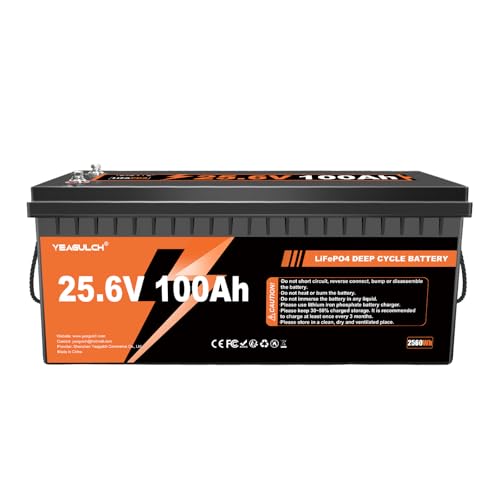
This yeagulch battery follows the same large-capacity path as the dumfume pick, but the listing leans harder into broad recreational use. That makes it a sensible match for RV travelers, marine installs, and solar systems where you want one battery that can sit in a central role instead of acting as a helper pack.
In a truck camper or a weekend boat setup, the 2560Wh figure matters because it points to a familiar 24V storage class with enough reserve for real routine use. The honest read is that it fits best as a main bank, not a casual spare.
Strong Points
- 100Ah capacity gives you a familiar full-size 24V option.
- 2560Wh storage suits cabins, campers, and marine systems.
- 100A BMS supports demanding everyday electrical loads.
- 15000+ cycle claim suggests long-term use potential.
Points To Note
- It’s a larger battery, so space planning matters.
- Best matched to installed systems rather than portable use.
- Cycle claims are useful, but your charging habits still matter.
Core Details
Who Should Grab It
You’re the right match for this battery if you want a main 24V bank for RV, boat, or solar use and don’t want to scale down capacity.
Look Elsewhere When
LiTime B0D94441RH suits you better for trolling motor work, especially where Bluetooth monitoring and a Group 24 profile matter.
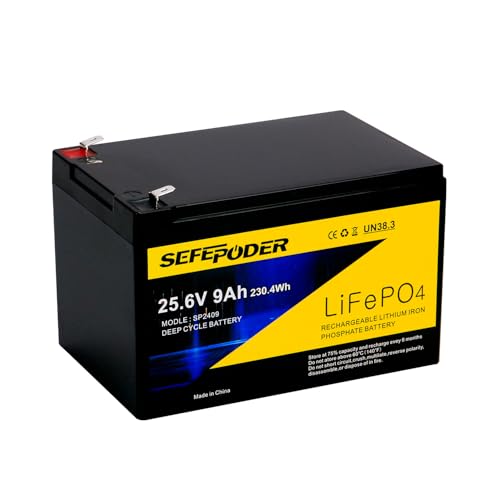
Small-format power changes the use case completely, and that’s what this SEFEPODER pack is for. A 24V 9Ah battery fits much better in scooters, lighting, 24V ride-on toys, and modest UPS units where physical size matters as much as runtime.
Compared with the 100Ah options above, this one is easier to handle and far less overbuilt for light loads. The trade-off is straightforward, you give up long runtime for a compact shell that makes more sense in tight spaces.
Highlights
- 9Ah capacity works well for light-duty 24V equipment.
- 30A BMS fits small power draws without excess bulk.
- 3000+ cycle claim gives a decent long-use signal.
- Lighter handling suits devices that get moved often.
Small Caveats
- It’s not meant for high-load RV or marine roles.
- Runtime will feel short in energy-hungry setups.
- Pairing matters, so matching voltage and load is important.
Details At A Glance
Built With In Mind
You’ll appreciate this battery most in compact machines, basic backup gear, or kids’ ride-on equipment that needs 24V power without extra bulk.
Another Choice May Suit
SEFEPODER B0G4GTNVK2 fits you better when you want the same 9Ah format in a two-pack for matched replacements or a spare on hand.
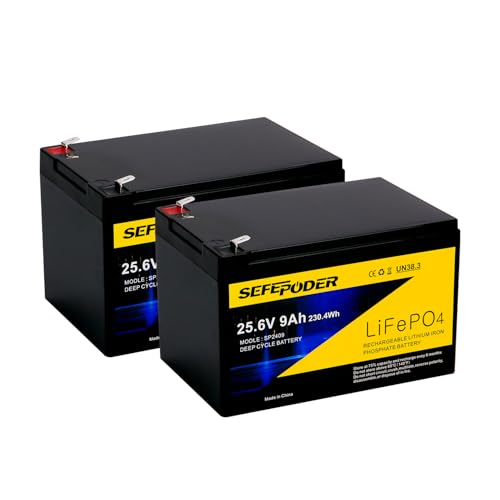
This two-pack version keeps the same compact 24V 9Ah profile as the prior SEFEPODER model, but it gives you a spare unit or a matched pair right away. That helps in home backup setups, toy replacements, and small equipment where having a second battery on the shelf is genuinely useful.
The trade-off is that you’re still working with a light-duty format, so it won’t replace a larger RV bank. For practical household use, though, the twin-pack angle can save a future scramble for a matching replacement.
Upsides
- Two batteries in the same compact 24V 9Ah class.
- Useful for matched replacement projects.
- 30A BMS keeps the pack aimed at light loads.
- Handy for households that like keeping a spare.
Areas To Watch
- The pair still suits smaller devices, not heavy systems.
- Storage space matters less than with larger packs, but it still helps to keep them organized.
- Runtime stays modest compared with the 100Ah batteries above.
Feature Rundown
Whose Shelf It Belongs On
You’ll like this two-pack most if you keep small 24V gear around the house and want a spare without hunting for a second matching unit later.
Reach For A Different Pick When
yeagulch B0FBRM7DT4 is the better fit for larger RV or marine duty, since it gives you a much bigger storage reserve in a single battery.
The LiTime model stands apart because it’s built around trolling motor use, not just generic 24V storage. Group 24 sizing helps with marine fitment, while Bluetooth gives you a clearer view of battery status from the helm or console area.
That mix makes a lot of sense for boat owners who want less guesswork during long sessions on the water. Compared with the bulkier 100Ah units, this one is easier to slot into a marine setup, though its 50Ah capacity naturally gives you less reserve.
Reasons To Buy
- Bluetooth adds useful monitoring convenience.
- Group 24 profile helps with marine fitment.
- IP65 rating supports everyday boat-side exposure.
- 50A BMS suits trolling motor duty.
- 4000+ cycle claim is solid for repeated use.
Worth Noting
- 50Ah is smaller than the 100Ah RV-focused batteries here.
- Bluetooth features add convenience, but they’re not essential for every boat.
- Marine owners still need clean cable routing and dry mounting habits.
Key Specs
Perfect Match For
You’re looking at a strong fit for kayak, boat, or yacht setups where a trolling motor battery needs practical monitoring and tidy fitment.
Where A Sibling Pick Shines
Dyness B0FDGRYGY5 suits you better for larger off-grid banks, especially when you care more about expandable storage than Bluetooth control.
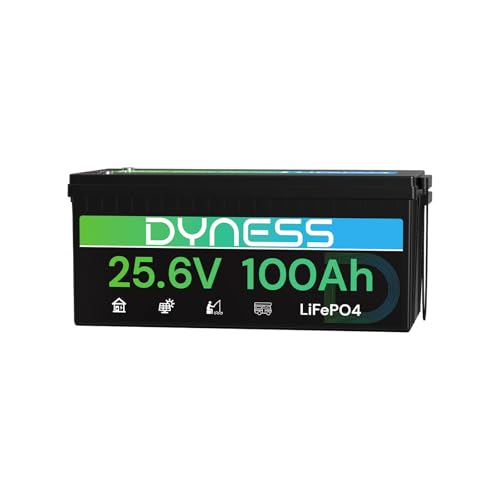
This Dyness battery pushes harder on system flexibility than the earlier full-size picks. With 4P2S support, you can build larger banks, so it suits RV owners or off-grid users who expect their setup to grow instead of staying fixed at one size.
The 100A BMS and low-temperature protection give it the same practical backbone you want in a serious 24V system, but the expansion support is what separates it from the dumfume unit. In a workshop or utility room, that extra headroom can matter as much as raw capacity.
Bright Spots
- 4P2S support opens the door to larger system builds.
- 100Ah capacity keeps it useful as a main bank.
- 100A BMS suits stronger electrical demand.
- Low-temperature protection helps in cooler locations.
- 2560W power figure points to serious system intent.
Trade Offs
- Expansion-friendly gear still needs careful planning.
- It makes most sense in installed systems, not quick swaps.
- Large banks can become cable-heavy, so layout takes thought.
Technical Sheet
The Right Fit
You’ll benefit most from this pick if you’re building a large RV, marine, or solar bank and want room to expand later.
Skip It When
SEFEPODER B0G4GSHJTG makes more sense for compact 24V devices, since it keeps the footprint smaller and easier to handle.
The final Dyness pick keeps the 100Ah, 2560Wh shape but adds a smart BMS, which makes it feel more suited to a careful long-term install. For off-grid cabins or a well-planned solar room, that kind of control often matters as much as raw capacity.
Its 4P2S support also makes it friendlier to future expansion than a basic stand-alone battery. Compared with the earlier Dyness model, this one leans less on output talk and more on steady system management, and that’s a sensible split.
Best Bits
- Smart 100A BMS adds a more managed feel.
- 2560Wh storage supports serious household or off-grid use.
- 4P2S support helps you build a larger bank later.
- 4000+ cycle claim suggests dependable repeat use.
- 10-year lifetime claim is appealing for long planning horizons.
Softer Spots
- The stronger long-life focus makes sense only if you plan to keep it installed for years.
- It still needs the same space and wiring care as any large 24V battery.
- Smart features are useful, but they won’t replace thoughtful system design.
Core Details
Who Will Love This
You’re the best match for this battery if you want a long-view 24V setup for RV, solar, or marine use and care about future expansion.
Where Shoppers Go Wrong
LiTime B0D94441RH is the smarter choice for boat owners who want Bluetooth monitoring and a trolling-motor-first layout instead of a larger stationary bank.
How To Choose The Right 24v Lifepo4 Battery
Size, Capacity, And Real Runtime
Capacity is the first number to check, because it shapes how long your gear can run before the next charge. A 100Ah battery makes sense for RV and solar banks, while a 9Ah pack fits lighter devices such as toys, backup lights, or a small UPS.
Think in actual use, not abstract numbers. A bigger battery can feel like carrying a bigger fuel tank, useful but not always necessary.
BMS Limits And Connection Options
The BMS, or battery management system, is the control layer that helps govern charge and discharge behavior. A 100A BMS works better for higher-draw systems, while a 30A unit is more appropriate for modest equipment.
Connection support matters too, especially for future expansion. A battery that supports 4P2S gives you more room to build a larger bank later, which helps in cabins, boats, and off-grid sheds.
Fitment, Weight, And Installation
Physical size can decide the right purchase faster than chemistry does. Group 24 marine batteries and compact 9Ah packs fit into very different spaces, so measure the tray, box, or compartment before you settle on a model.
Heavier fixed installs reward tidy wiring, safe mounting, and enough room around terminals for service. Portable devices need the opposite, a smaller shell and easier handling.
Environment And Use Case Match
Cold storage areas, damp marine spaces, and sunny RV compartments all ask for different features. Low-temperature protection matters in chilly conditions, while IP65-style enclosure ratings are useful on boats where exposure is part of normal life.
The right battery usually matches the environment first, then the equipment. Once those two line up, the rest of the decision gets much simpler.
Things Worth Knowing First
Common Shopping Slip Ups
Many people focus only on voltage and overlook capacity, which leads to batteries that run out sooner than expected. Another common miss is buying a pack that physically fits the math but not the compartment.
Matching the BMS to the load matters too. A compact 30A pack belongs in light-duty gear, not in a heavy trolling or RV role.
What The Higher Tier Buys
More expensive 24V LiFePO4 options usually bring stronger BMS hardware, larger usable capacity, and better expansion support. You also tend to see helpful touches like Bluetooth monitoring, low-temperature protection, or a smarter control layer.
That extra cost makes sense for systems you plan to keep installed and use often. For a simple toy replacement or a small backup project, the upgrade usually adds more than you need.
Frequently Asked Questions
What does 24V LiFePO4 mean?
It refers to a lithium iron phosphate battery built around a 24V system. That chemistry is popular for RV, marine, solar, and backup uses because it fits recurring charge cycles well.
How do you choose between 9Ah and 100Ah?
9Ah works for light equipment, while 100Ah suits much bigger storage needs. The better choice depends on runtime, physical space, and the load your gear draws.
Why does the BMS matter so much?
The BMS helps manage current flow and system behavior. A stronger BMS rating usually suits larger or more demanding setups.
Is Bluetooth useful in a marine battery?
Bluetooth can make it easier to check battery status from the helm or cabin. It matters most when you like quick visibility without opening up the install.
What should you check before installation?
Measure the battery compartment, verify voltage compatibility, and confirm the current needs of the device. A careful fit check prevents the most common setup headaches.
Closing Thoughts
The right 24v Lifepo4 Battery depends on how much space you have, how hard the load works, and whether the battery stays put or moves often. The large 100Ah picks suit RV and off-grid systems, while the smaller SEFEPODER options are much better for compact gear. LiTime stands out for marine use, and the Dyness models make the strongest case for expandable banks. Pick the one that fits your setup cleanly, and the rest gets easier.