
Faded factory speakers can make even a good commute feel flat, especially when vocals blur and bass turns thin. This roundup focuses on 6×9 3 way speakers that fit everyday driving, weekend road trips, and simple sound upgrades without turning the install into a project that eats your afternoon. You’ll see clear differences in power handling, speaker layout, and value for older systems versus newer head units. The goal is straightforward, help you match the speaker to the car and the kind of listening you actually do.
Quick Look At The Shortlist
Kenwood KFC-6966S 800W Max 6″ x 9″ 3-Way Speakers

PIONEER F-Series TS-F6935R 6″ x 9″ 3-Way Car Speakers
Alpine SXE-6926S 6×9 2-Way Coaxial Speakers

BOSS Audio Systems CH6930B 6 x 9 Car Speakers

Pioneer A-Series Standard TS-A6961F 6″ x 9″ 4-Way Speakers

Pioneer A-Series Plus TS-A6971F 6″ x 9″ 4-Way Speakers

ORION Cobalt CB693 6×9 3-Way Coaxial Car Speakers
More Details On Our Top Picks
Kenwood’s pair fits the sort of replacement job that starts with tired factory sound and ends with cleaner vocals and a firmer low end. The 4 ohm impedance matters because it’s the electrical load the head unit sees, so it can stay friendly to many stock systems without demanding an amp right away. That makes this a steady, low-drama choice for daily drivers.
The trade-off is straightforward: this is not the most feature-packed route in the group, especially beside the Pioneer A-Series options with adaptors and extra driver layers. Still, that simpler design often suits commuters who want dependable output more than tuning experiments. It’s a sensible middle ground for older sedans, hatchbacks, and work cars.
Strong Points
- Three-way layout helps separate bass, mids, and treble more clearly than a basic two-way setup.
- 4 ohm impedance gives it broad compatibility with many factory radios.
- 800W max rating leaves useful headroom on paper for spirited listening.
- Good fit for a daily car where you want clearer speech and less blur at normal volume.
Worth Noting
- The listing leans on power figures, so actual loudness still depends on your head unit and install quality.
- You may want to match the speaker size carefully, since a sloppy fit can create rattles later.
Feature Snapshot
Who It Suits Best
Commuters replacing worn factory speakers in a standard daily driver will get the most out of this pair.
A Better Fit Elsewhere
PIONEER F-Series TS-F6935R suits a shopper who wants a more OEM-style swap with a cleaner factory-first feel.
This Pioneer leans into the factory-replacement lane, which is exactly where many car audio upgrades begin. Its balanced tuning and smoother treble language point to a speaker meant to tidy up stock sound rather than overwhelm it, so it feels practical in a commuter car or family vehicle. Compared with the Kenwood above, it reads as the more OEM-minded route.
That focus helps you keep the install and the listening experience uncomplicated, especially in vehicles where you just want a cleaner voice range and less roughness up top. The trade-off is that its 230W max figure sits lower than some others here, so it makes less sense for a shopper chasing higher-output headroom. For most stock systems, though, that restraint is part of the appeal.
What We Like
- Factory replacement focus makes it easy to picture in a daily-use vehicle.
- Balanced sound profile should suit speech, podcasts, and mixed music well.
- Smoother treble helps keep brighter tracks from sounding harsh.
- High-efficiency design fits the kind of OEM power many stock radios provide.
Points To Note
- It is not the loudest-looking option on paper, so power-hungry setups may outgrow it.
- For heavier bass expectations, you may still want a subwoofer instead of asking the door speakers to do everything.
Core Details
Whose Shelf It Belongs On
Shoppers who want a neat, stock-friendly replacement in a daily commuter should start here.
Another Choice May Suit
Pioneer A-Series Plus TS-A6971F suits a system that needs more headroom and a more ambitious upgrade path.
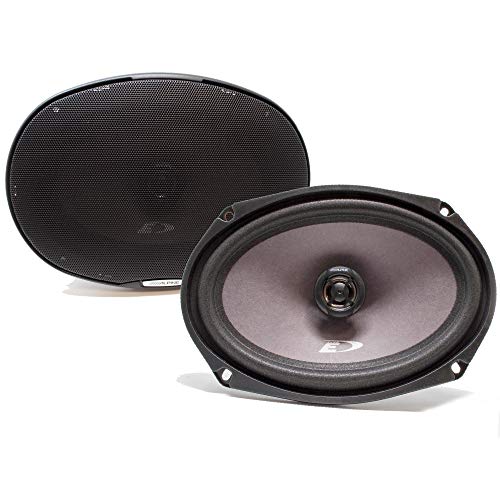
This Alpine stands apart because it is a 2-way coaxial pair, not a 3-way setup like the rest of the shortlist. A coaxial speaker places multiple drivers in one assembly, and a 2-way design usually keeps the sound path simpler, which can suit a straightforward replacement in an older car. The listed 45 watts RMS and 280 watts peak also make it feel more modest than the Pioneer and Kenwood pairs.
That smaller power story is not a drawback for everyone. In a compact sedan, a city runabout, or a car that rarely sees high-volume listening, a simpler speaker can be easier to live with and less likely to ask for extra equipment. Compared with the BOSS and ORION picks, it feels more restrained, which some installs honestly need.
Highlights
- 2-way layout keeps the design simple and easy to understand.
- 45 watts RMS gives a clear, continuous power reference for everyday listening.
- 280 watts peak adds a useful ceiling for brief louder moments.
- Good fit for shoppers who want a steady upgrade without overbuilding the system.
Small Caveats
- It may feel less ambitious than the 3-way and 4-way picks in this roundup.
- The listing gives fewer extra features, so install planning may rest more on your vehicle than on accessory support.
Quick Facts
Best Suited To
Drivers who want a clean, uncomplicated upgrade in a smaller vehicle will get the most from this pair.
Where A Sibling Pick Shines
Kenwood KFC-6966S suits you better when you want a more obviously full-featured 3-way setup.
The BOSS pair keeps the formula simple, which helps explain why it lands in a lot of budget-minded installs. A 3-way setup gives you separate coverage for different parts of the audio range, and that can help spoken content and music feel less crowded than with a very basic replacement. For a work truck, older sedan, or second car, that is often enough.
The honest read is that this sits in the plain-and-useful lane rather than the polished-and-premium one. The 400 watts per pair figure gives you a solid headline number, but it does not guarantee the same refinement you get from the Pioneer A-Series models. Still, plenty of everyday systems only need a sturdy step up, not a full rebuild.
Positives
- 3-way layout gives the speaker a more layered sound structure.
- 400 watts per pair offers a clear spec for modest upgrade plans.
- Good for vehicles where you want a simple replacement, not a complex install.
- Works well as a practical refresh for an aging sound system.
Areas To Watch
- It is more about function than polish, so detail-hungry listeners may want something broader.
- Budget speakers can be more sensitive to a loose fit or tired door trim, so installation care matters.
At A Glance
Right Fit For
Practical drivers who want a low-fuss replacement for an older sound system will feel at home with this pair.
Look Elsewhere When
Pioneer A-Series Standard TS-A6961F makes more sense for a shopper who wants included adaptors and a more complete upgrade package.
This Pioneer moves beyond the three-way crowd by using a 4-way layout, which usually means one more layer of driver separation inside the speaker. The included adaptors matter too, because a small accessory bundle can save you time and guesswork during an install in a tight garage or driveway. Compared with the Kenwood and BOSS entries, this one feels more built around a fuller swap.
The 450W max rating also makes it a stronger fit for shoppers who want a little more room to grow their system later. The trade-off is that extra feature depth often comes with a bit more planning, especially in older cars with unusual mounting needs. That said, for a factory upgrade in a mainstream sedan or crossover, it lands in a very useful sweet spot.
Upsides
- 4-way design gives you another step of driver separation beyond the 3-way picks.
- Included adaptors help smooth out common fitment headaches.
- 450W max leaves more room for future system changes.
- Good match for owners who want a more complete factory replacement package.
Softer Spots
- The more feature-rich setup can be more than a bare-minimum swap needs.
- Accessory support helps, but vehicle-specific trim work still deserves patience.
Details At A Glance
Built With In Mind
Drivers who want a fuller factory upgrade with a little installation help will benefit most from this set.
Swap It Out When
PIONEER F-Series TS-F6935R fits better for a simpler factory-style replacement with less emphasis on extra layers.
The Plus model builds on the Standard Pioneer above, and that higher 600W max figure is the clearest sign that it’s aimed at a more ambitious setup. In plain terms, that extra headroom can make sense in a car where you like the stereo turned up often or plan to pair the speakers with other gear later. It’s still in the same general family, just with more room to grow.
There’s a catch, though, and it’s the usual one with higher-output gear: your system needs to justify it. A basic factory radio may not squeeze everything out of this speaker, so the upgrade story works best in vehicles where you expect more than casual background listening. For that reason, it feels strongest in a well-planned install rather than a rushed weekend swap.
Bright Spots
- 600W max gives the group’s most obvious headroom story.
- 4-way layout supports a more layered presentation than basic factory speakers.
- Good match for drivers who expect to build on the system later.
- Shares the Pioneer upgrade-friendly approach found in the Standard model, but with more ambition.
Room For Improvement
- Extra capacity only matters when the rest of the system can support it.
- For a car that stays at low volume, the Standard Pioneer may be the more sensible spend.
Spec Overview
Perfect Match For
Shoppers planning a more serious car audio refresh will get the most from this pair.
A Better Fit Elsewhere
Kenwood KFC-6966S suits a more modest daily-driver upgrade where you want balance without chasing extra headroom.
ORION takes a more rugged angle than the Pioneer and Alpine entries, and the included grills point to a speaker that expects a busier life inside a vehicle. That makes it appealing for drivers who want something that feels sturdy enough for a work truck, weekend beater, or family car that sees a lot of door traffic. The 3-way layout also helps it stay in the same conversation as the Kenwood and BOSS picks.
Enhanced bass and full-range wording suggest a lively listen rather than a purely polite one, which suits road trips and mixed playlists more than quiet background playback. The honest caveat is that the stronger personality can be a plus or a minus, depending on how much control you want from the front end. Compared with Pioneer’s more polished factory-upgrade feel, this one is the rough-and-ready option.
Best Bits
- 3-way layout gives it the familiar broad coverage many car setups need.
- Included grills add useful physical protection in busier cabins.
- Durable construction language makes it attractive for rougher use cases.
- Enhanced bass focus suits drivers who want a fuller, more energetic sound.
Minor Gripes
- The stronger bass tilt may not suit someone who wants a flatter, more neutral presentation.
- Grills help, but they also add one more part to keep track of during install.
Feature Card
Who Will Love This
Drivers who want a sturdier-feeling speaker pair for daily abuse and louder playlists will appreciate this set.
Reach For A Different Pick When
Pioneer A-Series Standard TS-A6961F fits better for a more polished factory-style upgrade with included adaptors.
How To Choose The Right 6×9 3 Way Speakers
Match The Speaker To Your Factory Power
A 6×9 speaker can look right on paper and still feel wrong in the car. The big question is how much power your head unit can actually give, because a high max rating does not rescue a weak source, and a modest RMS figure can still sound lively in a normal commuter setup.
3-way speakers split the audio into more bands than a basic design, which often helps voices stay cleaner at everyday volume. That matters most in older cars with tired dashboards and road noise, where you want words to stay easy to follow instead of getting buried.
Think About Install Fit Before Sound Hype
Mounting depth, included adaptors, and your door cavity shape matter more than many spec sheets suggest. A speaker that sounds promising but needs awkward trimming can turn a weekend task into a sticky mess, especially in older sedans and trucks with odd factory hardware.
Pioneer’s Standard and Plus models are good examples of why accessories can matter. The included adaptors on the Standard version may save time, while the Plus gives you more headroom but asks for a system that can use it well.
Choose Your Sound Goal Early
Some 6x9s lean toward smoother treble and balanced voices, while others tilt toward stronger bass or a more forceful presentation. For podcast-heavy driving or long highway stretches, a clearer upper range usually helps more than a booming low end.
Kenwood and Pioneer F-Series sit in the calm, practical lane, while ORION leans harder into energy. Alpine is the simplest route in the group, so it makes sense for drivers who want a clean swap without chasing extra layers.
Size The Upgrade To The Car You Own
A work truck, a family hauler, and a weekend project car each ask for something different. A rugged speaker with grills can make sense in a busier cabin, while a factory-style upgrade may feel better in a newer vehicle where you just want the sound to finally match the interior.
The best match is the one that fits your listening habit and your install patience. That’s usually where the disappointment gets avoided.
What To Weigh Before You Choose
Common Shopping Slip Ups
A lot of people focus on wattage alone and miss the rest of the picture. Speaker type, impedance, and physical fit all shape how the system behaves once the panels go back on.
Another common miss is overlooking the car itself. A strong speaker in a noisy cabin can still feel underwhelming, while a modest set in a smaller car may sound perfectly fine.
What The Higher Tier Buys
More expensive models usually spend the extra money on extra driver layers, better accessory support, and more refined tuning. That can matter in a vehicle where you care about separation, smoother highs, or a cleaner transition between bass and vocals.
The upgrade tends to be worth it when your car audio is part of your daily routine, not just background noise. For casual listening, the middle of the pack often makes more sense.
Frequently Asked Questions
Are 6×9 3 way speakers better than 2-way models?
They can give you more separation across the sound range, which often helps music and speech feel clearer. The trade-off is that the install and tuning need to make sense for your car.
Do 6×9 3 way speakers work with factory radios?
Many do, especially models with friendly impedance or high-efficiency designs. The final result still depends on your factory unit’s power and the condition of the door installation.
Is more wattage always better?
No, because wattage only tells part of the story. A well-matched lower-power speaker can sound better in a stock system than a louder model that never gets the support it needs.
Should you pick 3-way or 4-way speakers?
3-way works well for a straightforward upgrade, and 4-way often makes sense when you want a more layered sound profile. The more advanced option usually fits better in a system you plan to build out.
What matters most during installation?
Fit is the big one, followed by secure mounting and sensible wiring. A speaker that sits properly in the opening usually sounds cleaner and rattles less over time.