

Charging an AGM battery asks for a little more care than a plain plug-and-walk-away setup. You want the right voltage, a sensible amperage range, and enough protection features to suit the vehicle or storage battery sitting in your garage, shed, or driveway. The seven picks below cover small maintainer jobs, heavier recovery work, and a few flexible options for mixed battery types. That spread helps you match the charger to daily use instead of guessing from the box.
Quick Look At Our Shortlist

TPE Battery Charger Automatic 6V 12V 1.5A

DEWALT DXAEC100 30 Amp Battery Charger

Huiaipaic 12-Amp Smart Battery Charger

PCHH 12V 24V Car Battery Charger Heavy Duty
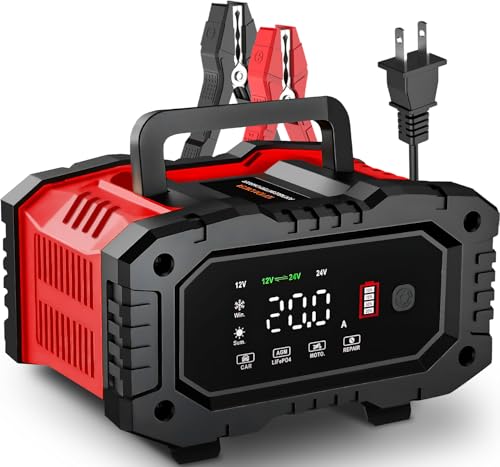
YONHAN Battery Charger 0-15A 12V/24V Adjustable Current

E-FAST 25A Smart Car Battery Charger
More Details On Our Top Picks
That small 1.5A output makes this TPE charger feel more like a steady caretaker than a rush job tool. For a motorcycle in storage, a lawn tractor in the shed, or a backup lead-acid battery that spends most of its life waiting, the gentler pace makes sense.
The 6V and 12V support covers the basics, and the stated fit for AGM, gel, SLA, VRLA, and flooded lead-acid batteries gives you broad compatibility in a compact form. The trade-off is simple, you give up speed and heavy recovery muscle, so this suits maintenance more than rescue work.
Strong Points
- Handles both 6V and 12V batteries.
- Good match for small seasonal vehicles.
- Gentle 1.5A output suits upkeep.
- Works across several lead-acid types.
Small Caveats
- Slow for deeply discharged batteries.
- Not built for large truck banks.
- Best suited to lighter maintenance, not fast turnaround.
Feature Snapshot
Who It Suits Best
Weekend riders and home garage owners with smaller AGM or lead-acid batteries will get the most from it.
Where A Sibling Pick Shines
Huiaipaic 12-Amp Smart Battery Charger suits you better once you need broader voltage flexibility and more speed for mixed vehicle use.
The DEWALT unit stands out for garage owners who want charging, starting, and checking in one box. That 100A engine-start mode gives you a serious push for stubborn vehicle batteries, while the 30A charging mode and 3A maintainer cover different levels of need.
The LCD screen helps you read status at a glance, which is handy in a dim garage or on a busy driveway. It supports 12V AGM, gel, and wet batteries, so it fits a wide slice of cars and marine setups, though it stays tied to 12V systems rather than covering the smaller 6V jobs handled by the TPE pick.
What We Like
- Three-use design, start, charge, maintain.
- LCD display keeps status easy to read.
- Fits AGM, gel, and wet 12V batteries.
- Useful for vehicles that sit idle.
- Good bridge between recovery and upkeep.
Worth Noting
- Only for 12V batteries.
- Bulkier than small maintainers.
- Overkill for tiny seasonal batteries.
Core Details
Built With In Mind
Drivers who keep a full-size vehicle or a boat battery in regular rotation will appreciate the broader toolset.
Skip It When
TPE Battery Charger Automatic 6V 12V 1.5A is the simpler fit for small batteries that only need gentle upkeep.
This Huiaipaic charger sits in the useful middle ground, fast enough for everyday ownership but still broad enough for a mixed garage. You get support for lithium and lead-acid families, including AGM, gel, and SLA, plus pulse repair language that suggests a more involved maintenance routine than a plain maintainer.
The 12V and 24V outputs help it cover cars, boats, motorcycles, and lawn equipment without forcing you into separate chargers for every job. The honest read is that its flexibility matters most for households with several battery types, not for someone who only tops up one scooter battery twice a season.
Upsides
- Supports both 12V and 24V use.
- Fits lithium and common lead-acid chemistries.
- Useful for mixed vehicles and tools.
- Better range than the small TPE unit.
Areas To Watch
- Broader feature set can feel busy.
- More charger than a simple maintainer.
- Less focused than the DEWALT for engine-start work.
Details At A Glance
Who Should Grab It
You get the most from this one when your garage holds both 12V and 24V gear.
Look Elsewhere When
DEWALT DXAEC100 30 Amp Battery Charger is the cleaner fit for anyone who wants engine-start support in a more familiar vehicle-first package.
PCHH leans toward the practical owner who wants one charger for multiple vehicles and seasons. The 0 to 15A automatic range gives you room for light maintenance or a more assertive charge, and the shutoff, repair, and winter mode labels point to a tool meant for routine garage duty.
That kind of flexibility helps in a cold shed, a farm garage, or a driveway where a car, truck, motorcycle, and mower all need attention at different times. Compared with the DEWALT option, it reads more like a broad maintainer than a dedicated jump-start helper, which is exactly why some households will prefer it.
Bright Spots
- Works across 12V and 24V systems.
- Automatic range suits mixed charging needs.
- Winter mode adds seasonal usefulness.
- Repair setting may help with neglected batteries.
Points To Note
- Broader feature set takes more time to learn.
- Heavier-duty format is less pocketable.
- Best for users who want one general-purpose charger.
Quick Facts
The Right Fit
Home mechanics with several vehicles and cold-weather storage needs will get the most from this one.
Another Choice May Suit
Huiaipaic 20-Amp Car Battery Charger is the better pick when you want a faster step up for busier garage routines.
Once you start needing quicker turnaround, the Huiaipaic 20-amp model makes a stronger case than the lighter 12-amp picks. It supports 12V/20A and 24V/10A charging, plus LiFePO4 and lead-acid families, so the same box can serve a truck battery, a motorcycle, or a mower with very different needs.
The 300W fast-charging label tells you where its value sits, in less waiting between jobs. That speed can be welcome in a working garage, though the trade-off is that a higher-output charger asks you to stay a little more attentive to battery size and fit than a compact maintainer would.
Best Bits
- Higher output suits faster turnarounds.
- Works with LiFePO4 and lead-acid.
- Strong range for vehicles and yard gear.
- Good step up from maintenance-only units.
Honest Caveats
- More output means less need for tiny batteries.
- Best value shows up in busy use.
- Not as simple as a small trickle charger.
At A Glance
Made For
You get the most from it in a garage where several batteries cycle through regular use.
Swap It Out When
YONHAN Battery Charger 0-15A 12V/24V Adjustable Current suits you better for softer maintenance and more gradual charging control.
YONHAN takes a middle-road approach that works well for households that don’t want an oversized charger sitting around. The adjustable 0 to 15A current gives you room to slow things down or step up a bit, while the 12V and 24V support keeps it useful across common garage equipment.
Its LiFePO4 support and temperature compensation matter most in spaces where weather swings are part of the routine, such as an unheated workshop or a shed that sees real seasonal changes. Compared with the Huiaipaic 20-amp unit, this one feels a little calmer and more balanced, which is exactly the point.
Reasons To Buy
- Adjustable current gives you more control.
- Supports both 12V and 24V systems.
- Temperature compensation helps in changing conditions.
- Works for LiFePO4 and maintenance jobs.
Minor Gripes
- Less specialized than the heavier DEWALT model.
- Not the fastest route for large batteries.
- Adjustment range may feel broad for casual use.
Technical Sheet
Whose Shelf It Belongs On
You will appreciate it most in a practical garage that needs one dependable middle-ground charger.
Reach For A Different Pick When
PCHH 12V 24V Car Battery Charger Heavy Duty makes more sense for a broader, more rugged maintenance setup.
E-FAST is the most assertive charger in this group, and that shows up in the 25A output and 200-second booster mode. For cars or equipment that need stronger attention, that extra headroom can save time, though it also puts this pick squarely in the hands of people who want more than casual maintenance.
It supports lead-acid, AGM, gel, and LiFePO4 batteries, which keeps it versatile enough for a garage that mixes older and newer gear. Compared with the smaller YONHAN charger, it feels built for harder work, a little like choosing a larger socket set when the simple wrench won’t cut it.
Positives
- 25A output suits faster charging.
- Booster mode helps with tougher starts.
- Supports several common battery chemistries.
- Good fit for larger household garages.
- Works across 12V and 24V systems.
Things To Consider
- More power than many small batteries need.
- Not as simple as a basic maintainer.
- Best value shows up in heavier use.
Spec Overview
Perfect Match For
You suit this pick best when your garage sees frequent charging, bigger batteries, or more demanding recovery work.
Where Another Pick Suits Better
DEWALT DXAEC100 30 Amp Battery Charger is the cleaner fit for someone who wants engine-start support alongside familiar vehicle charging controls.
How To Choose The Right Agm Battery Chargers
Match Voltage And Battery Chemistry First
Voltage is the first filter because 6V and 12V units serve very different jobs, and 24V chargers belong in a different lane altogether. AGM stands for absorbed glass mat, a sealed lead-acid style that usually benefits from controlled charging rather than a rough, one-speed approach.
Compatibility matters just as much as raw power. A charger that lists AGM, gel, SLA, or flooded lead-acid gives you more room to move between a car, mower, boat, or backup battery without juggling different tools.
Pick Output For The Way You Use It
Low-output units around 1.5A suit storage batteries, seasonal vehicles, and slow upkeep, while 12A to 20A models fit busier garages that need faster turnaround. The jump to 25A or 30A starts making sense once you’re dealing with larger batteries or multiple vehicles that sit longer than you’d like.
Higher amperage is not always better. Smaller batteries can be happier with gentler charging, so your real job is matching the charger to battery size and how often you need it.
Look For Controls That Save Time
Auto shutoff, maintainer mode, temperature compensation, and LCD readouts matter because they reduce guesswork. Those features help in a cold garage, a dim shed, or a driveway where you want clear status without babysitting the process.
Repair or desulfation functions can be useful on older batteries that have sat too long, though they are not a cure-all. Treat them as a maintenance aid, not a promise that every tired battery will come back to life.
What To Weigh Before You Click Through
Wrong Turns To Avoid
Many shoppers focus on amperage alone and forget voltage, battery chemistry, or the physical size of the charger. That leads to a mismatch, especially when a compact motorcycle battery and a truck battery sit on the same wishlist.
Another common slip is buying more charger than the job needs. A high-output model can feel excessive for a small scooter battery that only needs a gentle top-up now and then.
The Upgrade Payoff
More expensive chargers usually earn their keep through flexibility, clearer displays, stronger build quality, or added start support. You also tend to get more charging modes, which matters in a garage where different vehicles come and go.
The upgrade makes sense when you maintain several batteries, deal with seasonal storage, or want one tool that can handle recovery and upkeep. For a single battery in steady use, a simpler unit often feels easier to live with.
Frequently Asked Questions
What makes an AGM charger different from a basic battery charger?
An AGM charger is built to work with absorbed glass mat lead-acid batteries, which often prefer more controlled charging. A basic charger may still work, but it usually offers less nuance for sealed battery types.
Can you use one charger for AGM, gel, and flooded batteries?
Many models in this roundup list all three, along with SLA support. That gives you more flexibility for a garage with mixed equipment.
Do higher-amp chargers always charge better?
No, higher amp output only helps when the battery size and use case call for it. Small batteries usually do better with gentler charging.
Is a maintainer enough for a vehicle in storage?
For many stored vehicles, yes, a maintainer is exactly the right level of support. It keeps the battery in a steadier state without demanding constant attention.
What should you check before choosing a charger?
Check voltage first, then battery chemistry, then amperage range. After that, look at extras like LCD status, shutoff behavior, and any repair or booster mode.
Closing Thoughts
The right AGM charger comes down to fit, not flash. Small batteries want gentle output, garage work often needs more flexibility, and heavier-duty setups justify extra amperage or booster support. Once you match voltage and chemistry to the battery on hand, the rest gets easier. Choose the tool that suits your vehicles, your storage habits, and the amount of attention you want to give charging day.