

Keeping a vehicle battery ready for the next drive sounds simple until a car sits for weeks, a motorcycle lives in a garage corner, or a marine battery needs steady attention. That’s where the right tender earns its keep, because the wrong match can be too small, too slow, or just awkward to place. The seven picks below focus on practical fit, from compact maintainers to heavier-duty chargers and handy extension cables. You’ll see which ones suit daily garage use, seasonal storage, and mixed-battery setups.
The Shortlist At A Glance

CRAFTSMAN 12A Car Battery Charger Maintainer 6V/12V
Battery Tender Junior 8V 1.25 AMP Charger and Maintainer 022-0197

Battery Tender 15 AMP Charger and Maintainer 12V 022-0234-DL-WH

Battery Tender 12 Foot Extension SAE Cable 4 Pack 081-0148-12-BG4

Battery Tender 6V/12V 2 AMP Lead Acid and Lithium Charger
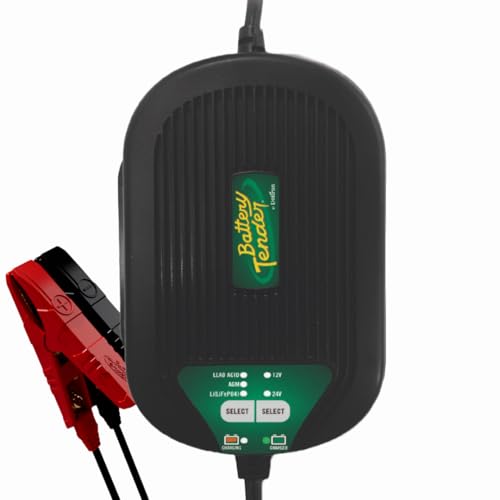
Battery Tender 5 AMP Selectable 12V/24V Charger and Maintainer 022-0258-DL-WH

1.5A 6V/12V Car Battery Charger Trickle Maintainer Desulfator
More Details On Our Top Picks
That 12A output gives you more breathing room than the small maintainers later in this list, especially for a car that sits between errands or a battery that needs more than a gentle top-off. The 6V and 12V coverage keeps it useful across a garage with mixed vehicles, and that kind of flexibility matters more than flashy extras.
The trade-off is size and intent, since a stronger charger is usually less of a set-and-forget toy than an 8V unit. For drivers who want one tool for routine maintenance and occasional recovery work, this feels like the most balanced place to start.
Strong Points
- 12A output suits faster charging needs.
- Works with both 6V and 12V systems.
- Useful for a car, truck, or seasonal vehicle.
- Good match for a busy garage shelf.
Things To Consider
- More charger than a tiny tender for simple storage-only use.
- Bulk can matter in a cramped workbench area.
Core Details
Who It Suits Best
You get the most from this pick if you keep multiple vehicles around and want a charger that can do more than light maintenance.
Swap It Out When
Battery Tender Junior 8V 1.25 AMP Charger and Maintainer 022-0197 suits smaller 8V vehicles better, especially for a simple garage setup.
Compared with the CRAFTSMAN above, this one stays much more focused: 8V vehicles, modest 1.25 AMP output, and automatic behavior that fits simple upkeep. That makes it easier to live with in a small garage, especially for motorcycles or specialty equipment that doesn’t need a heavy charger hanging around.
The honest read is that the narrow voltage range is the point and the limitation at the same time. You’ll appreciate it most when you want a clean, low-drama maintainer for the right battery type, not a multipurpose machine for every vehicle in the driveway.
What We Like
- Automatic operation keeps daily use simple.
- 8V support fills a specific niche well.
- Small footprint suits tight shelves and tool drawers.
- Works neatly for motorcycles and similar equipment.
Points To Note
- Only makes sense for 8V setups.
- 1.25 AMP output is modest, so patience helps.
- Narrower use range than the broader 6V/12V chargers here.
Feature Card
Built With In Mind
You’ll like this most for compact 8V vehicles, motorcycles, and basic storage maintenance in a tidy garage setup.
A Better Fit Elsewhere
Battery Tender 6V/12V 2 AMP Lead Acid and Lithium Charger suits mixed-battery owners better, especially when you need broader compatibility.
Where the Junior leans small and specific, this Battery Tender model feels built for people who want more control over charging pace. The switchable 15 AMP, 8 AMP, and 2 AMP settings give you room to match the battery’s condition, and the LCD display adds a clear readout that helps in a dim garage.
Selectable chemistry support for standard, AGM, and gel batteries makes the unit more adaptable than the simpler options in this roundup. You may find the extra controls worth it if your garage holds a few different 12V setups and you prefer seeing status at a glance rather than guessing.
Highlights
- Three output levels support different charging needs.
- LCD display makes status easier to follow.
- Selectable chemistry adds real setup flexibility.
- Good fit for mixed 12V battery ownership.
- More control than the basic maintenance units here.
Areas To Watch
- Extra settings can feel like more than you need for simple top-offs.
- Best value shows up when you use the display and modes often.
Details At A Glance
Who Should Grab It
You get the most value from this one if you want stronger charging options and handle several 12V batteries at home or in a workshop.
Reach For A Different Pick When
CRAFTSMAN 12A Car Battery Charger Maintainer 6V/12V is the simpler route for anyone who wants broad use without the extra mode selection.
This is the quiet helper in the group, and that matters more than it sounds. A 12.5-foot extension cable can make a garage charger far easier to place, especially when the battery sits deep in a bay, a motorcycle is parked tightly, or your outlet is just a little too far away.
Because this is a four-pack, it fits households with more than one charging spot or more than one vehicle using Battery Tender gear. The trade-off is obvious: it adds reach, not charging power, so it belongs beside a charger rather than standing on its own.
Best Bits
- Extra cable length helps awkward parking setups.
- Quick-connect style simplifies attachment.
- Four-pack format works for multiple vehicles.
- Useful companion to a Battery Tender charger.
Small Caveats
- Doesn’t charge by itself.
- Storage takes more room than a single cable.
- Most useful inside a Battery Tender setup.
Quick Facts
The Right Fit
You’ll value this most when your charger placement is awkward and you want cleaner routing without moving the whole setup.
Where A Sibling Pick Shines
Battery Tender 5 AMP Selectable 12V/24V Charger and Maintainer makes more sense for boat owners who need the charging unit itself to do the heavy lifting.
This one stands out because it bridges two different battery chemistries, lead acid and lithium, while also covering 6V and 12V systems. That sort of range matters in a home with modern gear on one side and older machines on the other, because you avoid juggling separate chargers.
The 2 AMP output keeps it in the maintenance-first lane rather than the quick-recovery lane, so it suits steady upkeep more than urgent rescue work. For mixed garages, that balance makes a lot of sense, though the most demanding charging jobs still belong to stronger units like the CRAFTSMAN or the 15 AMP Battery Tender.
Upsides
- Supports both lead acid and lithium batteries.
- Works with 6V and 12V systems.
- 2 AMP output suits regular maintenance.
- Reduces the need for separate chargers.
Worth Noting
- 2 AMP pace is not built for rapid charging.
- Less aggressive than the higher-output picks here.
Feature Rundown
Whose Shelf It Belongs On
You’ll like this most if your garage mixes older lead acid equipment with lithium-powered gear and you want one maintainer to handle both.
Another Choice May Suit
Battery Tender 15 AMP Charger and Maintainer 12V 022-0234-DL-WH fits better for someone who wants more output control and a display.
Boat owners and watercraft setups are the natural home for this charger, especially because it supports both 12V and 24V systems and offers switchable 5 AMP and 2.5 AMP operation. The screw-mountable design and weather-resistant build point toward a more permanent install than the plug-in chargers earlier in the list.
That makes it a stronger fit for a dockside or onboard setup than a portable garage tender. The trade-off is plain: you’re paying for a more installation-minded unit, so casual users who only need seasonal battery care may prefer something simpler like the Battery Tender 6V/12V 2 AMP charger.
Bright Spots
- Supports both 12V and 24V systems.
- Mountable design works well for marine installs.
- Weather-resistant housing suits harsher environments.
- Switchable output adds useful control.
Honest Caveats
- More specialized than a simple garage charger.
- Mounting setup takes a little planning.
Core Details
Perfect Match For
You’ll appreciate this most in a boat, watercraft, or other fixed setup where the charger stays put.
Look Elsewhere When
CRAFTSMAN 12A Car Battery Charger Maintainer 6V/12V works better for a general-purpose garage where portability matters more than mounting.
This VibeXtr unit leans into versatility without asking for much space or setup effort. The 1.5A output sits above a basic 1A trickle charger, and the mix of charger, maintainer, and desulfator roles makes it handy for a garage that wants one compact tool to cover common battery care jobs.
Overcharge protection and temperature compensation are useful touches for day-to-day ownership, especially in garages that swing hot or cold through the year. The appeal is clear, though the modest output means it suits maintenance and recovery work at a slower pace than the stronger Battery Tender models in this roundup.
Reasons To Buy
- 1.5A output beats very small trickle chargers.
- Works as a charger, maintainer, and desulfator.
- Supports several common battery chemistries.
- Temperature compensation helps with changing garage conditions.
Worth Noting
- Slower than the higher-amp options here.
- Less specialized brand ecosystem than Battery Tender gear.
- Best for routine upkeep, not urgent charging.
At A Glance
Right Fit For
You’ll get the most value from this pick if you want an affordable-feeling maintenance tool for a car, small machine, or seasonal battery.
Where Shoppers Go Wrong
Battery Tender 15 AMP Charger and Maintainer 12V 022-0234-DL-WH is the better path when you need more control, a display, and a stronger charging ceiling.
How To Choose The Right Auto Battery Tenders
Match Output To The Way You Store Vehicles
Output is the first thing worth sorting out, because a tender that’s too gentle can feel slow and one that’s too strong can be more than you need. A 1.25 AMP or 1.5A unit suits maintenance over long stretches, while 2 AMP and 5 AMP options start to feel more useful for regular garage rotation. Higher numbers matter most when you keep a vehicle in service and want less waiting between uses.
Check Voltage And Battery Chemistry
Voltage tells you which systems the charger can serve, and chemistry means the internal battery type it supports. A 6V/12V unit covers a wide slice of cars, toys, and seasonal equipment, while an 8V charger is more specialized and only makes sense for the right machine. Chemistry support matters just as much, since lead acid, AGM, gel, and lithium do not all benefit from the same charging approach.
Think About Placement And Access
A lot of frustration starts with simple placement, not with the charger itself. A long extension cable helps when the outlet sits too far away, while a screw-mountable marine unit makes sense for a boat or watercraft that keeps its charger in one place. For a cramped garage, a compact body and tidy cable routing can matter as much as output.
Pay Attention To Control And Readout
Extra settings are not just decoration. Switchable output levels let you match charging pace to the battery’s condition, and an LCD display can make it easier to understand what the charger is doing without guessing. That matters most for households with more than one vehicle, because a clearer readout cuts down on second-guessing during routine upkeep.
A Quick Reality Check
Wrong Turns To Avoid
A common mistake is buying a charger that matches the vehicle category in name but not in voltage. Another is choosing more output than the job needs, then leaving a simple storage battery tied to a unit that feels unnecessarily bulky. Connection accessories matter too, because a charger that sits across the garage from the vehicle can become annoying fast.
The Upgrade Payoff
Higher-tier models usually cost more because they add charging modes, battery chemistry support, readout screens, or installation-ready hardware. That extra spending makes sense for mixed garages, marine setups, or anyone who switches between vehicle types and wants fewer compromises. For a single seasonal car, a smaller maintainer is often enough, but a multi-vehicle home can justify the added flexibility.
Frequently Asked Questions
What does a battery tender actually do?
A battery tender keeps a battery at a healthy maintenance level instead of letting it sit unused for long stretches. It’s especially useful for seasonal vehicles, weekend cars, and equipment that stays parked.
Can one charger work for both cars and motorcycles?
Yes, as long as the voltage and connector setup match the vehicle. A 6V/12V charger is usually the easier path for mixed garages.
Is a higher amp charger always better?
No, because the right output depends on the battery and how you use it. A lower amp maintainer often makes more sense for long-term storage, while a stronger unit helps in broader garage use.
Why does battery chemistry matter?
Different battery types respond differently to charging behavior. Lead acid, AGM, gel, and lithium all benefit from a charger that matches their chemistry settings.
Do extension cables really help?
They do when the outlet sits far from the vehicle or the battery location is awkward. A longer cable can make the whole setup feel far less cramped.
Closing Thoughts
The best Auto Battery Tenders for 2026 are the ones that fit your actual garage, not just the label on the box. A small 8V maintainer suits specialty gear, a stronger 12V charger helps with mixed vehicles, and a marine mount belongs on boats where fixed installation makes sense. Once you match voltage, output, and placement to your routine, the choice gets easier fast. Pick the model that fits the way your batteries live, and the rest becomes simple.