
Dead batteries are annoying in the exact places you need reliability most, like a garage toy that sits all winter, a motorcycle between weekend rides, or a truck that sees short trips and long rests. The seven picks below focus on automatic charging, maintenance, and the kind of battery care that fits real storage habits. You’ll see simple 12V options, multi-voltage models, and a few stronger chargers for bigger vehicle needs.
The goal is to help you match charging speed, battery type support, and day-to-day convenience without overbuying. Some of these are better for small machines and seasonal storage, while others are built for heavier work and broader compatibility.
Quick Look At Our Shortlist

Suuwer Automatic Trickle Battery Charger 12V 2000mA Battery Maintainer

12V / 6V Battery Trickle Charger Maintainer 1.5A Automatic Smart Float Charger

CRAFTSMAN 12A Car Battery Charger Maintainer 6V/12V CMXCESM258

Haisito 16-Amp Smart Battery Charger 6V/12V/24V Desulfator
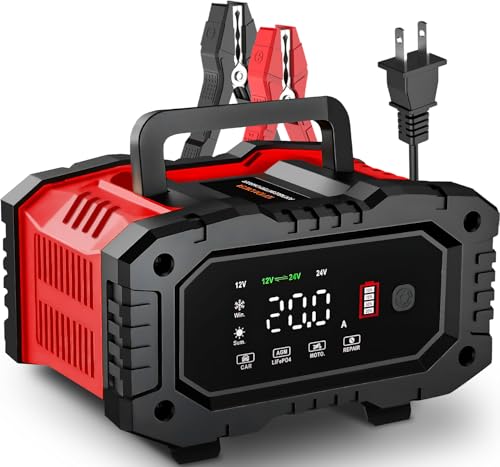
20-Amp Car Battery Charger 12V/20A and 24V/10A Automatic Smart Trickle Charger

3-Pack 1.75A Car Battery Charger 6V and 12V Smart Battery Trickle Charger

Smart Battery Charger Mroinge 5A 6V/12V Automatic Battery Charger Maintainer Desulfator
More Details On Our Top Picks
The Suuwer keeps things simple with a 12V, 2.0-amp pace that suits vehicles parked for stretches, not rapid recovery jobs. The 12-foot DC cable gives you room to reach a battery without parking awkwardly close, which helps in a tight garage or beside a motorcycle stand.
Compared with the more powerful CRAFTSMAN and Haisito picks, this one feels better matched to routine maintenance than speed. You may find it especially useful for an ATV, boat, or seasonal car that needs quiet, automatic upkeep rather than constant attention.
Strong Points
- 2.0-amp output suits steady maintenance.
- Long cable helps in cramped parking spaces.
- Automatic operation reduces day-to-day fuss.
- Works across common 12V vehicle types.
Things To Consider
- Lower output means slower charging than stronger units.
- Best suited to maintenance, not heavy recovery work.
Feature Snapshot
Who It Suits Best
It suits you best if your main need is simple 12V battery maintenance for a car, motorcycle, ATV, or boat that sits between uses.
Where A Sibling Pick Shines
CRAFTSMAN CMXCESM258 fits you better when you want more charging muscle for a busier garage and less patience for slow top-ups.
This Vemote option is built around low-current upkeep, so it fits smaller batteries that spend more time stored than working hard. The 6V and 12V support matters for hobby gear and older equipment, and the 1.5A output keeps the pace gentle rather than aggressive.
Compared with the Suuwer, it gives you broader voltage support but less charging speed. That trade-off makes sense for a lawn mower, motorcycle, or tractor battery that benefits from careful float charging and a small, uncomplicated footprint.
What We Like
- 6V and 12V support adds useful flexibility.
- Gentle 1.5A output suits smaller batteries.
- Float-style maintenance fits seasonal equipment storage.
Small Caveats
- Lower output is not built for quick turnaround.
- Smaller battery use cases make the most sense here.
Core Details
Made For
It suits you best for motorcycles, lawn equipment, or older 6V and 12V batteries that only need slow, careful upkeep.
A Better Fit Elsewhere
Mroinge 5A 6V/12V Automatic Battery Charger Maintainer Desulfator is the stronger choice for you if you want more versatility without moving into the heavier units.
The CRAFTSMAN brings more charging muscle than the first two picks, and that changes its role right away. A 12A charger can be a better match for a garage that sees more frequent use, especially around cars and other 6V or 12V equipment that need faster turnaround.
That stronger output does come with the usual trade-off, since a faster charger can feel like overkill for tiny batteries. For most household garages, though, the mix of speed and straightforward compatibility makes this a practical step up from the smaller maintainer-style units.
Highlights
- 12A output brings noticeably faster charging potential.
- Supports both 6V and 12V batteries.
- Brand familiarity helps some shoppers feel more settled.
- Good fit for regular garage use.
Worth Noting
- More output than you need for tiny batteries.
- Less of a gentle maintainer feel than low-amp picks.
Technical Sheet
Best Suited To
It suits you best if you want a faster charger for garage vehicles, lawn gear, or a battery that needs more than basic maintenance.
Look Elsewhere When
Vemote 12V / 6V Battery Trickle Charger Maintainer 1.5A Automatic Smart Float Charger fits you better for smaller batteries that need a softer touch.
Haisito moves into wider territory with 6V, 12V, and 24V support, so it suits a garage that handles more than one vehicle class. The built-in pulse repair function is aimed at sulfation, a buildup that can hold a battery back over time, so this pick goes beyond simple charging and maintenance.
Compared with the CRAFTSMAN, it adds a broader voltage range and a maintenance angle that may appeal to owners of boats, RVs, and aging lead-acid batteries. The honest read is that it’s not a jump starter, so it belongs in a charging role rather than an emergency rescue kit.
Reasons To Buy
- Supports 6V, 12V, and 24V batteries.
- Pulse repair adds a deeper maintenance layer.
- Good fit for mixed vehicle storage setups.
- Works across several battery chemistries listed by the maker.
Points To Note
- Not meant for instantly waking a fully dead battery.
- More features can mean more reading up front.
Details At A Glance
The Right Fit
It suits you best if your garage includes a boat, RV, or a mix of 24V and lower-voltage batteries that need one charger to cover more ground.
Another Choice May Suit
CRAFTSMAN CMXCESM258 is the simpler match for you if you want a faster 6V and 12V charger without the broader feature set.
This Huiaipaic charger pushes into heavy-use territory with 12V/20A and 24V/10A support, so it’s aimed at bigger batteries and bigger expectations. The 300W fast-charging detail points to a faster turnaround than the smaller maintainer picks, which matters in busy garages or for vehicles that can’t sit around all day.
Compared with Haisito, it stays in the high-output lane but is more direct about fast charging for automotive, truck, motorcycle, lawn mower, and boat use. You may find the higher output unnecessary for small batteries, yet it’s a strong match for equipment that needs a more muscular charger.
Upsides
- High output suits larger batteries well.
- Works with 12V and 24V charging needs.
- Handles several common battery chemistries.
- Useful for trucks and other bigger vehicles.
Areas To Watch
- More charger than many small vehicles need.
- Less suited to slow, set-and-forget upkeep alone.
Feature Rundown
Who Will Love This
It suits you best if your garage includes a truck, boat, or larger battery setup that needs a stronger charger than the typical maintainer.
Where Another Pick Fits Better
Suuwer Automatic Trickle Battery Charger 12V 2000mA Battery Maintainer suits you better if slow storage maintenance matters more than charging speed.
The NEXPEAK set stands out because you get three chargers in one package, which makes sense for a household with multiple vehicles or several storage spots. The 1.75A output keeps each unit in the maintenance lane, and the LCD screen adds a quick read on charging status without making the setup feel complicated.
Compared with the single-unit picks above, this is more about coverage than raw power. That trade-off works well for cars, boats, and motorcycles that need a shared solution, though a single stronger charger still makes more sense for one large battery that needs quicker charging.
Best Bits
- Three chargers in one package.
- LCD screen gives clear status feedback.
- 6V and 12V support adds flexibility.
- Good match for multiple parked vehicles.
Honest Caveats
- Each charger is modest in output.
- Better for maintenance than faster charging demands.
Core Details
Whose Shelf It Belongs On
It suits you best if you want a shared charging setup for several 6V or 12V batteries across cars, bikes, or boats.
Swap It Out When
Huiaipaic 20-Amp Car Battery Charger 12V/20A and 24V/10A Automatic Smart Trickle Charger fits you better for one large battery that needs more power.
Mroinge lands in a useful middle ground, since 5A gives you more pace than the tiny maintainer units without jumping all the way to the heavy-duty class. Its charging modes cover lead-acid batteries at 6V and 12V, plus a 12V fast-lithium mode for LiFePO4 batteries, so it serves mixed garages with less fuss.
Compared with the NEXPEAK three-pack, this is less about quantity and more about one flexible charger doing a lot of jobs. The integrated charger, maintainer, trickle charger, and desulfator setup makes sense for anyone who wants a single unit for cars, SUVs, or trucks, though the mode list takes a little more attention the first time through.
Positives
- 5A output gives a useful middle-speed charge.
- Multiple modes widen compatibility.
- Combines charging, maintenance, and desulfation roles.
- Good fit for mixed vehicle ownership.
Minor Gripes
- More mode choices mean a bit more setup attention.
- Single-unit value depends on whether you need lithium support.
At A Glance
Built With In Mind
It suits you best if you want one charger for a mix of lead-acid and LiFePO4 batteries across cars, SUVs, and trucks.
Reach For A Different Pick When
Suuwer Automatic Trickle Battery Charger 12V 2000mA Battery Maintainer fits you better for simple, low-amp storage upkeep.
How To Choose The Right Automatic Battery Charger Maintainers
Match Output To The Battery’s Job
Charging output tells you how much current the unit can deliver, and that matters more than most people expect. A 1.5A or 2A maintainer suits seasonal storage and smaller batteries, while 5A, 12A, or 20A options make more sense for larger vehicle batteries and faster turnaround.
The trade-off is simple: higher output usually means less patience, but it can be too much for tiny batteries that spend months parked. For motorcycles, lawn equipment, and weekend cars, gentler units often feel easier to live with.
Check Voltage Support Before Anything Else
Voltage is the first filter that keeps a short list from turning into a mismatch. Many household picks focus on 6V and 12V, while broader models add 24V for trucks, RVs, and more demanding setups.
Mixed garages benefit from multi-voltage chargers because one box covers more ground. That said, a simpler 12V maintainer can still be the smarter choice for a single motorcycle or car that never leaves that range.
Look Past Charging And Read The Modes
Some units only maintain, while others add float charging, desulfation, or lithium support. Float charging keeps a battery near storage charge without constant attention, and desulfation aims at buildup on lead-acid plates, which matters for older batteries that sit for long stretches.
The extra modes help, but they also add setup decisions. You’ll be happier with a straightforward charger if you want a plug-in routine, while mode-rich units fit garages with several battery types and a little more willingness to read the label.
Think About The Space Around You
Cable length, screen visibility, and storage size matter in real garages. A 12-foot lead helps when the outlet sits far from the vehicle, and an LCD screen makes it easier to confirm status without guesswork.
That kind of convenience matters most in cramped sheds, shared driveways, and packed workspaces. A compact unit can be enough, but a longer cable and clear display often save frustration later.
Things Worth Knowing First
Common Shopping Slip Ups
Many people focus on amperage alone and miss voltage compatibility. That’s how a charger ends up too small for the job, or simply wrong for the battery sitting in the garage.
Another common miss is overlooking battery chemistry. Lead-acid, AGM, Gel, SLA, and LiFePO4 do not all want the same charging behavior, so the label deserves a close read.
The Upgrade Payoff
Higher-tier units usually bring broader voltage support, faster charging, and more battery modes. You’re also paying for extras like desulfation, clearer displays, or tighter control over how the charger behaves.
That upgrade makes sense for multi-vehicle households, RV storage, or older batteries that need more than a basic trickle. A simpler maintainer still fits just fine for one motorcycle or a car that sits part of the week.
Frequently Asked Questions
What does a battery maintainer actually do?
A maintainer keeps a battery near its storage charge after it’s already filled. It’s designed for parked vehicles and seasonal equipment, not emergency rescue.
Can one charger work with both 6V and 12V batteries?
Yes, several of the picks here support both voltages. That makes them useful for mixed garages with older equipment and newer vehicles.
What is desulfation in simple terms?
Desulfation is a charging mode aimed at buildup on lead-acid battery plates. It’s most relevant for batteries that have sat unused for long stretches.
Is a higher amp charger always better?
No, higher output is only better when the battery and use case call for it. Small batteries often do better with gentler charging.
Do you need lithium support for every garage?
No, only the batteries you own decide that. Lithium support matters mainly for LiFePO4 setups, while many garages never need it.
Closing Thoughts
The right automatic battery charger maintainer feels less like a gadget and more like insurance for your parked equipment. For a simple garage, the smaller Suuwer or Vemote options keep things calm and easy. For heavier use, the CRAFTSMAN, Haisito, or Huiaipaic models bring more pace and broader coverage. Match the charger to the battery, not the other way around, and you’ll usually end up with the calmer, more useful choice.