
Boat audio has a rougher life than car audio, so you want a stereo that can handle spray, sun, vibration, and the kind of daily handling that happens on docks and open decks. This roundup focuses on Bluetooth Marine Stereos that make sense for a runabout, pontoon, golf cart, or mixed-use setup where easy streaming matters more than flashy extras.
You’ll see compact single-DIN receivers, gauge-style units, and a speaker bundle, because the right choice depends on your dash space and how much of the system you still need to build. The goal is simple, get sound that feels at home in a wet, bumpy environment without making installation a headache.
The Shortlist At A Glance

Sony DSXM55BT Bluetooth Marine Digital Media Stereo
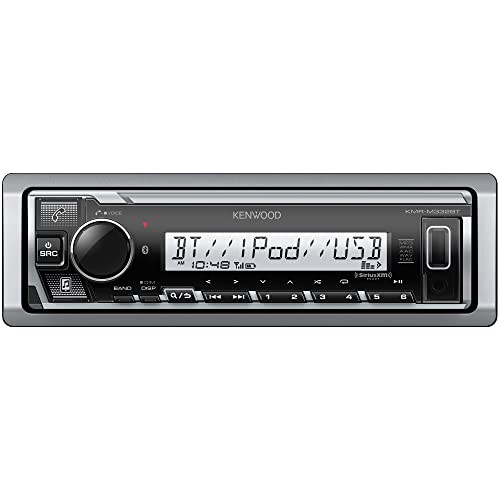
KENWOOD KMR-M332BT Car & Marine Stereo

Kicker 46KMC2 Weather-Resistant Gauge-Style Media Center
Boat Marine Stereo Receiver Bluetooth GR304

Pyle Marine Radio Single DIN Receiver

BOSS Audio Systems MCK632WB.6 Marine Bluetooth Stereo

Pioneer MVH-S110BT 1-Din Digital Media Car Stereo
More Details On Our Top Picks
Sony’s single-DIN layout suits boats where you want a familiar dash shape and a clean, no-fuss media receiver. The SiriusXM-ready note matters for long idle time at the dock or a lot of open-water cruising, because you can keep the setup flexible without crowding the faceplate.
Compared with the KENWOOD below, this one reads as the steadier, simpler choice rather than the feature-heavy one. It fits best in a cabin or helm area where straightforward controls matter more than a long list of inputs.
Strong Points
- Single-DIN sizing keeps installation familiar in many dash openings.
- Bluetooth support makes wireless streaming simple during casual outings.
- SiriusXM readiness gives you room to expand the setup later.
- The media-receiver format suits phones and streaming more than disc use.
Points To Note
- The feature set leans practical, so it may feel plain next to flashier units.
- Owners who want built-in speaker bundles will need to source those separately.
Feature Snapshot
Who It Suits Best
Boat owners who want a familiar in-dash layout and mostly stream from a phone will feel at home with this one.
Skip It When
KENWOOD KMR-M332BT Car & Marine Stereo suits you better when you want more source choices and a busier feature set.
This KENWOOD brings a broader mix of sources, which helps when the boat sees both phone streaming and old-school radio listening. Weatherproofing plus multicolor illumination also makes it easier to match a cockpit that’s already doing double duty as a day boat and a night cruiser.
Compared with Sony’s cleaner, simpler setup, this one feels more flexible right out of the gate. The trade-off is that more options also mean more controls to learn, so casual users may take a little longer to settle in.
Upsides
- Bluetooth, USB, AUX, and AM/FM coverage give you plenty of source options.
- Weatherproof construction fits marine use better than a standard car deck.
- Multicolor illumination helps the unit blend with different helm lighting.
- SiriusXM-ready support adds another listening path for longer outings.
- Single-DIN sizing keeps it practical for many retrofit jobs.
Softer Spots
- Extra inputs can make setup feel busier than a minimalist receiver.
- Lighted controls look useful at night, but they can feel busy in a very clean dash.
Feature Rundown
Made For
Boat owners who want several input options in one dash unit will get a lot of use from this model.
A Better Fit Elsewhere
Pioneer MVH-S110BT 1-Din Digital Media Car Stereo suits a cleaner, more stripped-back setup with fewer distractions.
Open helms and compact dashes tend to favor gauge-style gear, and that’s where the Kicker 46KMC2 makes immediate sense. The round mount format keeps the face centered and easy to reach, which matters when your helm already feels crowded.
It also stands apart from the Sony and KENWOOD units by leaning into a more purpose-built marine layout instead of a standard car-stereo shape. The readable screen and rotary encoder help when you want quick control with fewer tiny buttons, though that style may not suit everyone.
Highlights
- Gauge-style format fits open helm panels neatly.
- Rotary encoder gives you a simple way to move through settings.
- Easy-to-read screen helps in bright outdoor conditions.
- Over 200 watts of total peak power across four channels supports a fuller cockpit system.
Room For Improvement
- The round form factor won’t suit every dash cutout.
- Shoppers wanting a traditional rectangle faceplate may prefer a single-DIN unit instead.
- The more specialized layout can make replacement planning a little less flexible.
At A Glance
The Right Fit
Owners with open helms or limited dash real estate will appreciate the compact, marine-first shape.
Another Choice May Suit
KENWOOD KMR-M332BT Car & Marine Stereo fits better for a more traditional rectangular dash opening.
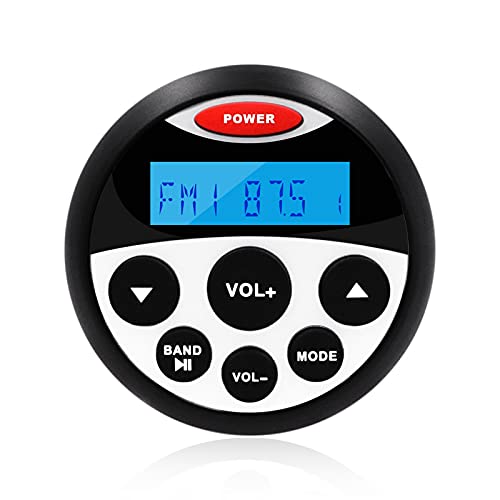
The GR304 reads like a utility-first stereo for boats, golf carts, ATVs, UTVs, and even spa-style installs. That broad fit can be handy for a mixed-property setup, where you want one source unit style to cover more than a single craft.
Compared with the Kicker, this one feels less specialized and more adaptable across different vehicles or recreational spaces. The 45 x 4 watt layout is enough to matter in a small-to-mid system, but you’ll want realistic expectations about how much speaker system you’re pairing around it.
Best Bits
- Works across several vehicle and leisure setups.
- AM/FM support keeps local radio in the mix.
- Bluetooth streaming handles phone playback without a cable.
- Waterproof gauge format suits harsher outdoor environments.
Small Caveats
- The flexible use case is useful, though it can also make the product feel less specialized for one exact boat layout.
- Installation planning matters, especially on tighter dashes with limited access behind the panel.
Details At A Glance
Whose Shelf It Belongs On
People setting up a boat, cart, or hot tub area from the same family of gear will get the most from this model.
Where A Sibling Pick Shines
Kicker 46KMC2 Weather-Resistant Gauge-Style Media Center is the cleaner fit for a dedicated helm-focused installation.
Pyle leans into the kinds of features many casual boat owners actually use, Bluetooth streaming, AM/FM, USB, AUX, and hands-free calling support. That spread makes it easy to keep the setup useful whether you’re heading out for a quick afternoon ride or leaving the boat docked for family outings.
Compared with the more specialized Kicker and the tighter-focused Sony, this one aims for a comfortable middle ground. The RGB buttons and remote control add convenience, though splash-resistant gear still benefits from sensible placement and a little care during cleaning.
Bright Spots
- Multiple audio sources cover most day-to-day listening habits.
- Hands-free calling support adds practical use beyond music.
- Remote control can be useful in a larger cockpit.
- RGB buttons help the faceplate stand out at night.
- Splash-resistant design suits damp environments better than a standard car stereo.
Honest Caveats
- The wider feature mix is handy, though it can feel busy for someone who wants a very simple deck.
- Splash-resistant construction still asks for basic care around washdowns and storage.
Quick Facts
Best Suited To
Casual boat owners who want a broad feature mix without jumping to a full system build should feel comfortable here.
Reach For A Different Pick When
Sony DSXM55BT Bluetooth Marine Digital Media Stereo suits you better when a cleaner, more restrained dash is the goal.
This BOSS bundle stands out because it includes 6.5-inch speakers, so you’re not only replacing the receiver, you’re also filling out part of the system in one move. That can be a smart route for a boat that still needs a matched starting point rather than a piecemeal upgrade.
Compared with the single-unit Sony, KENWOOD, and Pioneer models, this package is more about getting the deck and speakers sorted together. The detachable front panel and multicolor lighting are nice touches, though bundle installs usually reward a little extra planning around wiring and mounting depth.
Reasons To Buy
- Receiver and 6.5-inch speakers come together in one package.
- USB and aux inputs broaden day-to-day playback choices.
- Detachable front panel adds a useful layer of convenience.
- 50 x 4 power rating gives the system a solid base.
- Dipole antenna is included, which helps simplify the shopping list.
Areas To Watch
- Bundle installation takes more time than dropping in a head unit alone.
- The included speakers help a lot, though larger boats may still want a more expansive audio plan.
Core Details
Who Should Grab It
Boat owners who need both a stereo and speakers in one go will find this bundle especially practical.
Swap It Out When
Pioneer MVH-S110BT 1-Din Digital Media Car Stereo fits better for a simpler head-unit-only upgrade.
Pioneer keeps this one lean, which is useful in a tight dash where every bit of space matters. The USB input, AM/FM radio, and Bluetooth support cover the main listening habits without turning the faceplate into a control maze.
Compared with the BOSS bundle, this is the cleaner route for anyone who already has speakers in place or plans to build the system in stages. It also feels more pared back than the KENWOOD, and that restraint can be a real advantage in a compact helm or a small utility boat.
Plus Points
- Compact body works well in tight openings.
- Bluetooth, USB, and AM/FM cover core listening needs.
- 50 x 4 output gives you a familiar power level for small systems.
- Front and subwoofer RCA outputs support future system growth.
- iPhone and Android compatibility helps everyday phone use feel straightforward.
Worth Noting
- The lean layout is practical, though it leaves out the extra source variety some owners want.
- Anyone building from scratch will still need to plan for speakers and other supporting parts.
Spec Overview
Right Fit For
Owners with tight dash space and a simple audio plan will get the most out of this Pioneer.
Look Elsewhere When
BOSS Audio Systems MCK632WB.6 Marine Bluetooth Stereo suits you better when you want speakers included from day one.
How To Choose The Right Bluetooth Marine Stereos
Match The Stereo To The Dash
Single-DIN receivers fit many standard openings and usually make replacement jobs easier. Gauge-style units work better in open helms or round pods, especially when the console already has a compact marine layout.
That shape choice matters more than people expect, because a clean install often matters as much as the feature list. A stereo that fits neatly tends to hold up better in daily use simply because it’s less awkward to operate and protect.
Think About How You Listen
Bluetooth is the common thread here, but the rest of the source mix changes the experience a lot. USB and AUX inputs help when you keep offline playlists or family devices on board, while AM/FM still matters for casual dockside listening.
Satellite readiness matters for longer cruises, and bundled speaker systems make sense when the boat still needs a full sound setup. A stripped-down unit suits a boat that already has speakers, while a bundle is better when you want fewer separate purchases.
Look At Controls And Visibility
Bright sunlight, wet hands, and a moving deck make the control layout more important than it sounds. A rotary encoder, readable display, or clear button grouping can save you a lot of annoyance during a quick channel change.
Lighting also plays a role after dark, but it should help rather than distract. Multicolor illumination is nice in a custom cockpit, though a very clean helm may look better with a simpler faceplate.
Plan For The Whole System
Power ratings tell part of the story, but speaker count, mounting depth, and output connections shape how the system feels once it’s installed. A 50 x 4 or 45 x 4 unit is usually a solid starting point for compact marine setups.
For larger boats, you may want front and subwoofer outputs or a package that includes speakers. That’s where upgrade-tier models tend to cost more, because they reduce the number of separate parts you still need to source.
What To Weigh Before You Buy
Wrong Turns To Avoid
Don’t pick a unit only because the feature list looks long. A cockpit with limited space needs a receiver that fits cleanly, and a boat that already has speakers doesn’t need a bundle that repeats gear you own.
It’s also easy to overlook visibility. A tiny display or crowded button row can feel fine on paper, then become annoying once you’re trying to make quick changes on the water.
The Upgrade Payoff
Higher-tier models often cost more because they handle more of the system in one box. Better faceplate layouts, extra source inputs, included speakers, and marine-minded controls all add convenience.
That extra spend makes sense for a boat that gets frequent use or for a cockpit where you want fewer loose ends. For an occasional weekend setup, a simpler receiver can be the smarter place to land.
Frequently Asked Questions
What makes a marine stereo different from a car stereo?
Marine units are built with wetter, brighter, more exposed use in mind. They’re a better fit for boats, open consoles, and other outdoor setups than a standard car deck.
Do you need Bluetooth on a boat stereo?
Bluetooth makes phone playback much easier, especially on short outings and family trips. It’s also useful when you want quick access to playlists without running extra cables across the helm.
Is a gauge-style receiver worth choosing?
Gauge-style receivers make sense in round pods or crowded open helms. They feel less universal than a rectangular deck, but the fit can be cleaner and more natural.
Should you pick a bundle or just the head unit?
A bundle helps when your boat still needs speakers and you want a matched starting point. A head unit alone works better when the speakers are already in place or you plan to add them later.
What specs matter most for a small boat?
Mount style, source options, and output power matter most in a small setup. A compact receiver with Bluetooth, AM/FM, and a sensible layout usually keeps things simple.