
Your car audio upgrade starts making sense once you know where factory speakers fall short. These 6 5 Component Speakers suit daily commuting, weekend road trips, and builds where you want cleaner separation between vocals, highs, and midrange detail. The right set can make a crowded cabin feel less muddy and a long drive feel less tiring. The trade-off is simple, though, some sets lean toward easy fitment, while others ask more from your amp and installation time.
The Shortlist At A Glance

ORION Cobalt CM654 High Efficiency 6.5″ Mid-Range Bullet Loudspeakers
Rockford Fosgate Prime R165-S 6.5″ 2-Way Component Speaker System
Skar Audio TX65C 6.5″ 2-Way Elite Component Speaker System

DS18 PRO-GM6.4PK Mid and High Complete Package

MB Quart FSB216 Formula Component Speaker System
CT Sounds Meso 6.5″ 320 Watt 2-Way Premium Component Car Speaker Set
Alpine SXE-1751S Component System 6 1/2″ 2-Way Component Speakers
More Details On Our Top Picks
ORION’s Cobalt CM654 leans hard into midrange presence, so it makes sense in builds that need voices and guitar lines to cut through road noise. The 1.5-inch voice coil, which is the wound copper assembly that helps drive the speaker, points toward serious output handling, while the 4-ohm load keeps it in familiar car-audio territory.
That kind of setup fits loud systems, open-air rides, and trucks where you want direct sound rather than soft background fill. The trade-off is obvious, though, it’s more specialized than the Rockford Fosgate or Alpine picks, so a simple factory-style refresh may feel like overkill.
Strong Points
- High-efficiency design suits systems that need strong projection without sounding strained at normal listening levels.
- 250-watt RMS handling gives you a useful real-world comfort zone for amplified setups.
- The bullet-style midrange approach helps dialogue and lead instruments stay intelligible in noisy cabins.
- 4-ohm impedance makes it easier to match with many common car audio amplifiers.
Things To Consider
- Midrange focus means you still need other speakers or tweeters for a full front-stage balance.
- The sound profile suits loud, direct playback more than gentle, all-purpose listening.
- Owners commonly pair this style with careful tuning, so setup time matters.
Feature Rundown
Who It Suits Best
You’ll like this most in a loud daily driver, a show setup, or a build where midrange punch matters more than gentle tonal balance.
A Better Fit Elsewhere
Rockford Fosgate Prime R165-S suits a first-time upgrader who wants a more conventional component layout and less tuning fuss.
Rockford Fosgate keeps this one practical, with woofers, grilles, tweeters, and integrated crossovers in the box. A crossover is the small network that splits frequencies between drivers, so you get a cleaner handoff between lows and highs without extra guesswork.
That makes it a very sensible choice for a daily car, especially when you want a cleaner front stage without turning the install into a weekend project. Compared with ORION’s more aggressive midrange focus, this one feels easier to live with and less specialized.
What We Like
- Complete component layout gives you the main parts needed for a front-stage upgrade.
- Integrated crossovers reduce setup complexity for a cleaner install path.
- Included grilles help with a tidier finish in visible door locations.
- Balanced design suits music, podcasts, and everyday commuting without sounding overly specific.
Room For Improvement
- The package is straightforward rather than flashy, so bass-focused shoppers may want more support elsewhere.
- Component installs still take patience, especially with door access and wire routing.
Core Details
Made For
This fits you well if you want a clean, conventional component swap and prefer a setup that feels familiar rather than experimental.
Another Choice May Suit
CT Sounds Meso 6.5″ 320 Watt 2-Way Premium Component Car Speaker Set suits a more ambitious system where stronger output handling matters more.
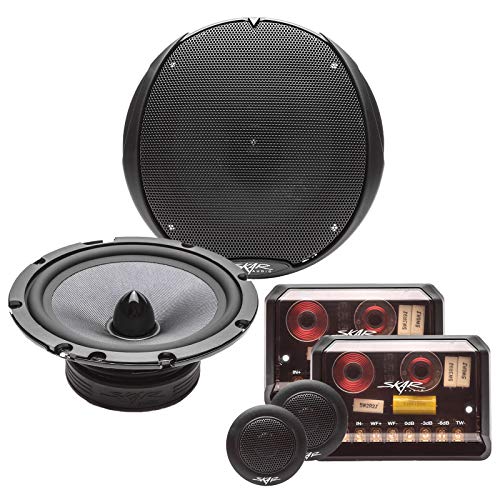
Skar Audio’s TX65C has the kind of straightforward component layout that makes sense for a cost-conscious upgrade path. You get a 2-way design, which means the woofer and tweeter divide the job instead of asking one driver to handle everything.
That matters in a daily car because it helps the front stage sound less congested, especially at highway speed. Compared with the Rockford Fosgate set, this one feels aimed a little more at the shopper who wants a stronger feature set without drifting into the pricier tier.
Highlights
- Two-way component layout improves frequency separation over simple full-range replacements.
- Set-of-two packaging suits a standard front pair installation.
- Good fit for a balanced upgrade where you want more control than a basic coaxial swap.
- The system is easy to map into a common front-channel build.
Softer Spots
- The package leaves the rest of the system up to you, so tuning still matters.
- Owners often need extra installation care with component layouts, especially in tight doors.
At A Glance
Best Suited To
You’ll get the most from this in a standard front-door upgrade where you want sensible parts and a clear path to better sound.
Where A Sibling Pick Shines
MB Quart FSB216 Formula Component Speaker System fits you better if you prefer a more polished crossover-first setup.
DS18 builds this as a mid-and-high package, so the focus is on presence and volume rather than polite background listening. The aluminum super bullet tweeter, a compact high-frequency driver, is the part that pushes treble energy forward in a very direct way.
That works well in a truck, show car, or custom stereo where you want the sound to announce itself quickly. The flip side is that this is less subtle than the Alpine or MB Quart options, so it’s not the one to reach for in a quiet commuter build.
Best Bits
- Midrange plus bullet tweeter layout creates a strong forward sound signature.
- Complete package format helps with planning a matched mid-and-high section.
- Suited to louder systems where presence matters more than softness.
- Works naturally in custom installs that need a more assertive front stage.
Points To Note
- The sound character is assertive, so it won’t suit every cabin or playlist.
- Custom audio installs can take more time than a simple swap-in door speaker job.
- For everyday low-volume listening, the presentation may feel a bit much.
Details At A Glance
Who Will Love This
This is a smart fit for custom stereo builders and truck owners who want a louder, more vivid front stage.
Skip It When
Alpine SXE-1751S suits a calmer daily commute where easygoing sound and simpler expectations matter more.
MB Quart takes a tidier route here, with an external crossover and a 4-ohm design that slot neatly into many standard car audio layouts. An external crossover sits outside the speaker itself, which can make signal routing easier to manage in a careful install.
That sort of layout tends to appeal to shoppers who value a clean front stage and a more organized build. Compared with the louder-leaning DS18 package, this one feels more measured and more suited to an OEM-plus style upgrade.
Bright Spots
- External crossover layout gives you a more deliberate component arrangement.
- 4-ohm impedance keeps it in a familiar range for many car audio systems.
- Black finish helps it blend into darker interior trims.
- Good fit for clean installs where layout matters as much as output.
Minor Gripes
- Installed neatly, it rewards patience more than speed.
- The 70-watt figure suggests a more modest role than the louder systems in this roundup.
Spec Overview
Right Fit For
You’ll appreciate this most in a clean, understated install where you want the cabin to look as tidy as it sounds.
Look Elsewhere When
ORION Cobalt CM654 makes more sense for a louder build that puts midrange impact ahead of neatness.
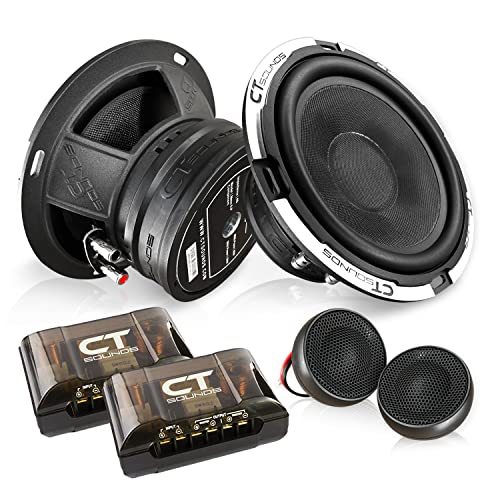
CT Sounds positions the Meso set as a stronger-output component option, and the 320-watt figure signals that clearly. That kind of headroom matters in systems that stay loud for long highway runs or in builds where you expect the speakers to keep composure as volume climbs.
Compared with Skar’s TX65C, this one reads as a more ambitious step up for people who know they want extra reserve. The honest read is that it suits a tuned setup better than a casual plug-and-play refresh.
Upsides
- 320-watt rating gives the set a strong performance-oriented profile.
- Two-way component design supports better driver separation up front.
- Good match for louder systems that still need controlled front-stage output.
- Useful choice for enthusiasts planning a more serious amplifier pairing.
Areas To Watch
- The stronger power profile makes amp matching more important.
- You’ll want to plan the install carefully so the system reaches its potential.
Key Specs
Built With In Mind
This is a strong match for enthusiasts who want more headroom and plan to build around a proper amp.
Swap It Out When
Rockford Fosgate Prime R165-S suits a simpler daily-driver upgrade where convenience matters more than output ambition.
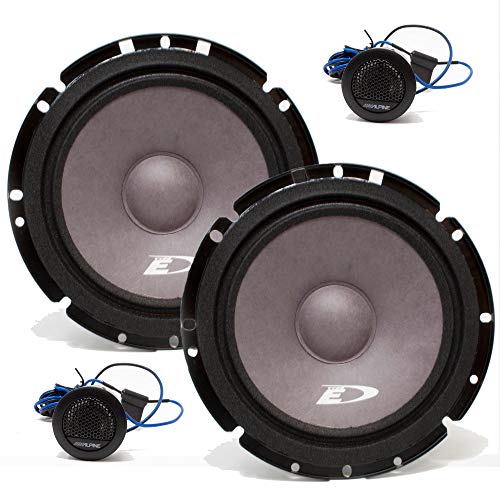
Alpine keeps this one easy to understand, with a 6 1/2-inch 2-way layout that fits the kind of everyday upgrade most people actually finish. The 45-watt RMS rating, which reflects continuous power handling, makes the speaker feel like a sensible match for modest factory or aftermarket amplification.
That’s a nice contrast to CT Sounds’ more ambitious Meso set, and it makes this Alpine a calmer choice for daily commuting. You may find it especially comfortable in a system where you want dependable clarity without turning the front stage into a project.
Positives
- Simple 2-way layout keeps the upgrade path easy to follow.
- 45-watt RMS rating fits modest amplification well.
- 6 1/2-inch size works in many common door applications.
- Good everyday balance for commuters and family vehicles.
Worth Noting
- The power profile is more restrained than the louder sets here.
- Shoppers chasing dramatic front-stage output will likely want a more assertive option.
Feature Card
Whose Shelf It Belongs On
This fits you well when you want a dependable, low-drama component set for everyday driving.
Where Another Pick Suits Better
DS18 PRO-GM6.4PK Mid and High Complete Package suits a louder custom system where presence matters more than restraint.
How To Choose The Right 6 5 Component Speakers
Match The Speaker Style To The Cabin
Start with how you use the vehicle. A quiet commuter benefits from a more balanced 2-way component set, while a truck with road noise can justify a louder midrange-forward option like ORION or DS18. The cabin shape matters too, because larger doors and noisier interiors can swallow detail faster than you expect.
Component speakers split the drivers, usually with a woofer and tweeter working together. That separation helps placement, but it also means your install has more parts to route and mount. In a cramped door panel, a simpler layout often feels more realistic than a showy one.
Check Power Handling And Impedance
Power handling tells you how much amplifier output a speaker can tolerate in normal use, while impedance is the electrical load your amp sees, often 4 ohms in this roundup. Those two details shape compatibility more than the marketing language does. A mismatch can leave you with thin sound, clipped output, or a setup that never quite settles in.
For modest factory-style systems, the Alpine SXE-1751S makes sense because its 45W RMS figure fits a calmer build. For a more serious amp, the CT Sounds Meso 6.5″ 320 Watt set gives you more headroom, which is useful when you listen loud and want the speakers to stay composed.
Look At Crossovers And Included Parts
A crossover separates the audio signal so each driver gets the range it handles best. Internal or integrated crossovers keep the install cleaner, while external crossovers give you more control over the layout and sometimes the wiring path. The Rockford Fosgate Prime R165-S and MB Quart FSB216 show how that can simplify a front-stage refresh.
Also think about what’s in the box, because grilles, tweeters, and matched pairs save time later. If you’re replacing factory door speakers, a complete bundle usually feels less frustrating than sourcing parts one by one. That practical side matters more than glossy marketing copy.
Think About Sound Character, Not Just Output
Some sets are tuned for punch and presence, while others lean toward smoother, more natural playback. ORION and DS18 speak to the first camp, which can be a good fit for energetic music and noisier vehicles. Rockford Fosgate, MB Quart, and Alpine sit closer to the balanced end, which is easier to live with for long drives.
The right call depends on your habits. A daily commuter usually values calm clarity, while a weekend cruiser or custom build may call for a more forceful voice. Picking by use case keeps you from overbuying a sound signature you won’t enjoy every day.
Things Worth Knowing First
Wrong Turns To Avoid
A common mistake is chasing the loudest-looking spec and ignoring fit. A midrange-heavy set can sound impressive in a demo, then feel incomplete in your car without the right tweeters or tuning.
Another misstep is overlooking installation space. External crossovers, deeper baskets, and extra wiring all need room, and tight door panels can turn a simple upgrade into a fiddly job.
The Upgrade Payoff
Higher-tier component speakers cost more because they usually spend more on driver control, crossover design, and build consistency. That extra spending often shows up as cleaner separation, better power handling, or a more controlled top end at higher volume.
The upgrade makes sense when you already have, or plan to add, a proper amplifier and want front-stage sound that stays composed. For basic daily listening, a balanced set can be enough, but a more ambitious build benefits from the extra headroom and finer tuning options.
Frequently Asked Questions
Are 6 5 Component Speakers Hard To Install?
They take more work than simple coaxial speakers because the tweeter and crossover need separate placement. A clean install is easier in doors with decent access and room for wiring.
Do You Need An Amplifier For These Speakers?
Some sets will play fine from a head unit, but many sound better with proper amplification. The higher-output picks in this roundup make more sense with an amp behind them.
What Makes Component Speakers Different From Coaxial Speakers?
Component speakers split the woofer and tweeter into separate parts, which helps placement and sound staging. Coaxial speakers stack the drivers together, which is simpler but less flexible.
Which Pick Is Easiest For A First Upgrade?
Rockford Fosgate Prime R165-S is the most approachable option for a clean front-stage refresh. Its bundled parts and familiar layout keep the project manageable.
Which Pick Fits A Louder Custom Build?
DS18 PRO-GM6.4PK and ORION Cobalt CM654 both suit louder, more forward systems. They make more sense in vehicles where you want strong presence instead of a soft, background sound.