

Dual 12-inch subwoofer enclosures draw attention for a reason, they shape how much low-end a car system can hold together. The right cabinet matters for commuters who want fuller bass without rattles, truck owners who need a tighter fit, and hobby installers aiming for cleaner output from a matched setup.
Some boxes lean toward roomy chambers and easy wiring, while others focus on tuning, sturdier wall stock, or a more complete install path. The shortlist below keeps those differences visible, so the choice comes down to cabinet design, fit, and the kind of sound system being built.
Quick Look At The Shortlist

Bbox Dual Vented 12 Inch Subwoofer Enclosure
QPower QBASS Dual 12 Car Audio Subwoofer Box

Q Power QBomb Dual Vented Horn Ported Subwoofer Box

Bbox Dual 12 Inch Subwoofer Box Pro Series

Rockville RDVB12 Dual 12 MDF Vented Ported Subwoofer Enclosure

Alpine R2-SB12V Single Type R2 12-in Subwoofer in Vented Enclosure

Alpine R-Series R2-W12D4 12 Inch Dual 4-Ohm Voice Coils Subwoofer
More Details On Our Top Picks
The Bbox layout suits daily driving systems that need room for two 12-inch drivers without turning the trunk into a maze. Spring-loaded terminals make wiring straightforward, and that matters during a first install or any rework inside a cramped cargo area.
Compared with the more rugged Rockville and the lower-tuned Bbox Pro Series, this one reads as the broad middle ground. The honest read is that versatility usually beats flash for mixed music libraries, and this cabinet is built around that idea.
What We Like
- Dual 12-inch layout supports a matched stereo bass setup.
- Spring-loaded terminals simplify cable changes in tight spaces.
- Good fit for everyday systems that need steady low-end weight.
- Balanced cabinet style keeps the focus on usable output rather than gimmicks.
Things To Consider
- The listing does not spell out tuning or internal volume, so exact sound shaping is harder to judge from specs alone.
- Owners who want a very specific bass target may prefer a box with published tuning data.
Feature Snapshot
Who It Suits Best
Car audio hobbyists who want a simple dual-12 cabinet for a daily system will get the most out of this design.
Where A Sibling Pick Shines
Rockville RDVB12 suits installers who want denser MDF construction and gold terminals, while the Bbox Dual 12 Inch Subwoofer Box Pro Series fits a more bass-focused target.
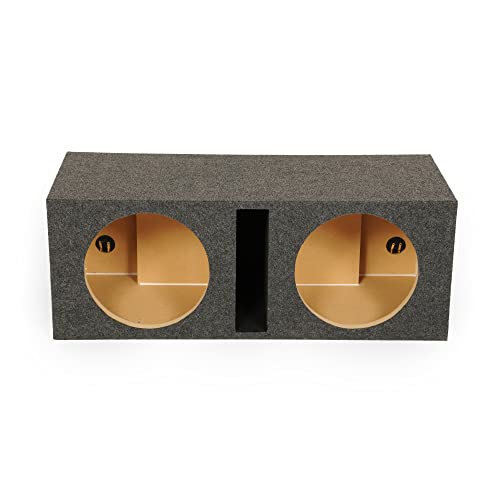
The split-chamber layout gives this QPower box a more orderly footprint for two 12-inch subs, and that helps in truck cabins where space feels tight fast. Each side has its own air space, so bass response tends to stay more controlled than in a shared cavity design.
That sets it apart from the Bbox entry above, which leans more on general versatility. In most garage installs, this one makes more sense for someone who wants a straightforward enclosure with a deeper bass bias and a carpeted exterior that feels finished.
Highlights
- Separate chambers help each sub work in its own air volume.
- Charcoal gray carpet finish gives the cabinet a tidy, understated look.
- Single slot port design supports fuller low-end output.
- Works well in truck systems where box shape matters as much as output.
Points To Note
- The enclosure is more about straightforward bass support than detailed tuning options.
- Carpeted surfaces can pick up dust and lint over time, so a little upkeep helps keep it presentable.
At A Glance
Built With In Mind
Truck owners and stereo hobbyists building a compact dual-12 system will find the layout easy to place and easy to understand.
Another Choice May Suit
Atrend’s Bbox Dual Vented 12 Inch Subwoofer Enclosure fits shoppers who want a more all-purpose cabinet, while this QPower box leans harder into chambered bass output.
The QBomb name makes sense here, because the cabinet looks built for harder use and a more industrial feel. The bed liner finish is the key detail, since it tends to suit trunks, garage builds, and other places where scuffs happen easily.
Compared with the carpeted QPower QBASS, this version brings a tougher surface and a more rugged personality. That trade-off usually means less of a soft interior look, but more confidence in rough handling and repeated loading.
Upsides
- Bed liner finish is well suited to frequent hauling and loading.
- Dual vented, horn-ported layout points toward bold bass presentation.
- Cabinet styling feels more durable than typical carpeted boxes.
- Good match for installs that live in work vehicles or active gear spaces.
Room For Improvement
- The tougher finish is practical, though it does not have the softer visual feel of carpet.
- Horn-ported styling can take up visual space, so fit planning matters in smaller trunks.
Core Details
Whose Shelf It Belongs On
Installers who care more about durability and heavy-use handling than a soft carpeted finish will find this enclosure especially practical.
Swap It Out When
Rockville’s RDVB12 suits anyone who wants a denser MDF cabinet with gold terminals, while the QPower QBASS is the calmer choice for a more conventional truck setup.
The Pro Series model shifts the focus toward lower tuning, which is the kind of detail that matters in bass-heavy builds. In plain terms, the 35 Hz tuning aims lower in the spectrum, so the cabinet fits listeners who want a deeper, fuller bottom end rather than a sharp, punchy setup.
That makes it feel more targeted than the original Bbox dual enclosure. The trade-off is simple, a tuned box asks more from the rest of the system, so the payoff is best when amps and subs are matched with some care.
Bright Spots
- 35 Hz tuning gives the cabinet a clearly bass-forward design target.
- 1.4 cubic feet per sub keeps the chamber size defined and purposeful.
- Works well for listeners who want deeper bass extension in a daily vehicle.
- Pro Series positioning makes it a strong fit for more deliberate builds.
Softer Spots
- Lower tuning is less forgiving if the rest of the system is mismatched.
- Owners who want a broad, all-purpose enclosure may prefer the standard Bbox version.
Details At A Glance
Best Suited To
Audio hobbyists building a more intentional bass system, especially in a vehicle that can support a larger low-end footprint, will get the most out of this cabinet.
Look Elsewhere When
The Bbox Dual Vented 12 Inch Subwoofer Enclosure suits a broader everyday setup, while the Rockville RDVB12 makes more sense for shoppers who want gold terminals and USA MDF in the mix.
Rockville takes a more material-focused route, and the 3/4-inch USA MDF is the part that jumps out first. MDF, or medium-density fiberboard, is valued here for stiffness and reduced cabinet flex, which helps the box stay composed under bass load.
That stiffness pairs well with the gold spring-loaded terminals and the 39 Hz tuning, creating a cabinet that feels carefully specified rather than generic. Compared with the QPower options, this one leans harder into build quality and connection detail, which matters in systems expected to stay installed for the long haul.
Best Bits
- 3/4-inch USA MDF gives the enclosure a solid structural feel.
- 39 Hz tuning supports a bass profile that stays deep without drifting too loose.
- Gold spring-loaded terminals help with cleaner wiring and dependable contact.
- 1.75 cubic feet per sub offers generous room for dual 12-inch drivers.
- Made in the USA will matter to some shoppers planning a more deliberate build.
Small Caveats
- The cabinet is more serious-minded than casual, so it suits a planned install better than a quick swap.
- Heavier MDF construction can make handling and placement feel less casual during installation.
Spec Overview
Right Fit For
Installers who want a cabinet built around material quality, measured tuning, and cleaner connection hardware will gravitate to this Rockville box.
Reach For A Different Pick When
The QPower QBASS suits a more compact truck-oriented setup, while the Bbox Dual 12 Inch Subwoofer Box Pro Series fits shoppers who want a lower 35 Hz target.
Alpine takes a different route from the empty cabinets above, because this one arrives as a matched subwoofer and vented enclosure package. That ready-to-play approach can save setup time for vehicle owners who want a cleaner path from cart to install.
The factory-matched design makes it especially useful in systems that value tidy compatibility more than custom box shopping. Compared with the Rockville RDVB12, the trade-off is obvious, less cabinet-only flexibility, but much less guesswork around pairing.
Reasons To Buy
- Matched enclosure and subwoofer package reduces the guesswork in system planning.
- Vented cabinet design supports deep, accurate output for everyday listening.
- Factory-matched fit can simplify installation for hobbyists who want a cleaner path.
- Single 12-inch format is easier to place than a larger dual-sub cabinet.
Areas To Watch
- Single-sub format gives up some total output potential compared with the dual-box choices.
- Owners who already own separate subwoofers may prefer a cabinet-only option instead.
Feature Rundown
Who Should Grab It
Drivers who want a tidier, more pre-matched install path and do not need a dual-12 cabinet will find this Alpine package especially practical.
Where A Sibling Pick Shines
The Bbox Dual Vented 12 Inch Subwoofer Enclosure suits buyers who already have two subs ready, while Rockville’s RDVB12 fits a more cabinet-focused build.
This Alpine driver is the most build-flexible item in the list, because dual 4-ohm voice coils open up more wiring paths. Voice coils are the electrical windings that determine how a sub connects to an amplifier, and that flexibility matters in custom systems.
The 750W RMS rating points to a driver that belongs in a serious setup rather than a casual add-on. Compared with the ready-to-play R2-SB12V, this model asks for more planning, yet it gives experienced installers more room to shape the final system around amplifier goals.
Standout Traits
- Dual 4-ohm voice coils support more wiring options for custom amplifier matching.
- 750W RMS rating suits more demanding daily-driver bass systems.
- Works in sealed or vented boxes, so enclosure choice stays flexible.
- Strong fit for system builders who want to tune around their own hardware.
Minor Gripes
- This is a component subwoofer, so a cabinet choice still has to be made separately.
- More wiring flexibility also means more planning for a clean install.
Technical Sheet
The Right Fit
Experienced installers and serious system builders who want wiring flexibility and more control over the finished result will get the most value from this Alpine sub.
Another Choice May Suit
The Alpine R2-SB12V suits a simpler matched-package install, while the Rockville RDVB12 is the better cabinet-first route for a dual-12 enclosure build.
How To Choose The Right Dual Vented 12 Inch Subwoofer Boxes
Cabinet Shape, Tuning, And Air Volume
Box shape changes how bass behaves long before the amplifier gets involved. A vented enclosure uses a port, or opening, to move air in a way that can increase low-end output, while tuning frequency tells the box where that emphasis lands.
Published tuning and chamber volume matter because they frame the sound target. A 35 Hz design leans deeper than a 39 Hz cabinet, while a larger internal volume often gives two 12s more breathing room, at the cost of a bigger enclosure footprint.
Materials And Terminals Matter More Than They Look
MDF remains common because it resists flex better than thin, lightweight board in many car-audio use cases. Thicker panels and tighter joints usually help the box stay quieter under pressure, which is especially relevant in trunks that already have trim noise.
Terminals deserve attention too. Spring-loaded or gold terminals can make wiring more secure and more convenient, and that matters during the first install as well as later amplifier swaps.
Match The Box To The Vehicle And The System
Truck cabins, sedans, and hatchbacks all punish enclosure size in different ways. A compact chambered box may fit a truck better, while a larger tuned cabinet makes more sense in a vehicle with a deeper cargo area.
The subwoofer itself matters just as much. A ready-made Alpine package suits a simpler path, while a cabinet-only box works better for hobbyists who already own subs or want to choose amplifier and driver pairings more deliberately.
Choose For Daily Use, Not Just Peak Output
Daily listening rewards control, reliable wiring access, and a cabinet that fits without forcing compromises elsewhere. That usually means looking beyond the loudest-looking spec and toward the whole system balance.
For mixed music, a balanced vented box is usually the safer middle ground. For bass-focused setups, the higher-tuned or more deliberately tuned options earn their keep by matching the vehicle and the rest of the hardware more closely.
Things Worth Knowing Before Ordering
Where Shoppers Go Wrong
Space gets ignored too often. A dual 12-inch enclosure can fit on paper and still crowd cargo room, so checking trunk depth, hatch clearance, and terminal access prevents awkward returns.
Another common miss is pairing the box with the wrong sub size or impedance. A 12-inch cabinet still needs the correct driver dimensions, coil configuration, and amplifier match for the result to make sense.
The Upgrade Payoff
Higher-tier models usually cost more because of material density, cleaner terminal hardware, tighter tuning, or a matched sub-and-box package. Those details don’t look dramatic in a listing, yet they often shape install ease and the way the system behaves over time.
The upgrade makes sense for anyone building a system that stays installed for years, or for anyone who wants less guesswork in the install path. More careful construction tends to be the part that shows up later, after the novelty wears off.
Frequently Asked Questions
What does vented mean in a subwoofer box?
A vented box uses an opening that helps move air and support stronger low-frequency output. The trade-off is that it usually needs more careful matching than a sealed cabinet.
Why choose dual 12-inch subwoofer boxes?
Dual 12-inch enclosures give two woofers a shared home and can deliver fuller bass in a car audio setup. They also take more space than a single-sub cabinet, so fit planning matters.
Is MDF a good enclosure material?
MDF is common because it is dense and less prone to flex than thin panel stock. That stiffness helps the box stay quieter and more controlled under bass load.
What tuning frequency should matter most?
Lower tuning usually favors deeper bass, while slightly higher tuning can feel a bit tighter in some setups. The right target depends on the vehicle, the subs, and the style of music.
Do component subwoofers need a separate box?
Yes, component subs need an enclosure unless they are sold in a matched package like the Alpine R2-SB12V. That extra choice gives more flexibility, but it also adds another planning step.