

Gas storage gets messy fast when the container flexes, spills, or just feels awkward to move around the garage. You’re probably here because you want something that fits the way you store fuel, diesel, water, oils, or transfer gear without turning every refill into a chore. The nine picks below cover compact jugs, rugged steel cans, rolling caddies, and even a pump setup for bigger jobs. You’ll find the right fit faster by matching capacity, material, and handling style to your space and routine.
Quick Look At The Shortlist

VP Racing 35221-CA 5.5 Gal. Square Motorsport Jug
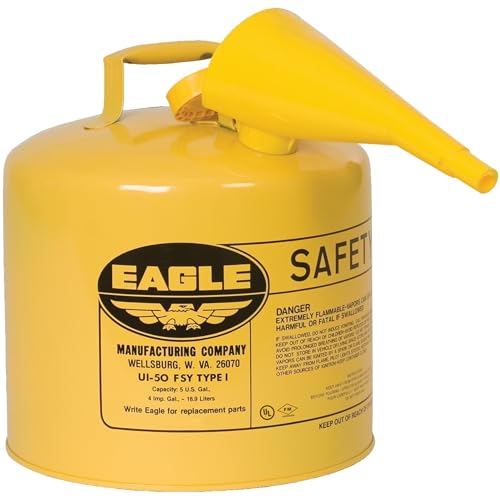
Eagle 5 Gallon Type I Yellow Safety Gas Can for Diesel

RotopaX 3 Gallon Gasoline Pack

Scepter 5 Gallon Gas Can with SmartControl Spout

Automatic Electric Fuel Transfer Pump with Auto-Stop

VEVOR Fuel Caddy 35 Gallon with Manual Transfer Pump

TUFFIOM 35 Gallon Fuel Gas Caddy with 11.9ft Hose

TUFFIOM 20 Gallon Fuel Gas Caddy with 8.9ft Hose

Garvee 16 Gallon Gas Can with 10 FT Siphon Pump
More Details On Our Top Picks
For garage users who store more than fuel, this square jug stands out because it’s built for non-fuel liquids and dry materials as well. The close-trimmed cap and neck are meant to tighten the seal, while reinforced corners help the body resist stress where containers usually take abuse.
You’ll notice the shape is practical rather than flashy, which helps it sit neatly on a shelf or in a truck bed. Compared with the steel Eagle can, this one is better suited to versatile storage, especially for farm chores, shop fluids, or birdseed duty.
Strong Points
- Handles non-fuel storage jobs beyond the usual gasoline task.
- Square profile saves shelf space in a crowded garage.
- Reinforced corners are a smart fit for rough handling.
- The seal-focused neck and cap help limit mess during transport.
Things To Consider
- It’s not the right match for hot equipment refueling, which keeps the use case narrower.
- Plastic construction is lighter than steel, but that can feel less reassuring for some storage setups.
- You’ll want to keep the hose and cap clean after sticky materials like attractants or oils.
Feature Snapshot
Who It Suits Best
You’ll get the most from it in a garage, workshop, or small farm where the same container may hold several kinds of materials.
Where A Sibling Pick Shines
VP Racing works well for versatile storage, but the Eagle 5 Gallon Type I Yellow Safety Gas Can for Diesel is the better fit for someone who wants a steel safety can built around diesel handling.
Steel makes this one feel built for a more deliberate kind of storage, especially in shops that keep diesel on hand for equipment or backup use. The self-closing lid and included funnel point to cleaner pouring, and the flame arrester adds a more controlled transfer setup than the lighter plastic jugs in this list.
The trade-off is weight and bulk, which matters more once you’re moving it across a property or lifting it repeatedly. For most garages, that’s a fair exchange for the sturdier feel and the kind of container you can keep in a more demanding corner of the shed.
What We Like
- Galvanized steel gives it a tougher, more utilitarian feel.
- Diesel-focused design suits equipment storage and transfer routines.
- Self-closing lid helps keep pouring more controlled.
- The included funnel supports cleaner filling in tight spaces.
- The flame arrester is a useful feature for cautious handling.
Minor Gripes
- Steel can feel heavier than the molded options above.
- The yellow safety-can style is practical, but not subtle.
- Cleaning out residue takes a little more attention than rinsing a plain jug.
Core Details
Built With In Mind
You’re looking at a strong fit for diesel storage in a workshop, shed, or equipment area where a steel can feels like the right call.
Reach For A Different Pick When
RotopaX 3 Gallon Gasoline Pack suits trail rigs and compact mounting setups better, especially for off-road travel where every inch of storage counts.
Trail users tend to care as much about shape as capacity, and this compact pack leans hard into that reality. Seamless construction and a secure seal are the big calls here, while the three-layer rotational molding adds the sort of build approach you usually want on rough roads and bouncing cargo trays.
It’s not the biggest container in this roundup, and that’s the point. You get a smaller gasoline pack that makes more sense for ATVs, UTVs, camping rigs, or trucks than for a stationary garage stash, and that trade-off will feel right for mobile setups.
Highlights
- Compact size suits mounting and tight transport layouts.
- Seamless build helps reduce leak concerns during travel.
- Three-layer rotational molding points to stronger everyday durability.
- Works especially well for off-road and overlanding gear.
Softer Spots
- The smaller capacity is useful for portability, but less practical for larger property storage.
- Its shape is geared toward mobile use, not a big garage shelf.
- Red color helps visibility, though some storage bays may already feel crowded with gear.
Details At A Glance
Whose Shelf It Belongs On
This fits off-road drivers, campers, and anyone who keeps fuel mounted or stowed in a vehicle rather than sitting in a shop corner.
A Better Fit Elsewhere
VEVOR Fuel Caddy, 35 Gallon, Gas Storage Tank on 4 Wheels suits property owners who care more about bulk transfer than compact trail packing.
This one is built around cleaner diesel handling, and the SmartControl spout is the part most households will notice first. The spout design is meant to help guide flow without the usual clumsy tilt-and-splash routine, which is handy in a driveway or beside yard equipment.
It feels more specialized than the VP Racing jug and less industrial than the Eagle steel can. That middle ground works well for steady diesel storage, especially for lawn gear and small engines where controlled pouring matters more than flashy capacity.
Best Bits
- SmartControl spout is aimed at more controlled pouring.
- Diesel-only setup gives it a focused storage role.
- Five-gallon size works well for routine equipment refills.
- Cleaner handling is useful in a garage with limited room.
Points To Note
- It’s designed for diesel, so it’s not the flexible all-purpose pick some households want.
- The more specialized spout may take a little getting used to at first.
- Like most fuel containers, it’s easier to keep tidy when you wipe the nozzle after use.
Feature Rundown
Right Fit For
You’ll appreciate this most in a home garage, mower shed, or utility space where diesel is the main fuel you keep around.
Look Elsewhere When
VP Racing 35221-CA 5.5 Gal. Square Motorsport Jug makes more sense for mixed storage tasks, especially when you want one container for several non-fuel jobs.
Big transfer routines get easier once you move beyond pouring by hand, and this pump leans into that shift with an auto-stop function. The 51-inch hose and four adapter sizes give you some flexibility across containers, so it makes sense for garages that juggle gasoline, diesel, or kerosene.
The catch is that it’s an accessory, not a storage container, so it belongs in a list like this only if your real bottleneck is transfer work. Compared with the rolling caddies below, this is the better choice for anyone who already has storage and just wants a cleaner way to move fuel around.
Positives
- Auto-stop function helps reduce overfilling during transfer.
- Long hose gives you more reach around vehicles and equipment.
- Multiple adapter sizes widen compatibility with different containers.
- Useful for gasoline, diesel, and kerosene handling.
Small Caveats
- It solves transfer tasks, not storage tasks, so the use case is narrower.
- Electric accessories need a bit more care than a plain can.
- Hoses and adapters are easier to keep organized in a dedicated bin.
Technical Sheet
Who Should Grab It
You’ll get the most value from this in a garage or workshop that moves fuel between several containers on a regular basis.
Another Choice May Suit
Garvee 16 Gallon Gas Can with 10 FT Siphon Pump is a better fit for someone who wants a single rolling storage caddy rather than a separate pump setup.
Once you move into 35-gallon territory, mobility becomes the whole story, and this caddy answers that with four wheels and a manual transfer pump. It suits bigger spaces, like property sheds or equipment areas, where you need to move fuel to cars, mowers, ATVs, or boats without lifting smaller cans over and over.
The size is the advantage and the burden at the same time. For large properties, that extra capacity can save time and repeated trips, but it also means more storage space and more attention to placement than the compact RotopaX or the smaller Scepter can.
Upsides
- Large 35-gallon capacity reduces how often you need to refill.
- Four wheels make it easier to move around a property.
- Manual pump gives you direct control over transfers.
- Works across several equipment types, from cars to boats.
- Yellow body helps it stand out in a busy storage area.
Areas To Watch
- It takes more floor space than the smaller containers in this list.
- Large capacity means you’ll want a stable spot for storage.
- Moving a full caddy still asks for planning and clear paths.
Feature Card
The Right Fit
This suits property owners and equipment keepers who value capacity first and don’t mind giving up a little storage convenience.
Skip It When
TUFFIOM 20 Gallon Fuel Gas Caddy with Wheels and Manual Siphon Pump fits tighter garages better, especially when you want a smaller footprint with rolling convenience.
This caddy follows the same large-capacity logic as the VEVOR, but the longer 11.9-foot hose gives you a bit more freedom around larger equipment layouts. That can matter in barns, long driveways, or side yards where the tank has to stay put while the nozzle reaches farther.
The manual siphon approach keeps it straightforward, and the wheel setup helps with movement across flat ground. The honest read is that it makes more sense for property fueling than for occasional garage-only use, because the footprint is still substantial.
Bright Spots
- 35-gallon size suits bigger storage and transfer routines.
- 11.9-foot hose gives you generous reach around equipment.
- Wheels help when you need to reposition the tank.
- Well suited to diesel and gasoline transfer work on larger properties.
Room For Improvement
- Large size can feel cumbersome in a small garage.
- Long hose reach is helpful, though it also asks for tidy storage.
- Like most caddies, it works best on level ground and clear paths.
Core Details
Made For
You’ll appreciate this most on larger properties where a long hose can save steps between the tank and the machine.
Swap It Out When
TUFFIOM 20 Gallon Fuel Gas Caddy with Wheels and Manual Siphon Pump is the better fit for someone who wants a smaller tank that’s easier to tuck away.
This TUFFIOM caddy trims the footprint compared with the 35-gallon version, which is exactly what a tighter shed or crowded garage often needs. The 8.9-foot hose still gives you workable reach for ATVs, mowers, tractors, and boats, but the smaller tank makes daily handling less of a production.
For most households, that’s the sweet spot between mobility and capacity. It won’t replace a full-size transfer tank on a big property, yet it feels far easier to store and roll around than the heavier caddies above it.
Reasons To Buy
- 20-gallon capacity keeps it more manageable than the larger caddies.
- Wheels add useful movement around the garage or driveway.
- 8.9-foot hose gives enough reach for many common tasks.
- Works across several equipment types, including mowers and boats.
Honest Caveats
- Still larger than a standard gas can, so storage space matters.
- The shorter hose reach may feel limiting on sprawling properties.
- Like other rolling tanks, it’s easiest to manage on flat ground.
Feature Rundown
Perfect Match For
You’ll find this especially sensible for garage owners who want a rolling fuel caddy without giving up too much floor space.
Where Shoppers Go Wrong
VEVOR Fuel Caddy, 35 Gallon, Gas Storage Tank on 4 Wheels suits users who genuinely need bigger volume, because the larger tank makes more sense than squeezing capacity into a smaller area.
Garvee lands in a useful middle zone, smaller than the 20- and 35-gallon caddies but still built for rolling storage and transfer. The 10-foot siphon pump gives you reach for common yard and shop tasks, and that makes it easier to stage fuel near generators, blowers, tractors, or boats without dragging a full-size tank everywhere.
It’s a sensible shape for everyday utility storage, especially when you want more capacity than a hand-carry can without taking on the bulk of the bigger caddies. Compared with the TUFFIOM 20 Gallon Fuel Gas Caddy, this one trims a little capacity, so it suits tighter spaces and lighter fueling routines.
Standout Traits
- 16-gallon size keeps the footprint more manageable.
- Wheels add the mobility you want for garage use.
- 10-foot siphon hose gives practical working reach.
- Useful for a broad mix of yard and equipment tasks.
Worth Noting
- It gives up capacity compared with the larger caddies.
- The rolling format still needs a bit of storage space.
- Keeping the hose coiled neatly helps avoid clutter after use.
At A Glance
Built For
You’ll like this most if you want a rolling fuel caddy for regular chores but don’t need the scale of a 35-gallon tank.
Where Another Pick Fits Better
TUFFIOM 35 Gallon Fuel Gas Caddy with 11.9ft Hose suits larger properties more naturally, especially when storage volume matters more than compactness.
How To Choose The Right Gas Cans For Storage
Match Capacity To Actual Use
The right size starts with how much fuel or liquid you keep on hand between refills. A 3-gallon pack like RotopaX makes sense for trail use, while 20- to 35-gallon caddies suit larger properties that need fewer trips.
Smaller cans are easier to move, store, and tuck into a shed shelf. Larger containers reduce repeat fills, but they ask for more room and a steadier storage spot.
Choose The Material For The Job
Plastic containers are lighter and easier to handle, which is why the VP Racing jug works so well for mixed storage tasks. Steel cans like the Eagle feel more rigid and formal, which can suit diesel storage better in a work area.
The trade-off is simple: lighter materials are easier to live with, while heavier builds usually feel more substantial during rough use. Pick the material that fits how often you lift, move, and clean the container.
Think About Pouring And Transfer
Spouts, funnels, hoses, and pumps matter more than they first appear. A SmartControl spout, a flame arrester, or a longer siphon hose can turn a clumsy refill into a calmer routine.
Hand-carry cans work for quick jobs, but rolling caddies and electric pumps earn their place in setups where you move fuel often. The more times you transfer, the more those small hardware details matter.
Storage Space And Handling Matter Too
Square jugs and compact packs help in tight garages, while wheeled caddies need floor room and a clear path. That’s the big difference between a shelf-friendly can and a property-level fuel cart.
Also think about cleaning and maintenance. Wide openings and simpler shapes are easier to rinse out, while pumps, hoses, and longer transfer parts take a little more care to keep organized.
Things Worth Knowing First
Wrong Turns To Avoid
Many people start by choosing capacity alone and end up with a container that’s awkward to move or hard to store. A huge caddy sounds useful, but it can feel excessive in a small garage.
Another common miss is choosing the wrong fuel type. Diesel-only cans and multipurpose jugs solve different storage problems, so the label matters more than the color.
The Upgrade Payoff
Higher-tier models usually cost more because of stronger materials, better transfer hardware, and more specialized designs. That includes steel construction, longer hoses, self-closing lids, or wheeled tanks that move fuel with less effort.
Paying up makes sense when you store fuel often, keep equipment on a larger property, or want cleaner handling around engines and tools. For occasional household use, a simpler can often covers the need without extra bulk.
Frequently Asked Questions
What size gas can works best for home storage?
For most garages, 5 to 16 gallons gives you enough room without becoming hard to handle. Larger caddies fit bigger properties better, but they take more space.
Are steel cans better than plastic ones?
Steel usually feels sturdier and suits more formal fuel storage. Plastic is lighter and easier to carry, which helps for mixed-use containers.
Why do some containers have hoses or funnels?
Those parts help guide fuel more cleanly and reduce awkward pouring. They matter most in tight spaces or when you refill equipment often.
Do rolling fuel caddies make sense for small garages?
They can, but only when you truly need the capacity. Smaller garages usually do better with a compact jug or mid-size can.
What’s the difference between a transfer pump and a siphon pump?
A transfer pump is a broader category that moves liquid from one container to another. A siphon pump uses pressure and flow through a hose, which works well for many manual fueling jobs.
Final Thoughts
You get the best result here by matching the container to the way you actually store and move fuel, not by chasing the biggest number on the label. A compact jug works for mixed materials and easier shelf storage, while a steel can or rolling caddy earns its place in heavier-duty routines. The cleanest fit is the one that keeps your storage area calmer, your pours steadier, and your daily upkeep simpler. Pick the shape that fits your space, and the rest gets easier.