

Choosing a gas can is less about looks and more about fit, pouring control, storage space, and the fuel type you actually handle. Some models suit a workshop or farm shed, while others make more sense for an ATV rack, a long driveway, or a backup tank beside a generator. The right choice keeps refills calmer, cleaner, and easier to manage. The wrong one turns a simple chore into a mess.
Quick Look At The Shortlist

VP Racing 35221-CA 5.5 Gal. Square Motorsport Jug
Justrite Type II Gasoline Safety Can Red Galvanized Steel 2 Gallon
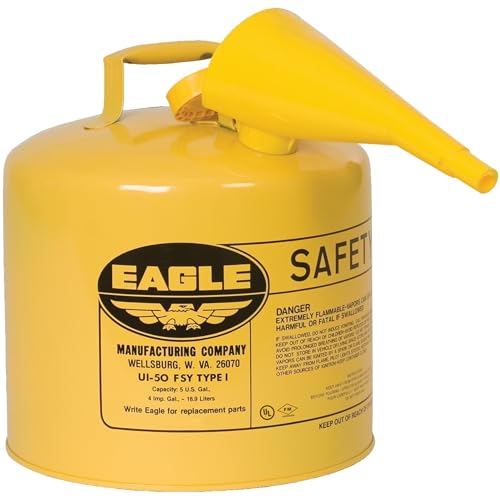
Eagle 5 Gallon Type I Yellow Safety Gas Can for Diesel


Scepter 5 Gallon Gas Can with SmartControl Spout Diesel Only
Surecan 2 Gallon Type-II Safety Container Red
Garvee Slim 15 Gallon Gas Can Fuel Tank Container with 10 FT Siphon Pump

VP Racing 3846-CA 5.5 Gallon Motorsports Jug Camo Square
More Details On Our Top Picks
The square shape makes this VP Racing jug easier to tuck beside shelving, toolboxes, or feed bins than a round can. It’s built for non-fuel storage and transport, so your use cases lean toward automotive fluids, non-potable water, animal feed, birdseed, or salt rather than gasoline. That makes it a strong fit for garages, farms, and workshops that need one container for several chores.
The 14-inch filler hose and close-trimmed cap aim for a tighter seal and more controlled dispensing, while the reinforced corners help the jug handle stress where containers usually get punished. The trade-off is simple, you need to stay within the intended non-fuel use. For property owners who juggle mixed materials, that limitation is still worth the convenience.
Strong Points
- Square profile saves shelf space beside bins and cabinets.
- Useful for feed, salt, and non-potable water storage.
- Reinforced corners help the body handle rough handling.
- Deluxe hose supports steadier pouring into smaller openings.
Points To Note
- Not meant for fuel, so it has a narrower role.
- The multipurpose angle helps most in utility spaces, not cars.
Feature Card
Who It Suits Best
You get the most from this jug in a garage, barn, or workshop where storage materials need a sturdy container with a tidy footprint.
A Better Fit Elsewhere
RotopaX 3 Gallon Gasoline Pack Red suits off-road rigs and trail storage better, since its sealed format is built around transport in rougher environments.
This one is for shop spaces that need tighter control during fuel transfer. The galvanized steel body and powder-coated finish give it a more industrial feel than the plastic jugs above, and the patented manifold with Safe-Squeeze trigger is designed to keep fuel flowing without the stop-start glugging that can make pouring messy. In a busy garage, that steadier control matters more than flash.
The flexible metal hose helps you reach smaller openings, and the lift lever makes refilling less awkward. You may find the 2-gallon size more practical for frequent top-offs than for long storage sessions, which is exactly where it fits best. It’s a steadier, more serious tool than the lighter-duty jugs in this roundup.
What We Like
- Metal body feels well suited to repeated shop use.
- Trigger-style control helps limit sloppy pours.
- Flexible hose reaches tighter filler necks with less fuss.
- Powder-coated finish adds another layer of wear resistance.
- Compact capacity works well for smaller fuel jobs.
Small Caveats
- The smaller capacity means more refills for bigger equipment.
- Steel construction suits durability, but it adds carry weight.
- Best kept clean and dry to maintain the finish.
Core Details
Who Should Grab It
You’ll appreciate this most in a garage or maintenance bay where controlled pouring matters more than carrying a large volume.
Swap It Out When
Eagle 5 Gallon Type I Yellow Safety Gas Can for Diesel fits better for users who want a larger diesel-focused can with a more traditional Type I layout.
Diesel storage often calls for a straightforward can with a predictable layout, and this Eagle model leans into that. The self-closing lid, flame arrester, and included F-15 funnel make it feel more focused on clean handling than on flair, which suits equipment sheds and service areas. For a fuel room or utility shelf, that is a reassuring combination.
The yellow finish helps separate it visually from other containers, a small but useful detail in a crowded garage. It’s made from galvanized steel and built in the USA, so it has the feel of a workhorse rather than a lightweight carry piece. The honest read is that it’s a sensible fit for diesel users who want a familiar safety-can format.
Highlights
- Diesel-specific setup keeps the use case clear.
- Self-closing lid helps keep handling more contained.
- Funnel included, which saves a separate purchase.
- Galvanized steel suits long-term garage storage.
Areas To Watch
- The traditional layout is practical, not especially compact.
- Steel construction rewards care during storage and movement.
Quick Facts
Best Suited To
You get the cleanest fit here for diesel equipment owners who want a familiar can with a disciplined, no-frills setup.
A Better Fit Elsewhere
Scepter 5 Gallon Gas Can with SmartControl Spout Diesel Only suits users who want a more modern spout style and a slightly different handling feel.
Off-road storage has different demands than a garage can, and this RotopaX pack speaks to that immediately. Seamless construction and secure sealing are aimed at keeping leaks under control in rough conditions, while the three-layer rotational molding gives the shell a tougher feel than many ordinary portable containers. Rotational molding, in plain terms, is a process that forms a thick, even wall for added durability.
That design makes the pack a natural match for trucks, UTVs, ATVs, and overlanding setups where space and movement are both part of the story. The 3-gallon capacity is not huge, so it works better as a mobile reserve than as your main storage can. For trail use, that trade-off is easy to understand.
Bright Spots
- Seamless shell supports leak control during travel.
- Three-layer construction suits rougher riding conditions.
- Compact size makes it easier to mount or store.
- Good fit for vehicle-based adventures and equipment backup.
Things To Consider
- Three gallons is modest for large backup needs.
- Best used as transport storage, not a bulk tank.
Technical Sheet
Whose Shelf It Belongs On
You’ll get the most from this on a truck, trail rig, or overlanding setup where compact transport matters more than volume.
Look Elsewhere When
Garvee Slim 15 Gallon Gas Can Fuel Tank Container with 10 FT Siphon Pump fits larger backup fueling needs much better for home or farm storage.
Diesel equipment owners usually want a can that pours cleanly without demanding a lot of effort, and this Scepter model is built around that idea. The SmartControl spout is the main draw, since it aims to keep filling more measured and less messy than a plain open spout. In a shed, trailer, or machine barn, that kind of control can make routine top-offs feel less fiddly.
Because it’s diesel only, the use case stays clear and simple. That clarity is helpful, but it also means the can won’t try to cover every fuel job around the property. For most owners, that narrower focus is a strength, not a flaw.
Reasons To Buy
- Spout design supports more measured diesel pouring.
- Five-gallon size fits practical equipment refills.
- Clear diesel-only labeling reduces confusion in storage.
- Simple form factor suits garages and utility spaces.
Minor Gripes
- Diesel-only setup limits how broadly you can use it.
- The cleaner pouring system may need a small learning curve.
At A Glance
Who Will Love This
You’ll like this most if your equipment runs on diesel and you want a straightforward can that makes pouring feel calmer.
Where A Sibling Pick Shines
Justrite Type II Gasoline Safety Can Red Galvanized Steel 2 Gallon suits shop users who want a metal can with a more industrial pour-control setup.
Small refills often benefit from a container that keeps the nozzle work simple, and this Surecan leans into that idea with a rotating spout. Self-venting helps the can breathe during use, while the safety fill cap adds another layer of control around the opening. In a garage where space is tight, those details can matter more than raw capacity.
The 2-gallon size keeps it easy to move and store, though it naturally suits smaller transfer jobs rather than major fuel storage. You may find it especially convenient for lawn equipment or short maintenance tasks where a bigger can feels clumsy. Compared with the bulkier Garvee model, this one is more about nimble handling than backup volume.
Best Bits
- Rotating spout helps aim fuel more easily.
- Self-venting design supports smoother pouring flow.
- Small size is easy to carry and store.
- Safety fill cap keeps the top more controlled.
Honest Caveats
- Two gallons suits small jobs more than long storage.
- The compact body can feel limiting for larger equipment.
- Spout parts deserve regular cleaning after use.
Details At A Glance
The Right Fit
You’ll like this most for smaller equipment, short refills, and storage spaces where a compact can simply makes life easier.
Another Choice May Suit
VP Racing 3846-CA 5.5 Gallon Motorsports Jug Camo Square suits users who need more volume and a tougher utility jug for broader outdoor jobs.
Once you need a larger reserve for generators, tractors, boats, or snow blowers, the Garvee shifts the conversation toward capacity and mobility. The slim body is built to take up less floor space than a bulky drum-style tank, and the included 10-foot siphon pump gives you reach for transferring fuel without crowding the container. For garages that store several tools at once, that slimmer footprint is a real advantage.
The bigger capacity is the obvious benefit, but it also means more weight and more attention during storage. The mixed-fuel wording makes it versatile on paper, though practical owners will still want to match the container to the liquid and equipment at hand. Compared with the Surecan, this one is much better for large backup storage and less suited to quick grab-and-go use.
What We Like
- Large capacity supports backup fuel planning.
- Slim profile helps it fit along a wall or shelf line.
- Ten-foot siphon pump adds useful reach.
- Works for several equipment and storage scenarios.
- Wheels make transport easier than lifting a full caddy.
Room For Improvement
- Large volume means more space and more careful handling.
- The longer pump setup adds a bit of setup time.
- Best for users comfortable managing larger fuel reserves.
Spec Overview
Built With In Mind
You’ll get the most from this in a garage, farm, or utility space where you need a larger reserve and easier rolling transport.
Where Shoppers Go Wrong
RotopaX 3 Gallon Gasoline Pack Red fits trail rigs and compact vehicle storage much better when your priority is portable, sealed transport.
This VP Racing jug feels aimed at hard use, not just casual storage. The company says it uses 30 percent more material than conventional utility jugs, and that heavier build is paired with reinforced high-stress areas to help reduce cracking or distortion. In a shed, farm, or motorsports setup, that kind of extra body support can be the difference between something that looks fine and something that handles rough treatment better over time.
Like the other VP Racing jug in this roundup, it’s positioned as a multipurpose container for non-fuel products, industrial fluids, and outdoor materials. The camo finish gives it a different look from the patriotic model, but the bigger story is still durability. The trade-off is that this is more of a serious utility jug than a lightweight carry-all.
Best Bits
- Heavier material load supports tougher handling.
- Reinforced corners help guard the body from stress.
- Useful for feed, fluids, and outdoor materials.
- Square shape stores neatly beside other gear.
- Good fit for work areas that see regular use.
Worth Noting
- Built for non-fuel use, so the scope stays specific.
- The tougher body may feel less nimble in hand.
- Best stored where the square profile can really help.
Feature Rundown
Whose Shelf It Belongs On
You’ll appreciate this most in a garage, farm shed, or motorsports space where a tougher utility jug earns its keep.
Where Shoppers Go Wrong
VP Racing 35221-CA 5.5 Gal. Square Motorsport Jug suits people who want the same kind of utility style with a different look and hose setup.
How To Choose The Right Gas Cans
Match The Container To The Liquid
The first decision is the simplest: fuel type and intended use. Some picks here are for gasoline, some are diesel only, and a couple are built for non-fuel storage such as water, feed, or shop materials. That matters because the right body, spout, and label keep your storage organized and reduce mix-ups in a crowded garage.
Containers built for diesel often focus on controlled flow, while utility jugs lean toward storage and transport of non-fuel materials. You’ll save yourself hassle by choosing the one that matches the task instead of forcing one can to handle everything.
Look Closely At Pour Control
Spout design changes the whole experience. A flexible metal hose, rotating spout, or trigger-style control can help direct liquid into a smaller opening with less awkward tipping, which matters a lot around lawn equipment, generators, and machines with cramped fill points.
Simple spouts are fine for casual use, but more controlled systems usually earn their keep in busier spaces. The trade-off is more parts to clean and store, so a cleaner pour can come with a little extra upkeep.
Think About Capacity And Storage Space
Two gallons suits short top-offs and easier carrying, while five gallons tends to hit a practical middle ground for home storage. Larger caddies make sense for backup fuel, tractors, or groups of tools, yet they also demand more floor space and more careful handling once filled.
Square or slim bodies store better than round, bulky shapes in most sheds and service rooms. That can matter more than people expect, especially when you’re trying to keep shelves open for tools, filters, or spare parts.
Choose Construction For Your Environment
Steel cans feel at home in shop settings where repeated use and rough handling are common. Rotomolded plastic jugs suit transport and outdoor storage better, especially when the container needs to resist impacts, pressure, or cramped vehicle mounts.
For most property owners, the right material is the one that fits the way the container will live day to day. A sturdy finish, reinforced corners, or a sealed body can be worth more than an extra feature you’ll rarely use.
Things Worth Knowing First
Common Shopping Slip Ups
One common mistake is matching the can to the color instead of the fuel type or use case. Another is choosing a large container for a small task, then discovering it’s awkward to move and store.
It also helps to pay attention to the spout style before you commit. A smart-looking container can still feel clumsy in real use, and that’s where pouring details make all the difference.
The Upgrade Payoff
Higher-tier containers usually cost more because of the material thickness, steel construction, sealing hardware, or more controlled spout systems. Those extras tend to pay off in less spill-prone pouring, sturdier storage, and better long-term handling in rough spaces.
That upgrade makes the most sense for busy garages, farm sheds, and equipment owners who use the container often. For occasional top-offs, a simpler design is often enough.
Frequently Asked Questions
What size gas can works best for home use?
Five gallons is the most practical middle ground for many homes. Two gallons works better for smaller top-offs and easier carrying.
What’s the advantage of a metal safety can?
Metal safety cans often feel sturdier and more controlled during pouring. They’re a strong fit for workshops and regular use.
Why do some cans say diesel only?
That label keeps the container’s purpose clear and avoids confusion in storage. It also signals a design tuned for diesel handling.
Are larger fuel caddies harder to manage?
They can be, because extra volume means extra weight and more storage space. Wheels or a slim shape help a lot here.
What makes a can better for off-road travel?
Seamless construction, secure sealing, and a compact body matter most. Those traits help a container stay practical on rough ground and inside a vehicle setup.
Closing Thoughts
The right gas can fits the way you actually work, not just the label on the front. For a garage, a shop, a trail rig, or a farm shed, the best match comes down to fuel type, pouring control, size, and storage space. VP Racing’s utility jugs suit mixed non-fuel use, Justrite and Eagle lean toward safety-minded fuel handling, and RotopaX stands out for transport. Pick the one that fits your routine, and the whole job gets easier.