

You want a fuel container that fits your routine, not just your garage shelf. Some days that means a compact can for a mower, other days it means a wheeled caddy for a boat, ATV, or back-of-truck setup. The right choice depends on spout control, capacity, material, and how often you pour in a hurry. This roundup keeps those details front and center so you can sort the sturdy from the awkward.
The Shortlist At A Glance

VP Racing 35221-CA 5.5 Gal. Square Patriotic Motorsport Jug

Justrite Type II Gasoline Safety Can
Eagle 5 Gallon Type I Yellow Safety Gas Can for Diesel


Scepter 5 Gallon Gas Can with Spill Proof SmartControl Spout

Automatic Electric Fuel Transfer Pump with Auto-Stop

Surecan 2 Gallon Type-II Safety Container
15 Gallon Gas Can with Fluid Transfer Manual Siphon Pump

VP Racing 3846-CA 5.5 Gallon Motorsports Jug Camo Square w/Hose
More Details On Our Top Picks
For garage shelves, farm sheds, and trailer corners, this square jug makes better use of space than round cans. The reinforced corners and dense plastic in stress points speak to long-term storage, and the 14-inch hose helps direct pours with less fuss.
The honest read is that this one fits non-fuel jobs better than true gasoline storage, so it belongs with oil, water, feed, birdseed, or similar materials. You may find it especially handy in a workshop that needs one container to handle several messy chores.
Strong Points
- Square shape sits neatly against walls and on shelves.
- Reinforced corners help the jug hold up in rough storage.
- Long filler hose makes directed pouring easier in tight spots.
- Works for oil, water, feed, and other outdoor materials.
Things To Consider
- It is aimed at non-fuel use, so it is not the right match for standard gasoline storage.
- The broad utility design is handy, though that also means it is less specialized than a dedicated safety can.
Core Details
Who It Suits Best
You will get the most from this jug in a garage, farm, or workshop where storage flexibility matters more than fuel-specific hardware.
Where A Sibling Pick Shines
VP Racing 3846-CA works better for you if you want a similar jug format but need the heavier-duty camo version for tougher outdoor handling.
Compared with the utility jug above, this one is built for controlled fuel transfer in a shop setting. The galvanized steel body and powder-coated finish point to tougher everyday handling, and the patented manifold with Safe-Squeeze trigger is meant to smooth out the pour.
For people who refill small equipment and want less slosh at the opening, the flexible metal hose and lift lever make the process feel more precise. The trade-off is simple, steel cans carry weight and need a little more care when you move or store them.
What We Like
- Patented flow control aims to reduce jerky pouring.
- Galvanized steel body suits regular shop use.
- Powder-coated finish adds another layer of surface protection.
- Flexible metal hose helps with smaller filler openings.
- Two-gallon size is easier to lift than larger shop cans.
Worth Noting
- Steel construction adds heft compared with molded plastic options.
- The 2-gallon format works best for smaller refills, not big transfer jobs.
- Metal parts can ask for more careful cleaning after repeated use.
Feature Snapshot
Who Should Grab It
You are the right fit for this can if you want a compact metal safety container for frequent small-equipment refills.
Look Elsewhere When
RotopaX 3 Gallon Gasoline Pack suits you better for trail use, since its sealed portable format is a stronger match for vehicles that move over rough ground.
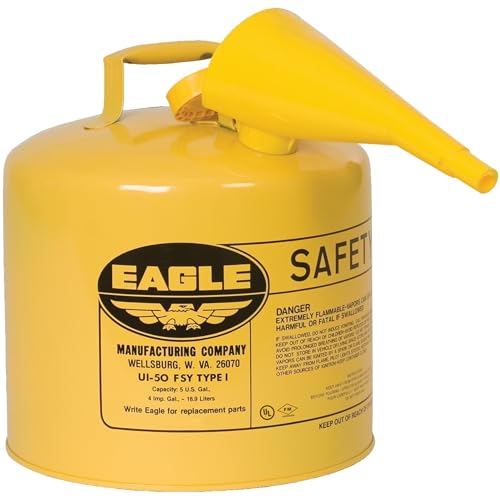
Once you move from a 2-gallon shop can into this 5-gallon steel model, the focus shifts toward larger diesel storage with familiar safety hardware. The self-closing lid, flame arrester, and included F-15 funnel give it a straightforward, old-school feel that many garages still trust.
For larger equipment or a truck that drinks more fuel at once, that extra capacity helps cut down on repeat trips. The yellow body also makes it easy to spot among other containers, though steel storage means you will want a dry place and a bit of care with dents.
Highlights
- Five-gallon size suits heavier fuel needs.
- Self-closing lid adds a practical layer of control.
- Flame arrester is built into the can design.
- F-15 funnel supports cleaner filling from the start.
- Galvanized steel construction feels built for hard use.
Points To Note
- Steel construction can feel heavy once full.
- It is made for diesel use, so it is not the flexible all-purpose option some households want.
Technical Sheet
The Right Fit
You will appreciate this can most in a setup that keeps diesel storage separate and values steel hardware over lightweight convenience.
Swap It Out When
Scepter 5 Gallon Gas Can is the better match for you if you want a molded can with a more modern spout setup and less metal weight.
This pack is aimed at off-road rigs first, and that shows in the sealed, crush-resistant build. The three-layer rotational molding gives it a tougher shell than a plain utility jug, so it fits better on an ATV, UTV, truck bed, or overlanding setup that gets bounced around.
In a daily garage role, it can feel more specialized than the earlier steel and molded picks. That specialization is the point, though, because a secure pack matters more when your fuel rides outside the comfort of a tidy shelf.
Best Bits
- Leak-resistant construction suits rough transport.
- Crush-resistant shell adds confidence for trail use.
- Three-layer molding gives the body extra substance.
- Compact 3-gallon size works well on vehicles with limited space.
Areas To Watch
- Specialized format makes less sense for simple garage storage.
- The smaller capacity may not suit longer trips or larger equipment.
Details At A Glance
Perfect Match For
You will like this pack most if your fuel container needs to travel with the vehicle and stay settled over rough ground.
Another Choice May Suit
VP Racing 35221-CA fits better for you if your priority is a square jug for storage rather than a vehicle-mounted fuel pack.
After the RotopaX, this Scepter can feels more like a garage-first tool than a trail accessory. The SmartControl spout is meant to make diesel pouring easier to manage, and the 5-gallon size gives you enough capacity for regular equipment without moving into a bulk caddy.
That kind of middle ground works well for property owners and home mechanics who want a familiar container shape with a more controlled spout layout. Since it is diesel only, the main trade-off is obvious, you are buying for a narrower job rather than a do-everything can.
Positives
- SmartControl spout aims for steadier pouring.
- Five-gallon size suits repeat refills without becoming oversized.
- Molded construction keeps the can lighter than steel options.
- Diesel-only labeling helps keep storage more clearly organized.
Softer Spots
- Diesel-only use narrows the range of jobs it can cover.
- Spout systems like this need regular attention so they stay easy to manage.
Core Details
Whose Shelf It Belongs On
You are the right fit for this can if you handle diesel equipment at home and want a molded container with a calmer pour path.
Reach For A Different Pick When
Justrite Type II Gasoline Safety Can is the better match for you if you want a metal safety can with more industrial hardware and tighter transfer control.
This is the outlier in the list, because it does the pouring for you instead of storing fuel by itself. The 3.8 GPM rate and 51-inch hose make it better suited to routine transfers from a gas can, especially in a setup where you want to reduce the lifting and tipping that comes with manual pouring.
For owners who refill equipment often, the auto-stop function and leak protection are the sort of details that turn a chore into a cleaner handoff. The trade-off is setup, since pumps add parts, adapters, and another item to keep organized.
Reasons To Buy
- Auto-stop helps keep transfers more controlled.
- 3.8 GPM gives you useful movement for regular refills.
- 51-inch hose adds reach around trucks and equipment.
- Four adapter sizes widen compatibility with different openings.
- Works with gasoline, diesel, and kerosene.
Minor Gripes
- It is an accessory, so you still need a compatible container.
- Extra hose and adapters mean more storage pieces to track.
- Electric gear adds setup compared with a basic hand pour.
Feature Rundown
Built With In Mind
You will get the most value from this pump if you move fuel often and want less shoulder strain from repeated manual pours.
Skip It When
VP Racing 3846-CA is the better fit for you if you want a simple container with a hose rather than a powered transfer setup.
Compared with the Justrite can, this Surecan leans into compact handling and a rotating spout. That rotating spout is the detail that stands out most in small spaces, because it lets you position the outlet more naturally without fighting the whole can.
For trim work, small equipment, and tight sheds, the 2-gallon size feels easier to keep close by. The self-venting and safety fill cap round out the design, though the smaller tank also means more frequent refills for bigger jobs.
Bright Spots
- Rotating spout gives you more control over outlet direction.
- Self-venting design supports smoother fuel movement.
- Two-gallon size stays easy to carry and store.
- Safety fill cap adds another practical control point.
Small Caveats
- Two gallons may feel small for larger equipment or long storage cycles.
- Compact cans like this usually need more frequent topping off.
At A Glance
Who Will Love This
You will appreciate this container most for light-duty refills, small engines, and sheds where every inch of storage matters.
Where A Sibling Pick Shines
Scepter 5 Gallon Gas Can suits you better if you want a larger molded container for fewer refills in a home garage.
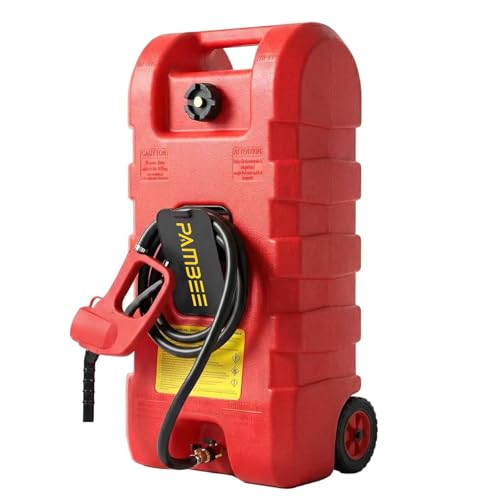
This rolling caddy moves the conversation from handheld cans to bulk storage. With 15 gallons on board, plus a manual siphon pump and 10-foot hose, it makes more sense for equipment yards, boats, ATVs, and similar setups where you want fuel close by but not inside a full-size tank.
The wheels matter as much as the size, because a filled caddy is not something you want to wrestle by hand. The honest trade-off is footprint, since this much capacity asks for more floor space and a more permanent parking spot.
What We Like
- Large capacity reduces repeat fill-ups.
- Wheels make a heavy load easier to move.
- Manual siphon pump supports more controlled transfer.
- 10-foot hose gives you solid reach around equipment.
- Fits larger fueling chores better than handheld cans.
Room For Improvement
- Needs more storage space than the smaller cans in this list.
- Manual pumping adds effort compared with a powered transfer tool.
- Its size can be more than a casual homeowner needs.
Spec Overview
Made For
You are the right fit for this caddy if you manage larger equipment, boats, or property tools and want a rolling fuel station.
Another Choice May Suit
Eagle 5 Gallon Type I Yellow Safety Gas Can for Diesel suits you better if you want a simpler steel can without the space demands of a wheeled caddy.
This VP Racing jug takes the square utility idea from the first pick and pushes it harder. The camo finish, thicker material build, and reinforced corners give it a more rugged feel for workshops, outdoor gear, and motorsport-style use.
For people who want one jug that can handle mixing, dispensing, and general storage without feeling flimsy, it lands in a useful middle zone. You may still prefer a true safety can for fuel-specific jobs, but for broad utility use, this one carries a lot of practical weight.
Positives
- Thirty percent more material than standard utility jugs.
- Reinforced corners help the body resist strain.
- Square shape stores neatly in a packed garage.
- Works well for outdoor materials and mixed-use storage.
- Included hose adds convenience for dispensing.
Honest Caveats
- Like the other VP jug, it is broader in purpose than a dedicated safety can.
- The added material can make the jug feel more substantial to move around.
Core Details
Built With In Mind
You will get the best fit from this jug if you want a rugged utility container for workshop, farm, or outdoor storage.
Where A Sibling Pick Shines
VP Racing 35221-CA suits you better if you prefer the same square layout in a cleaner patriotic look and want the 14-inch filler hose setup.
How To Choose The Right Gasoline Cans
Match Capacity To Your Routine
The right size depends on how often you refill and how far you need to move the can. A 2-gallon container suits small engines and short jobs, while 5 gallons gives you a more practical middle ground for mowers, generators, and shop gear. Step up to 15 gallons only when you truly need bulk storage or a rolling fuel station.
Smaller cans are easier to carry, store, and tip with control. Larger ones save trips, but they ask for more space and more planning.
Choose The Material For The Job
Galvanized steel feels at home in a workshop because it brings rigidity and a more industrial build. Molded plastic, like the VP Racing jugs and Scepter can, stays lighter and easier to move, which helps in home garages and mixed-use storage areas.
There is a trade-off either way, steel can be heavier, while plastic can be less specialized for fuel-specific work. Your storage habits matter here more than branding does.
Pay Attention To Pour Control
Spout design has a big effect on how a can lives in daily use. A rotating spout, flexible metal hose, or trigger-style transfer system helps you aim into smaller openings and keep the flow steadier.
That matters most around lawn equipment, boats, and compact engine tanks where splashing gets annoying fast. The smoother the pour path, the less you wrestle with the container.
Think About Storage And Transport
Square bodies tuck against walls better than rounded ones, which is a real help in crowded garages. Vehicles and trail rigs benefit from leak-resistant or crush-resistant builds because the can has to survive motion, vibration, and cramped mounting spots.
For regular carry, look at handles, weight, and whether the container needs a pump or a funnel. The best fit is usually the one that matches the place you actually keep it.
Things Worth Knowing First
Common Shopping Slip Ups
One common mistake is buying too much capacity for a simple yard task. Another is picking a fuel type that does not match the equipment you actually own, which creates extra storage clutter and confusion.
Spout style matters too, especially in narrow fill openings. A heavy steel can or a bulky caddy can be a bad fit for a small garage, even if the capacity sounds appealing.
The Upgrade Payoff
Higher-tier cans usually cost more because of better metal thickness, thicker molded walls, more careful spout hardware, or extra control features like auto-stop transfer. Those details can make daily refills smoother and storage less awkward.
The upgrade makes the most sense for frequent use, rough transport, or cramped equipment bays. For a once-in-a-while mower refill, a simpler container may already do the job well enough.
Frequently Asked Questions
What size works for most home garages?
Five gallons is a comfortable middle point for many garages. It gives you useful volume without becoming too awkward to lift or store.
Are steel cans better than molded plastic cans?
Steel feels sturdier and suits shop use, while molded plastic usually stays lighter and easier to move. The better choice depends on whether you value rigidity or easier handling more.
Why do some cans have special spouts?
Special spouts help you direct fuel into small openings with less mess. They also make controlled pouring easier during routine equipment refills.
Do you need a large caddy for a boat or ATV?
Not always, but larger rolling caddies help when you want more fuel in one place. Smaller portable cans work better for quick trips and limited storage space.
What makes a utility jug different from a safety can?
A utility jug is broader in purpose and often suits non-fuel materials too. A safety can is shaped more specifically for fuel handling and controlled transfer.
Closing Thoughts
You do not need the most elaborate setup to keep fuel storage manageable, just the container that fits your space, your equipment, and your routine. A square jug works well for mixed garage use, a steel safety can suits more controlled pours, and a rolling caddy makes sense once capacity starts to matter more than portability. Choose the shape that matches your day-to-day chore, and the whole job feels easier. The right can should sit there like a dependable tool, not a hassle you keep working around.