

Marine audio lives in a punishing setting, where spray, glare, vibration, and cramped dash space all matter at once. The right stereo needs clean Bluetooth pairing, sensible controls, and a faceplate that makes sense after a wet day on the water. This shortlist focuses on the sort of features that matter on a center console, pontoon, or small cabin boat, without dressing up the trade-offs. Some picks lean compact, some bring extra input options, and some are better suited to a full helm setup than a simple weekend rig.
Quick Look At The Shortlist

Sony DSXM55BT Bluetooth Marine Digital Media Stereo Receiver
KENWOOD KMR-M332BT Single Din Car & Marine Stereo

Kicker 46KMC2 Gauge-Style Media Center with Bluetooth
Boat Marine Stereo Receiver Bluetooth GR304

Pyle Marine Radio Single DIN Receiver

BOSS Audio Systems MCK632WB.6 Marine Bluetooth Stereo

Pioneer MVH-S110BT 1-Din Digital Media Car Stereo
More Details On Our Top Picks
Single-DIN sizing makes the Sony a straightforward fit for many helm cutouts, and the digital media layout keeps the front panel focused on source control rather than a crowded face. In a boat that spends part of the season at the dock and part of it under way, that simple layout tends to matter more than flashy extras.
SiriusXM readiness widens the listening mix for long stretches on open water, while Bluetooth keeps phone playback tidy. The trade-off is plain enough, since a digital media receiver skips disc playback and leans on external sources, so it suits streaming-first setups better than legacy audio libraries.
Strong Points
- Single-DIN format helps it slot into many common marine dash openings.
- Bluetooth keeps phone playback uncluttered during weekend runs or dockside listening.
- SiriusXM readiness adds another source path for longer outings.
- Digital media layout usually means fewer moving parts on the front panel.
Things To Consider
- Digital-media-only design leaves out disc playback.
- Best suited to source-rich setups, not purely old-school music collections.
Technical Sheet
Who It Suits Best
Boat owners who want a straightforward single-DIN upgrade with streaming and satellite support fit this Sony well.
Where A Sibling Pick Shines
KENWOOD KMR-M332BT suits shoppers who want more front-panel inputs and a broader source mix in one unit.
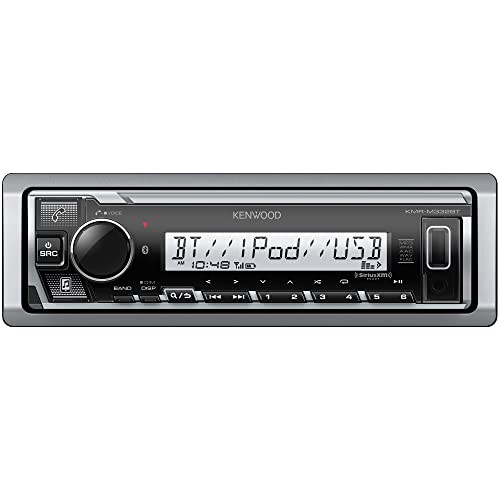
KENWOOD takes the more versatile route here, with Bluetooth, USB MP3, aux input, AM/FM reception, and SiriusXM readiness all sitting in the same single-DIN frame. For a boat that doubles as a travel rig or utility vehicle, that wider source spread keeps the stereo from feeling narrow.
Weatherproofing and multi-color illumination add practical value, especially on consoles where visibility changes from bright noon glare to after-dark runs. The honest read is that this model favors flexibility over minimalism, so it appeals more to users who want several source options ready at hand.
Highlights
- Bluetooth, USB, aux, AM/FM, and satellite readiness cover many listening habits.
- Weatherproof construction suits exposed marine or mixed-use installs.
- Multi-color illumination helps the face blend into varied dash layouts.
- Single-DIN size keeps installation more familiar for many setups.
Points To Note
- The feature count adds setup decisions, which can feel busy in a simple helm.
- Color lighting is useful, though not every rig needs that visual flexibility.
Feature Snapshot
Made For
Weekend boaters and mixed-vehicle owners who want several input paths in one unit are the clearest match.
Another Choice May Suit
Pioneer MVH-S110BT fits simpler music-first installs that do not need the broader source mix found on this Kenwood.
The Kicker 46KMC2 feels built for open helms where the dash space is tight and visibility matters more than a traditional deck layout. Its gauge-style form factor and included round mount make it a natural fit for watercraft panels that leave little room to spare.
An easy-to-read screen, rotary encoder, USB and RCA inputs, Bluetooth, and AM/FM radio give it a practical spread of controls and sources. The trade-off is that this compact approach favors focused control over a sprawling interface, which is exactly the point for many small helm stations.
Best Bits
- Gauge-style shape suits open helm and instrument-dash installations.
- Rotary encoder gives a more tactile way to move through settings.
- USB and RCA inputs widen source options without crowding the face.
- IPX66 rating supports use in exposed, wet conditions.
- Over 200 watts of peak output into four channels gives it solid output potential for its size.
Small Caveats
- Gauge-fit design narrows its appeal outside marine or specialty dash layouts.
- Compact controls can feel simpler than a full-size head unit.
- Owners of large cabins may want a fuller faceplate and bigger display.
Core Details
Built With In Mind
Captains with open helm stations and limited face space are the clearest match for this Kicker.
Look Elsewhere When
BOSS Audio Systems MCK632WB.6 suits owners who want a full stereo package with included speakers rather than a compact media center alone.
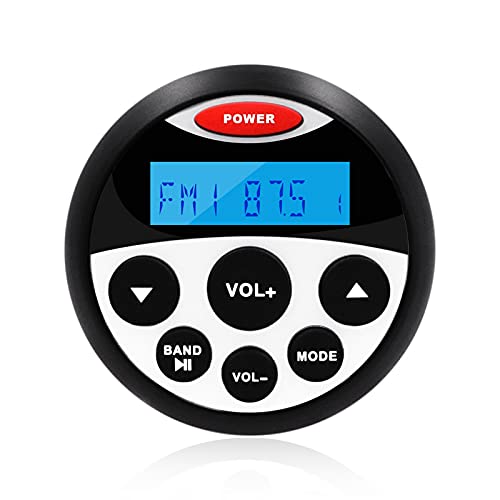
GR304 stretches beyond standard boat use, which makes it notable for utility rigs, golf carts, ATVs, UTVs, and even spa-side setups. That wider compatibility can matter for owners who want a single head unit format across several outdoor machines rather than a stereo dedicated to one platform.
The listed 45 x 4 watts audio output and AM/FM plus Bluetooth setup keep the formula straightforward. The catch is that the design language feels utilitarian, so shoppers focused on dash polish or a richer interface may prefer the Kenwood or Kicker options.
Upsides
- Cross-vehicle compatibility opens up more install scenarios.
- Bluetooth streaming keeps portable devices easy to manage.
- 45 x 4 watts gives a clear baseline for small to mid-size audio layouts.
- Gauge-style format can work neatly in purpose-built outdoor panels.
Areas To Watch
- The utilitarian styling will not appeal to every helm.
- Owners wanting extra media inputs may find the feature set relatively lean.
- Shared-use machines can make wiring and storage more involved.
Feature Rundown
Right Fit For
Owners of boats and outdoor utility vehicles who want one stereo format across several platforms fit this model well.
Swap It Out When
Kicker 46KMC2 is the better match for helm installations that need a more purpose-built marine face and tighter gauge-style presentation.
Pyle keeps the formula familiar, which is useful for boaters who want Bluetooth streaming without a dense control stack. Single-DIN sizing, AM/FM radio, USB and AUX playback, and hands-free calling make it easy to see where this unit sits in the lineup.
RGB buttons add a little dash presence, while the splash-resistant build is aimed at the reality of damp hands and wet air around the helm. The honest read is that this looks strongest as a straightforward upgrade for smaller boats, not a showpiece for a premium dash.
Positives
- Bluetooth and hands-free calling keep phone use less cluttered at the helm.
- USB and AUX inputs leave room for wired playback sources.
- Single-DIN sizing helps installation stay familiar.
- RGB buttons make the unit easier to spot after dark.
- Splash-resistant design suits light moisture around open consoles.
Room For Improvement
- The visual style feels more functional than refined.
- Mixed-use or larger boats may want a richer interface and broader feature spread.
Details At A Glance
Whose Shelf It Belongs On
Smaller boat owners and casual weekend boaters who want a simple, budget-conscious feature set are the strongest fit.
A Better Fit Elsewhere
Kenwood KMR-M332BT makes more sense for shoppers who want a broader source mix and a more feature-dense face.
This BOSS package stands out because it bundles the stereo with 6.5-inch speakers, so the purchase reaches beyond the head unit itself. That matters in a tired boat audio system, where replacing the source and the speakers together can make planning simpler.
USB and aux inputs, AM/FM reception, multicolor illumination, a detachable front panel, 50W x 4 output, and a dipole antenna give it the feel of a more complete refresh kit. The trade-off is physical and practical, since bundled systems ask for more install time and a little more room than a lone receiver.
Reasons To Buy
- Includes 6.5-inch speakers, which simplifies a fuller system refresh.
- Detachable front panel adds a layer of theft deterrence in dockside settings.
- 50W x 4 output gives the package a stronger output profile.
- USB and aux inputs cover common wired sources.
- Multicolor illumination helps it fit varied dash aesthetics.
Softer Spots
- Bundled hardware means a more involved install than a head unit alone.
- The package may be more than needed for a very small boat.
Feature Card
Perfect Match For
Owners planning a more complete refresh, rather than a simple stereo swap, will get the most from this BOSS package.
Reach For A Different Pick When
Pioneer MVH-S110BT is the cleaner fit for a minimal music-only install that does not need bundled speakers.
Pioneer keeps this one lean, and that makes sense for a marine setup that needs Bluetooth and USB without extra clutter. The 50W x 4 output, AM/FM radio, front output, and subwoofer RCA output give it enough flexibility for a compact upgrade with room to grow.
iPhone and Android compatibility makes source pairing feel broadly useful rather than tied to one phone ecosystem. The trade-off is simple, since this is a digital media receiver and not a feature-heavy marine dashboard, so it suits music-first boats more than all-in-one helm builds.
Best Bits
- Lean digital-media layout keeps the face uncluttered.
- USB input and Bluetooth cover the main modern playback paths.
- Front and subwoofer RCA outputs help with future audio expansion.
- iPhone and Android compatibility makes phone pairing broadly practical.
- 50W x 4 output supports a capable small-system install.
Trade Offs
- No disc support, so legacy media collectors will need another source.
- Feature set is modest next to the more layered Kenwood or BOSS package.
Spec Overview
The Right Fit
Music-first boat owners who want a straightforward receiver with room for expansion fit this Pioneer especially well.
Where A Sibling Pick Shines
Kenwood KMR-M332BT suits users who want more front-panel source flexibility in the same general size class.
How To Choose The Right Marine Stereos With Bluetooth
Match The Deck To The Boat
Single-DIN units work well in many standard dash openings, while gauge-style models fit tighter helm panels and open stations. That distinction matters more than marketing language, because a clean fit avoids awkward trim work and keeps controls reachable after installation. Kicker 46KMC2 is the clearest example of a specialty fit, while Sony DSXM55BT and Pioneer MVH-S110BT stay closer to a conventional receiver shape.
Start With The Sources You Actually Use
Bluetooth solves phone playback, but many boats still benefit from USB, AUX, AM/FM, or SiriusXM readiness. A stereo with more inputs gives more flexibility for family trips, charter use, or mixed ownership between phone users and stored music libraries. Kenwood KMR-M332BT does this well, though the trade-off is a busier front panel.
Think About Exposure And Controls
Marine use is about visibility, splash resistance, and controls that make sense with wet hands or mild motion. Rotary knobs, detachable faces, and weather-focused housings are worth extra attention because they affect daily handling, not just spec sheets. BOSS Audio Systems MCK632WB.6 and Pyle Marine Radio Single DIN Receiver show two different ways to address that reality, one as a full package and one as a simpler receiver.
Pay For What Changes Ownership
Higher-tier marine stereos usually earn their keep through better source flexibility, bundled speakers, stronger output, or more purpose-built layouts. Those upgrades matter most on boats used often, where setup time, dash clarity, and speaker coverage shape the experience more than headline features. For a compact weekend rig, a leaner unit can make better sense, and for a full refresh, the BOSS package usually justifies the extra complexity.
What To Weigh Before You Commit
Common Shopping Slip Ups
A frequent mistake is treating every marine stereo as a fit for every dash, which leads to awkward installs or wasted space. Another is paying for sources that never get used, especially in boats where Bluetooth and one radio band cover nearly all listening. The cleanest result comes from matching mounting format, control layout, and the way the boat is actually used.
Where The Extra Money Goes
More expensive units usually pay for added source options, better face layouts, bundled speakers, or features that suit exposed helm use. That can be worth it on boats that spend long stretches in service, where quick controls and a more complete audio package reduce hassle. For a spare skiff or a lightly used runabout, a simpler model like Pyle or Pioneer often keeps the setup more sensible.
Frequently Asked Questions
Are marine stereos with Bluetooth different from car stereos?
Marine models are built with wetter, brighter, and more vibration-prone spaces in mind. Car units can work in protected cabins, but exposed helm use usually calls for a model made for marine conditions.
Do these stereos need speakers sold separately?
Some do, and some come in bundles. BOSS Audio Systems MCK632WB.6 includes speakers, while the other picks in this roundup are head units or media centers only.
What does SiriusXM Ready mean?
It means the stereo is set up to work with satellite radio hardware and service, depending on the rest of the system. That can matter for long routes where local broadcast coverage gets spotty.
Is a digital media receiver enough for a boat?
For many boats, yes, especially where phone streaming does most of the work. It skips disc playback, so it suits modern source habits better than older media libraries.
Which option is simplest for a small boat?
Pyle Marine Radio Single DIN Receiver and Pioneer MVH-S110BT are the most straightforward of the group. Both keep the feature set lean, which helps on compact dashes and modest audio setups.