

Single Din Stereos still make sense for older dashboards, compact cars, work trucks, and boats with limited opening space. The right unit keeps playlists, radio, phone calls, and steering-wheel control support within easy reach, without turning the dash into a science project.
This roundup focuses on practical differences, from simple media receivers to a touchscreen unit with wireless phone integration. The lineup also separates everyday installs from more specialized use cases, so the fit feels cleaner from the start.
The Shortlist At A Glance
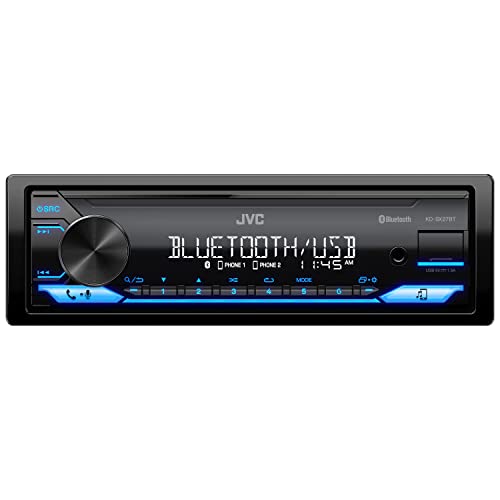
JVC KD-SX27BT Car Stereo with Bluetooth, 100W Digital Media Receiver, 1.5A USB, Single DIN Head Unit

Pioneer MVH-S230BT 1-Din Car Stereo with Bluetooth, USB, AM/FM Radio

KENWOOD KMM-BT332U Bluetooth Single DIN Car Stereo with USB Port
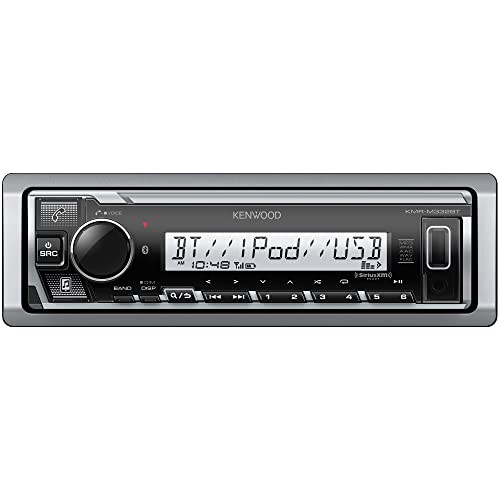
KENWOOD KMR-M332BT Car & Marine Stereo – Single Din

KENWOOD KMM-BT270U Bluetooth Digital Media Car Stereo Receiver

Single Din Radio Car Stereo with Wireless Apple Carplay & Android Auto

Pioneer MVH-S110BT 1-Din Digital Media Car Stereo with Bluetooth
More Details On Our Top Picks
JVC’s KD-SX27BT lands in the practical middle ground, with Bluetooth, AM/FM radio, AUX-in, and a 1.5A USB port for everyday cabin use. The 13-band equalizer gives more control than bare-bones units, and the dual-phone connection suits households that swap drivers often.
That mix fits commuters and shared vehicles better than a stripped-down deck like the Pioneer MVH-S110BT. The remote app support also matters in a parked driveway or busy work truck, where quick phone-side control can be easier than leaning across the dash.
What We Like
- Bluetooth support keeps calls and music in one place.
- Dual-phone pairing helps two drivers share the same dash without constant re-pairing.
- The 13-band EQ offers finer tone shaping than simple bass and treble controls.
- USB charging at 1.5A helps keep a phone topped up during shorter drives.
- The remote app adds extra control from a phone, which suits parked setup time.
Worth Noting
- The feature set stays focused on audio, so touchscreen buyers should look higher on the list.
- App-based control depends on phone compatibility and a clean connection.
- The single-DIN size keeps installation manageable, but the dash kit still matters.
Feature Snapshot
Who It Suits Best
Commuters and family vehicles benefit most from a straightforward stereo with flexible phone handling and enough tuning control to suit different music styles.
A Better Fit Elsewhere
The Pioneer MVH-S230BT suits drivers who want a leaner layout with fewer extras and a simpler, more stripped-back stereo front end.
Pioneer keeps the MVH-S230BT compact and familiar, with Bluetooth, USB, and AM/FM radio in a layout that should feel easy for a basic dash swap. The selectable front or mono sub output adds wiring flexibility, which is useful in small systems that may grow later.
Compared with the JVC above, this one trims away app control and deeper tuning, which keeps the interface simpler. That trade-off suits older vehicles, work trucks, and drivers who just want quick source access without extra menu layers.
Highlights
- Bluetooth and USB cover the main everyday sources.
- The 50W x 4 output rating supports a standard four-speaker setup.
- Selectable front or mono sub output helps with future audio expansion.
- iPhone and Android support keeps it broad in mixed households.
Small Caveats
- The feature list stays lean, so fine sound control is limited compared with the JVC KD-SX27BT.
- Drivers wanting app-based control will need to step up to a different model.
- The plain front panel is easy to live with, but it offers less visual feedback than a display-rich unit.
Core Details
Built With In Mind
Drivers moving from a factory radio to a simple aftermarket unit will get the most from this model, especially in cars where clean controls matter more than flash.
Skip It When
The KENWOOD KMM-BT332U makes more sense for shoppers who want a fuller display and detachable face security features in the same category.
The KMM-BT332U leans into extra controls and display detail, with a multi-color LCD, detachable face, and built-in Alexa support. SiriusXM compatibility also gives satellite-radio users a cleaner path than the more basic Pioneer and JVC options above.
In a daily driver, the detachable face can add peace of mind during parking, while the color display helps the dash feel less bare. The honest read is that it asks for a bit more setup attention, but the payoff suits drivers who use the stereo as a command center rather than a simple music box.
Upsides
- The multi-color LCD improves visibility and gives the dash more personality.
- Detachable face design adds a practical layer of removable front-panel security.
- Built-in Alexa support fits voice-oriented setups with compatible phone access.
- USB, AM/FM, and MP3 playback cover several common listening needs.
- SiriusXM tuner compatibility broadens source options for satellite-radio users.
Points To Note
- The richer feature set can take longer to set up than the Pioneer MVH-S230BT.
- Voice features depend on connected services and phone pairing.
- The detachable face needs a safe storage spot to avoid scratches or misplacement.
Technical Sheet
Who Should Grab It
Drivers who want a more feature-dense single-DIN deck, especially those who like voice control and richer display feedback, will find the strongest fit here.
Reach For A Different Pick When
The JVC KD-SX27BT suits shoppers who want a simpler interface with dual-phone handling and a lighter setup path.
The KMR-M332BT stands apart because it is built for cars and marine use, so the weatherproof construction matters more than flashy extras. That makes it a smart match for boats, garage projects, and open-cockpit installs where moisture exposure is part of the setting.
Compared with the KENWOOD KMM-BT332U, this model trades away some display flair for a tougher housing profile. Multi-color illumination still keeps it readable at night, and SiriusXM readiness adds flexibility for road use as well as dockside listening.
Reasons To Buy
- Weatherproof construction suits marine and other exposed installations.
- Bluetooth, USB MP3, AUX-in, and AM/FM cover varied playback sources.
- SiriusXM readiness gives it broader radio potential.
- Multi-color illumination helps the unit blend into different dash or helm layouts.
Areas To Watch
- The durability focus matters most in exposed spaces, so dry-car shoppers may not need the extra hardening.
- Owners usually need to think through sealing, mounting depth, and wiring care during install.
- The interface is more utilitarian than the touchscreen model farther down the list.
Details At A Glance
The Right Fit
Boat owners and drivers with exposed cabins will benefit most from the tougher construction and the more workmanlike feature mix.
Another Choice May Suit
The Pioneer MVH-S230BT makes more sense for a dry car install where the simplest path from factory radio to Bluetooth matters most.
The KMM-BT270U keeps the setup lean, with a high-contrast LCD, Bluetooth, USB, and a detachable face plate in a straightforward single-DIN shell. It feels like a sensible middle step for compact dashboards that need readable controls without the visual bulk of a larger screen.
Compared with the KMM-BT332U, this version gives up built-in Alexa and the more colorful display, which trims complexity. That trade-off works well in daily cars where dependable basics matter more than extra layers of menu depth.
Best Bits
- The high-contrast display stays legible in changing cabin light.
- Bluetooth and USB support cover the core use case for most drivers.
- The detachable face plate adds practical front-panel storage flexibility.
- 13-band EQ gives more sound shaping than basic tone controls.
Minor Gripes
- The plain layout is efficient, but it offers less visual flair than the KMM-BT332U.
- Anyone wanting voice control will need to step up to another model.
- The removable face plate needs care during transport and storage.
Feature Rundown
Whose Shelf It Belongs On
Minimalist dashboards and daily commuter cars are the best match here, especially where a readable display matters more than a large feature stack.
A Better Fit Elsewhere
The Pioneer MVH-S110BT works well for drivers who want a similarly simple route with a different feature balance and brand feel.
This Sobalai unit shifts the category from basic audio toward a full dashboard interface, with a 6.9-inch UHD touchscreen, wireless Apple CarPlay, and Android Auto. That kind of setup suits drivers who want maps, music, and messages in one place rather than a separate phone mount and a plain radio face.
The trade-off is physical and practical, because a screen-driven unit asks for more install attention than the simpler Pioneer or Kenwood media receivers. In return, USB Type-C fast charging, a backup camera input, mirror link, navigation support, and steering-wheel control compatibility create a far more complete dash experience.
Standout Traits
- Wireless phone integration reduces cable clutter on the dash.
- The 6.9-inch UHD screen brings a much larger control surface than the media-only units above.
- Backup camera support and navigation features help everyday driving routines.
- USB Type-C fast charging is useful on longer commutes.
- Steering-wheel control support helps preserve familiar vehicle controls.
Room For Improvement
- The screen-based layout takes more planning than a simple single-DIN deck.
- Wireless phone features can be as smooth as the vehicle setup allows, so cabling and pairing still matter.
- This style suits feature-hungry installs more than no-frills audio replacements.
Core Details
Perfect Match For
Drivers who want the most modern-feeling dashboard in a single-DIN opening will get the most from this unit, especially in cars that already support camera or wheel-button integration.
Look Elsewhere When
The JVC KD-SX27BT fits better for shoppers who want an audio-first layout with less screen complexity and a simpler install path.
The MVH-S110BT strips the category to the core, with Bluetooth, USB input, AM/FM radio, and the same 50W x 4 output format as the other Pioneer unit. That makes it a tidy fit for older cars, fleet vehicles, or anyone replacing a tired factory deck without layering on extra controls.
Compared with the MVH-S230BT, this model feels similarly focused but reads as the more straightforward of the two on paper. The front and sub RCA output support can help future system changes, although the unit still sits firmly in the audio-first camp rather than the app-heavy one.
Positives
- Bluetooth and USB handle the most common playback needs.
- AM/FM radio keeps local listening simple.
- 50W x 4 output suits a standard four-speaker setup.
- Front and sub RCA outputs leave room for later expansion.
Trade Offs
- The plain layout keeps costs and complexity down, but it gives up the richer display of Kenwood’s screen-based models.
- Sound-shaping tools are limited compared with the JVC KD-SX27BT.
- It suits basic installs more than advanced custom builds.
Spec Overview
Built For In Mind
Drivers who want a no-nonsense deck with room for future audio changes will appreciate the simple layout and familiar Pioneer approach.
Swap It Out When
The KENWOOD KMM-BT270U makes a better match for shoppers who want a high-contrast display and a detachable face plate in the same price tier.
How To Choose The Right Single Din Stereos
Start With The Dash, Not The Spec Sheet
Single-DIN fit is the first filter, because a slim opening leaves little room for guesswork. Older cars, compact imports, and marine dashboards often need a unit that stays physically simple, while the install kit and wiring harness do the real work behind the faceplate.
Feature-heavy screens can still fit the slot, but they usually ask for more depth, more cabling, and more patience during install. A plain media receiver is often the calmer choice for a clean replacement in a daily driver.
Match Controls To Driving Habits
Bluetooth, USB, AUX-in, and app support solve different habits, not just different budgets. Long commuters tend to benefit from stable Bluetooth and clearer display feedback, while short-trip drivers often want fast source changes and fewer menu layers.
Dual-phone pairing helps shared vehicles, and a detachable face plate suits parking situations where front-panel removal is part of the routine. Touchscreen models add more functionality, but they also ask for more attention while setup and use settle in.
Don’t Ignore Sound Tuning
Equalizer bands matter because cabin acoustics vary from one car to the next. A 13-band EQ gives more room to trim harsh highs, thicken bass, or soften thin factory speakers than a basic bass-and-treble layout.
That matters most in vehicles with older door speakers or road noise that masks detail. For a simple system, though, a cleaner interface can beat extra tuning menus that rarely get used.
Think About Future Expansion
RCA outputs, subwoofer support, camera input, and steering-wheel control compatibility point toward how long a stereo can stay useful. The more the dash may change later, the more these connections matter.
Someone planning a basic replacement can skip some of that complexity. Someone building a fuller setup from a single-DIN opening should pay attention to those ports before sound source features.
What To Weigh Before You Choose
Common Shopping Slip Ups
Shoppers often focus on Bluetooth and ignore physical fit, connector needs, and dash space behind the opening. That mistake shows up fast during install, especially in older vehicles where the mounting kit matters as much as the stereo itself.
Another miss is buying more screen than the vehicle really needs. A large touchscreen looks appealing, but a daily commuter may get more value from a simpler face with faster access to radio and phone audio.
The Upgrade Payoff
Higher-tier units usually cost more because of display quality, app integration, extra outputs, and more polished controls. Multi-color LCDs, wireless phone mirroring, and steering-wheel support all add hardware and software layers that basic receivers do not carry.
The upgrade makes sense in cars that serve as office space, family shuttle, or road-trip base camp. In a work truck or older hatchback, a simpler deck often delivers the cleaner ownership experience.
Frequently Asked Questions
What Makes A Single Din Stereo Different From Double Din?
Single-DIN units use a smaller front opening and suit tighter dashboards. Double-DIN units occupy a taller space and usually leave room for larger touchscreens.
Do Bluetooth Car Stereos Still Need USB?
USB still matters for charging, firmware-related tasks, and wired playback on many units. Bluetooth covers convenience, but USB adds a dependable fallback.
Is A Detachable Face Plate Worth It?
Detachable faces can help with front-panel storage in parking-sensitive setups. They also add one more part to keep track of during everyday use.
Do Touchscreens Work Well In Older Cars?
Touchscreens can modernize an older dash, especially where navigation and phone mirroring matter. They also ask for more install planning than a basic media receiver.
Which Features Matter Most For Shared Vehicles?
Dual-phone connection, easy Bluetooth switching, and a readable display help shared vehicles feel less fussy. A clear control layout usually matters more than extra menu depth.