


Home bass is easy to underestimate until a movie scene feels thin or a playlist loses weight. This roundup focuses on compact powered subwoofers and one soundbar bundle for living rooms, bedrooms, apartments, and mixed-use setups where space and connection options matter just as much as low-end output.
Each pick is judged by enclosure style, input flexibility, driver size, and how naturally it fits a real room. Some are a better match for straightforward TV upgrades, while others suit stereo systems, studio corners, or tighter layouts where a larger cabinet would be overkill.
The Shortlist At A Glance

Rockville Rock Shaker 10 Black Powered Subwoofer
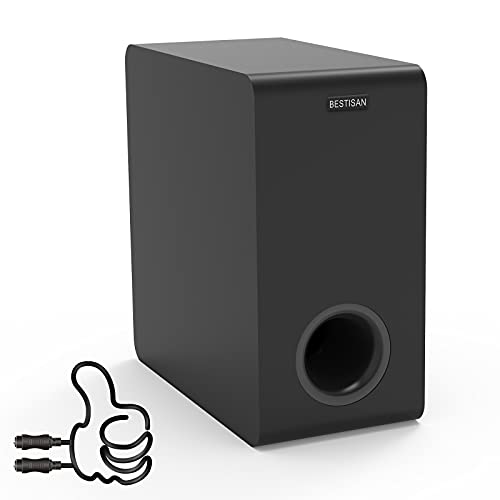
Bestisan Powered Subwoofer 6.5″ Side-Firing Woofer
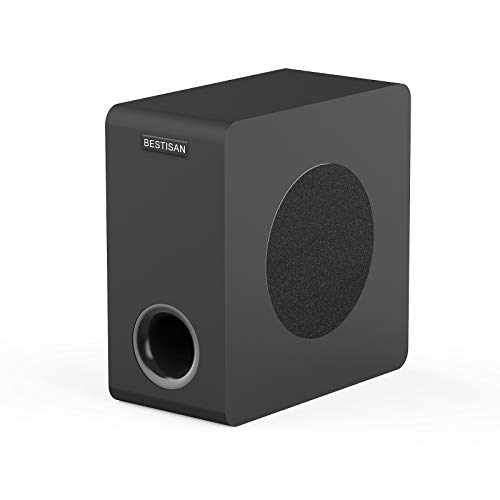
BESTISAN Powered Subwoofer 6.5″ Side Firing Home Audio Sub

BESTISAN Subwoofer 6.5″ Powered Home Audio Sub Woofer SW65C

BESTISAN Powered Subwoofer Deep Bass Sub

ULTIMEA Sound Bar with Wireless Subwoofer Poseidon M30
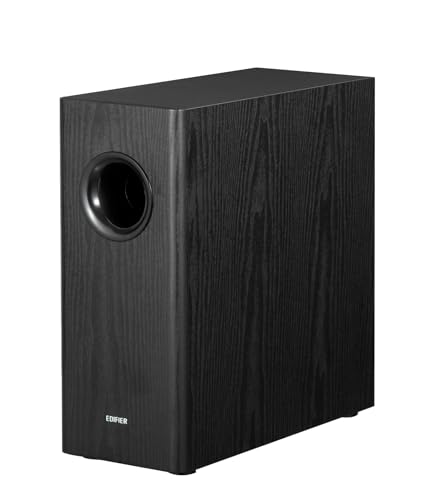
Edifier T5s Powered Subwoofer 70W RMS
More Details On Our Top Picks
The Rock Shaker 10 has the largest footprint in this set, and that matters in a living room where bass needs physical room to breathe. The 10-inch driver, Class-D amplifier, and MDF enclosure point to a setup that suits movie nights, gaming, and nearfield studio use without looking delicate.
The adjustable crossover gives useful control over where the sub hands off to the main speakers, which helps in mixed systems. In most home theaters, that flexibility matters more than sheer wattage on paper, though the larger cabinet asks for more floor space than the compact BESTISAN models.
Strong Points
- 10-inch driver gives it clear size advantage for larger rooms.
- Class-D amplification keeps the internal electronics compact.
- MDF cabinet adds a sturdier feel than light plastic shells.
- RCA and high-level inputs cover both receiver and speaker-level setups.
- Adjustable crossover helps match the sub to different main speakers.
Points To Note
- The cabinet takes up more floor space than the 6.5-inch options.
- Room placement matters, since large subs can overwhelm a small bedroom.
- Cleaning around a fuller box shape is less convenient than with slimmer designs.
Feature Snapshot
Who It Suits Best
Movie-focused households and hobby setups that need a fuller low end with flexible wiring fit this Rockville model well.
A Better Fit Elsewhere
BESTISAN Powered Subwoofer 6.5″ Side-Firing Woofer suits apartment living and shelf placement better than this larger cabinet.
This compact Bestisan leans into a slim cabinet and a side-firing woofer, which sends bass sideways rather than straight out the front. That layout helps the footprint stay manageable in tighter rooms, especially beside a media console or under a desk.
Its input set is broad enough for a modest receiver stack, and that makes it a practical match for apartments or secondary rooms. Compared with the Rockville unit, the trade-off is plain, less bulk and less room-swallowing scale, but also less physical presence.
What We Like
- Slim cabinet fits easier beside furniture than a fuller tower-like box.
- Side-firing woofer helps keep the design visually restrained.
- RCA, LFE, AUX, and speaker inputs support varied hookups.
- Works well in small rooms where floor space is limited.
Small Caveats
- A small cabinet can be easier to place, but it usually brings less scale.
- Side-firing designs depend on sensible placement near a clear wall or open floor area.
- Fingerprints and dust show more easily on compact black finishes.
Details At A Glance
Made For
Apartment setups, desktop-adjacent listening spaces, and small home theaters suit this compact Bestisan best.
Another Choice May Suit
Rockville Rock Shaker 10 Black Powered Subwoofer is the better match for larger rooms that need a more substantial cabinet.
This BESTISAN model takes a similar size approach to item 2, but its setup emphasis leans more toward easy pairing with home theater systems, TVs, and speakers. The broad connector list helps in mixed equipment stacks, which is useful in a living room where source gear changes over time.
Because the unit stays in the 6.5-inch class, it remains easier to tuck into a corner than the Rockville. The honest read is that this size works best as support bass, not room-shaking drama, so it suits practical TV upgrades more than oversized movie rooms.
Upsides
- Broad input support makes system matching less fussy.
- Easy pairing with TVs and speakers fits common living-room setups.
- Side-firing layout keeps the form factor relatively compact.
- Good match for simple upgrades from soundbar-only audio.
Areas To Watch
- The smaller driver size limits scale in larger open-plan rooms.
- Side placement needs a little thought during installation.
- Pairing with large main speakers may leave some systems feeling uneven.
Core Details
Best Suited To
Living rooms that need an easy bass upgrade without a large cabinet suit this BESTISAN model well.
Where A Sibling Pick Shines
Edifier T5s Powered Subwoofer 70W RMS is a smarter fit for music-first setups that value cleaner tuning over broad input variety.
The SW65C keeps things simple, which often matters more than flashy numbers in a starter home theater. Its down-firing woofer sends bass toward the floor, a layout that can feel steady in small to medium rooms and works neatly under a media stand or near a wall.
Compared with the side-firing BESTISAN models above, this one aims for a more straightforward placement story. That makes it a sensible fit for setups where the gear arrangement is already crowded, though the compact size still means it’s more support piece than heavyweight centerpiece.
Bright Spots
- Down-firing layout can be easier to place in a modest room.
- Compact build suits shared spaces and smaller entertainment areas.
- LFE, RCA, and high speaker level ports broaden hookup options.
- Black finish blends into most TV furniture without drawing attention.
Softer Spots
- Smaller format leaves less headroom for large open rooms.
- Down-firing designs can be sensitive to floor setup and clearance.
- Dust around the base can build up in busy family rooms.
Feature Card
The Right Fit
Starter home theaters and modest living rooms benefit most from this compact BESTISAN design.
Look Elsewhere When
Rockville Rock Shaker 10 Black Powered Subwoofer is the stronger fit for larger rooms that need more cabinet volume.
Item 5 keeps the same compact home-audio logic as the earlier BESTISAN units, but the included coaxial cable gives it a more ready-to-wire feel. For a typical TV or receiver setup, that means less hunting for accessories before the system is up and running.
The down-firing design and multiple connection paths make it useful in rooms where bass has to fit into an existing furniture plan. It does not try to dominate the space, which is a sensible trade in apartments and smaller family rooms, especially alongside a soundbar or bookshelf speakers.
Best Bits
- Included coaxial cable reduces the number of extra parts needed.
- Down-firing layout works neatly in compact entertainment spaces.
- RCA, LFE, AUX, and high-level inputs support more source gear.
- Suited to movies, games, and everyday TV watching.
Honest Caveats
- Small-cabinet bass will not match the scale of the Rockville 10-inch model.
- Wired connections help stability, though they add cable management work.
- Down-firing placement needs a little attention on carpeted or uneven floors.
Technical Sheet
Whose Shelf It Belongs On
Small-room setups that need simple wiring and flexible input support suit this BESTISAN well.
Skip It When
Edifier T5s Powered Subwoofer 70W RMS is the better choice for music setups that favor cleaner, more studio-leaning tuning.
This ULTIMEA bundle changes the formula by pairing a soundbar with a wireless subwoofer, so the bass section is only part of the story. App control, HDMI, optical, and Bluetooth 6.0 suit a TV setup that needs fewer cables and fewer remote-control headaches.
For a media room, that can be a cleaner path than adding a standalone sub to a separate speaker stack. The trade-off is obvious, the system is shaped around soundbar convenience rather than the open-ended flexibility of the standalone Rockville or Edifier units.
Reasons To Buy
- Wireless subwoofer reduces cable clutter around the TV.
- App control adds a simple way to change settings.
- HDMI and optical support fit modern television connections.
- Bluetooth 6.0 gives it flexible wireless playback options.
- VoiceMX and BassMX features point to user-friendly tuning controls.
Room For Improvement
- As a soundbar bundle, it is less specialized than a true standalone subwoofer.
- Wireless systems can be easier to place, though they still depend on stable power access.
- It is less suited to custom stereo expansions than the Edifier T5s.
Quick Facts
Built With In Mind
TV owners who want a simpler all-in-one sound upgrade with wireless bass support fit this ULTIMEA setup well.
Swap It Out When
BESTISAN Powered Subwoofer Deep Bass Sub is the better call for people who already have speakers and only need the low end.
Edifier takes a more music-minded route here, with an 8-inch woofer, built-in amplifier, phase selector, and a stated low-end extension to 35Hz. That combination reads like a measured sub rather than a showy one, which suits a stereo room, desktop listening area, or compact studio.
Compared with the BESTISAN models, this one feels less about jack variety and more about controlled bass character. The phase selector, which adjusts alignment between the sub and the main speakers, matters most in rooms where placement is a little awkward and the bass image needs help locking in.
Highlights
- 8-inch woofer gives it more scale than the smaller 6.5-inch options.
- 70W RMS provides a clearer power reference than peak-only figures.
- Phase selector helps integration with main speakers.
- Low-distortion and energy-efficient design suit longer listening sessions.
- Works well for music systems and smaller studio corners.
Minor Gripes
- It is more focused on sound quality than on connection breadth.
- Music-first tuning may feel restrained in very large home theater rooms.
- Placement still matters, especially near walls and corners.
Spec Overview
Perfect Match For
Music listeners and compact studio setups that want cleaner bass control fit this Edifier best.
Where Another Pick Suits Better
Rockville Rock Shaker 10 Black Powered Subwoofer is the smarter match for a larger room that needs more cabinet size and raw scale.
How To Choose The Right Subwoofers For Home
Match Driver Size To The Room
Driver size shapes how much air a sub can move, which is why a 10-inch unit like the Rockville feels better suited to a larger family room than the 6.5-inch BESTISAN models. Smaller drivers usually fit tighter spaces more gracefully, and they often sit more quietly beside a console or desk.
That choice is less about chasing a number and more about scale. Compact rooms can sound bloated with an oversized cabinet, while a big open-plan room can leave a small sub sounding cautious and unfinished.
Check The Connection Set First
RCA, LFE, AUX, and high-level speaker inputs solve different wiring problems, so the useful question is simple: what already sits behind the TV or receiver. A soundbar bundle like the ULTIMEA shifts that question entirely, because HDMI and optical become the main path instead of analog sub connections.
The wider the port mix, the easier the product usually fits into older gear. The trade-off is that more options can also mean more cables and a little more setup time, especially in a crowded media cabinet.
Choose Between Bass Control And Bass Simplicity
Phase selectors, adjustable crossovers, and built-in amps matter because they help the sub blend with main speakers rather than sit beside them like a separate appliance. Edifier’s phase selector is a good example, since room layout can change how cleanly bass and main channels meet.
Simple designs still have a place. A compact down-firing model can be easier to live with day to day, especially in apartments or shared spaces where clean placement beats deep menu-style control.
Think About Furniture, Floors, And Cable Paths
Cabinet shape affects placement as much as sound. A slim side-firing sub can slip beside a media stand, while a larger MDF box needs more breathing room and easier access for cable routing.
That’s where ownership gets practical. Dusting, cord management, and clearance around vents or ports all become part of the purchase decision, so the neatest-looking option on paper is not always the neatest one in a lived-in room.
A Quick Reality Check On Home Bass
Mistakes Worth Dodging
Size mismatches are the most common problem in this category. A small sub in a large room can leave soundtracks thin, while a giant cabinet in a bedroom can be more placement trouble than it is worth.
Another easy miss is ignoring the connections already in use. A receiver, TV, and soundbar all ask for different hook-ups, and the wrong input mix often creates more frustration than the bass driver itself.
The Upgrade Payoff
Higher-tier models usually cost more because of larger drivers, stronger amplification, and more careful cabinet construction. An MDF enclosure, like the one on the Rockville, generally points to a firmer, less hollow feel than lighter housings.
That extra spend makes sense in bigger rooms, mixed speaker systems, or listening spaces where integration matters more than raw convenience. For a small bedroom or a simple TV corner, the simpler BESTISAN options can be the more sensible place to stop.
Frequently Asked Questions
What size subwoofer works best for a living room?
A 6.5-inch model can suit smaller living rooms and apartments, especially when space is tight. A 10-inch unit fits larger rooms better because it has more cabinet volume and driver area.
Is a wired subwoofer easier to set up than a wireless one?
Wired models usually need more cable planning, but they keep the signal path straightforward. Wireless systems reduce visible cabling, though they still need proper power placement.
What does LFE mean on a subwoofer connection?
LFE stands for low-frequency effects, the dedicated bass channel used in many home theater setups. That input is common on AV receivers and can make setup more direct for movie systems.
Why does phase control matter?
Phase control helps the sub and main speakers work together more cleanly at the crossover point. It matters most when the sub sits off to the side or behind the seating area.
Do smaller subwoofers still help with TV sound?
Yes, a compact sub can add useful depth to dialogue-heavy TV and streaming content. The improvement is usually most noticeable in room tone, soundtrack weight, and overall fullness rather than sheer volume.