
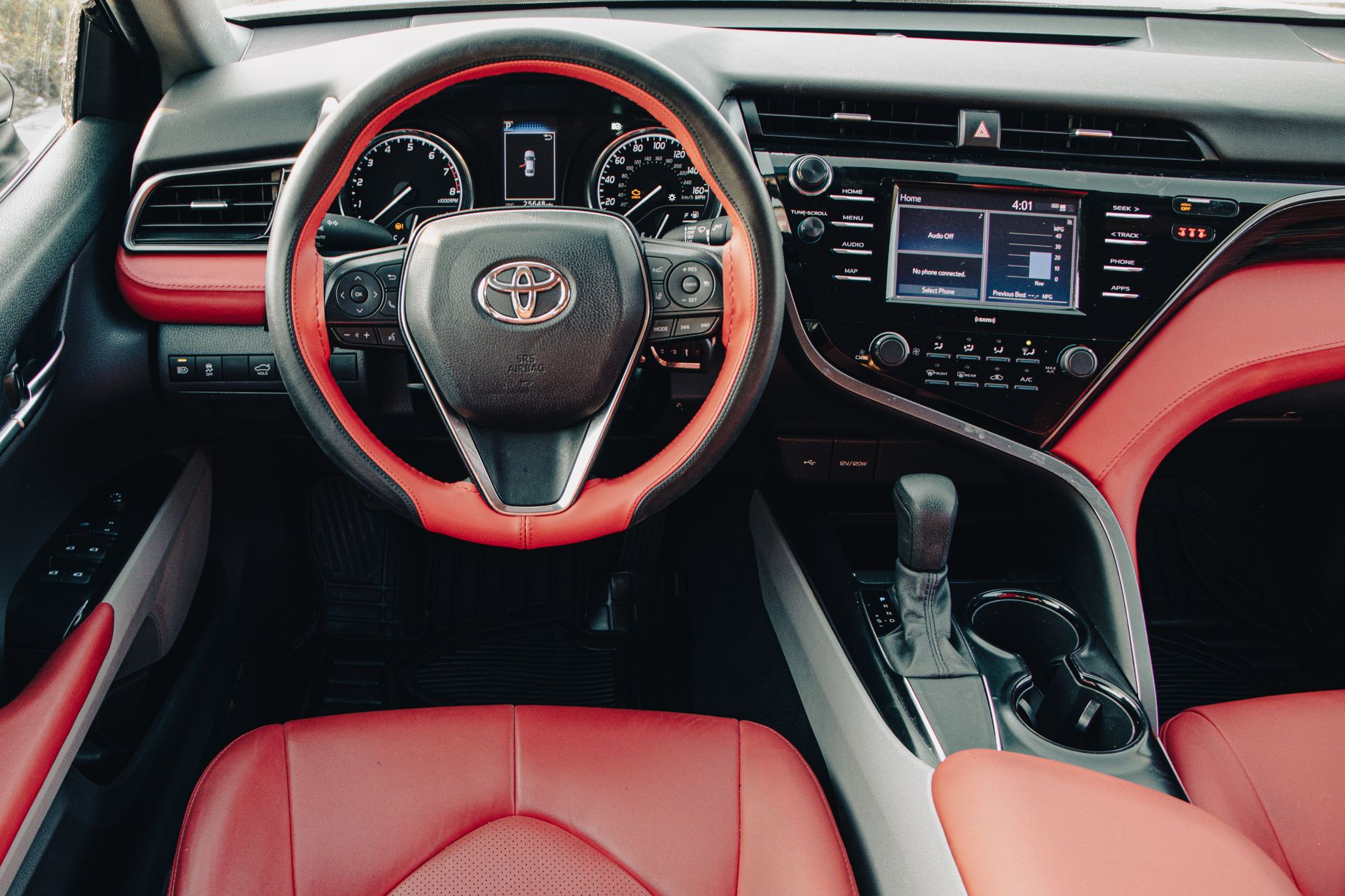

When the stability-control warning lights up on a Camry, the system has detected a fault that can reduce skid control and traction management. It usually shows up with ABS, TRAC, or Check Engine lights, and the cause is often a brake, sensor, or engine signal problem.
If the warning appeared after a rough start, battery work, or a sudden dash-light combo, this overview covers what it means and how to narrow the fault fast.
What The VSC Warning Means On A Camry
When a wheel starts to slip, stability control trims engine power or brakes one wheel to help keep the car pointed where you steer. On a Camry, that decision depends on wheel speed data, brake input, steering angle, and engine signals, so a fault in any of those areas can trigger the message.
A Check VSC System message is not a casual reset prompt. It means the control unit found a stored diagnostic trouble code, and Toyota built the alert because the car may lose part of its traction and skid control logic until the cause is fixed.
Sometimes a Camry limits VSC after an engine or brake fault lands in memory. A misfire, throttle body issue, or brake switch problem can make the stability module distrust its own data, which is why a VSC system check Toyota Camry warning can start with something outside the VSC hardware itself.
That kind of false signal usually points to another system feeding bad information into the stability network.
Lights That Often Appear Together
Shared inputs usually explain a dash that lights up in pairs or threes. ABS, traction control, and the VSC message often rely on the same wheel speed sensors, brake circuits, and control logic, so one bad signal can spread across the panel.
ABS And TRAC Often Join The Warning
The anti-lock brake system and traction control system use the same wheel speed sensors and much of the same wiring. A damaged tone ring, corroded connector, or erratic sensor signal can trigger VSC and traction control light Toyota Camry displays at the same time because the car can’t trust the wheel data.
Check Engine Lights Can Be Part Of The Same Fault
A Toyota Camry check engine and VSC light combination often starts with an engine-side code. Toyota logic can shut down or limit stability control after a throttle, airflow, or misfire fault because engine torque has to be predictable before the car can trim power for slip control.
That’s why a rough idle, delayed throttle response, or a loose gas cap can matter more than it seems. The stability warning may be reacting to the engine management side of the car, which leads straight into the fault list below.
When those lights travel together, the real culprit is often hiding in a different part of the car.
Common Faults Behind The Message
Wheel sensors sit close to the road, heat, salt, and spray, so they fail more often than many Camry owners expect. Brake switch issues, steering sensor drift, and low system voltage can also confuse the control unit and create a Toyota Camry stability control warning without a dramatic mechanical failure.
Wheel Speed Sensor Problems
At each wheel hub, this sensor reports how fast the tire is turning so the car can compare speeds. On a Camry, that signal matters because even a brief dropout can make the VSC module think a wheel is slipping, which is why a cracked harness or dirty sensor tip can cause a warning at normal driving speed.
Front sensors face steering movement and road splash, while rear sensors live near brake dust and corrosion. A rusty hub, bent tone ring, or chafed wire can create a false pulse pattern, and the system sees that noise as a real traction event.
Brake Switch And Pedal Input Faults
Mounted above the brake pedal, this switch signals the car the moment your foot presses down. Toyota uses that signal for cruise logic, brake lights, shift interlock, and stability control, so a switch that sticks or reports the wrong position can confuse several systems at once.
One common pattern is a brake lamp that stays on after the pedal is released, or a lamp that works only at a certain pedal position. That small electrical mismatch can trigger a VSC system check Toyota Camry message because the control unit can’t tell whether you are braking, coasting, or holding pressure.
Steering Angle And Yaw Sensor Errors
During a hard corner or sudden lane change, these sensors track the car’s direction and body rotation. The yaw rate sensor tells it how the body is actually rotating, and those two signals are compared every fraction of a second, like a conversation between intention and motion.
Centering drift after a battery disconnect, a worn clock spring, or a sensor calibration fault can upset that comparison. The control unit then sees a mismatch between the steering wheel and the car’s path, so the VSC message appears even though the tires and brakes may feel normal.
Voltage And Brake Fluid Problems
Low battery voltage can create unstable sensor readings during startup. Modern Toyota modules dislike weak voltage because a brief dip can distort communication across the ABS and stability control network, leaving behind a code that points to the whole system rather than one part.
Brake fluid that falls below the proper mark can also raise concern, especially after pad wear or a small leak. A clean fluid level check helps because the warning may reflect a hydraulic issue, and that changes what you inspect next.
A simple leak or low reservoir can change the diagnosis completely, so the checks have to follow that logic.
Stop at a simple visual pass before clearing codes. A loose connector at a front wheel or a nearly empty battery often saves you from replacing a sensor that was never the root problem.
A Practical Diagnosis Sequence
The fastest path starts with the basics because the stability system depends on clean power and clean signal paths. A VSC system check Toyota Camry scan works best after you inspect the battery, fluid, and wiring, since those items can create misleading codes that send you toward the wrong repair.
Check Fluid, Battery, And Wiring First
Open the hood and confirm brake fluid level, battery terminal tightness, and visible harness damage near the wheels. A green crust on a terminal, a rubbed-through wire loom, or a wet connector near the caliper can explain a warning without any deeper teardown.
Pull Codes With An OBD-II Scanner
An OBD-II tool gives you the diagnostic trouble code that the car stored. Toyota and Lexus systems often log ABS or chassis codes alongside engine codes, so a basic parts-store scan may help, but a tool that reads ABS data gives a clearer path for the VSC and traction control light Toyota Camry issue.
Match The Code To The System
A wheel speed code points you toward a sensor, hub, or harness. An engine code points you toward airflow, ignition, or throttle control, while a brake or steering code shifts attention to pedal input, sensor calibration, or the stability control module itself.
Two real-world examples show how that logic works. A P0301 misfire code can bring on the Check Engine Light and VSC message together, while a C0210-style wheel speed fault can leave ABS and traction control lit even though the engine runs smoothly. That split tells you where to spend time and where not to.
A few repairs clear the warning quickly, while others reveal deeper faults that deserve a different approach.
| Code Area | What It Usually Points To | What You Check Next |
|---|---|---|
| ABS or wheel speed | Sensor, tone ring, hub, or wiring | Look at the affected corner first |
| Engine management | Misfire, throttle body, airflow, or fuel issue | Inspect engine performance and related parts |
| Brake input | Brake light switch or pedal signal fault | Watch brake lamps and pedal response |
| Steering or yaw | Sensor calibration or center alignment problem | Check calibration history and steering feel |
Repairs That Usually Clear The Warning

Once the code points to a system, the fix is usually narrower than the dash light makes it feel. A Toyota Camry VSC light on message often clears after the true fault is repaired and the control unit sees a clean drive cycle with normal inputs from the sensors.
Clean Or Replace The Sensor That Failed
A wheel speed sensor with corrosion or a broken lead can be cleaned only when the issue is dirt or debris at the connector. A sensor that reports erratic voltage under movement needs replacement, and the hub area should be checked for rust, metal shavings, or impact damage at the same time.
Repair Brake And Steering Input Faults
A misadjusted brake light switch can be set with a small change in pedal position, while a steering angle sensor may need recalibration after battery work or alignment service. The system depends on those signals being centered and believable, so clearing the code without fixing the input only hides the fault for a short time.
Fix Electrical Supply Issues
Weak battery voltage, a blown fuse, or a loose ground can mimic a deeper module failure. Alternator output matters too, because a charging system that drifts below normal can make the ABS and VSC modules drop offline just long enough to store a fault.
A weak battery or shaky alternator can be enough to trigger the same cluster of warnings again.
Watch for a pattern after repair. A clean road test with no return of the warning tells you the control unit accepted the new signal and finished its readiness checks.
Resetting The System And Knowing When To Stop
A reset only works after the root cause is gone, since the car will bring the warning back the moment it sees the same bad data. The phrase how to reset VSC light on Toyota Camry sounds simple, but the real answer is to clear codes after repair and let the system verify every input again.
Disconnecting the battery can erase some memory, yet it does not cure a sensor fault or a wiring break. A warning that returns after reset means the module still sees an active problem, and repeated resets only waste time while the car stays in a reduced-safety state.
Professional inspection makes sense when brake feel changes, steering feels off-center, or traction behavior becomes slippery on dry pavement. A scan tool with live data can show wheel speed spikes, brake switch status, and steering angle drift in real time, which is far faster than swapping parts at random.
Live data makes that pattern visible, and the final takeaway is knowing when a reset is enough.
What To Remember
The warning is a signal, not a verdict. Your quickest path is a careful scan of the codes, a check of the battery and wiring, and a repair that matches the system named by the fault, because that is what gets the Camry back to full traction and stability control logic.
FAQ
Why is the VSC light on in my Toyota Camry?
A Camry lights VSC when the stability control module finds a fault in wheel speed, brake input, steering input, or engine management. A stored code tells you which system failed, and the light often stays on until that code is repaired and cleared.
Can I drive my Camry with the VSC light on?
You can move the car, but traction and skid correction may be limited. Dry pavement may feel normal, yet slippery road conditions expose the weakness fast, so a brake, steering, or engine change in feel deserves prompt diagnosis.
How do I reset the VSC warning on a Toyota Camry?
Clear the stored code with an OBD-II scanner after the fault is fixed. Battery disconnects can erase some memory, but the warning returns if the module still sees the same bad signal.
Why do the check engine and VSC lights come on together?
The engine control module and stability system share data. A misfire, throttle body issue, airflow fault, or other engine-side problem can make VSC shut down part of its function until the engine code is resolved.
What causes VSC and traction control lights to stay on?
A bad wheel speed sensor, brake light switch fault, steering angle issue, low voltage, or damaged connector can keep both lights active. The system stays lit because it still sees an active fault, not a past one.