
When the pads wear down completely, metal can rub where friction material should be, so stopping power can drop fast. You might have only a few miles, or even less, before the rotors are damaged and the car takes much longer to slow.
If the noise has started, the next step is usually service, not waiting it out. This overview covers causes, risk levels, and the safest move for your car or truck.
What Grinding Usually Means
Worn pads are the most common reason, and loose hardware or direct metal-on-metal contact can also create the sound. The soft friction layer is gone, so the hard parts are doing the stopping.
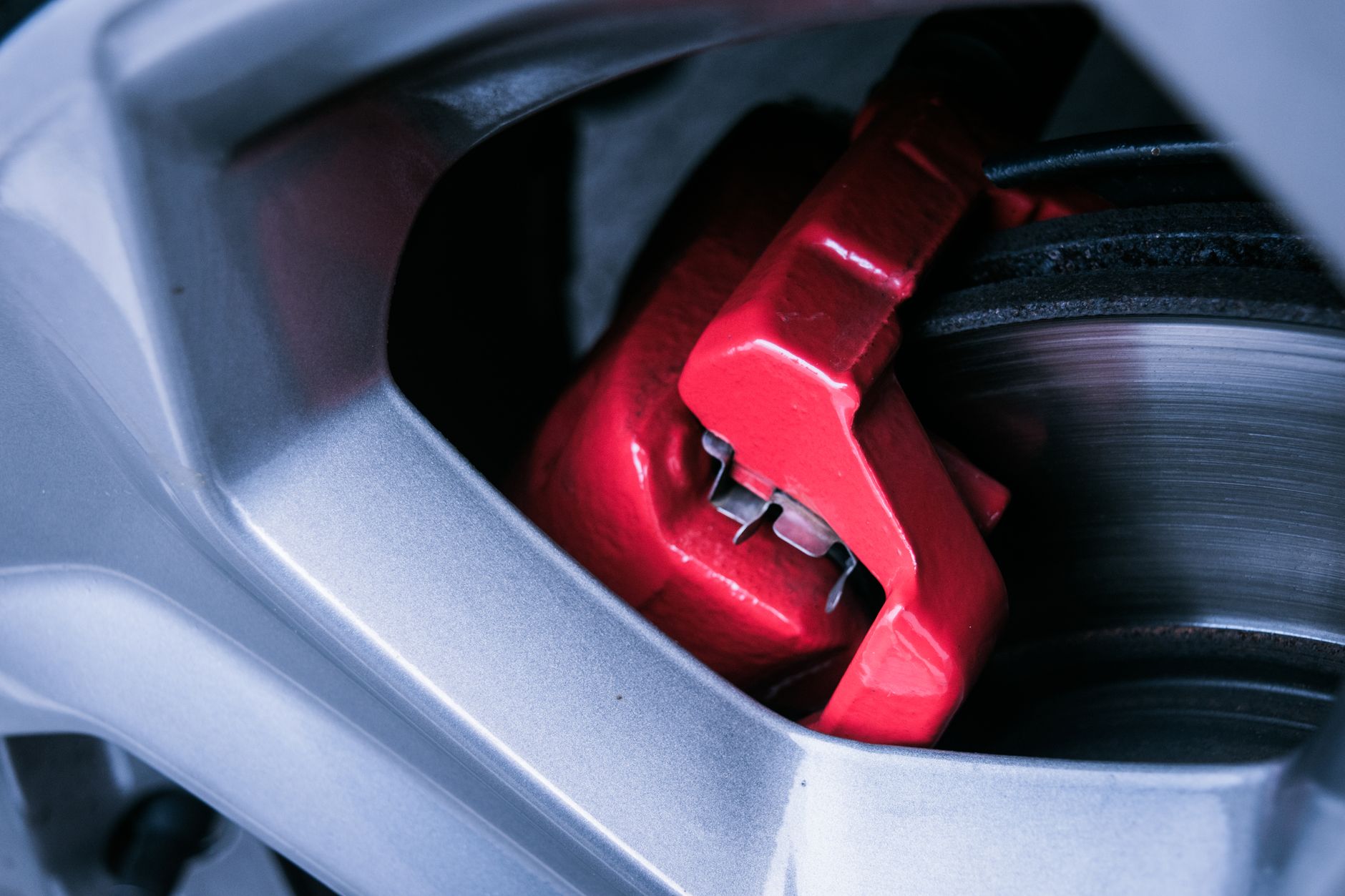
Once the pad material disappears, the backing plate can carve grooves into the rotor during a single commute. A wear indicator may squeal first, and a warning light or pedal shake makes the problem harder to ignore.
Brake and Clutch shops often treat this as damage, not normal wear. That matters because the noise is no longer something to schedule around.
Pad Wear Changes the Sound
Fresh pads stop the car with a smooth, dull feel. As the friction layer wears away, the caliper starts pressing metal against metal, and the noise shifts from squeal to scrape to grind.
Already-scored rotors can make the sound louder with each mile. That’s why driving on grinding brakes can seem manageable at one block and worse at the next stoplight.
Warning Signs Stack Up Fast
A steering wheel shimmy, a longer pedal stroke, or a brake warning light often shows up with the noise. Taken together, those signs matter more than sound alone.
The National Highway Traffic Safety Administration warns drivers to act quickly when brake behavior changes because stopping distance can shift before a full failure shows up. AAA gives the same practical advice, since weak brakes in city traffic leave very little room for surprise.
Look at the noise, the pedal feel, and the warning lights as a group. The next section shows why the risk rises so quickly once friction starts disappearing.
As friction disappears, the system can go from annoying to dangerous far faster than most drivers expect.
Why the Risk Rises So Quickly
Once friction drops, the car doesn’t slow the same way anymore. Braking distance stretches, and a stop that felt routine on Tuesday can turn sloppy on Wednesday with the same pedal pressure.
Heat makes things worse. Metal contact creates more heat than pad material does, and heat reduces friction consistency while also warping rotors and stressing calipers.
The longer the car keeps moving, the more parts get pulled into the repair. A simple pad swap can become rotor replacement, hardware replacement, and extra labor once the rotor face is grooved or the caliper slides seize.
Stopping Distance Grows in Normal Traffic
Traffic light gaps, school zones, and parking lots all punish weak brakes. A 10 to 20 percent change in brake response can feel small on paper and huge when the car ahead stops short.
That’s the hidden risk of driving on grinding brakes, because the vehicle can still roll and steer while its stopping distance quietly gets worse.
Heat and Metal Contact Damage Parts Quickly
Rotors are built to handle clamping force, not repeated steel contact. Once the surface is cut, the grooves act like a file and keep wearing the pad backing plate and the caliper face.
Brake fluid also absorbs heat from the system, so a hot brake can make the pedal feel softer for a short stretch. That doesn’t mean the system has recovered; it only means the heat is moving through the hydraulic circuit.
You feel that heat most when stop-and-go traffic stacks one hard stop on top of another. The next section gets specific about how little driving you can get away with before the damage spreads.
That acceleration matters, because every extra stop compounds the heat and shrinks the safe window.
How Far You Can Safely Go
There’s no reliable safe mileage once grinding starts. A quarter mile can be enough to damage parts, while a long highway run can push the system into a much worse state.
Think of the sound as a stop sign, not a warning to monitor for a few days. Loud, constant grinding means the safest answer is to stop driving and arrange service.
Short city trips are less punishing than long descents, but even a quick run to the shop can finish off a rotor that was already thin. The real question isn’t how long you can drive on grinding brakes, but how little driving you can get away with before inspection.
| Situation | What The Noise Suggests | Practical Risk |
|---|---|---|
| Light squeal only | Pad wear indicator or early pad wear | Service soon, braking may still feel normal |
| Scrape at low speed | Pad material may be nearly gone | Rotor damage can start on the next stop |
| Constant grind | Metal contact is already happening | Stop driving and arrange inspection |
| Grinding plus vibration | Rotor wear or caliper trouble | Braking can become uneven and unsafe |
Short Trips Are Still a Gamble
A three-mile trip at neighborhood speed creates less heat than a 20-mile interstate drive, but the damage can still climb fast. That’s why distance alone doesn’t make the trip safe.
Steep hills and stop-and-go routes raise the load on pads and rotors. A short route through traffic can be harder on the brakes than a longer, easy run on flat roads.
You also need to think about how often the car has to stop, not just how far it needs to travel. Fewer stops usually mean less heat, and the next section covers the safest way to move the car before more damage sets in.
For short distances, restraint is the real safeguard, especially when heat buildup has already begun.
What To Do Before More Damage Sets In
Move the car only as far as needed to reach a shop, and only when the sound is mild enough to allow cautious driving. Slow roads, long following gaps, and gentle pedal pressure reduce the strain on the system.
Skip highway speeds, heavy traffic, and steep descents. Those conditions heat the brakes fast and leave less room for a longer stopping distance.
Schedule an inspection right away instead of waiting for the sound to fade. Grinding rarely disappears on its own, and silence after a hard stop can mean the pad material is already gone.
- Check pedal feel. A softer or longer pedal points to more than simple pad wear.
- Limit the route. Choose the shortest road to the shop and avoid detours.
- Drive gently. Leave space ahead so you can brake less forcefully.
- Skip steep grades. Hills add heat and can speed up rotor damage.
- Arrange inspection fast. A lift inspection can show pad thickness, rotor scoring, and caliper movement.
Do not keep “listening for a change” on the road. A grinding sound is already the change, and each stop can remove more rotor material.
Cutting the trip to the shortest safe run usually gives the best chance of avoiding extra damage. The repair decision usually comes next, because worn pads rarely stay a simple pad job for long.
Once that limit is crossed, small fixes often give way to broader repair work.
The Repairs That Often Follow

Worn pads are only the start when the backing plate has been rubbing the rotor. A mechanic may find scored rotors, damaged anti-rattle hardware, stuck caliper slides, or heat spots that call for replacement.
Grinding brakes repair cost can rise fast because one worn part tends to expose the next weak link. Pads alone are cheaper than pads plus rotors, and the bill climbs again when the caliper or mounting hardware is worn.
Do I need new rotors if my brakes are grinding often depends on how long the car kept moving after the noise began. A rotor with light marks can sometimes be resurfaced, but a deeply grooved or heat-damaged rotor needs replacement.
Rotor Damage Changes the Job
Rotors are measured for thickness because heat and wear remove material over time. Once they fall below the minimum spec stamped by the maker, resurfacing is off the table and replacement becomes the safe path.
That’s a mechanical limit, not a sales pitch. A thin rotor sheds heat poorly, and poor heat control raises the chance of pedal fade during hard stops.
Calipers and Hardware Add Hidden Cost
A seized slide pin can hold the pad against the rotor after you lift off the pedal. That creates drag, extra heat, and uneven wear that can look like a much larger failure.
Brake clips, shims, and anti-rattle hardware matter because they keep pad movement controlled. When those pieces are bent or rusted, new pads may start noisily and wear unevenly.
What a Shop Looks For
A proper brake inspection checks pad thickness, rotor thickness, slide pin movement, and fluid level. That list matters because grinding may come from one bad corner or from all four wheels showing wear at the same time.
Brake and Clutch specialists also look for heat cracks and uneven contact marks. Those clues tell you whether the system needs one axle repair or a broader fix.
Those findings decide whether you need a straightforward pad swap or a more complete brake job. Severe wear pushes the decision one step farther, which is where towing starts to make sense.
When wear reaches that point, the question shifts from repair cost to whether the car should move at all.
When Towing Becomes the Safest Choice
Severe grinding changes the decision fast. A car that barely slows, pulls hard to one side, or shakes at the pedal should not be treated as roadworthy for a shop run.
A brake warning light, strong vibration, or weak braking makes towing the prudent move. AAA calls that the safer option because a tow costs less than a collision or a failed stop in traffic.
You should also choose towing after a long descent leaves the brakes smoking hot or after the pedal starts sinking farther than normal. At that point, driving on grinding brakes can move from repair issue to real failure risk in one stretch of road.
Take the sound seriously the same day it starts. A tow truck is cheaper than a tow plus rotor, caliper, and tire damage after a bad stop.
The safest choice is to have the vehicle inspected or towed before brake failure becomes a real possibility. Once the pedal feel changes, the margin for error has already shrunk.
That shrinking margin is the cue to step back and remember the priorities that protect both car and driver.
What To Remember
Grinding brakes aren’t a background noise you can monitor for a week. They mean the friction layer is gone or nearly gone, and the car may already be cutting into the rotors. The safest move is to limit motion, avoid speed, and get an inspection or tow before the damage spreads.
FAQ
Can I still drive if my brakes are grinding?
Light, brief grinding can still let the car roll, but the safe answer is to stop driving as soon as you can. Metal contact can cut into rotors fast, and the stopping distance can grow before the pedal feels fully wrong.
How long can you drive on grinding brakes?
There’s no dependable mileage once grinding begins. Some cars lose pad material in a short city trip, while others get through a few miles and still suffer rotor damage, so the practical answer is as little as possible.
How much does it cost to fix grinding brakes?
The bill depends on how far the wear has gone. Pad replacement alone costs less than pad, rotor, and hardware replacement, and a seized caliper or damaged slide pin can push the total higher.
Do I need new rotors if my brakes are grinding?
Not always, but deep grooves, heat spots, or thickness below spec mean replacement instead of resurfacing. A shop inspection can measure the rotor and tell you whether the damage stayed shallow or went too far.
How long do brakes last when grinding?
Once grinding starts, brake life can shrink to a very short window. The backing plate can eat into the rotor surface in one drive, so the safe expectation is immediate service rather than waiting for the sound to change.