
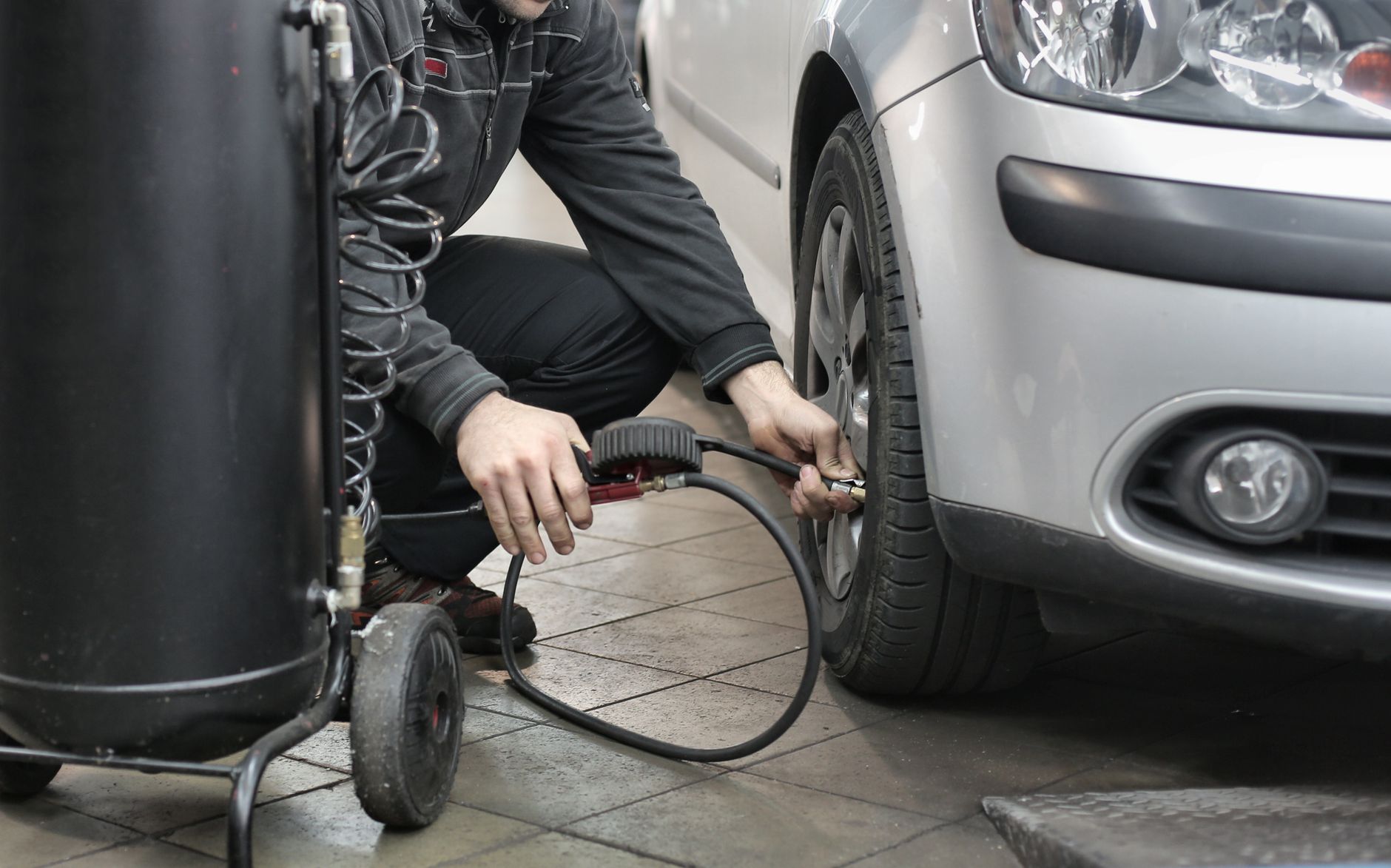

Underinflated tires, a sensor that isn’t reading correctly, or a system that still needs a reset usually cause the warning light to stay on after a fresh tire install. It can also show up after a cold night, a rushed install, or a TPMS sensor that never got paired.
If the warning appeared right after service, the next steps are straightforward: check pressure, confirm the spare, and reset or relearn TPMS for the vehicle you drive.
Start With The Basics On Pressure And Temperature
Pressure checks come before anything else, because the dash light often reacts to small changes fast. The driver-side door placard shows the correct cold inflation target, while the sidewall only lists the tire’s maximum limit.
Even a mild temperature swing can drop pressure enough to trigger TPMS. About 10 degrees Fahrenheit can mean roughly 1 psi less air, which is enough to matter on some vehicles. That matches guidance from NHTSA and tire makers like Michelin, Bridgestone, and Goodyear.
Some vehicles monitor the spare too. If that tire is low, the warning can stay on even when the four road tires are set correctly.
Use The Door Placard, Not The Sidewall
Placard pressure is tied to load, handling, and suspension tuning. That’s why one vehicle may call for 32 psi up front and 35 psi in back, even though the tire itself lists a much higher limit.
A shop can still leave one tire a few psi low after mounting. Three to 5 psi may not sound like much, but TPMS is built to catch that kind of difference before it turns into a bigger problem.
Cold Weather Can Trip The Warning Fast
Morning air often drops below the temperature the tires were inflated at, so TPMS sees the change right away. You might drive home with no warning, then see the light the next morning after a cold snap pulls pressure down across the set.
That pattern usually points to air, not damage. The tread can be fine and the casing can be fine too; the pressure simply changed, and a cold inflation check may clear it.
A simple pressure drop can trigger the dashboard even when the tire itself is still sound.
Check the spare during the same walkaround. A monitored spare that sits low can keep the system lit even after the road tires are correct.
Why The Light Can Stay On After A Tire Change
A fresh install can still leave the tires slightly off target. When that happens, the system keeps the warning active until each tire reaches the pressure stored in TPMS.
Sensor problems sit right behind simple underinflation. A missing sensor, a damaged valve stem, or an unregistered transmitter can stop the module from reading one wheel position clearly, so the light stays on even though the tire itself is fine.
A flashing light that turns solid usually means a system fault, not a normal low-pressure warning. Many Ford, Honda, and Toyota models use that pattern to signal that the electronics need attention before the readings can be trusted again.
Simple Inflation Error
Busy installs can lead to a tire leaving the bay a few psi low. TPMS watches for deviation, not a dramatic failure, so even a small miss can trigger the tire pressure light on after tire change.
A sedan set for 33 psi may roll out at 28 psi on the right rear. The tire still holds air, but the car sees a low reading and reacts right away.
Sensor Or Registration Trouble
Direct TPMS uses a sensor inside the wheel, usually near the valve stem. If the battery is weak, the stem was damaged during service, or a new sensor never got paired, the module can’t build a clean signal map.
That problem shows up often after wheel swaps and aftermarket rim changes. Air alone won’t fix it, because the vehicle needs a sensor relearn before it trusts the wheel position data again.
Flash Then Solid Means A Fault
A blinking warning that becomes steady deserves more attention than a normal low-pressure alert. That sequence often means the TPMS control module stored a fault code, and the problem may be communication rather than air pressure.
Because of that, inflation checks are only the starting point. Set the pressure correctly, then see whether the car still complains after a drive cycle or reset attempt.
Correct inflation clears many false warnings, but a stubborn light can still point to the system itself.
Setting The Correct Pressure On New Tires
The correct number is on the driver-side door placard or fuel door label, not the sidewall maximum. That value reflects the load, handling, and tread-wear balance the automaker chose for the vehicle, and TPMS is calibrated around it.
Cold readings matter here. Tires heat up as you drive, and that raises internal pressure, so the best check happens before a trip or after the car has sat for several hours.
Do not chase the sidewall number. A sidewall rating is the tire’s upper limit, not the road-going target. Overinflation can narrow the contact patch, make the ride harsher, and wear the center of the tread faster.
Use A Cold Inflation Check
A handheld gauge gives the clearest reading when the tire hasn’t been driven on for a few hours. Even a short run to the gas station can warm the carcass enough to raise pressure and blur the real number.
That’s why a shop that sets pressure right after mounting may still need a final morning check. The pre-drive reading tells you whether the install truly matched the placard.
Match Each Wheel To The Placard
Set all four tires to the listed psi, then confirm the spare if the vehicle monitors it. Uneven pressure across wheel positions can keep the light active, especially on cars with direct TPMS that tracks each corner separately.
A small list helps here:
- Front left: Match the placard value for that axle, not the tire sidewall.
- Front right: Use the same cold gauge method before you add or release air.
- Rear tires: Keep both rear readings close unless the placard shows a split spec.
- Spare tire: Check it only after confirming whether your vehicle monitors it.
Use The Right Number For Daily Driving
Bridgestone and Goodyear both point you toward placard pressure because that setting supports everyday stability, braking, and tread life. A tire pumped to the sidewall ceiling may feel firmer, but that doesn’t make it the right choice for commuting or hauling groceries.
That difference matters the moment you leave the shop. The goal is not maximum air; it’s the pressure the car was calibrated around, so the warning light has no reason to stay lit once the tires are set.
Once the tires match the recommended setting, the remaining step is teaching the car to recognize it.
Resetting And Relearning The TPMS System
Some vehicles clear the warning on their own after a few miles, while others need a button press, menu command, or sensor relearn. The process depends on the make and model, because direct TPMS and indirect TPMS don’t store wheel data the same way.
Many newer vehicles use an infotainment screen, a dash button, or a drive cycle that asks you to hold a steady speed for several minutes. That’s why how to reset tire pressure sensor after new tires is less about one universal trick and more about following the exact routine the car expects.
Shop equipment matters too. A tire center may need a TPMS tool to pair new sensors with the car if automatic learning doesn’t happen during the first drive.
Menu, Button, Or Drive Cycle
Honda and Toyota models often route relearn functions through the dash or center screen, while some Ford trucks use a button sequence plus a drive loop. The screen prompt or owner manual gives the order, and the system needs that order to map each sensor to its wheel position.
Drive cycles aren’t random errands. The vehicle may want a specific speed range, a certain time on the road, and then a parking period before it accepts the new sensor data.
New Sensors Need Pairing On Some Vehicles
A sensor bought with the wrong frequency or left unpaired can sit invisible to the receiver. In that case, the car shows new tires but tire pressure light is still on even though all four tires hold the correct air.
The fix is pairing, not more pressure. A shop with a TPMS scan tool can register the sensor IDs, confirm battery status, and check whether the module is reading all corners.
Even a proper relearn can fail when one wheel stops sending a usable signal.
Save the old tire service invoice. The sensor IDs, valve stem parts, and wheel positions on that paper can speed up the next diagnosis.
When A Sensor Problem Is The Real Cause

Correct pressure with a stubborn warning points away from air and toward hardware. A sensor battery can fade, a valve stem can crack at the base, or the transmitter can fail after a wheel hit or curb strike.
That failure mode is common on cars that have been in service for 6 to 10 years, because TPMS batteries are sealed inside the sensor body. Once they weaken, the module may read the wheel one trip and lose it the next.
Stored fault codes give the clearest path forward. A scan tool can show whether the issue is low signal, dead battery, or a missing sensor, and that’s faster than guessing which tire is at fault.
Valve Stem Damage Looks Minor, Then Stays Annoying
A cracked rubber stem or a bent metal stem can leak slowly enough to confuse the situation. The tire may drop only a few psi over a day, yet the dashboard warning light keeps returning because the sensor sees a real pressure loss.
That’s one reason a tire pressure light on after new tires shouldn’t be treated as a cosmetic annoyance. A stem issue can sit quietly until the pressure falls far enough to affect handling or tire wear.
Fault Codes Beat Guesswork
A TPMS scan shows which wheel stopped talking, which sensor ID failed, and whether the module lost calibration. That data saves time because it separates a bad sensor from a mount issue or an air leak at the bead.
In plain terms, the code tells you whether to add air, relearn the system, or replace a sensor. That order keeps you from paying for parts that won’t solve the problem.
That kind of diagnosis tells you whether the fix is air, a reset, or a fresh sensor.
The Smart Checks Before You Head Back To The Shop
Compare all four pressures with a good gauge before you drive back. A tire can be off by only 2 or 3 psi and still keep the light on, so matching the placard value across the set is the cleanest starting point.
Recheck after a short drive and then again the next morning if the weather changed sharply. Pressure shifts with temperature, and a morning drop can make a borderline reading look like a fresh problem.
Escalate to service right away when the light flashes, a sensor is missing, or the warning refuses to clear after proper inflation and reset. That sequence points to a TPMS fault, not a simple air adjustment, and the car needs a scan before you assume the tires are the issue.
- Check all four corners: Compare each tire to the placard value with a cold gauge.
- Inspect the spare: A monitored spare can keep the warning active.
- Drive a short loop: Some systems need motion before they relearn.
- Watch the light pattern: A flash then solid points to a system fault.
- Ask for fault codes: Stored codes show whether a sensor or stem failed.
A small example helps. A crossover leaves the shop at 35 psi on all four tires, but a cold front drops the morning temperature by 18 degrees and the rear axle falls to 32 psi. The warning light comes back, yet the tires are fine once the placard pressure is restored and the relearn is finished.
Another example is a truck with a missing sensor after winter tire mounting. The air pressure looks right, but the module never sees the left rear wheel, so the dash stays lit until the sensor is installed and registered.
If one corner never appears on the scan, the problem is no longer inflation at all.
Wrap Up
A TPMS warning after fresh tires usually points to pressure, sensor data, or a reset step, not a bad tire. Set the air to the placard number, check the spare, and use the correct relearn routine before you assume the mount went wrong. That sequence clears most cases without guesswork.
FAQ
Why is my tire pressure light still on after I put air in my tires?
The most common reason is that one tire is still below the placard pressure, or the system has not relearned the new reading yet. A sensor fault, a missing spare sensor, or a temperature drop can also keep the light on after the air is corrected.
How do you reset the TPMS light after new tires?
Use the reset or relearn process listed in your owner manual, which may involve an infotainment menu, a dash button, or a drive cycle. Some vehicles also need a shop tool to register new sensor IDs before the warning clears.
Why is my tire pressure light on when the tires are new?
New tires can still be underinflated, and that is enough to trigger TPMS right after service. A damaged sensor, a cracked valve stem, or a cold weather drop can create the same warning even when the tires themselves are fine.
Do new tires need a TPMS relearn?
Many vehicles do, especially after wheel swaps, sensor replacement, or tire rotation. The relearn lets the car match each sensor to the correct wheel position, which is why the warning can stay on until that step is done.
How do I turn off the tire pressure light?
You do not turn it off by hand like a dash lamp. Set the correct pressure, fix any sensor or stem fault, and complete the reset or relearn sequence so the system can clear the warning on its own.