
Gas storage looks simple until the container has to sit for months, move through a garage, or stay easy to pour without creating a mess. You want the right mix of material, capacity, venting, and handling, especially for mowers, tractors, boats, ATVs, and backup equipment that do not get used every week.
This roundup focuses on nine options that fit very different storage habits. Some are compact cans for light use, others are wheeled tanks for heavier refilling, and each one makes a different trade between portability, control, and capacity.
Quick Look At The Shortlist

VP Racing 35221-CA 5.5 Gal. Square Motorsport Jug

Justrite Type II Gasoline Safety Can, Red Galvanized Steel
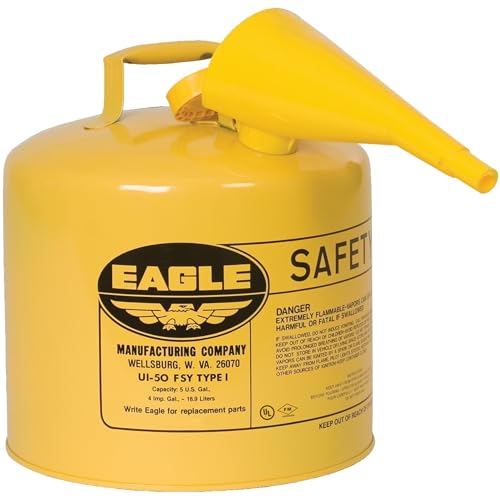
Eagle 5 Gallon Type I Yellow Safety Gas Can for Diesel

Eagle 1 Gallon Type I Red Safety Gas Can for Gasoline

JohnDow Industries JDI-FST15 15 Gallon Fuel Station

RotopaX 3 Gallon Gasoline Pack

VEVOR Fuel Caddy 35 Gallon Gas Storage Tank on 4 Wheels

TUFFIOM 35 Gallon Fuel Gas Caddy with Wheels
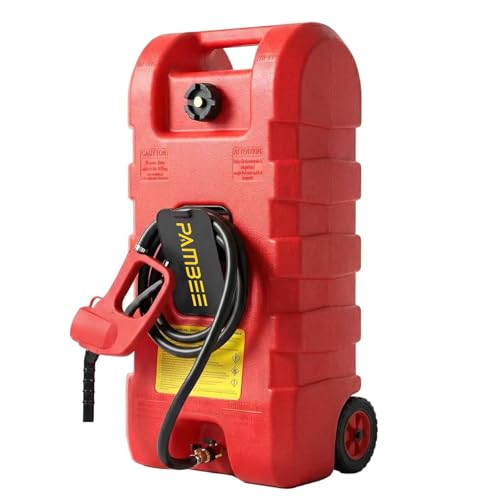
15 Gallon Gas Can, Fuel Tank Container with Manual Siphon Pump
More Details On Our Top Picks
The square body gives this jug a different personality from the round cans in the list, and that matters in a garage where shelf space gets tight. The close-trimmed cap and neck are aimed at a tighter seal, while the 14-inch filler hose helps with pouring into containers that do not sit up high.
You also get a non-fuel storage angle, which makes this more versatile than the more strictly regulated steel cans from Justrite and Eagle. For a farm shed, workshop, or trailer cabinet, that flexibility is handy, though the trade-off is that it is not built for gasoline storage.
Reasons To Buy
- Square shape stores neatly against walls and corners.
- Long filler hose helps with controlled transfer.
- Even-density plastic in stress points adds practical durability.
- Works for feed, outdoor materials, and recyclable fluids.
- Useful in garages, sheds, and farm setups.
Points To Note
- It is meant for non-fuel use, so it misses gasoline-focused storage needs.
- Plastic construction will not feel as rigid as the steel cans in this roundup.
- Its broad usefulness can also make it feel less specialized.
Feature Snapshot
Who It Suits Best
You get the most from this jug in a garage, workshop, or farm setting where the contents are not gasoline and the shape matters as much as the volume.
Where A Sibling Pick Shines
VP Racing 35221-CA fits a different job than the Justrite Type II Gasoline Safety Can, which suits careful fuel handling for people who need a metal can with more direct pouring control.
This is the steel-can option for people who want controlled pouring rather than a broad utility container. The patented manifold and Safe-Squeeze trigger are meant to keep fuel moving with less sputter, and the flexible metal hose helps with smaller fill openings.
Compared with the VP Racing jug, this one is far more focused on gasoline handling, and the powder-coated galvanized steel body gives it a tougher, more industrial feel. The honest read is that it asks for a little more care during cleaning and storage, but that is the trade for a more serious fuel can.
What We Like
- Safe-Squeeze trigger supports smoother pouring control.
- Flexible metal hose helps guide fuel into tighter openings.
- Galvanized steel body suits demanding shop use.
- Chemical-resistant powder coat helps the finish hold up.
- Pressure testing adds confidence for repeated handling.
Softer Spots
- Steel construction adds weight compared with plastic cans.
- Its specialized focus makes it less versatile than the VP Racing jug.
- The more technical pouring setup can feel like overkill for simple backyard refills.
Core Details
Right Fit For
You are the best match for this can when careful fuel transfer matters more than carrying a large volume.
A Better Fit Elsewhere
JohnDow Industries JDI-FST15 suits garages and work sites that need a larger station-style setup, not just a handheld safety can.
The yellow body helps separate diesel storage from gasoline at a glance, which is useful in a shed that already has more than one fuel container. The self-closing lid, flame arrester, and included F-15 funnel are aimed at cleaner handling, and the galvanized steel build keeps the feel firmly in the safety-can lane.
Compared with the Justrite can, this Eagle leans more toward straightforward diesel storage without the trigger-driven pouring setup. For a mower owner, tractor user, or anyone who keeps fuel lined up by task, that simpler layout can be easier to live with.
Bright Spots
- Yellow color makes diesel identification easier.
- Self-closing lid helps keep the opening contained.
- Included funnel supports less awkward filling.
- Flame arrester adds an extra handling layer.
- Five-gallon size fits regular equipment refills.
Small Caveats
- It is purpose-built for diesel, so it is less flexible than the VP Racing jug.
- Steel construction needs normal care to stay clean and tidy.
- The single-opening style is practical, but not as elaborate as the Justrite system.
Feature Rundown
Built With In Mind
You get the best fit here for diesel users who want a clear, durable, single-purpose safety can for shop or yard storage.
Another Choice May Suit
RotopaX 3 Gallon Gasoline Pack suits trail rigs and overlanding setups much better, especially where compact carry matters more than a taller steel can.
Small garages make this one easy to appreciate because it keeps the footprint tight while still staying in the safety-can category. The single opening, funnel, gasketed cap, and self-closing spout assembly make it feel practical for short fuel storage or occasional top-offs.
Compared with the 5-gallon Eagle diesel can, this one gives you less volume but easier placement on a shelf or in a cabinet. The trade-off is obvious, but for lawn equipment owners or anyone who wants a compact gasoline reserve, that smaller scale is the point.
Best Bits
- One-gallon size is easy to store.
- Included funnel helps with filling and pouring.
- Self-closing spout cap helps limit drips.
- Good fit for short-term backup storage.
Areas To Watch
- Capacity is modest, so it suits smaller fuel jobs.
- Frequent users may outgrow it quickly.
- The compact body can be less convenient for longer refuel sessions than the larger cans in this list.
Details At A Glance
Whose Shelf It Belongs On
You are the right match here if you want a compact gasoline container for a small garage, shed, or emergency stash.
Swap It Out When
VEVOR Fuel Caddy 35 Gallon Gas Storage Tank on 4 Wheels suits users who need much larger volume and rolling convenience for repeated refills.
This one shifts the conversation from handheld cans to a real fuel station setup. The welded steel tank, 10-foot hose, shut-off valve, and squeeze-handle dispenser are aimed at people who refill equipment often and want gravity-feed dispensing without a pump.
In a landscaping yard or farm shop, that larger format saves you repeated trips with smaller cans like the Eagle 1-gallon or 5-gallon picks. It does ask for more space and more commitment, so it belongs where storage and regular use justify the footprint.
Highlights
- 15-gallon capacity supports larger fuel reserves.
- Gravity-feed setup avoids pump dependence.
- 10-foot hose helps reach equipment more comfortably.
- Welded steel construction suits tougher work areas.
- Shut-off valve adds practical control during dispensing.
Room For Improvement
- Size and format are more demanding than the smaller cans in this roundup.
- It needs a dedicated storage spot.
- The station-style design is more than casual weekend users usually need.
Technical Sheet
The Right Fit
You are the best match for this station if you keep multiple machines fueled and have a place to park a larger tank.
Look Elsewhere When
Justrite Type II Gasoline Safety Can suits tighter storage areas and users who want a smaller handheld option instead of a station.
This is the travel-minded option in the group, built for off-roading, overlanding, camping, and truck-based trips where gear gets shaken around. The seamless construction and secure sealing are the main story, and the three-layer rotational molding gives it a more rugged feel than the lighter plastic jug from VP Racing.
That layout makes sense for vehicle-mounted storage, though the smaller 3-gallon size means you are choosing mobility over long reserve capacity. For trail rigs, ATVs, and UTVs, that trade is often the right one.
Upsides
- Seamless build supports leak resistance.
- Three-layer molding adds ruggedness for rough travel.
- Compact capacity suits vehicle-mounted fuel needs.
- Strong fit for off-road and camping setups.
Trade Offs
- Three gallons is modest for larger equipment.
- It is more specialized than the general-purpose cans in this list.
- The compact format favors travel over high-volume storage.
Quick Facts
Made For
You fit this pack best when your fuel container has to ride with a trail vehicle and stay compact enough for cargo racks.
A Better Fit Elsewhere
TUFFIOM 35 Gallon Fuel Gas Caddy with Wheels suits shop users who need rolling storage and longer hose reach, not trail-mounted carry.
The scale here moves it into serious utility territory, especially for garages with multiple machines or larger yards to cover. Four wheels and a manual transfer pump mean you can move it around more easily than a fixed tank, though it still belongs in a spot where a 35-gallon caddy makes sense.
Compared with the JohnDow station, this VEVOR caddy keeps a similarly large footprint but favors mobile storage on wheels. The honest read is that it suits people who want capacity first and a simple pump setup second.
Plus Points
- Large 35-gallon capacity reduces refill frequency.
- Four wheels help with repositioning.
- Manual transfer pump supports direct dispensing.
- Useful for cars, mowers, ATVs, and boats.
- Better suited to shared shop use than handheld cans.
Worth Noting
- The size can be awkward in tight garages.
- Manual pumping takes more effort than gravity-feed systems.
- It calls for organized storage and a level surface.
Feature Card
Who Should Grab It
You are the right fit here if your setup needs a large rolling tank for several machines or wide property use.
Reach For A Different Pick When
JohnDow Industries JDI-FST15 suits users who want a stationary station-style dispenser instead of a rolling caddy.
This caddy follows the same large-capacity lane as the VEVOR, but the 11.9-foot hose changes the day-to-day feel because you can reach farther without moving the tank as often. That matters in a busy garage or shed where the equipment sits in different spots, and the manual siphon pump keeps the system straightforward.
The longer hose is the main reason this one stands out from the other large caddies, though it also means you need to keep hose storage tidy. For mixed vehicle use, including tractors and motorcycles, the format feels practical rather than flashy.
Standout Traits
- 11.9-foot hose adds useful reach.
- Wheels support easier moving around the workspace.
- Large capacity works for multi-machine fueling.
- Manual siphon setup stays uncomplicated.
Honest Caveats
- The large body needs room to park.
- Long hose storage takes a little organization.
- Manual pumping is not as effortless as a powered setup would be.
Feature Card
Best Suited To
You are the best match here if you need a rolling tank with longer reach for a varied garage or yard setup.
Where Another Pick Suits Better
VEVOR Fuel Caddy 35 Gallon Gas Storage Tank on 4 Wheels is the cleaner fit for users who want a simpler transfer pump layout and do not need the extra hose length.
This sits between the handheld cans and the oversized 35-gallon caddies, which makes it easier to place in a normal garage while still giving you a substantial reserve. The 10-foot hose and manual siphon pump make it feel like a practical middle path for cars, ATVs, boats, and yard machines.
It is not as compact as the Eagle one-gallon option or as specialized as the RotopaX travel pack, but that is part of its appeal. For many households, this middle capacity is the least awkward balance of space, reach, and refill frequency.
Best Bits
- 15-gallon size offers a useful middle ground.
- Wheels make storage and movement easier.
- 10-foot hose helps reach different machines.
- Manual siphon pump keeps the setup straightforward.
Things To Consider
- It still needs more floor space than a handheld can.
- Manual transfer asks for a bit more effort than gravity-feed setups.
- The middle size may feel unnecessary for very light fuel use.
Spec Overview
Who Will Love This
You fit this tank best if you want a middle-capacity fuel caddy that does not take over the whole garage.
Skip It When
JohnDow Industries JDI-FST15 is the better match for shoppers who want a more station-like dispensing setup with a welded tank and gravity feed.
How To Choose The Right Gas Cans For Long Term Storage
Material And Container Type
Steel cans suit people who want a more rigid feel and a traditional safety-can layout, while heavy plastic options usually weigh less and are easier to carry. Rotomolded or seamless plastic can work well for travel and off-road use, but a metal safety can often feels better in a shop that sees regular fuel handling.
The right material also depends on how often the container moves. A fixed tank or caddy can justify heavier construction, while a compact garage can make a small one-gallon or three-gallon form easier to live with.
Capacity And Storage Space
Size drives the whole decision. A one-gallon can suits small equipment and short backup needs, five gallons fits common mower or tractor top-offs, and 15 to 35 gallons starts making sense for larger properties or shared equipment.
Long-term storage is easier when the container matches your actual use pattern. Oversizing creates clutter and unnecessary handling, while undersizing means you keep refilling the container more often than you would like.
Pour Control And Hose Reach
Pouring hardware matters more than many shoppers expect. A flame arrester, self-closing cap, siphon pump, or gravity-feed hose can change how cleanly fuel moves into a small tank opening or a hard-to-reach machine.
Long hoses help in busy garages, but they also need a tidy place to live. Shorter hoses and compact funnels are simpler to manage, though they ask you to bring equipment closer to the caddy or can.
Storage Habits And Maintenance
You also want a setup that fits the way your space stays organized. A square jug works well against a wall, wheeled caddies belong on level floor space, and trail packs make more sense where the container travels with the vehicle.
Cleaning, cap care, and hose storage matter too. The easier a can is to seal, move, and wipe down, the more likely it is to stay in good shape over time.
What To Weigh Before You Choose
Hidden Buying Traps
One common mistake is focusing on capacity alone. A large tank sounds helpful, but in a small garage it can become awkward fast, especially once you add hose storage and turning space.
Another miss is ignoring the container type. A non-fuel utility jug, a diesel-only safety can, and a mobile fuel station solve different problems, so matching the can to the job matters more than chasing a bigger number.
What The Upgrade Payoff
Higher-tier models usually cost more because they add better materials, more controlled dispensing, and more durable hardware. Welded steel, longer hoses, trigger controls, and rolling bases all take more to build than a simple compact can.
That upgrade pays off when you fill equipment often or keep fuel stored in a busy workspace. For occasional backyard use, a smaller and simpler can often makes more sense than a heavier station-style setup.
Frequently Asked Questions
What size works best for long-term fuel storage?
Five gallons suits many homes because it balances storage and handling. Larger caddies make more sense only when you refill equipment often.
Is steel better than plastic for storage?
Steel feels more rigid and often suits traditional safety-can use. Plastic can be lighter and easier to move, especially in travel setups.
Why does pour control matter so much?
Better pour control helps fuel move into small openings with less mess. It also makes repeated refills less awkward in a busy garage.
Do wheels really help on larger fuel caddies?
Wheels matter a lot once the container gets heavy. They make storage changes and yard movement easier than lifting the tank.
Which option works best for off-road travel?
The RotopaX 3 Gallon Gasoline Pack fits that use case well because it is compact and rugged. It suits vehicles and trail rigs better than bulkier shop tanks.
Final Thoughts
You have a pretty wide spread here, from compact canisters to rolling fuel stations, so the best fit comes down to where the container lives and how often you refill equipment. The VP Racing jug makes sense for utility storage, the Justrite and Eagle cans suit more focused fuel handling, and the bigger caddies are for garages that use fuel all the time. For most homes, the middle-capacity options are the least troublesome choice. Pick the one that matches your space first, then your fuel habit, and the right container usually becomes obvious.