

Upgrading a golf cart battery changes more than charge time, it shapes how far you roam, how often you plug in, and how much cockpit clutter you can live with. You’ll see that most clearly on hilly routes, in neighborhood use, or in carts that pull extra weight from passengers and gear. This roundup focuses on lithium 48V options with app-based monitoring, smart BMS protection, and charger bundles, so you can match capacity and output to your cart, not the other way around.
Seven Solid 48V Options At A Glance
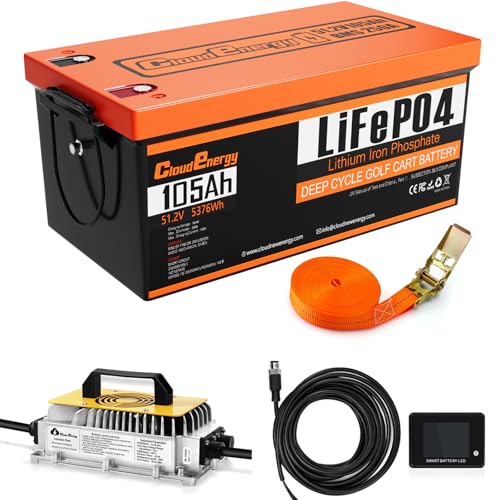
Cloudenergy 48V 105Ah LiFePO4 Battery Kit

OGRPHY 48V Conversion Kit 100Ah

LOSSIGY 48V Conversion Kit with Bluetooth BMS

HumsiENK 48V 100Ah Metal Case Battery

Mehrpow 48V 100Ah Battery Kit

DC HOUSE Metal Case 48V 100Ah Kit

TEMGO 48V 100Ah LiFePO4 Battery Kit
More Details On Our Top Picks
Cloudenergy leans into range and monitoring, which matters for carts that spend more time on paths and property roads than on the fairway. The 105Ah capacity gives you more stored energy than the 100Ah models below, and the built-in 250A BMS, or battery management system, helps regulate charge and discharge behavior.
The retention strap and touch monitor make installation and day-to-day checking a little easier, especially in a garage where you want quick visual status. The honest trade-off is size and weight, so this makes more sense for carts that can accommodate a larger pack without turning access into a chore.
Strong Points
- 105Ah capacity suits longer daily loops and fewer plug-in stops.
- 250A BMS gives you a stronger control ceiling than the smaller kits here.
- Mobile app monitoring keeps charge status easier to check from the seat.
- Touch display and strap simplify ownership in a real garage setup.
Things To Consider
- The larger pack will ask more from your available battery bay space.
- Car owners who store gear under the seat may find access a little tighter.
Feature Snapshot
Who It Suits Best
Cart owners who want longer range and easy status checks will get the most from this package.
A Better Fit Elsewhere
HumsiENK 48V 100Ah Metal Case Battery suits you better when a slightly smaller 100Ah pack and a metal shell matter more than extra capacity.
OGRPHY is the loudest performer in this lineup, and that usually matters to carts carrying passengers, climbing slopes, or hauling extra weight. The 200A BMS and 1000A peak current rating point to a setup built for heavier demand, while the 10.24kW output figure signals serious headroom for a 48V conversion.
You also get a touch monitor and charger in the kit, which keeps the install path more orderly than piecing parts together one by one. The trade-off is simple: this is more power-focused than minimalist, so a casual flat-ground cart may not use all that ceiling every day.
Highlights
- 10.24kW output rating gives you a strong performance ceiling.
- 1000A peak current helps during hard pulls and quick acceleration.
- Touch monitor and charger keep the kit more self-contained.
- 4000-plus cycle claim points to long service potential on paper.
- Well suited to carts that see hills or heavier passenger loads.
Worth Noting
- The power-first spec set may be more than a basic neighborhood cart needs.
- A high-output kit can take a little more planning during installation.
- Storage space matters, since full conversion bundles usually occupy more room.
Details At A Glance
Right Fit For
Cart owners who want stronger output for hills, hauling, or brisk acceleration should look here first.
Skip It When
TEMGO 48V 100Ah LiFePO4 Battery Kit is the calmer choice for simpler carts that value balance over peak-output bragging rights.
LOSSIGY brings Bluetooth into the mix, which is handy when you want battery information without opening the seat every time. That monitoring approach feels practical for carts that also get pulled into RV or solar use, because a phone-based readout can simplify checks across different setups.
The 200A Bluetooth BMS and 1000A peak current rating give it a confident spec sheet, and that makes it feel closer to the OGRPHY model than the more modest 100Ah kits. The catch is that a feature-heavy pack can feel a bit more involved for someone who just wants a clean swap and nothing else.
What We Like
- Bluetooth monitoring helps you check status from a phone.
- 200A BMS gives the pack a stronger control setup.
- 1000A peak current supports short bursts of higher demand.
- Works across golf cart, RV, and solar-style use cases.
Small Caveats
- The broader use-case focus may be more than some cart-only owners need.
- App-based monitoring adds a layer you may not want in a barebones install.
Core Details
Made For
You’ll get the most from this kit when your cart shares space with RV or off-grid gear.
A Better Fit Elsewhere
Cloudenergy 48V 105Ah LiFePO4 Battery Kit suits you better when longer cart range matters more than broader system flexibility.
HumsiENK lands in a very practical middle ground, with a 100Ah pack, metal casing, and Bluetooth plus LCD monitoring. That combination fits many replacement jobs where you want a tougher shell than a bare plastic-style layout and enough visibility into charge status for everyday use.
The 5.12kWh figure gives you a clearer sense of stored energy than capacity alone, and the 200A BMS with 410A peak current shows solid current handling for many carts. Compared with Cloudenergy’s larger 105Ah pack, this one feels a touch more compact without dropping the core monitoring features.
Upsides
- Metal casing adds a sturdier feel for carts that get regular use.
- Bluetooth and LCD monitoring make charge checks easy at a glance.
- 5.12kWh capacity helps translate the battery into usable energy terms.
- 100Ah size suits many standard golf cart conversions.
Areas To Watch
- The 100Ah capacity is solid, but not as roomy as the 105Ah pick above.
- Metal housing can make handling feel a bit less casual during install.
Technical Sheet
The Right Fit
This suits you well if you want a sturdy 100Ah replacement with both app-style and screen-based monitoring.
Swap It Out When
Mehrpow 48V 100Ah Battery Kit is the better match for shoppers who want a complete bundle with the strongest cycle-life claim in this group.
Mehrpow is the most complete bundle in this list, with a smart 200A BMS, an 18A charger, a touch monitor, and mobile app support all in the same package. That kind of all-in-one setup helps when you’d rather spend time riding than sorting out separate parts and compatibility details.
The 8000 recharge cycle claim also puts it in a long-life lane on paper, and the 58.4V charger makes the package feel properly matched rather than pieced together. One thing worth considering is the non-returnable shipping constraint, so the fit matters more here than with the more flexible options above.
Reasons To Buy
- Complete kit layout reduces the guesswork around add-on parts.
- 18A charger keeps charging support in the same box.
- Touch monitor and app access make everyday checks easier.
- 8000 cycle claim makes the long-service case stronger than most here.
Points To Note
- The shipping and return limits mean you should confirm fit before ordering.
- Complete bundles usually take more planning around storage and installation space.
Feature Rundown
Who Should Grab It
You’ll appreciate this most if you want a bundled install with minimal part hunting.
Look Elsewhere When
DC HOUSE Metal Case 48V 100Ah Kit is the safer everyday alternative for a cart owner who prefers a more conventional bundled setup.
DC HOUSE sits in the everyday-replacement lane, which is useful for carts that need a dependable swap without too much fuss. The metal case, 100Ah size, and included 48V 18A charger make the package feel complete in the way many garage projects need it to be.
Its 200A BMS and 670A peak current rating give it enough overhead for a typical golf cart setup, though it does not lean as aggressively into peak output as OGRPHY or LOSSIGY. That quieter spec profile will suit you well if you want straightforward ownership and fewer bells hanging off the install.
Best Bits
- Metal case gives the battery a sturdier housing feel.
- Charger is bundled, so you are not sourcing a separate unit.
- Bluetooth mobile app and LCD monitor make checks more convenient.
- 100Ah capacity fits a wide range of replacement jobs.
Softer Spots
- The 670A peak is lower than the punchier kits higher in the list.
- It feels more utility-focused than feature-heavy, which some setups prefer and others won’t.
Key Specs
Built With In Mind
This fits you best if you want a tidy, conventional 100Ah replacement with the charger already included.
Where A Sibling Pick Shines
HumsiENK 48V 100Ah Metal Case Battery makes more sense for someone who wants a metal shell plus higher peak-current headroom from a sibling option in this roundup.
TEMGO lands as the balanced middle choice, with a 100Ah LiFePO4 pack, 200A smart BMS, and a 10.24kW maximum output figure. That combination is appealing for carts that need respectable power without chasing the bigger 105Ah pack or the more aggressive high-surge kits.
The Bluetooth app, LCD screen, and 58.4V 18A charger round it out into a sensible bundle for regular ownership. You may find it especially comfortable for everyday cart use where you want monitoring, charging support, and decent headroom in one place.
Positives
- 100Ah size fits a broad range of common cart conversions.
- Smart 200A BMS helps the battery management side feel well thought out.
- Bluetooth app and LCD screen give you two monitoring paths.
- 10.24kW max output keeps it from feeling underpowered in normal cart use.
Minor Gripes
- The 100Ah figure is practical, but not as roomy as the 105Ah pack above.
- It is a feature-rich bundle, so minimalists may prefer a simpler kit.
Feature Card
Whose Shelf It Belongs On
This is a strong fit for you if you want a balanced 100Ah cart battery kit with modern monitoring and charger support.
Reach For A Different Pick When
Cloudenergy 48V 105Ah LiFePO4 Battery Kit suits longer-range use a little better, especially for bigger carts or longer routes.
How To Choose The Right 48v Golf Cart Battery
Capacity, Range, And Daily Routine
Capacity, usually shown in amp-hours or Ah, tells you how much energy the battery can store. A 105Ah pack like Cloudenergy suits longer rides and heavier use, while 100Ah options fit most standard carts without taking over the battery bay.
Your route matters more than marketing language. A neighborhood cart that makes short loops can live happily with a 100Ah kit, while a cart that climbs hills or carries passengers more often benefits from the extra headroom.
BMS Ratings And Peak Current
The BMS is the battery management system, the control layer that helps regulate charge and discharge behavior. In plain terms, a higher BMS rating matters when you ask for stronger acceleration or heavier load handling.
Peak current figures matter too, but only for short bursts. OGRPHY and LOSSIGY lean hard into that lane, while DC HOUSE and HumsiENK stay a bit more modest and may suit calmer cart use better.
Monitoring, Chargers, And Convenience
Bluetooth apps, LCD screens, and touch monitors make ownership easier because you can check status without lifting panels every time. That helps in a busy garage, especially when multiple people use the cart.
A bundled charger keeps setup cleaner. Mehrpow, DC HOUSE, and TEMGO are strong examples of kits that reduce parts chasing, while a simpler pack can work fine for owners who already have charging gear sorted.
Fit, Housing, And Installation Space
Metal casing can add a sturdier feel, but it may also make the pack feel less nimble during install. HumsiENK and DC HOUSE lean into that more durable housing style, which is useful if your cart sees regular use.
Measure the battery compartment before you order. A larger pack can be a smooth upgrade on one cart and a cramped headache on another, so the right choice comes down to space, weight tolerance, and how tidy you want the final setup to look.
What To Weigh Before You Order
Mistakes Worth Dodging
One common miss is focusing only on amp-hours and ignoring the BMS and peak current. A cart that hauls passengers or climbs grades needs more than a big number on the label.
Another easy slip is forgetting the charger. A bundle like TEMGO or DC HOUSE keeps the setup simple, while piecing parts together can leave you checking compatibility more than you wanted.
The Upgrade Payoff
Higher-tier kits usually cost more because they add monitoring, smarter control hardware, and more complete bundles. That extra money often goes toward convenience as much as raw battery size.
Paying up makes sense for carts that see regular use, mixed terrain, or heavier loads. For a mostly flat neighborhood cart, a simpler 100Ah option can be the smarter use of space and budget.
Frequently Asked Questions
What does 48V mean on a golf cart battery?
It refers to the system voltage the cart is built around, which needs to match the cart’s electrical setup. The 51.2V label on some lithium packs reflects the battery’s nominal lithium iron phosphate design.
Is 100Ah enough for most carts?
For many standard carts, 100Ah is a practical middle ground. Longer routes, steeper terrain, or heavier use can justify stepping up to 105Ah.
Why does a BMS matter?
The BMS manages charge and discharge behavior and helps keep current delivery organized. A stronger BMS rating can suit carts that ask for more from the battery.
Do app and LCD monitors really help?
They make it easier to check status without opening the battery area every time. That is handy for garages, shared carts, and frequent use.
Should you choose a kit with a charger included?
A bundled charger simplifies setup and reduces guesswork. It’s especially useful when you want a cleaner install without hunting for matching accessories.
Final Thoughts
The right 48v Golf Cart Battery depends on how your cart actually gets used, not just the headline capacity. Cloudenergy gives you the most range-focused feel, OGRPHY and LOSSIGY push harder on output, and TEMGO, DC HOUSE, and HumsiENK sit in the practical middle where many carts live. Mehrpow stands out for the most complete kit feel, especially for owners who want fewer loose ends. Match the pack to your terrain, your storage space, and how much monitoring you want, and the choice gets much easier.