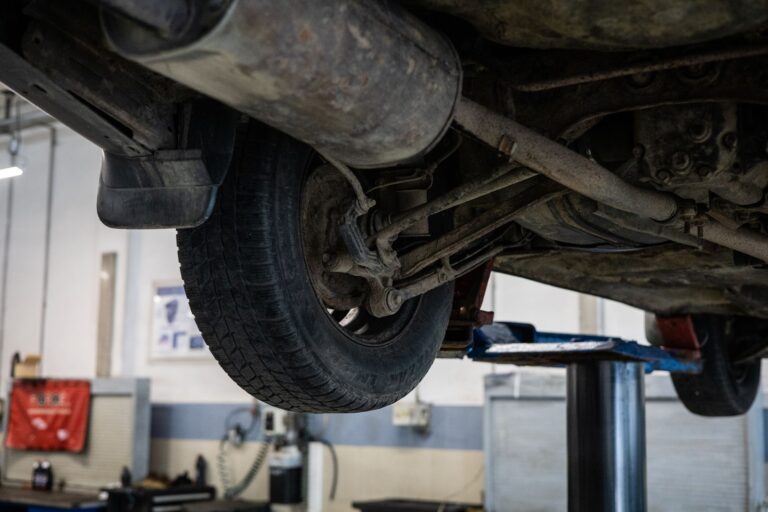


A slight inward tilt at the top usually means negative camber, and a small amount can be normal. A sharp tilt often points to worn suspension parts or poor alignment, and the inner tire edge usually wears first.
Here’s the scope: what the angle means, which parts change it, and how wear patterns, pulling, and alignment readings help pinpoint the issue for anyone checking a drifting front end.
Negative Camber And What It Means
A wheel that tips inward at the top is showing negative camber. SAE uses camber to describe wheel tilt relative to vertical, and carmakers build a small amount into many suspensions so the tire stays planted in a turn.
That factory setting is different from a wheel camber issue. Stock camber is measured in fractions of a degree, while a bent part or worn joint can push the wheel far enough out that the tire leans inward in plain sight.
Factory Angle Versus Fault
MacPherson strut layouts and double-wishbone setups both use camber to balance handling. A slight inward lean helps the outside tire keep a flatter contact patch during cornering, which matters on freeway ramps, cloverleaf curves, and quick lane changes.
A real problem starts when the front tire tilted inward enough to look crooked at parking-lot speed. Then the angle is no longer helping grip in a controlled way, and the rest of the suspension has to be checked for wear or impact damage.
Why Small Negative Camber Exists
Engineering teams use camber, toe, and caster together, not in isolation. The wheel alignment spec sheet for your model sets a range that balances tire life, steering effort, and road holding, and that range is where the setup belongs.
A mild slant can be normal on a brand-new car, especially with a MacPherson strut front end. A steep lean is a different story, and that is the point where the shape of the tire, the steering feel, and the next service stop start to matter.
That range matters because the next clue usually shows up in wear or steering behavior, not in the paint or bodywork. Once the angle leaves spec, the front end starts telling on itself.
That kind of change usually points beyond appearance and into the parts that hold the wheels in place.
When The Tilt Points To Trouble
A car tire leaning inward enough to catch your eye usually means something has shifted. Pothole hits, curb strikes, rust, and plain wear can all change the wheel angle, and the inner shoulder of the tire often shows the result before the rest of the tread does.
That visible slant matters because camber problems rarely stay alone. A bent control arm, a loose ball joint, or a tired strut can change the stance at the same time that steering feel gets vague or the car starts to drift.
Wear Patterns That Give The Game Away
Inner-edge wear is the clearest clue. The tread can still look decent from a quick glance, while the inside shoulder is getting scrubbed down by every mile of straight-road driving.
So a tire that looks fine from ten feet away can still be damaged in a way that shows up on the inside rib. That is one reason a visual check alone misses a lot of wheel camber issue cases.
Driving Feel Changes That Follow
Pulling to one side can show up before noise or vibration. A wheel that sits out of spec changes the way the contact patch loads the pavement, and the steering wheel may feel off-center even after you correct it on the road.
Vague steering is another clue. The car may respond a half-beat late, then settle, which often points to looseness in the front end instead of a pure tire problem. That leads straight to the parts that hold the angle in place.
Those symptoms usually trace back to hardware, so the next step is to look at the pieces that set wheel position and keep it there under load.
When the angle shifts under load, the components that locate the wheel are usually the first suspects.
Suspension Parts That Change The Angle
A bent or worn suspension part can move the wheel inward without warning. Control arms set the lower pivot point, ball joints allow the hub to steer and rise, and bushings cushion motion while keeping the geometry from wandering too far.
Struts and knuckles matter too. The strut tower and the steering knuckle define where the wheel sits in space, so damage in either place can turn a mild tilt into a front wheel negative camber problem that keeps getting worse with mileage.
Control Arms, Ball Joints, And Bushings
Ball joint wear lets the wheel shift in more directions than it should. A joint with play can let the hub sag inward, and a cracked bushing can do the same by letting the arm move under load.
A bent control arm from a curb strike is easy to miss from above. The arm can still look straight while the pickup point has moved just enough to push camber outside the factory window.
Struts, Knuckles, And Wheel Bearings
A damaged strut can alter stance after a hard hit or a long period of sagging. On a MacPherson strut front end, the strut itself helps locate the wheel, so a bend changes more than ride height.
The steering knuckle is the hub carrier, and it sets the wheel’s angle relative to the suspension. A wheel bearing with excess play can add tiny movement that muddies alignment readings and makes the slant look worse under load.
- Ball joint play lets the hub drop inward and changes camber at the same time.
- Control arm bend shifts the lower pickup point after curb or pothole impact.
- Cracked bushings allow the arm to move under braking and cornering.
- Strut damage alters the upper locating point on MacPherson systems.
- Knuckle damage changes where the spindle sits relative to the suspension.
These parts can stack their effects, which is why a single bad joint can send the whole angle out of spec. Once the hardware is suspect, a measurement is the only way to see how far the setup has drifted.
Because those parts can move the wheel without warning, a precise reading is the only reliable check.
Why Alignment Readings Matter
A driveway look cannot tell you whether the front wheel leaning inward at top is within spec. The eye sees shape, but the alignment rack reads degrees and minutes, which is the only way to know whether the wheel is still inside the maker’s range.
Alignment measurements show camber, toe, and caster for each wheel. That matters because a wheel can look slightly slanted and still be within tolerance, while another wheel on the same axle may be the outlier causing the pull or the wear.
What The Numbers Show
Alignment shops use heads that read the wheel position relative to centerline and thrust angle. Those numbers point to the fault much faster than guesswork, especially on vehicles with a recent impact or a long history of tire wear.
SAE measurement conventions help keep the data consistent, but the vehicle maker’s own spec is what the technician uses. A car can feel fine and still show camber that sits just beyond the allowed range, which is enough to wear tires unevenly over time.
Why Both Sides Need A Check
One side can hide the problem. A right wheel may sit close to spec while the left side has a bent arm, and the car still tracks crooked because the two angles no longer match.
An alignment shop looks at both fronts for that reason. A split measurement often explains a steering wheel that sits off center or a pull that seems to come and go with road crown.
Those measurements often explain uneven steering feel and the kind of pull that changes with the road.
Check both front corners together, not one wheel at a time. A single bad side can mask a larger geometry shift that only shows up under load or at highway speed.
Tire Wear And Driving Effects

Excessive negative camber chews the inner shoulder because that strip carries more load than the rest of the tread. The contact patch shrinks on the outside edge, so the rubber wears unevenly even while the tread center still looks usable.
That uneven wear shortens tire life and can make the car feel less settled in a lane change. The steering may stay drivable for a short trip, but ongoing slanting means the setup is changing the way the tire meets the road every mile.
What The Tire Shows
An inside edge worn smooth next to a tread block that still has depth is a classic sign. On performance cars, the pattern can show faster because the suspension uses more negative camber from the factory, but a sudden change still points to damage or looseness.
A truck or sedan can show the same clue in a different shape. On a heavier vehicle, the wear may appear as feathering or scalloping on the inside rib before the rest of the tread catches up.
How The Car Feels On The Road
The steering can feel nervous on rough pavement. A tire that no longer sits flat creates a smaller and less stable contact patch, and that patch reacts more sharply to grooves, bridge joints, and braking input.
Short trips home are one thing. A long stretch of daily driving with the same slant is where the tire starts losing usable rubber, and that is where the repair path matters more than the appearance of the wheel.
Uneven wear becomes more than a cosmetic issue when the tire starts giving up tread on one side.
Use the tire as a clue, not a verdict. A worn inner shoulder tells you the geometry has changed somewhere, but it does not name the exact part.
The Repair Path Back To Spec
The usual fix starts with a suspension inspection, not a wrench on the alignment machine. A bent control arm, loose ball joint, damaged knuckle, or tired strut has to be found and corrected before any wheel alignment has a fair chance of holding.
Once the worn hardware is replaced, the car goes back on the rack for a wheel alignment. That order matters because alignment settings can only fine-tune parts that are already sitting where they belong.
Inspect, Replace, Then Align
A good repair path starts with the obvious wear points: ball joints, bushings, control arms, struts, tie rod ends, and wheel bearings. A technician will look for movement, bends, torn rubber, and rusted mounting points that could shift the wheel under braking or cornering.
After the damaged part is fixed, the alignment readings are set to spec. That step restores camber, toe, and steering wheel position together, which is the part that stops the same wear pattern from coming back.
Why Straight Appearance Is Not Enough
A wheel can look straight and still sit a degree out of range. That small difference can matter over 5,000 or 10,000 miles, especially on the front axle where steering and braking loads stack up on every commute.
The real fix is a wheel that looks straight and measures right. That is the point where your front wheel leaning inward at top stops being a visual concern and returns to a controlled setting the suspension can live with.
That final check is what keeps the repair from becoming a short-term patch. If the angle is still off, the tire will show it long before the dashboard does.
A careful inspection before the appointment helps make sure the fix lasts instead of masking the real problem.
What To Watch Before The Shop Visit
A few quick checks can save time before you book an alignment. Look for fresh inner-edge wear, a steering wheel that sits off center, or a car that pulls after the tires were already rotated.
Jot down where the pull happens, too. A drift that only shows up on smooth interstate pavement can point to a camber or toe problem, while a clunk over bumps points more toward loose joints or a bad strut mount.
- Check the tread edges for heavier wear on the inside shoulder than on the outside.
- Inspect the stance from a few feet back for a clear inward tilt at the top.
- Listen over bumps for clunks that suggest looseness in the front suspension.
- Watch the wheel for off-center steering after a straight road test.
- Note recent impacts such as potholes, curbs, or a hard parking contact.
Those clues help the shop focus on the right corner first. That saves time, and it also keeps a simple alignment complaint from hiding a bent part that needs replacement.
That last check keeps a small alignment issue from hiding damage that deserves a closer look.
Final Thoughts
A slight inward tilt can be part of normal handling, but a pronounced lean means the front end deserves a close look. The tread, the steering feel, and the alignment numbers all tell the same story when camber has drifted out of range, and the fix starts with the part that caused the shift.
FAQ
What causes a front wheel to lean inward at the top?
Worn ball joints, bent control arms, damaged struts, and shifted steering knuckles are common causes. A pothole hit or curb strike can move the geometry enough that the wheel sits in a clear negative camber position.
Is it safe to drive with a wheel tilted inward?
Short trips may be manageable, but ongoing slanting can wear the inner tire edge fast and change steering feel. A steep tilt deserves inspection soon because the cause can be a loose or bent front-end part.
Does a bent control arm or ball joint cause negative camber?
Yes. A bent control arm changes the wheel location, and a worn ball joint can let the hub sag inward, both of which create abnormal camber. Either fault can also show up as pulling or uneven tire wear.
Can misalignment make a tire look slanted?
Yes, and it can do that without any obvious damage to the tire itself. Alignment measurements show whether the wheel angle is inside the maker’s range, which is the only way to tell normal camber from a true wheel camber issue.
How do you fix a front wheel that leans inward?
The usual repair order is inspection, replacement of worn or bent parts, then a wheel alignment. Straightening the look alone is not enough, because the measurement has to land in spec or the tire wear will return.