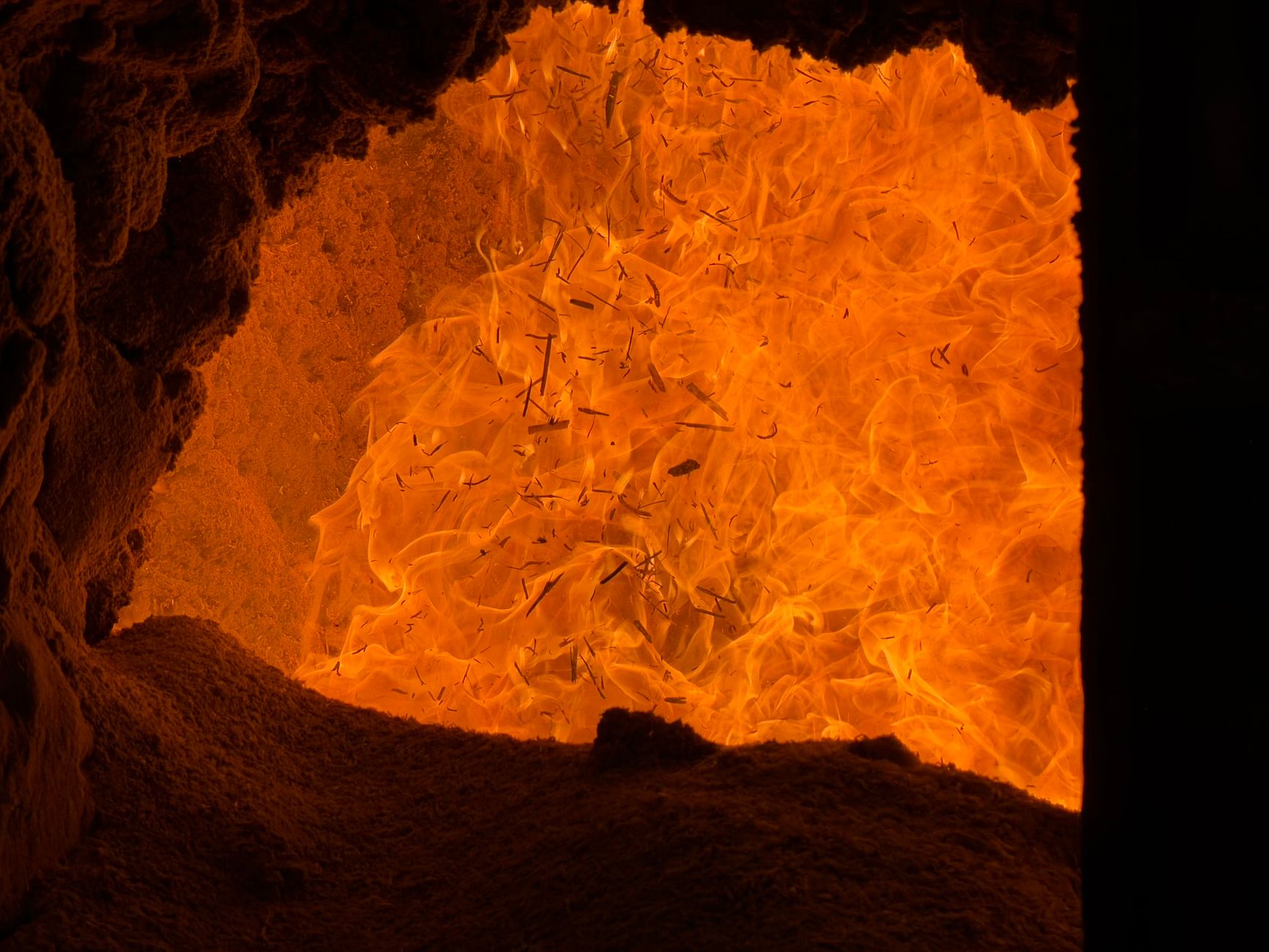

At peak load, temperatures inside that chamber can soar far beyond what most metal parts can tolerate. In plain terms, the chamber can hit roughly 1,500 C to 2,500 C, with brief flame peaks above 2,000 C. The metal never matches that peak because coolant, oil, and rapid heat transfer pull energy away almost immediately.
Here’s a quick breakdown of the temperature range, how gasoline and diesel differ, and which engine parts handle the most heat. It’s most useful if you’re troubleshooting load-related heat, knock, or cooling concerns.
The Temperature Spike Inside The Chamber
A spark can send local flame fronts into the 2,000 C range, but the burst fades in milliseconds. The gas burns above the piston crown while the head, valves, and liner keep shedding heat as the cycle continues.
Engine load changes that number fast. A light cruise on flat pavement stays cooler than a hard climb, a towing pull, or late ignition timing, because more fuel and pressure raise engine combustion temperature. Spark timing, compression ratio, and mixture strength all shift the peak.
That gap between gas and metal explains why a Ford EcoBoost or a Toyota four-cylinder can handle daily use even though the chamber itself runs far hotter than the cylinder head casting ever does. The chamber is the furnace, and the surrounding structure works as the heat sink.
Why Flame Peaks Do Not Equal Metal Temperature
The gas is thin, fast-moving, and short-lived, so it dumps energy into the chamber walls only for a brief moment. Aluminum and cast iron absorb heat, spread it out, then pass it to coolant passages and oil films.
A surface thermometer on a valve cover gives you a very different number from the hottest part of a car engine. That mismatch matters because the real load is hidden inside the chamber where ignition starts and pressure rises.
What Changes The Number
- Engine load rises under towing, climbing, and wide throttle, which pushes the chamber hotter.
- Ignition timing that is too advanced can raise peak pressure before the piston reaches top dead center.
- Air-fuel mixture that runs lean burns hotter and can leave sharp hot spots behind.
- Compression ratio changes the starting temperature before the spark or compression event.
- Operating state during cold start, idle, and steady cruise all produce different heat levels.
Once you see those variables together, how hot does a combustion chamber get in a vehicle stops being a single number and starts looking like a moving target. Fuel type matters just as much, and that is where gasoline and diesel split apart.
Fuel choice turns that number into two very different heat stories inside the chamber.
Gasoline And Diesel Run Different Heat Profiles
Gasoline engines depend on a spark plug, so the mixture must be prepared well enough to ignite in a controlled burn. Diesel engines rely on compression ignition, where the air charge gets squeezed so hard that injected fuel lights from the heat of compression alone.
That difference changes chamber heat and pressure. A diesel often starts with higher compression temperatures, while a gasoline engine can show sharper spikes near the plug when timing is aggressive or the mixture is thin.
Steady cruise sits on the cooler end of the range for both types. Light throttle trims fuel and cylinder pressure, while heavy load, hill climbs, and long acceleration pulls push the chamber toward the upper end of the scale.
Gasoline Engines Depend On Spark Control
In a gasoline internal combustion engine, the spark plug ignites a compressed air-fuel mixture at a planned moment. That timing lets engineers shape the burn, which helps keep chamber heat under control during normal driving.
Skirted pistons, pent-roof heads, and multi-valve layouts help direct the burn and move exhaust heat out faster. The result is smooth power with less chance of a runaway hot spot.
Diesel Engines Use Compression Heat
Diesel fuel lights in hot compressed air, so the chamber starts with more pressure before combustion even begins. That is why diesel designs handle high compression ratio numbers and heavy work like towing with less drama than a gasoline setup of similar size.
Still, pressure has a cost. A sharp load rise can raise piston crown stress, exhaust valve temperature, and head gasket strain, especially under long climbs or poor fuel quality.
Load State Shapes The Heat Curve
| Driving state | Chamber behavior | What you notice |
|---|---|---|
| Steady cruise | Lower pressure, stable burn | Even power, modest heat rise |
| Light throttle | Leaner control, lower fuel flow | Cooler metal, low stress |
| Heavy load | Higher pressure, stronger burn | More detonation risk and hotter parts |
That table gives you the practical picture: the chamber does not sit at one fixed temperature, and how hot does a combustion chamber get in a vehicle depends on how hard the engine works. The next question is which parts sit closest to that heat and still survive.
That split decides whether heat stays manageable or starts threatening the hardware around it.
The Parts That Survive The Furnace
The cylinder head, exhaust valve, and piston crown take the harshest thermal hit. Each part sees flame on one side, coolant or oil on the other, and a rapid expansion cycle in between.
Melting is not the usual failure mode in daily use. Repeated heat cycling is the real problem, because metal expands, contracts, and slowly loses shape or sealing force after thousands of runs through hot and cool states.
Material choice changes the odds. Aluminum heads move heat fast, steel or sodium-filled exhaust valves cope with severe exhaust-side stress, and forged pistons carry tougher margins than weak cast parts in high-output builds.
Why Repeated Cycling Hurts More Than One Spike
A single high run does less damage than months of hot-cold-hot cycling. Fatigue cracks form where stress concentrates, such as around valve seats, spark plug bosses, and thin bridge sections between ports.
That is why chamber shape matters. A clean roofline and even quench areas move flame more evenly and reduce random hot spots that can nick the metal over time.
How Design Choices Hold The Heat
Honda, Ford, Toyota, and many other makers use chamber shapes that aim the burn toward the center of the piston crown rather than the wall edges. That one choice lowers local stress and keeps pressure rise more predictable.
Exhaust valves sit in the hottest gas path, so they are built to pass heat into the seat and stem. A valve that seals well also runs cooler, because a poor seal traps heat where it can do the most damage.
One quick rule helps in the shop: shiny aluminum does not mean cool metal. The part can look fine on the outside while the chamber surface has been living near the limit for miles.
Once those parts are in view, the cooling system stops looking like a side feature and starts acting like the reason the engine lasts at all.
Once the hottest parts are identified, temperature control becomes a matter of survival, not convenience.
Cooling Systems Keep Metal Below Flame Temperature
Coolant and oil work as moving heat carriers. Coolant pulls energy from the head and block, while oil carries heat away from the piston underside, bearings, and valvetrain.
That separation is the key reason metal surfaces stay much cooler than the gases burning above them. The chamber gas may flash past 2,000 C, but the head metal and piston structure sit on a much lower thermal plateau because heat transfer never keeps the full flame energy in one place.
Radiator capacity, coolant condition, thermostat behavior, fan airflow, and oil quality all shape engine cylinder temperature in traffic and on the highway. A clogged radiator or weak airflow can raise bulk engine heat enough to shrink your safety margin under load.
Coolant And Oil Each Carry A Different Job
Coolant protects the head, block, and combustion chamber walls by moving heat to the radiator. Oil cools parts the coolant never touches, including the piston skirt and cam journals.
Fresh oil matters because it keeps film strength under heat. Thin, oxidized oil loses its ability to protect hot contact points, and that raises wear even before a gauge shows trouble.
Airflow And Radiator Capacity Set The Margin
Air moving through the radiator and across the condenser removes heat that the engine cannot store. Stop-and-go traffic cuts that airflow, so heat builds faster at idle than it does on a moving road.
A clean radiator, sound water pump, and working fan clutch on truck platforms keep the chamber-adjacent parts out of the danger zone. That margin matters most during towing, summer climbs, and long highway pulls.
A Scientific Detail That Explains The Gap
Heat transfer slows at the wall because gas is a poor conductor compared with metal. The flame may be extremely hot, yet the short contact time and boundary layer between gas and surface keep the metal from matching that peak.
That is why chamber heat can be dramatic without instant failure. The metal survives by spreading energy out faster than the flame can concentrate it.
Better cooling buys room, but it does not forgive bad combustion. Once chamber heat leaves the safe zone, the engine starts telling you with noise, power loss, and rising metal temperature.
When cooling can no longer contain the burn, the engine’s warning signs become impossible to ignore.
When Chamber Heat Becomes A Warning Sign
Knock, pre-ignition, and overheating are the main trouble signals. Each one points to combustion that has moved beyond controlled burn and into destructive pressure spikes.
Lean mixtures are a common trigger, because less fuel absorbs less heat and leaves more oxygen for a hotter burn. Poor fuel quality, carbon hot spots, and excessive load add to the problem, especially in a turbocharged engine that already runs tight margins.
The real risk is not just noise. Detonation can chip piston crowns, torch exhaust valve edges, and pound rod bearings with shock loads that arrive before the parts have time to cool.
Knock And Pre-Ignition Do Different Damage
Knock happens after the spark when end-gas lights too fast and pressure rings through the chamber. Pre-ignition starts before the spark, often from a glowing deposit, overheated plug tip, or a sharp edge in the chamber.
Pre-ignition is harsher because it fights the rising piston. That can drive pressure way beyond what the parts were built to carry.
What You Notice In The Car
- Ping or rattle shows unstable burn under load.
- Power drop appears because the ECU pulls timing to protect the engine.
- Hot smell points to excessive underhood heat and stressed fluids.
- Rough idle can come from uneven combustion or a vacuum leak.
- Temperature rise on the gauge hints at cooling trouble, not just chamber heat.
Those symptoms connect directly to how hot does a combustion chamber get in a vehicle during abuse. A hard pull on low-octane fuel in summer heat is a very different story from a gentle highway run, and the engine tells you which one you are in.
Why Fuel Quality Matters So Much
Octane resists knock by slowing uncontrolled autoignition. A higher-octane fuel does not burn hotter by itself, but it gives the engine more room before pressure spikes turn ugly.
That is why turbocharged gasoline engines, especially small high-output units, can feel fine on good fuel and noisy on poor fuel. The chamber heat profile changes with the burn, not just the thermometer.
Even a strong engine can sound different from one tank to the next because combustion heat shifts with fuel quality.
Reading Engine Heat In Daily Driving
The cabin can feel punishing at 100 F outside even while the engine runs normally. Cabin heat and combustion chamber temperature are different problems, because the interior air comes from sun load, glass gain, and parked heat soak, not from the burn inside the cylinders.
The hottest part of a car engine is still the combustion zone and nearby exhaust-side components. The exhaust valve, spark plug tip, and piston crown live closest to the flame, while the turbine housing on a turbo engine can also run extremely hot after a hard drive.
In normal use, the hottest engine parts stay within design limits because the cooling system, fuel map, and load stay balanced. In abusive conditions, such as long towing on a steep grade or sustained lean running, those parts can cross the line fast and stay there longer than you want.
Normal Use Versus Abuse
A commuter trip with steady throttle, clean coolant, and healthy oil keeps chamber heat in a controlled band. The engine warms up, reaches operating temperature, then sheds heat fast enough to hold metal below damaging levels.
By contrast, repeated full-throttle pulls, a blocked radiator, or a misfiring cylinder can push local heat far higher than the rest of the engine sees. That is the point where a small issue turns into a head gasket job or a damaged piston.
Practical Ways To Read Heat In Your Own Vehicle
- Watch the gauge for steady movement, not sudden climbs under load.
- Listen for pinging during acceleration or hill climbs.
- Check coolant service so heat transfer stays consistent.
- Inspect oil condition because dark, cooked oil loses heat-carrying ability.
- Notice power loss since timing pull can hide a growing heat issue.
That practical readout brings the answer back to daily use. It isn’t just a trivia question; it’s a clue to how the engine balances flame, metal, and cooling every mile you drive.
That everyday pattern makes engine heat less of a spec sheet detail and more of a practical driving clue.
What To Remember
The chamber burns far hotter than the metal around it, and that gap is the whole story. You protect the engine by keeping combustion controlled, fuel quality sound, and cooling parts healthy, because the parts fail from repeated stress long before they melt.
FAQ
How hot does the inside of a combustion chamber get?
Gas inside the chamber can reach roughly 1,500 C to 2,500 C, with flame peaks above 2,000 C for a very short moment. The metal around it stays far cooler because coolant, oil, and heat transfer move energy away as combustion happens.
What is the hottest part of a car engine?
The hottest zone is the combustion chamber itself, with the exhaust valve area, spark plug tip, and piston crown taking the harshest local stress. Turbochargers and exhaust housings can also run very hot after sustained load.
What is the hottest an engine can get?
Inside the chamber, flame temperature can pass 2,000 C during peak burn, but the engine block and head should stay well below that through cooling and oil circulation. Surface heat above normal operating range points to overheating, detonation, or airflow trouble.
How hot does a car engine combustion chamber get under load?
Heavy throttle, towing, or climbing a grade raises chamber pressure and heat far above steady cruise. A lean mix, poor fuel, or too much ignition advance can push the peak high enough to trigger knock or pre-ignition.
How does the cooling system affect combustion chamber temperature?
The cooling system does not touch the flame itself, but it keeps the head, block, and surrounding metal from climbing into failure territory. Coolant, oil, radiator airflow, and fan performance all shape how much heat the engine can shed.