
The number of axle units determines how a vehicle’s weight is carried, not how many tires you can see from the outside. That count affects payload, stability, braking, and how the vehicle behaves under load.
Here’s a quick overview of axle count, who needs to care about it, and where the differences matter most on roads, in fleets, and on job sites.
Axle Count Versus Wheel Count
One axle connects and supports a pair of wheels, so the structure matters more than the tire total. A pickup with dual rear wheels still has two axle units, which is why wheel count and axle count are not interchangeable.
The structural unit matters more than the tire total
Most road vehicles use two wheels per axle, but that’s only the common setup. A front steer axle, a rear drive axle, or a tandem pair under a commercial truck all count as axle units, and that classification affects vehicle class more than the visible tire count does.
Road agencies and manufacturers track axles because the load moves through the frame, brakes, differential, and suspension in specific ways. That’s why the Federal Highway Administration and the Federal Motor Carrier Safety Administration focus on axle configuration: pavement wear depends on how force reaches the road, not just on gross vehicle weight. That’s the practical core of 2 axle 3 axle and 4 axle vehicle meaning.
How many wheels an axle can carry
A standard passenger car axle carries two wheels, one on each side. Some heavy trucks use dual wheels on one or both sides, so the answer to how many wheels an axle has can change with the setup.
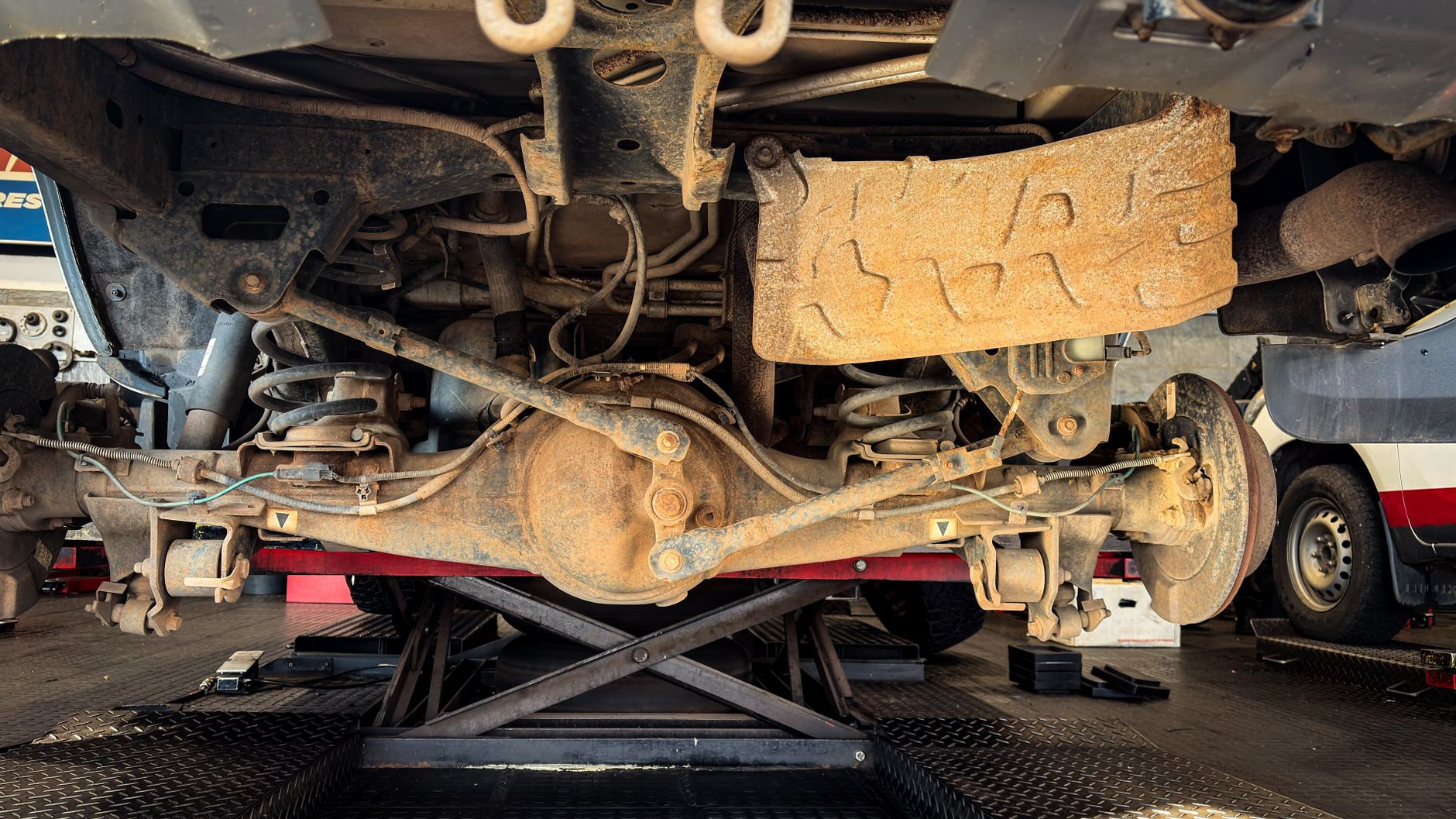
Think of the axle as the spine of the vehicle and the wheels as the feet. The feet can change, but the spine count stays fixed, and that’s why vehicle axle definition starts with axle units rather than tire counts.
Everyday traffic gives plenty of examples where axle count matters more than the number of tires underneath.
Two-Axle Vehicles In Everyday Use
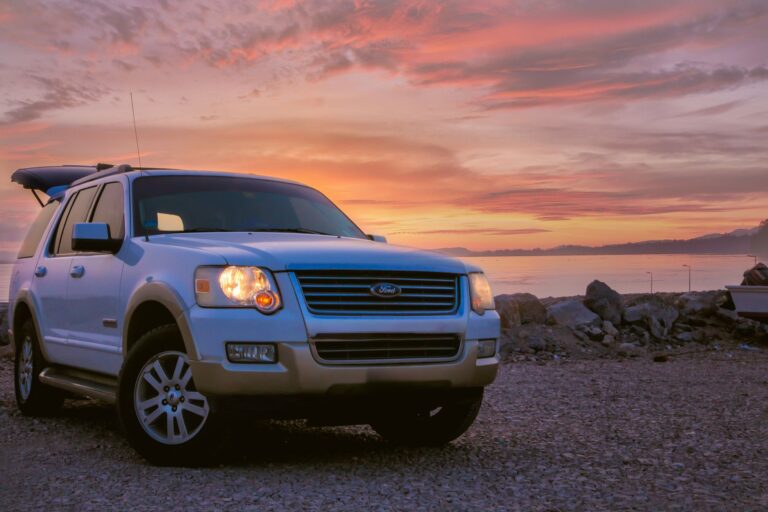
Most vehicles seen on ordinary roads sit on two axles, one in front and one in back. Passenger cars, minivans, cargo vans, light-duty pickups, and small SUVs all fit this pattern because it balances size, wheelbase, and maneuverability.
Why two axles fit daily driving
Two axles keep the chassis short enough for parking lots, lane changes, and standard driveways. The shorter wheelbase also helps the steering axle respond quickly instead of feeling sluggish the way longer truck axle setups often do.
Payload capacity stays modest in this layout, which works fine for groceries, passengers, and short-haul work. A half-ton pickup can carry tools or pull a small trailer, but the single rear axle still has a finite axle load, so the Gross Vehicle Weight Rating, or GVWR, sets the real ceiling.
Where two axles make the most sense
Local deliveries, family travel, and light construction errands fit this setup well. A plumber hauling pipe fittings, a parent loading sports gear, or a landscaper carrying a compact mower gets enough carrying ability without the extra length and turning radius a third axle would add.
That simplicity has a downside: fewer axles mean less suspension hardware, fewer brake components, and lower empty weight. The next step changes that balance fast, because a third axle spreads the same weight across a wider base.
With the basics in place, a third axle becomes the turning point between modest duty and serious carrying power.
Three-Axle Vehicles And The Step Up In Capacity
A third axle spreads the load over a larger contact pattern, so each axle carries less stress. That’s why a 3 axle truck can hold more cargo and still feel calmer on the road than a 2 axle truck built on a similar frame.
Load spread and axle ratio
The extra axle helps distribute gross vehicle weight across more tires, which lowers pressure on the pavement and on the vehicle itself. Engineers also match the axle ratio and differential to the job, because gearing affects pulling strength, engine speed, and fuel use under load.
A tandem axle arrangement is common on medium and heavy trucks because the pair shares axle load and keeps the rear of the vehicle more settled over bumps. FHWA bridge formulas and state weight limits often reflect that logic, since road wear rises faster when weight rides on fewer axle units.
The tradeoff in length and turning radius
Three axles add frame length, extra weight, and a wider turning path. That means a vehicle can carry more, but it also asks more from steering, parking space, and backing skill.
- Better load spread A third axle cuts pressure per axle and helps keep cargo level.
- More traction Extra tires can improve grip on wet pavement and loose jobsite ground.
- Longer body The vehicle needs more room to turn and park cleanly.
- Higher curb weight The added hardware eats into some payload before loading begins.
Delivery box trucks, utility rigs, and some dump trucks use this layout because they need steadier hauling without jumping to a full heavy-haul platform. Once the load moves beyond that range, a fourth axle starts making more sense.
That extra support helps until the payload grows again, when four axles begin to offer a better compromise.
Four-Axle Vehicles For Heavier Transport
Four axles show up where cargo mass, equipment weight, or route rules push past the comfort zone of lighter trucks. A four-axle rig can split weight across more road contact points, which lowers axle load and helps the vehicle stay within legal weight limits.
Why heavier hauling needs four axles
More axles give you more room to place a trailer axle, a steering axle, and one or more drive axles without overloading any single point. That matters on a truck tractor pulling a semi-trailer, especially when cargo shifts during braking or cornering.
Specialized transport also uses four axles for machinery moves, construction materials, and oversized equipment. In those cases, the axle count becomes part of the permit plan, not just a mechanical detail, because regulators care how the load meets bridges, intersections, and pavement seams.
Handling gets more demanding
Four axles make the vehicle larger, heavier, and slower to pivot. Turning radius grows, backing becomes less forgiving, and suspension response feels more deliberate, especially at low speed in yards or loading docks.
A fleet manager looks at that tradeoff differently from a weekend driver. For long runs with heavy cargo, the four-axle setup can be the right answer; for short errands, it can feel like hauling a barn door where a sedan would do.
The same hardware can feel efficient on long hauls yet unwieldy when the job is small.
What Changes As Axles Increase

As axle count rises, payload capacity and stability climb while maneuverability drops. That pattern holds across cars, vans, and commercial truck setups because the physics are simple: more contact points divide force, but more hardware also adds length and steering effort.
Capacity, stability, traction, and steering
Payload capacity rises because each axle carries less axle load, and the suspension works under a smaller share of the total mass. Stability improves too, especially on uneven pavement, since the wheels follow the surface better without overloading one corner.
Traction can improve as tire contact increases, but wheel arrangement matters just as much as raw axle count. A drive axle delivers power, a steering axle sets direction, and axle spacing changes how the chassis reacts to bumps, grades, and crosswinds.
A simple comparison that holds up in the real world
| Axle count | Common use | Main tradeoff |
|---|---|---|
| 2 axles | Cars, vans, light trucks | Easier to park, lower payload capacity |
| 3 axles | Medium trucks, utility rigs, some dump trucks | More capacity, longer body and tighter low-speed control |
| 4 axles | Heavy hauling, specialized transport | Highest load spread, most demanding handling |
Check the wheelbase and axle spacing before judging a vehicle by size alone. Two vehicles can look similar from the outside and still carry weight very differently because their axles sit in different positions.
The mechanical reason behind this is worth a closer look. Road load bends the frame and heats the tires, brakes, and hubs, so a wider axle spread lowers stress concentration. That same principle is why bridge engineers and truck planners care about spacing, not just total mass.
By the time a vehicle is compared in practice, the pattern is clear: more axles buy carrying power, but the steering feel gets slower and the body gets harder to place in tight spaces. That tradeoff leads straight into the legal side of the question.
As size and weight climb, maneuverability drops, and regulations start to shape what can actually run.
Road Rules, Permits, And Operating Costs
Axle count shapes tolls, permits, and legal weight limits because road wear rises with concentrated load. Regulators use axle configuration to spread traffic impact across highways, bridges, and city streets, and that’s why the same truck can face different rules in different states.
Why regulators care about axle configuration
Axles help measure how force enters the road surface. A 30,000-pound truck resting on fewer axle units can stress pavement more than a heavier vehicle with a better load spread, which is why axle count helps guide enforcement and permit decisions.
FMCSA weight limits, bridge formulas, and state haul permits all look at axle count alongside gross vehicle weight. In practice, that means a truck tractor with a tandem axle or a semi-trailer with extra support can move certain loads more legally and with less road damage than a shorter rig.
What it changes for your operating budget
More axles can raise purchase price, maintenance time, tire count, alignment work, and brake service. They can also change toll classes and permit fees, so a fleet that adds one axle may gain carrying ability while also adding recurring cost.
- Tolls change More axle units can move a vehicle into a higher toll class.
- Permits shift Oversize or overweight loads may need route-specific approval.
- Tires multiply Extra axles mean more tires to inspect, rotate, and replace.
- Service grows Brakes, suspension parts, and bearings add labor and downtime.
For an owner-operator, that math matters as much as payload capacity. For a city utility fleet, it can decide which truck fits bridge rules, depot turns, and daily route length. That’s where the meaning of axle count turns into a real operating choice, not just a spec-sheet line.
Those practical limits make axle count a daily decision, not just a number on a specification sheet.
What To Remember
Axle count tells you how a vehicle carries weight, not just how many wheels it rolls on. Once you read the chassis that way, the differences between two, three, and four axles become easy to spot in payload, stability, road access, and operating cost.
FAQ
What is the difference between a 2 axle, 3 axle, and 4 axle vehicle?
Weight shifts across two axle units in one case, across three in the next, and across four when the load is carried by a larger setup. The extra axles raise payload capacity, lower stress per axle, and make the vehicle larger and less nimble.
How many wheels are on a 2 axle vehicle?
On a standard setup, 4 wheels are attached, with 2 wheels mounted on each axle. Some trucks use dual wheels on one or more axles, so wheel count can rise without changing the axle count.
What does axle count mean on a truck or car?
Axle count tells you how many structural axle units the vehicle has. On a car, that means front and rear support; on a truck, it can include steering axles, drive axles, tandem axle pairs, and trailer axle groups.
Why do vehicles have different numbers of axles?
Vehicles use different axle counts to match the job. Light vehicles need maneuverability, while heavier trucks need more load spread, better axle load control, and more stable handling under cargo or towing weight.
How do axles affect load capacity and towing?
More axles usually allow higher payload capacity because the weight spreads across more contact points. That helps towing and hauling, but the extra length, curb weight, and turning radius can make the vehicle slower to place in tight spaces.