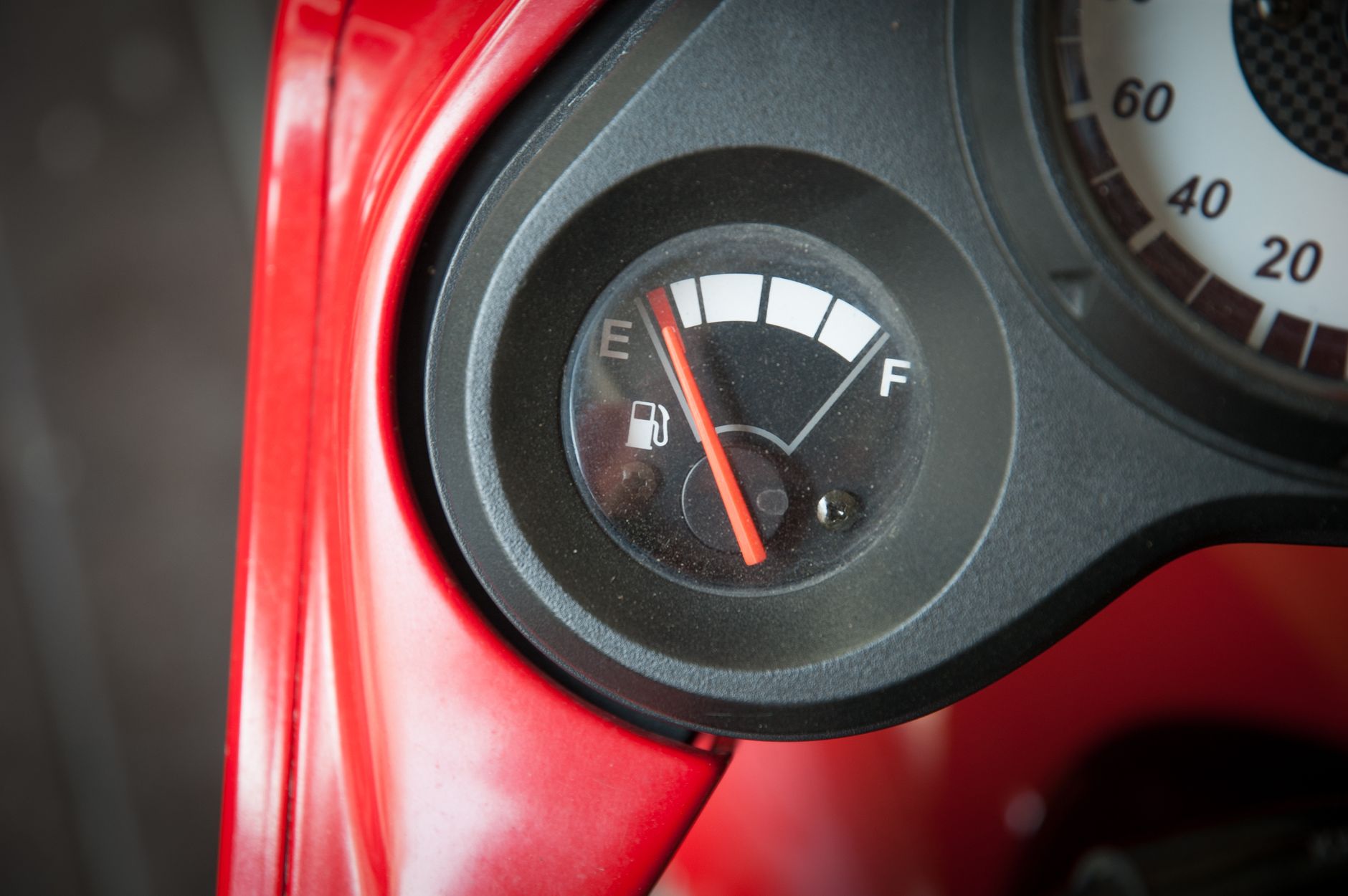

A faulty fuel-system signal can trigger the warning even when the tank is completely full. A bad sender, damaged wiring, or a faulty cluster can make a full tank look empty, so the signal has to be checked before the gauge can be trusted again.
These symptoms matter after refueling, during diagnosis, or when the dash and the fuel level disagree. Here’s a practical path for drivers and DIYers who need to find the fault without replacing parts at random.
Why A Full Tank Can Still Trigger The Warning
One broken link in the circuit is enough to trip the lamp even with the tank topped off. The fuel level sender, the wiring, or the instrument cluster can report empty while the tank is full.
The pattern is usually simple: the low fuel light stays on when tank is full because the gauge system is wrong, not because the tank is empty. A fuel gauge stuck on empty, a bad fuel sending unit, or a dashboard fuel warning light fault can all create the same result.
Electrical faults outrank fuel level
The warning lamp does not measure fuel directly. It reads a changing electrical signal from the fuel level sensor, and that signal can fail long before the fuel pump runs dry. Corrosion, a blown fuse, or a weak ground can break the circuit and make the dash show empty.
That matters because the car can say low fuel even when full after a refill, which tells you the problem sits in the signal chain rather than in the tank itself. Next, the sender inside the tank becomes the main suspect.
That makes the float assembly the first place to inspect for a bad reading.
The Sender, Float, And Signal Inside The Tank
A moving float and resistor inside the tank act like a volume meter. As fuel rises, the float lifts, the resistor changes, and the instrument cluster receives a different resistance value.
A stuck float can hang near the bottom, a sunk float can stay underwater, and a loose arm can move without giving the right reading. That is why a bad fuel sending unit can create a fuel level sensor fault and an incorrect empty reading even after you fill the tank.
How the sender fails
Plastic floats can crack and fill with fuel, which makes them sink instead of rise. The wiper inside the resistor track can also wear through, and then the signal jumps or drops out as the car moves.
Fuel pump module designs from Bosch, Denso, and Delphi often place the sender beside the pump in the same assembly. That layout saves space, but it also means a sender fault can sit next to the pump and confuse diagnosis unless you check the electrical signal itself.
False empty readings start at the assembly
A false low fuel light often starts with a defective sender assembly, not the gauge on the dash. The level data travels from the tank, through the harness, and into the cluster, so a single worn contact can make the whole system act wrong.
On many cars, the gauge and warning lamp share the same sender input. That is why the needle can sit at empty while the tank is clearly full, and why the next section has to focus on wiring before you blame the cluster.
When the sender checks out, a broken wire or poor ground often explains the lie.
Wiring Faults That Make The Gauge Lie
Corrosion at the connector, a broken ground, or a damaged harness can interrupt the sender signal in a quiet, sneaky way. The car may still start and drive fine while the gauge logic gets bad data.
Poor continuity raises resistance in the circuit, and the instrument cluster can read that as an empty tank. A loose connection between the tank sender and the cluster can do the same thing, especially after road vibration, tank work, or a rear-end impact.
- Corroded connector Moisture at the tank plug can increase resistance and distort the sender signal.
- Broken ground A weak ground can make the gauge drift to empty or swing erratically.
- Damaged harness Heat, rubbing, or rodent damage can open the circuit between tank and dash.
- Loose terminal A pin that backs out can pass power but fail under vibration.
- Cluster splice An aged joint near the instrument cluster can interrupt the warning lamp path.
Because of this, a quick visual check is not enough. Follow the signal in order, from the fuel tank to the dash, so a sender that was never at fault does not get replaced. That sequence also makes the next round of testing faster and cleaner.
Each component has to be ruled out in order before the dash gets the blame.
Testing The Gauge System In Order
Start with the actual fuel level and verify that the tank is truly full. A fresh fill-up from a known empty point, plus the odometer and recent mileage, gives you a real-world anchor before you chase a warning light.
From there, inspect the sender, wiring, and instrument cluster in that order. Some vehicles store a diagnostic trouble code for a fuel level sensor fault, and an OBD-II scan can point you toward an open circuit, short, or signal out of range.
- Verify fuel level Confirm the tank is full with a known fill amount, not just the gauge needle.
- Inspect the sender Check the float arm, resistance sweep, and connector at the fuel pump module.
- Check the wiring Look for corrosion, broken insulation, and loose terminals along the harness.
- Scan for codes Pull any diagnostic trouble code tied to the fuel level circuit or cluster input.
- Review the cluster Watch for a gauge that sweeps oddly or a warning that stays on after a key cycle.
Skip guesswork and use the meter. A simple multimeter reading at the sender plug can show whether the tank signal changes as fuel level changes.
That order matters because a fuel level sender fault and a cluster fault can look identical from the driver seat. Once the sender and harness check out, the instrument cluster becomes the last major suspect.
A clean test of those parts often leaves the cluster as the remaining weak link.
Cluster Problems And Hidden Electrical Faults

A bad instrument cluster can trigger an incorrect warning even with a healthy sender. The gauge circuit inside the dash may have a worn stepper motor, a cracked solder joint, or a failed input driver that reads the signal wrong.
Disconnecting the battery can reset the symptom for a short time, but that only clears stored behavior. It does not repair a weak circuit, so the warning can return as soon as the fault signal comes back.
Cluster faults can bring other lights with them
On some cars, a full tank and an abnormal signal also bring on the check engine light. The powertrain control module sees a reading that does not match the rest of the system, and it can set a code for the fuel level sensor or related circuit.
Ford, Toyota, GM, Honda, and Chrysler clusters all use slightly different logic, but the pattern is the same: the dash has to trust a clean electrical signal. As soon as that signal drops out, the gauge can sit at empty while the tank is full.
Hidden faults show up as strange gauge behavior
An instrument cluster fault often causes symptoms that move in steps. The needle may jump, the warning may stay on after refueling, or the reading may change only after a hard bump or a long key cycle.
That kind of behavior points to an internal circuit issue rather than a fuel tank problem. With the signal path mapped out, the last step is choosing the repair that fits the fault and your budget.
That narrows the choice between a simple fix, a pricier repair, and the risk of driving on.
Repair Choices, Costs, And Driving Risk
Connector repair, ground repair, sender replacement, and cluster service cover most cases. A fuel level sensor repair can run from a modest connector fix to a larger tank service job, and the cost depends on tank access, parts, and whether the pump module has to come out.
Driving is usually possible when the tank is truly full, but the gauge should not be trusted until the fault is fixed. That matters on longer trips, because a fuel gauge stuck on empty removes your margin and can leave you guessing at the next refill.
| Fault area | What you replace or repair | Why it changes the warning |
|---|---|---|
| Connector | Clean terminals, repair pins, restore contact | Signal loss stops the dash from reading tank level |
| Ground path | Repair the ground wire or attachment point | Weak grounding skews resistance and creates a false empty reading |
| Sender assembly | Replace the float and resistor unit, or the pump module | The sensor inside the tank gives the cluster the wrong data |
| Instrument cluster | Service the gauge circuit or replace the cluster | The dash interprets a good signal as a bad one |
An experienced shop will often prove the fault with resistance checks before any part swap. That saves you from replacing a fuel pump module when the real issue is a corroded wire near the tank strap.
Short checks that save time
Check the fuse panel, inspect the sender plug for green corrosion, and watch the gauge after a full key cycle. Those small checks can separate a wiring issue from a sender issue before any major repair starts.
When the fault points back to the tank, the sender assembly is the part that carries the most suspicion. From there, the next move is clear: verify the circuit, then repair the piece that fails the signal test.
Careful diagnosis keeps guesswork low and points directly to the failed part.
What To Remember
A full tank with a low fuel warning points to a bad signal path, not a mystery in the gasoline. The sender, wiring, ground, or cluster can all lie to you, so a steady diagnosis protects your money and your fuel gauge at the same time.
FAQ
Why is my low fuel light always on even though my tank is full?
The warning light stays on because the fuel level signal is wrong. A bad sender, corroded wiring, weak ground, or faulty cluster can make a full tank look empty to the dash.
Can a bad sending unit cause the fuel light to stay on?
Yes. A worn fuel sending unit can leave the float stuck, sink the float, or send the wrong resistance value, and the dashboard then thinks the tank is near empty.
How do you diagnose a fuel gauge that reads empty?
Start with the actual fuel level, then inspect the sender, wiring, and cluster with an OBD-II scan and a multimeter. A diagnostic trouble code can point you toward an open circuit, short, or bad sensor input.
How much does it cost to fix a fuel level sensor?
The price depends on access and parts. A connector or ground repair can stay modest, while a sender or fuel pump module replacement costs more because tank removal and labor can take longer.
Why does my check engine light come on when my gas tank is full?
A bad signal can trigger both warnings. The engine computer may see an implausible fuel level reading, store a code, and turn on the check engine light along with the low fuel lamp.
What are the first signs of fuel pump failure?
Hard starts, loss of power under load, stalling, and a whining pump are common early signs. A false low fuel warning alone does not mean pump failure, but a tank-level fault can sit near the pump module.