
Brake caliper piston won’t go back in usually means hydraulic pressure, corrosion, or a parking brake mechanism is holding the piston out of place. Forcing it with a C-clamp can tear seals, swell a hose, or stress the master cylinder.
This walkthrough covers the checks that matter most for a stubborn piston, including rear-brake quirks on Honda, Toyota, Ford, and Brembo setups, so the right fix gets done the first time.
Start With The Pressure In The System
Brake fluid can trap pressure like a spring-loaded plunger, so the piston may seem seized when the circuit is just closed off. Crack the reservoir cap loose, then check the bleeder screw before you press on the caliper. A closed bleeder can trap hydraulic pressure and make retraction feel impossible.
Small resistance is part of the job. Pads sit close to the rotor, and fresh seals add a little drag. A piston that refuses to move at all points to something deeper, and that difference matters because the wrong push can bend hardware instead of fixing it.
That pressure check also tells you whether the issue lives in the wheel end or farther up the system. A stiff pedal after you clamp the hose points toward hydraulic trouble, while a soft pedal with a stuck piston sends you back to the caliper body itself.
Open The Reservoir Before You Press
Brake fluid expands with heat, and that expansion can hold pressure in a closed circuit. Crack the reservoir cap loose before compression so the fluid has somewhere to move, then watch the level instead of forcing the piston against a sealed column.
Use The Bleeder Screw As A Pressure Check
Raybestos and Haynes both point to the same practical habit: verify that the bleeder screw turns freely before compression work begins. A seized bleeder can hide trapped hydraulic pressure, and that pressure can make a brake caliper piston won’t go back in situation look worse than it is.
Residual pressure can mimic a failed caliper, but the rear assembly often adds a separate mechanical catch.
Separate Simple Resistance From A Seized Caliper
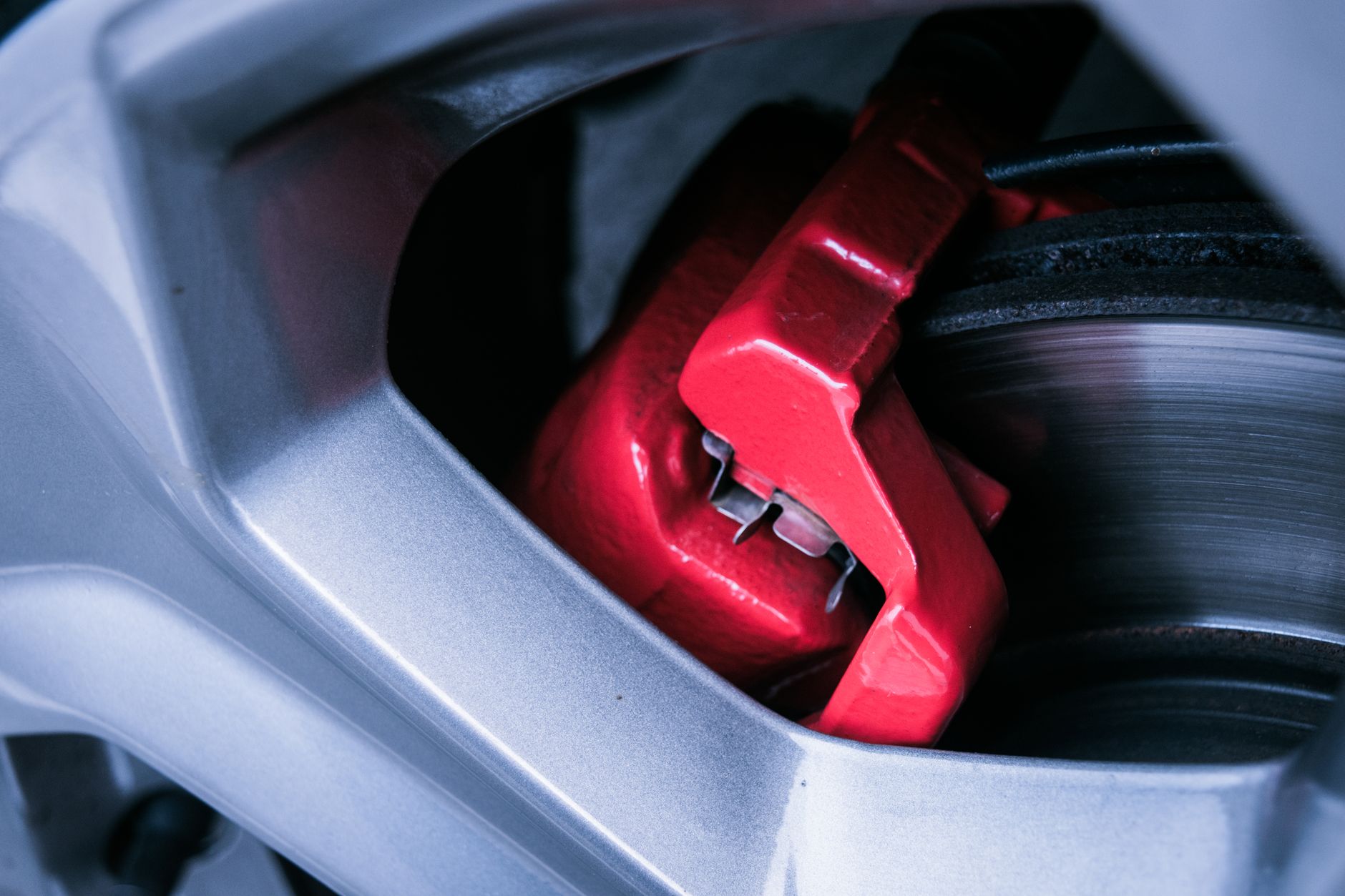
Rust buildup on the piston face or caliper bore changes the feel fast. A clean piston retracts with steady pressure, while a corroded one grabs, jerks, or stops halfway. That difference tells you whether you are dealing with pad drag or a brake caliper piston stuck in the bore.
Look closely at the dust boot, the piston edge, and the caliper body where road splash collects. Heat damage leaves a dark, cooked look on rubber parts, and contamination from old fluid or road grit can scar the seal land. A seized piston does not need more force, it needs inspection.
Do not use a bigger clamp to hide a bad caliper. Extra leverage can collapse the brake hose or push debris past the seal, and the damage shows up later as uneven pedal feel.
Uneven movement is the giveaway. One pad may sit flush while the other stays cocked, or the piston may return a few millimeters and stop. That pattern points away from ordinary pad drag and toward a caliper that will not close because the piston or seal stack is binding.
Corrosion Leaves A Clear Pattern
Surface rust on the caliper body is one thing. Rust inside the bore is another. Internal corrosion roughens the sliding surface, and the seal has to climb over those pits every time you press the pedal.
Pad Drag Looks Different From A Seized Piston
Pad drag leaves shiny wear marks on the rotor and backing plates, but the piston still moves with normal pressure. A seized piston feels sticky even with the pads out of the way, which is the faster way to separate the two problems.
Even after pressure is relieved, a sticky rear piston can still signal a different kind of fault.
Rear Brake Pistons Need A Different Approach
Rear calipers often use a screw-in design, so a straight push does nothing. The piston has to rotate while it compresses, which is why a caliper rewind tool works better than a plain C-clamp on many cars. That design shows up on a lot of Toyota and Ford rear brakes, plus many aftermarket Brembo units.
The parking brake mechanism can also hold the piston out. On some rear brakes, the lever or internal screw adjuster must be released or serviced before the piston will retract. A rear brake piston won’t compress because the internal mechanism is still engaged, not because the piston is weak.
This is the spot where many repairs go sideways. You can fight the piston for ten minutes and make no progress, or you can read the design and save the seals. Rear calipers are small threaded machines, not simple cups, and the motion has to match the hardware.
Rotate While You Compress
Many rear caliper pistons move in and turn at the same time. A proper rewind tool engages the piston face and applies steady torque while the threads walk the piston inward.
Release The Parking Brake Mechanism
A cable-actuated parking brake can hold the rear piston in a locked position. Make sure the lever returns fully and the cable is not binding before you try to retract the piston by hand.
Watch For An Integrated Screw Adjuster
Some calipers use an internal adjuster tied to the parking brake function. When that mechanism stays engaged, the piston sits rigidly and the caliper won’t close until the adjuster is backed off or serviced.
That same rigidity often points beyond the piston itself to the hardware guiding it.
Slide Pins And Pad Wear Often Hide The Real Problem
Slide pins carry more blame than they get. Dirt, corrosion, or torn boots can make the caliper sit crooked, and a crooked caliper pushes one pad harder than the other. That uneven load makes a good piston look bad.
Excessive brake pad wear can create its own headache. A thin pad leaves less room for the piston to move back in smoothly, and the caliper can hang on the rotor edge during reassembly. The problem feels like a piston issue, but the space around it is the real limit.
Uneven pad contact is a clue worth reading carefully. One inner pad worn to the metal and an outer pad with meat left on it tells you the slide hardware is not floating the way it should. Honda and Ford service manuals both lean on that visual pattern for a reason.
Inspect The Pins And Boots
Pull the slider pins, wipe them clean, and check for pitting or dry spots. A damaged dust boot lets water in, and water starts the rust cycle that makes the caliper bind at the wrong angle.
Measure Pad Wear Before Reassembly
Pad wear near the backing plate changes the clearance stack. That small gap matters because a piston that has nowhere to go will stop hard against the rotor side and refuse to seat fully.
When the caliper cannot travel freely, even a small gap can stop the piston from seating.
- Check both pins: A single dry pin can twist the caliper and fake a piston problem.
- Compare pad thickness: Large side-to-side differences point to hardware, not just friction material.
- Read the boots: Torn rubber means water and grit already reached the sliding surface.
- Inspect contact faces: Shiny edges on one side show uneven loading.
Safe Compression Keeps Small Problems From Becoming Big Ones
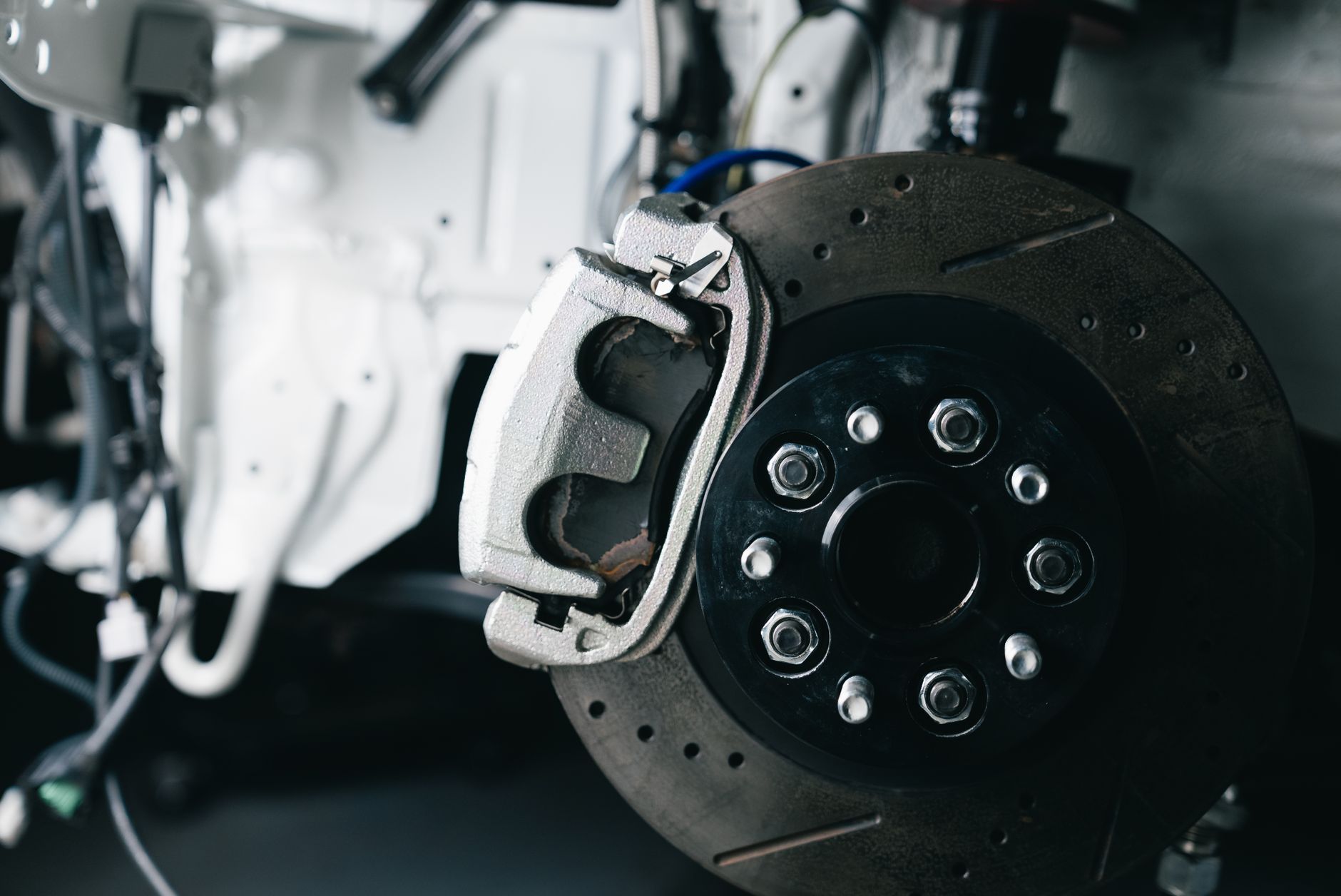
The correct retraction method depends on the caliper design. A front floating caliper may accept a slow, even push, while a rear screw-in unit needs rotation with a caliper rewind tool. Match the tool to the design and the parts stay in one piece.
Force is the enemy here. Excessive leverage can damage seals, collapse a brake hose, or send pressure back through the master cylinder. That is where a routine pad job turns into a broader hydraulic repair, and the extra labor comes from skipping a simple check.
Short practical habits help here: keep the pads square, turn the piston slowly, and stop the moment the fluid level climbs faster than expected. Fluid that rises fast means the system is resisting somewhere, and a pause gives you a chance to spot the fault before parts get hurt.
Rough pressure works against brake parts the same way a wrench on a soft fitting does. Steady motion tells you more than brute force ever will.
| Caliper type | What the piston needs | Common clue |
|---|---|---|
| Floating front caliper | Straight compression | Pads slide back with steady clamp pressure |
| Rear screw-in caliper | Rotation plus compression | Piston face has notches or slots |
| Parking brake integrated caliper | Parking mechanism release | Lever or cable still holds tension |
Pause When The Fluid Rises Fast
Rapid reservoir rise means the piston is displacing fluid normally but the path back is restricted. That is the moment to reassess the bleeder screw, hose condition, and caliper hardware instead of forcing a stuck assembly.
Once movement is restricted that way, forcing the caliper usually means the real repair was missed.
When Rebuild Or Replacement Becomes The Smarter Repair
A brake caliper piston stuck from internal corrosion rarely cleans up well enough for dependable service. Pitting on the bore, torn seal lips, or a piston that binds again after a short push are strong signs that the parts inside have gone past a simple cleaning.
Cleaning and lubrication make sense when the slide pins are dry or the dust boot has trapped light grime. Rebuild territory starts when the piston surface is scored, the seal groove is rusted, or the caliper still drags after the pins move freely. That is the line between maintenance and a failing hydraulic part.
Haynes manuals, Brembo service literature, and factory procedures from Honda, Toyota, and Ford all point in the same direction here: a caliper that will not retract reliably should not go back on the car unchanged. That is the point where your brake caliper piston won’t go back in problem becomes a decision, not a debate.
- Rebuild it: The bore is clean, the seal seat is sound, and only the sliding parts are sticky.
- Replace it: The piston is pitted, the bore is rusted, or the caliper binds again right away.
- Inspect the hose: A swollen brake hose can trap pressure and mimic caliper failure.
- Check the master cylinder: A blocked compensation path can keep residual pressure in the circuit.
Watch For Internal Corrosion
Salt, old fluid, and long storage push moisture into the bore. That moisture starts corrosion under the seal, and the seal can no longer glide across the surface with the low friction brake fluid depends on.
Replace The Unit When Movement Is Not Reliable
Reliability matters more than saving one part. A caliper that binds once can bind again on the next heat cycle, and that is not a safe place to leave your brakes after the job is done.
Because a part that binds once can bind again, deciding between overhaul and replacement becomes critical.
Wrap Up
The real fix starts with pressure, moves through hardware, and ends with an honest call on the caliper itself. Once you sort out the bleeder screw, slide pins, parking brake mechanism, and piston design, the cause becomes much clearer. A piston that still refuses to retract is telling you the caliper needs more than force.
FAQ
Why won’t my brake caliper piston go back in?
A stuck piston, trapped hydraulic pressure, seized slide pins, or a rear screw-in design can block retraction. Start with the reservoir cap, check the bleeder screw, and confirm the caliper type before you press harder.
How do you retract a brake caliper piston?
A floating front caliper usually compresses straight in with even pressure. A rear screw-in caliper needs rotation and compression together, and a caliper rewind tool gives you the right motion without damaging the piston face.
What causes a brake caliper piston to stick?
Rust buildup, contaminated fluid, torn dust boots, internal seal wear, and a parking brake mechanism that stays engaged are the main causes. A swollen brake hose can add pressure that makes the piston feel seized even when the caliper body is not the only issue.
Should I open the bleeder screw when compressing a caliper piston?
Opening the bleeder screw can help release trapped hydraulic pressure, especially on a stubborn caliper. Keep the reservoir cap loose and watch fluid movement so you do not force pressure back through the master cylinder.
Why won’t the rear caliper piston compress?
Rear pistons often need to turn as they move inward, and some also need the parking brake mechanism released first. A rear brake piston won’t compress in a straight push setup because the internal adjuster is still engaged.