
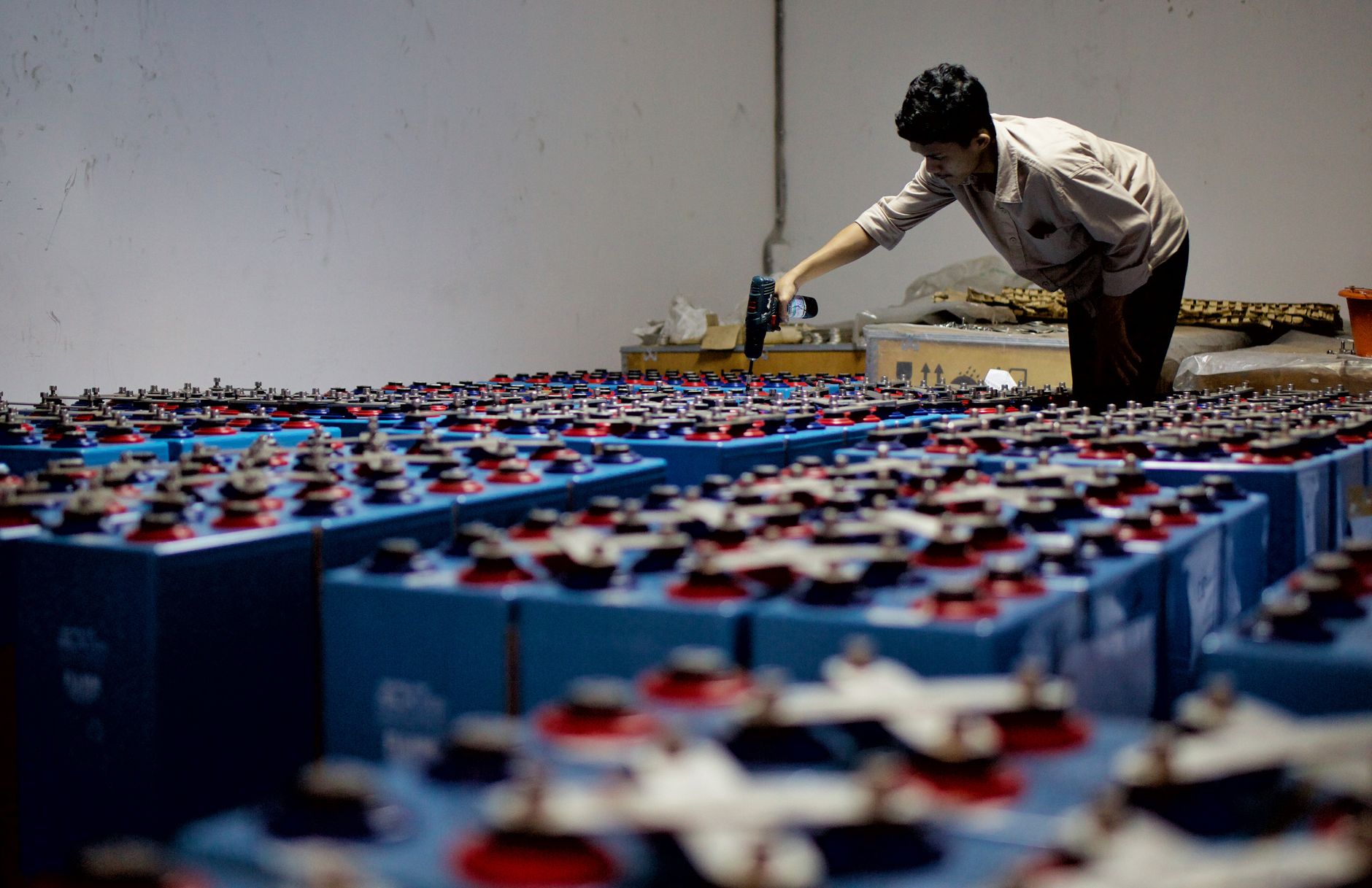

Walmart’s EverStart batteries are private-label products built by outside manufacturers, and the exact supplier depends on the battery line, plant, and contract. The name on the case is Walmart’s; the factory behind it can change from one batch to the next.
Here’s the quick breakdown for shoppers who want the source, the label logic, and the case markings that can point to the actual producer before buying.
EverStart as Walmart’s Store Brand
Walmart owns the EverStart name, but battery plants belong to suppliers, not retailers. That split separates the brand on the shelf from the factory that built the unit, which is why the label alone doesn’t tell the full story.
EverStart includes several lead-acid battery types, from automotive starters to deep-cycle and marine models. A group size 35 battery for a sedan and a group size 24F battery for a truck can carry the same store brand while coming from different production sources.
Brand owner and factory are not the same
Walmart controls the EverStart name, decides the specs it wants, and places the batteries in its stores. The actual manufacturing is handled by a supplier that produces to those requirements and ships the finished product under the private label.
Lead-acid battery production depends on a few core parts, including lead plates, separators, sulfuric acid electrolyte, and a plastic case. That setup is mature, so large retailers can change suppliers without changing the basic product category.
Automotive use is the main lane
Most EverStart batteries on the shelf are built for automotive starting power. In that category, cold cranking amps, reserve capacity, and group size matter more than the name printed on the sticker.
For a daily commuter, fit and output matter most, not branding. Once that part is clear, the next question is which company assembled the battery, and that leads to the third-party makers.
That separation matters because the packaging matters less than the plant behind it.
The Third-Party Makers Behind the Label
That contract setup explains why the source can shift without any change to the shelf tag. The EverStart battery manufacturer is an outside company that fills Walmart’s order under a private-label agreement.
Johnson Controls supplied many Walmart batteries for years, and Clarios has the strongest modern connection to automotive battery production behind the brand. Exide Technologies also appears in the wider battery industry, so sourcing can move among suppliers over time.
Johnson Controls shaped the older supply chain
Johnson Controls was a major force in North American battery production for decades, so its role in Walmart batteries came from scale, not retail branding. The company operated large lead-acid plants that served multiple labels, which made private-label supply a standard business model.
In 2019, Clarios became the standalone battery company formed from that automotive battery business. That history matters because many shoppers still ask who manufactures EverStart car batteries, and the answer depends on the era and the product line.
Exide and other suppliers can appear in the mix
Exide Technologies is another name that shows up in the broader battery world, and private-label retail sourcing can involve different producers over time. A store brand is a contract, not a factory, so the same label can sit beside supply changes with no visible change on the shelf.
Check the case, not just the shelf tag. The box can say EverStart while the molded code on the battery shell points to the real producer and plant.
Once that contract logic clicks, the next question is why the maker can change even within the same store aisle.
Contract manufacturing makes consistency possible, yet it also leaves room for supplier swaps.
Why the Manufacturer Changes Over Time
Battery sourcing changes because plants, freight routes, and regional distribution all affect cost and supply. A warehouse in Texas may pull from a different plant than a store in Ohio, especially when Walmart balances inventory across several distribution lanes.
That means two EverStart batteries sitting on different shelves may come from different sources. The label stays steady while the factory origin moves, which is why who makes EverStart batteries is a moving answer rather than a fixed one.
Plant location shapes the source
A plant near the distribution hub can fill orders faster and cut freight costs, so the supply map shifts with logistics. Lead-acid batteries are heavy, and shipping weight affects the economics much more than it does with smaller consumer goods.
That weight also changes how retailers manage regional stock. A store brand with broad national coverage needs a flexible supply chain, and that flexibility is why the same product family can come from more than one producer in the same year.
Contract shifts change the name behind the mold
Battery contracts often move as plants open, close, or retool for AGM and EFB formats. AGM means absorbed glass mat, a design that uses a fiberglass separator to hold electrolyte and resist vibration better than a basic flooded battery.
That construction detail narrows the pool of plants that can make the unit. Once a retailer wants a specific chemistry or reserve-capacity target, the source list shrinks, and the name behind the case can change with it.
Those shifting supplier choices often show up in the battery’s physical markings.
Clues Hidden on the Battery Case
The battery case tells you more than the shelf label ever will. Manufacturing codes, date stamps, and label marks usually sit on the top cover, near the terminal edge, or stamped into the case wall where the plastic is molded.
Those markings can reveal the plant, production week, and internal batch code. The code format isn’t the same across every producer, but it’s a better clue than the store tag when you’re trying to identify who makes Walmart EverStart batteries.
What the codes can reveal
A date stamp can tell you how fresh the battery is, and that matters because lead-acid units lose charge over time on the shelf. A battery that sat too long may need a closer inspection before it’s installed.
Some codes point to a plant location, while others map to an internal production line or shift. You can sometimes cross-reference those marks with known Clarios, Johnson Controls, or Exide coding patterns, but the code itself is the stronger clue than the retail label.
Where to look on the shell
Start with the top lid, the front label edge, and the area near the handles or terminal posts. Many manufacturers place an ink stamp or laser mark there so the code survives handling and shipping.
The stamp may be small, faint, or partly hidden by a Walmart sticker. A flashlight and a quick wipe with a dry cloth can make the characters easier to read, which is often enough to identify the real source with more confidence than a guess from the aisle card.
A legible case code turns speculation into a more reliable read on provenance.
What the Origin Means for Quality and Value
The name behind the battery matters less than the spec sheet, the warranty terms, and the consistency of supply. A well-built store-brand battery can perform the same job as a more recognizable label if the cold cranking amps, reserve capacity, and case fit match your vehicle.
That’s the part many drivers miss. Store brand doesn’t automatically mean lower quality, and a premium label won’t fix a battery with the wrong group size or weak starting power for your engine.
Specification beats brand prestige
A 600 CCA battery and a 700 CCA battery are not the same just because the cases look similar. CCA, or cold cranking amps, measures how much current a battery can deliver in cold conditions, which matters on winter mornings and for larger engines.
The chemistry matters too. A flooded lead-acid battery is simpler and cheaper to make, while an AGM unit handles vibration and repeated cycling better. That technical split affects value more than the retail name printed on the front.
Store brand pricing follows a different logic
Walmart’s private label can cost less than some name-brand replacements because the retailer controls packaging, merchandising, and volume. That doesn’t mean the battery is low grade; it means the profit chain is shorter and the branding cost is lower.
For a family sedan, a truck, or a backup generator setup, the real question is whether the battery matches the load and the install space. If the answer is yes, the case origin becomes a useful detail, not the main decision.
When fit and performance line up, the label’s backstory becomes secondary.
| Check | Why It Matters | What You Should See |
|---|---|---|
| Cold cranking amps | Shows starting strength in low temperatures | Number that meets or exceeds your vehicle spec |
| Group size | Confirms physical fit and terminal layout | Same size code as your old battery |
| Reserve capacity | Shows how long the battery can support accessories | Higher number for larger electrical loads |
| Date code | Shows how fresh the unit is | Recent production stamp on the case |
Buying EverStart with the Right Expectations
Start with the exact battery, not the brand family. An EverStart replacement battery can be a strong value only when the group size, terminal layout, reserve capacity, and vehicle load all match what your car or truck needs.
Then compare the supplier code and production date against similar units on the shelf. A fresh code, the right spec, and a fair price gap matter more than a familiar factory name, especially because who makes EverStart batteries can change by batch and region.
- Match the group size. The case has to fit the tray and hold-down points in your vehicle.
- Check CCA and reserve capacity. Those numbers tell you whether the battery can handle your start load and accessories.
- Read the case code. The stamp can point to the real producer more reliably than the shelf label.
- Inspect the date mark. A newer production code helps you avoid sitting inventory that has lost charge.
- Compare like for like. Compare AGM to AGM and flooded to flooded, not across different chemistries.
That same habit helps with trucks, SUVs, and marine batteries too. A boat battery with deep-cycle use has different demands than a commuter car battery, so the right choice comes from the load profile, not the logo.
So the simple answer holds up: EverStart is Walmart’s brand, but the maker is usually a third-party producer behind the label. Once you know how to read the code and the spec sheet, the sticker stops being the whole story.
Those details make the purchase feel less mysterious and the label easier to trust.
Wrap Up
The real supplier matters, but it doesn’t change the main rule: fit, output, and freshness beat brand lore. Walmart owns EverStart, outside factories build it, and the case markings tell you more than the shelf tag ever will.
FAQ
Who makes EverStart batteries for Walmart?
Several third-party battery manufacturers fill Walmart’s private-label orders for EverStart batteries. Johnson Controls supplied many units in earlier years, and Clarios is the name most tied to modern automotive battery production.
Are EverStart batteries made by Clarios or Johnson Controls?
Both names fit the brand history, but not every EverStart battery comes from the same source. Johnson Controls handled many older supply lines, while Clarios now sits closer to the present automotive battery business.
Where are EverStart batteries manufactured?
The factory location changes with plant assignments and regional distribution. You can find clues on the battery case, and those marks point to the plant or production batch more reliably than the Walmart shelf tag.
Are EverStart batteries any good?
They can be a solid value when the spec sheet matches your vehicle and the unit is fresh. Quality comes from the actual design, the production batch, and the warranty terms, not the store brand name alone.
Who makes Walmart car batteries?
Outside battery suppliers produce Walmart car batteries under the EverStart label. The exact producer can change with contract terms, product type, and plant location, so the case code is the best clue.