

You want stronger bass from factory power, not a project that eats your weekend. The right 6×9 speakers can add fuller low-end punch, cleaner midrange, and less strain on a stock head unit, especially in a daily driver, work truck, or older car with tired originals.
This roundup keeps the focus on practical fit. You’ll see which models lean toward easy OEM replacement, which ones give you more output headroom, and which ones make sense only when your door and deck setup can support them.
Quick Look At Our Shortlist

PIONEER F-Series TS-F6935R 6 x 9 3-Way Car Speakers
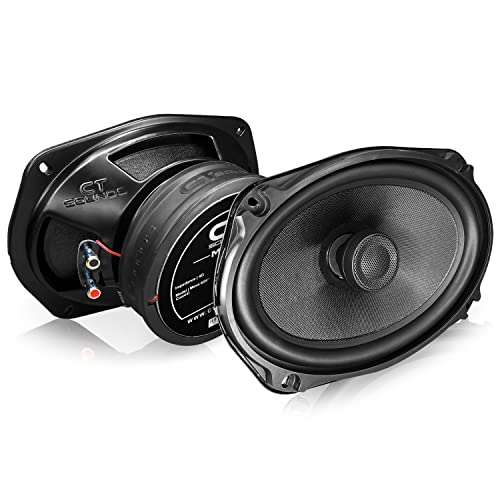
CT Sounds Meso 6×9 400 Watt 2-Way Premium Coaxial Car Speakers

BOSS Audio Systems CH6930B 6 x 9 Car Speakers
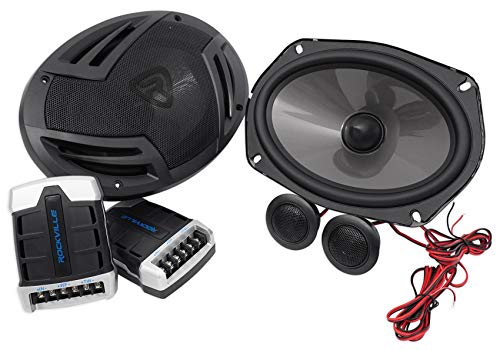
Rockville RV69.2C 6×9 Component Car Speakers

ORION Cobalt CB693 6×9 3-Way Coaxial Car Speakers
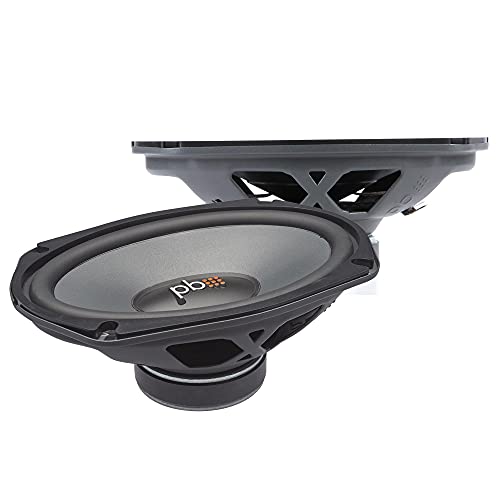
PowerBass OE-690D 6 x 9 3-Way Speakers

ORION Cobalt CM6954 6×9 High Efficiency Mid-Range Speakers
More Details On Our Top Picks
Factory-radio upgrades usually need a speaker that sounds tidy without asking for extra hardware, and that’s where this Pioneer makes sense. Its 3-way layout splits the work across drivers, so the bass, mids, and treble each get a clearer job than a plain single-cone setup. That tends to help in older sedans and commuter cars where you want fuller sound, not a rebuild.
The trade-off is straightforward, it’s more about clean replacement than hard-hitting output. Compared with the more aggressive CT Sounds and ORION picks later in the list, this Pioneer feels calmer and easier to live with. For most daily drivers, that restraint is a strength rather than a flaw.
Strong Points
- Three-way layout helps the sound stay organized across bass, vocals, and brighter detail.
- Built for OEM-style replacement, so it fits the kind of upgrade many stock systems need.
- High efficiency matters for factory head units, which often struggle with less sensitive speakers.
- Balanced tuning suits long commutes and casual listening without sounding overcooked.
Things To Consider
- It leans toward balance, so deep bass seekers may want a more assertive option.
- Owners replacing worn factory speakers may still need to check mounting depth and connector fit.
Feature Snapshot
Who It Suits Best
You get the most from this Pioneer in a daily driver where the goal is cleaner factory replacement and a fuller sound stage. It suits commuters who want an easy upgrade without chasing a bulky system.
Where A Sibling Pick Shines
CT Sounds Meso 6×9 400 Watt 2-Way Premium Coaxial Car Speakers fit better for you if you want a livelier, more forceful setup with a bit more edge.
This CT Sounds pair leans a little more toward punch and sparkle than the Pioneer above, which makes sense for you if the stock speakers already sound flat. A two-way coaxial speaker uses a woofer and tweeter in one frame, so installation stays simple while the top end gets a cleaner lift. In a compact car or hatchback, that can make music feel more awake without adding an amp.
The honest read is that this style works best when you want more excitement, not maximum warmth. Compared with BOSS CH6930B, the Meso looks like the more polished step up, while still staying easier than a component setup like Rockville RV69.2C. That middle ground is a big part of the appeal.
Highlights
- Two-way coaxial design keeps installation simpler than component-style systems.
- Strong output rating gives you more headroom for stock-system upgrades.
- Clearer treble can help older cabins sound less muffled on the road.
- Good match for drivers who want a firmer, more lively sound profile.
Room For Improvement
- The stronger voice can feel less relaxed than a softer factory-replacement tune.
- In some doors or rear decks, you may still want to verify depth and mounting space.
- It can feel a bit too energetic for listeners who prefer gentle, low-key playback.
At A Glance
Made For
You’re the best match for this pair if you want a direct upgrade in a daily driver and like a more lively tone without moving to an amp-backed build. It also fits you well when installation simplicity matters.
Look Elsewhere When
PIONEER F-Series TS-F6935R 6 x 9 3-Way Car Speakers suit you better if your priority is smoother OEM-style balance over extra bite.
The BOSS CH6930B is the kind of straightforward set that works for a lot of stock systems, especially in older cars with tired paper cones. Its three-way layout gives you a little more separation than a basic two-way design, so vocals and upper detail don’t have to crowd the bass as much. For casual listening, that makes the cabin feel cleaner without getting complicated.
Compared with the CT Sounds Meso, this one feels more approachable and less pushy, which can be a relief on long commutes. The catch is that it’s built for sensible upgrades, not the most refined sound in the group. That trade-off is reasonable for budget-minded installs.
Best Bits
- Three-way architecture gives you broader separation than plain full-range replacements.
- Works well as a simple refresh for worn factory speakers.
- Balanced tuning can keep everyday music from sounding too thin.
- Pair format makes it easy to plan around front or rear replacement.
Softer Spots
- It’s tuned more for general use than for deep bass authority.
- You may notice less finesse than the CT Sounds or Pioneer options.
Core Details
Right Fit For
You fit this model best when you want a no-drama replacement for everyday driving and don’t need a flashy audio build. It also suits you when value matters more than chasing the last bit of finesse.
Swap It Out When
ORION Cobalt CB693 6×9 3-Way Coaxial Car Speakers make more sense for you if you want a fuller, slightly more expressive sound than this BOSS set usually aims for.
Rockville takes a different path from the coaxial speakers above, because this is a component-style setup with separate pieces doing different jobs. A woofer handles the lower range, PEI dome tweeters cover the highs, and the two-way crossovers guide the split, which can make the sound feel more controlled in the right car. You notice that most in a system where installation space and tuning matter.
It’s the most ambitious pick in the group, but it asks more from the install than the Pioneer or BOSS options. In a custom build, that extra effort can pay off with a more deliberate front stage and stronger low-end presence. In a simple swap, though, it may feel like more speaker than you really need.
What We Like
- Component layout gives you more control over how the sound is placed in the cabin.
- Polypropylene woofer and butyl rubber surround point to durable, car-friendly materials.
- Separate tweeters and crossovers can help the top end sound cleaner.
- Rated bass response starts low, which suits custom setups that want more reach.
- Included grilles help protect the drivers during daily use.
Points To Note
- Component layouts usually ask for more installation effort than coaxial sets.
- The 4-ohm load and tuning choices make system matching more important.
- For a quick factory swap, this is more involved than the Pioneer or BOSS picks.
Details At A Glance
Built With In Mind
You’re the right match for this Rockville set if you’re building a more deliberate system and want room for tuning. It also suits you when you’re comfortable with a more involved install.
A Better Fit Elsewhere
PIONEER F-Series TS-F6935R 6 x 9 3-Way Car Speakers make more sense for a quicker replacement in a car that still runs on factory hardware.
This ORION set sits in a familiar middle zone, with a three-way coaxial format that aims for fuller coverage without turning the install into a project. That makes it appealing for family cars, second vehicles, and anyone replacing old rear-deck speakers who still wants decent bass presence. The sound profile should feel broader than a basic two-way, but less specialized than the Rockville component setup.
Compared with the BOSS CH6930B, this ORION pair reads as a touch more expressive and better equipped for everyday listening. The trade-off is that “enhanced bass” still means speaker-level bass, not subwoofer territory. For most stock systems, that’s exactly the honest expectation to keep.
Positives
- Three-way coaxial design gives you fuller coverage than simpler speaker layouts.
- Durable construction should suit regular commuting and repeated cabin heat cycles.
- Included grilles add a practical layer of protection in active family vehicles.
Minor Gripes
- The bass emphasis is useful, but it won’t replace a dedicated low-end setup.
- Like most 6 x 9 upgrades, installation still depends on your car’s mounting space.
Quick Facts
Whose Shelf It Belongs On
You fit this ORION model well if you want a general-purpose upgrade for a daily car and like a balanced sound with a little bass lift. It’s also a sensible choice for casual listeners who want the install to stay manageable.
Another Choice May Suit
Rockville RV69.2C 6×9 Component Car Speakers suit you better if you want a more custom front-stage build and don’t mind the extra wiring and setup.
The PowerBass OE-690D stands out because of its 2-ohm load, which is lower than the 4-ohm setups in several other picks here. Lower impedance can make a system draw more power from a compatible source, so it matters most when your vehicle audio is set up to work that way. For you, that means this pick is less about casual replacement and more about matching the rest of the system properly.
Compared with the Pioneer and BOSS models, this one feels a little more specialized. That can be useful in a vehicle where the electrical and speaker match are already sorted, but it’s not the most forgiving choice for a first-time swap. The upside is that it gives you a clear path for a more assertive factory-style upgrade.
Bright Spots
- 2-ohm impedance can suit systems built around that lower load.
- Three-way design gives the speaker more flexibility across the audio band.
- 100 watts RMS is a useful anchor for more realistic power planning.
- Good fit for drivers who want more output than a plain replacement speaker.
Areas To Watch
- The 2-ohm load means compatibility matters more than it does with 4-ohm models.
- For a simple factory deck, this may be more speaker than the system can make use of.
Feature Card
Best Suited To
You’re the right fit for this PowerBass pair if your system already works well with a 2-ohm speaker and you want more output from a careful upgrade. It also suits you when the installation is part of a planned audio build, not a quick swap.
Where Another Pick Suits Better
BOSS Audio Systems CH6930B 6 x 9 Car Speakers make more sense for a simpler replacement on a basic factory head unit.
This ORION model moves away from the coaxial crowd and leans into mid-range output, which changes the whole character of the system. A bullet-style driver is built to project sound more directly, so vocals and front-stage presence can feel more immediate in the cabin. That kind of setup works best in vehicles where you care about clarity and output more than soft, relaxed tuning.
Compared with the ORION CB693, this CM6954 is the more specialized choice, and the stronger voice comes with a firmer, less gentle personality. In a louder system or a show-style build, that directness can be exactly what you want. In a quiet commuter car, it may feel a bit forward.
Reasons To Buy
- High-efficiency design suits setups that need stronger projection from the front end.
- 4-ohm impedance keeps it in familiar territory for many systems.
- 1.5-inch voice coil suggests it’s built to handle more demanding use.
- Bullet-style construction helps the speaker act like a focused mid-range driver.
Worth Noting
- This is a mid-range-focused speaker, so it’s not the same kind of all-purpose swap as the Pioneer.
- The stronger projection can feel intense in a small cabin with very little acoustic space.
- For routine rear-deck replacement, it may be more speaker than you need.
Technical Sheet
Who Should Grab It
You fit this ORION pair best if you want a louder, more forward mid-range speaker for a system that already has a clear plan. It’s especially sensible for builds that value vocal presence and stronger projection.
Skip It When
PIONEER F-Series TS-F6935R 6 x 9 3-Way Car Speakers suit you better if you want a gentler, more conventional upgrade for everyday listening.
How To Choose The Right 6×9 Speakers For Bass Without Amp
Match The Speaker To Your Head Unit
Stock head units usually deliver modest power, so speaker efficiency matters more than a big peak watt number. High-efficiency models like the Pioneer and ORION CM6954 are easier to wake up from factory power, while lower-sensitivity setups can feel muted in the same cabin. The practical result is simple, you want a speaker that can move well without asking for an amp you do not plan to add.
Impedance matters too. A 4-ohm speaker is the safer default for many factory systems, while a 2-ohm model like PowerBass OE-690D makes more sense only when the rest of the system is set up for it. That’s the difference between a clean swap and a mismatch that leaves sound on the table.
Choose The Right Type Of 6×9
Coaxial speakers keep the tweeter and woofer in one frame, so they’re the easiest path for most daily drivers. The Pioneer, CT Sounds, BOSS, ORION CB693, and PowerBass all fit that simpler lane in different ways, from gentle OEM replacement to more active output. Component-style models, like the Rockville, separate the drivers and crossovers, which gives more tuning freedom but asks more from the install.
For bass without an amp, the shape of the system matters as much as the paper specs. A coaxial set is usually the safer choice for a quick rear deck or door replacement, while a component setup suits a more deliberate build where you can place drivers carefully. In a small sedan, that can be the difference between tidy punch and a setup that feels like a tangle of parts.
Look Past Peak Watts
Peak wattage sounds dramatic, but RMS power tells you more about steady handling. RMS, or root mean square, is the speaker’s more realistic continuous power figure, and it helps you compare models without getting distracted by the biggest number on the page. That’s why the Rockville, PowerBass, and CT Sounds entries deserve closer attention than any spec sheet bragging about a huge maximum figure.
Bass also depends on enclosure and cabin shape. A 6 x 9 in a well-sealed rear deck or solid door mount usually gives more satisfying low-end than the same speaker rattling around a loose panel. You get the most from these picks when the mounting fit is tight and the cabin doesn’t bleed away the energy.
Think About The Sound You Actually Want
Some 6 x 9 speakers are built for balance, while others lean harder into output or mid-range projection. If your commute is long and you want music that stays easy on the ears, the Pioneer or BOSS route feels safer. If you want a more vivid, forward sound, CT Sounds or ORION CM6954 gives you more attitude without adding an amp.
That choice should follow your car, your music, and your tolerance for installation fuss. For most drivers, a balanced coaxial set is the least risky way to get stronger bass from factory power. For a custom build, the specialized options earn their keep.
What To Weigh Before You Commit
Mistakes Worth Dodging
The biggest mistake is chasing only peak watts and ignoring fit. Mounting depth, impedance, and whether the set is coaxial or component all affect how the speakers behave in your car. A speaker that looks powerful on paper can still disappoint in a cramped door or underpowered system.
Another common miss is expecting speaker-only bass to act like a subwoofer. These 6 x 9 picks can add body and punch, but they still live inside the limits of factory power and cabin space. That’s why tuning and placement matter as much as the model name.
What The Higher Tier Buys
Higher-tier models usually spend more on driver materials, crossover parts, and more deliberate tuning. You see that in the Rockville component set, where separate tweeters, crossovers, polypropylene construction, and a butyl rubber surround all point to a more serious build. Those details do not just sound fancy, they usually mean better control and more setup flexibility.
Paying more makes sense when you want a custom install or a stronger front stage that rewards careful matching. For a basic daily driver, the extra cost can be overkill. For a system you plan to keep for years, the upgrade path feels more justified.
Frequently Asked Questions
Do 6 x 9 speakers give you bass without an amp?
They can add fuller low-end punch, especially when the factory speakers are worn out. They still work within the limits of the head unit, so the bass stays speaker-level, not subwoofer-level.
Are 4-ohm speakers safer for stock systems?
Yes, 4-ohm models are usually the easier match for common factory audio gear. A 2-ohm option can work well too, but only when the rest of the system is built for it.
What matters more, power rating or efficiency?
Efficiency usually matters more for a no-amp setup, because it affects how easily the speaker plays from modest factory power. Power rating still matters, but it does not tell the whole story by itself.
Is coaxial or component better for a quick upgrade?
Coaxial speakers are usually the simpler path because the drivers sit together in one unit. Component sets give you more control, but they ask for more planning and install effort.
Can these fit rear decks and front doors?
Many 6 x 9 speakers are used in both places, depending on the vehicle’s mounting pattern and depth. You still need to check your car’s opening before you choose a set.