
Changing oil at home goes a lot smoother when the pan matches the job. A compact drip pan suits a sedan in a tight garage, while a wheeled drain cart makes more sense for trucks, fleet work, or any shop that handles repeated fluid changes. You also want a shape that pours cleanly and a body that holds up after hot, messy use. The six options below cover those real-world needs without drifting into fluff.
Quick Look At The Shortlist

Groz 15 Quart Oil Drain Pan with Wheels & O-Ring Seal

Funnel King 32950 Oil Drain Pan
VEVOR Low Profile Oil Drain Pan, 20-Gallon Metal Oil Change Pan
OEMTOOLS 4 Gallon Oil Drain Pan Heavy Duty Polyethylene

22” Square No Splatter Pad, Oil Drain Splash Pad

NEIKO 20760A 4 Gallon Anti-Splash Drain Container
More Details On Our Top Picks
The wheels change the feel of this pan right away, because a full 15-quart load is far easier to move than a hand-carried tub. The wide 8-inch opening helps when you’re draining a truck or larger car, and the catch basket adds a bit of order to the messy middle of the job.
The O-ring seal and leak-resistant spout matter most in a garage that sees repeated use, since splashes and drips are where cleanup gets tedious. Groz built this for people doing regular maintenance on bigger vehicles, and the trade-off is simple: more utility, more bulk.
Strong Points
- Rolling base makes a loaded pan easier to move across a shop floor.
- Large opening gives you more room under broad drain points.
- Catch basket helps keep loose debris and drain hardware organized.
- Leak-resistant spout supports cleaner pours into a storage container.
- 3.75-gallon capacity suits larger oil changes without constant emptying.
Things To Consider
- Wheels and sealing hardware add complexity compared with a plain pan.
- The larger body takes more storage space on a crowded wall or shelf.
- Cleanup can take a little longer after thicker fluids or repeated use.
Feature Snapshot
Whose Shelf It Belongs On
You’ll get the most from this in a home garage that handles trucks, SUVs, or frequent oil changes.
Where A Sibling Pick Shines
Funnel King 32950 suits the person who wants a smaller, simpler pan for basic sedan work.
Some pans are built for flair, but this one keeps the job straightforward. The 13.5-inch length and 4.5-inch height make it a compact, low-slung option for routine fluid changes, especially in garages where storage space is tight.
The fact that it’s made in the USA may matter to shoppers who prefer a familiar, no-frills tool for repeat use. Compared with the Groz pan, you give up wheels and sealing extras, yet you gain a simpler shape that’s easy to stash and rinse out.
Upsides
- Low profile shape slides into tighter under-vehicle spaces.
- Compact length makes shelf storage less awkward.
- Simple construction keeps day-to-day handling uncomplicated.
- Pack of two helps you keep one on hand while the other is in use.
Room For Improvement
- Smaller capacity means more frequent emptying during bigger jobs.
- No wheel system, so moving a full pan takes more care.
- The plain body offers fewer extras for spill control.
Core Details
Built With In Mind
You’ll appreciate this most in a small garage or for simple maintenance on a compact car.
A Better Fit Elsewhere
Groz 15 Quart Oil Drain Pan with Wheels & O-Ring Seal suits truck owners who want easier transport after draining.
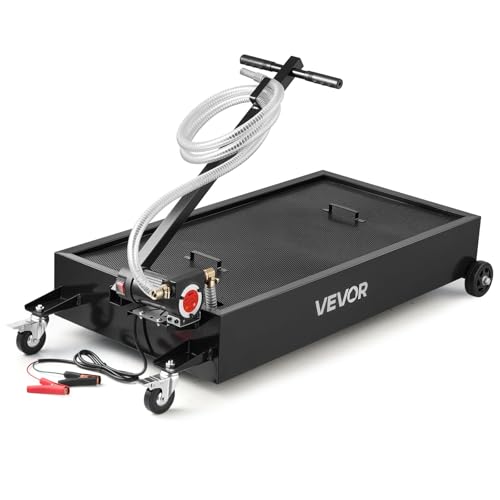
This is the heaviest-duty choice in the group, and the cart format makes that obvious the moment you picture it in a busy bay. The 20-gallon capacity is aimed at repeated service work, while the 180W electric pump changes the way you handle transfer, especially when you’re moving fluid across a larger workspace.
The folding handle and wheels help with positioning, though the metal body and powered setup mean you’re dealing with a more involved piece of gear than the simpler pans above. For shops, RV service, or someone handling large vehicles often, that extra structure can be worth it.
Highlights
- Large cart-style capacity suits frequent or heavy service use.
- Electric pump reduces the hand labor of transferring collected fluid.
- Wheels make movement easier in a garage or workshop.
- Folding handle helps with steering and storage placement.
- Metal build feels better suited to demanding environments than lighter pans.
Softer Spots
- Size and hardware make it a poor match for minimal storage space.
- Powered equipment brings more setup than a simple drain pan.
- The industrial format is more than many home garages need.
Technical Sheet
Perfect Match For
You’ll get the most value from this in a busy shop, fleet bay, or RV service setup.
Skip It When
OEMTOOLS 4 Gallon Oil Drain Pan is the easier choice for a home mechanic who wants a lighter, simpler container.
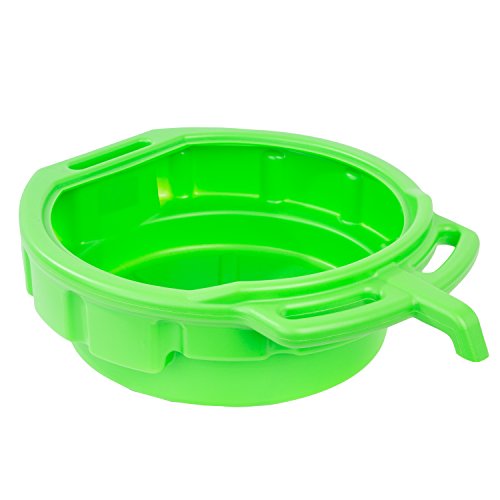
For most home garages, this hits a sensible middle ground. The 4-gallon body is big enough for routine oil work, coolant drains, or transmission fluid changes, and the angled pour spout gives you a cleaner way to transfer liquid afterward.
The no-splash lip and three handles are the details that make it feel thought through, especially when your hands are oily and the pan is full. Compared with the Funnel King option, it feels more purpose-built for pouring and carrying, though it still stays simpler than the Groz wheeled setup.
Bright Spots
- 4-gallon capacity suits many common vehicle fluid jobs.
- Angled pour spout helps direct liquid into a storage container.
- No-splash lip can reduce messy slosh during handling.
- Three handles make grip and lifting easier from different angles.
- Stackable design helps you store more than one without much fuss.
Points To Note
- Plastic construction is lighter, but it feels less heavy-duty than metal carts.
- Stacking helps storage, yet the pan still needs enough shelf space.
- Large fluid changes may require more careful pouring to avoid spills.
Details At A Glance
Right Fit For
You’ll like this most for regular garage work on cars, SUVs, or light trucks.
Look Elsewhere When
VEVOR Low Profile Oil Drain Pan, 20-Gallon Metal Oil Change Pan suits a shop that needs far more capacity and powered transfer.
This isn’t a traditional pan, and that matters. The 22-inch square pad is aimed at catching splatter and stray drips around a drain point, so it fits a garage where you want the floor to stay cleaner during oil or transmission work.
Because it’s a pad rather than a rigid container, storage is easier and cleanup tends to be less involved than with a deep pan. The catch is simple, though, it’s a support piece, not a replacement for a pan that actually holds drained fluid.
Reasons To Buy
- Square footprint gives you a broad surface for managing splashes.
- Low-profile format stores easily with other flat garage gear.
- Helps protect the work area during messy fluid changes.
- Useful as an extra layer under a drain container.
Small Caveats
- It does not replace a true collection pan for drained fluid.
- The pad is more of a mess-control accessory than a full tool.
- Best results come when you pair it with the right pan size.
Feature Card
The Right Fit
You’ll benefit most from this in a garage where splatter control matters more than storage capacity.
Another Choice May Suit
NEIKO 20760A 4 Gallon Anti-Splash Drain Container is the better all-around option for direct fluid collection.
This one leans into everyday usefulness, especially for routine fluid changes in a home garage. The 4-gallon size is practical without feeling oversized, and the pour spout gives you a cleaner path from drain pan to waste container.
The thick-walled recycled polythene is meant to stay rigid, which matters once you’re handling hot oil or a mix of garage fluids. Compared with the OEMTOOLS pan, it feels a bit more workmanlike and a little less focused on carrying convenience, but that trade-off can suit a straight-ahead mechanic’s setup.
Best Bits
- 4-gallon capacity handles common maintenance jobs well.
- Pour spout supports neater transfer after the drain is finished.
- Thick walls help the container keep its shape during use.
- Recycled polythene gives it a sturdy, no-frills feel.
- Suitable for a range of garage fluids, including oil and antifreeze.
Areas To Watch
- Plastic build is sturdy, but it lacks the cart-style ease of the VEVOR pick.
- No wheel system, so moving a full container depends on hand carry.
- Basic shape leaves less room for handling extras or accessories.
Spec Overview
Who Should Grab It
You’ll like this most for regular maintenance in a home garage or driveway setup.
Swap It Out When
Groz 15 Quart Oil Drain Pan with Wheels & O-Ring Seal works better for truck owners who want rolling mobility.
How To Choose The Right Automotive Oil Pans
Match Capacity To The Job
Capacity shapes how often you stop to empty the pan, and that’s the first choice worth getting right. A 4-gallon pan works well for regular car maintenance, while a 15-gallon or cart-style setup makes more sense for larger vehicles or repeated service work. Bigger is not automatically better, because a larger body also takes more room to store and move.
Think in terms of the vehicles in your garage, not a generic spec sheet. A sedan owner rarely needs the same volume as someone handling trucks, SUVs, or fleet maintenance. That’s why the Groz and VEVOR picks serve very different kinds of jobs.
Look Closely At Pouring And Containment
The spout, lip shape, and any sealing parts affect how messy cleanup feels after the drain is done. An angled spout helps guide used fluid into a storage jug, while a no-splash lip or O-ring seal can reduce drips during transport. Those details sound small, but they’re often what separate a calm cleanup from a messy floor.
For a home mechanic, easy pouring matters almost as much as the drain itself. The OEMTOOLS pan leans into handling comfort, while the Groz model adds sealing and a catch basket for a more managed workflow. Both are useful, just in different ways.
Choose Mobility Based On Your Space
Wheels and handles matter most in garages that handle heavy containers or long work sessions. A wheeled cart like the VEVOR setup saves strain in a large workspace, while a lighter container such as the NEIKO or Funnel King option stays simpler for tighter storage. A flat splash pad, by contrast, barely asks for any space at all.
That trade-off is easy to miss until you try to move a full pan across a crowded floor. If your work area is compact, a smaller profile usually beats extra hardware. In a larger bay, mobility starts to feel less like a nice extra and more like the whole point.
What To Weigh Before You Buy
Common Shopping Slip Ups
One common mistake is treating every oil pan like a simple bucket. Some are meant for collection, some for pouring, and some, like the FEICHANGHAO pad, are mainly there to control splatter around the job site.
Another easy miss is storage size. A cart-style unit can be a pain to tuck away in a crowded garage, while a low-profile pan or flat pad fits into tighter spaces with far less effort.
The Case For Spending Up
Higher-tier options usually cost more because they add mobility, larger capacity, thicker construction, or transfer features that save time. That matters most in a busy garage, where repeated handling puts stress on seams, handles, and pouring edges.
You gain the most by stepping up when you use the pan often or work on bigger vehicles. For occasional sedan maintenance, a simpler pan can be enough, and the extra hardware may feel like more than you need.
Frequently Asked Questions
What size oil pan works for a typical car?
A 4-gallon pan fits most routine home oil changes well. Larger vehicles and repeated service work often call for more capacity.
Do wheels really matter on an oil drain pan?
Wheels matter most once the pan gets heavy or the workspace is large. They matter less for small pans that stay close to the vehicle.
Is a splash pad the same thing as an oil pan?
No, a splash pad helps manage drips and mess around the drain area. A true oil pan is built to collect the fluid itself.
What material should you look for?
Polyethylene is common in lighter pans because it is easy to carry and store. Metal tends to suit heavier-duty, cart-style setups.
How do you keep cleanup simple?
A pour spout, no-splash lip, or sealing edge can make a real difference after the drain ends. Those details help keep used fluid where it belongs.
Closing Thoughts
The right automotive oil pan is the one that fits your garage, your vehicle, and how often you actually change fluid. A simple 4-gallon container works for plenty of home jobs, while a wheeled cart makes more sense for larger vehicles or frequent use. The splash pad stands apart as a helper piece, not a full replacement. Keep the work area, storage space, and cleanup you want in mind, and the right choice becomes easier to see.