


Keeping three batteries in shape is easier when the charger matches the way you actually use the boat. A weekend angler, a coastal cruiser, and someone keeping a trolling motor ready all care about different things, especially bank count, chemistry support, sealing, and charge speed. The right pick can make dockside upkeep feel orderly instead of fiddly. The list below focuses on those practical differences.
Quick Look At The Shortlist

3 Bank Marine Battery Charger 10X3, 30A (10A/Bank)

3 Bank Marine Battery Charger, 12V 30A (10A/Bank)

LiTime 2 Bank 12V 10A LiFePO4 Battery Charger

3 Bank Marine Battery Charger 5X3, 15A (5A/Bank)
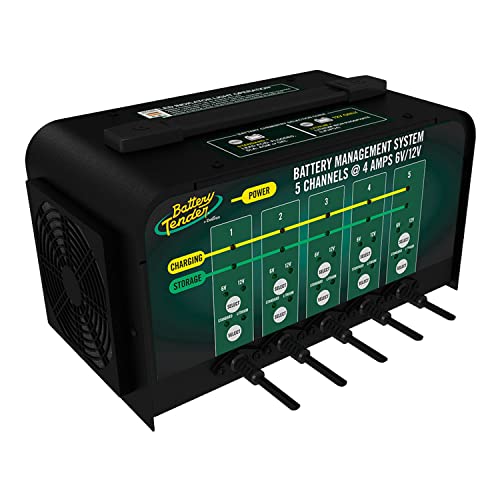
Battery Tender 5 Bank Multibank Charger 20 AMP

3 Bank Marine Battery Charger, 12V (5A/Bank) IP68
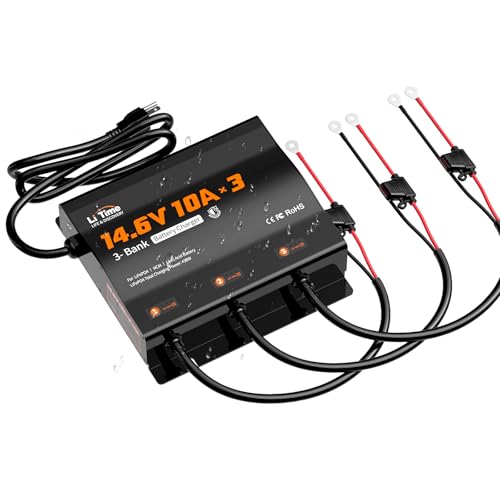
LiTime 3 Bank 12V 10A LiFePO4 Battery Charger
More Details On Our Top Picks
FirstPower Pro leans into faster charge delivery, with 10A per bank for three 12V batteries. That makes sense for a boat that spends long stretches between outings and needs all three batteries brought back up without babysitting each one.
The enclosure is described as waterproof, and the unit is meant to stay connected around the clock with overcharge and temperature protection. That combination suits a docked boat or a garage setup, though the stronger output also makes cable routing and battery fitment worth a careful look.
Strong Points
- 10A on each bank gives you a brisker recharge path for multi-battery rigs.
- Three-bank support matches common helm, house, and starting battery setups.
- Waterproof design fits open boat storage better than basic indoor chargers.
- Overcharge and temperature protection help keep unattended maintenance more orderly.
Things To Consider
- Higher bank output can mean more attention to cable length and heat around tight installs.
- The charger looks more suited to dedicated marine use than to casual bench charging.
Key Specs
Who It Suits Best
Dock owners and anglers with three batteries who want a tougher, faster onboard charger will get the most from this one.
Where A Sibling Pick Shines
LiTime 3 Bank 12V 10A LiFePO4 Battery Charger suits lithium-focused setups better, especially when you want IP65 sealing and 0V activation in the same unit.
SOARFLY gives you the same three-bank, 10A-per-bank structure as the FirstPower Pro pick, but the focus shifts toward battery care functions. The maintainer and desulfator roles make it attractive for boats that sit more than they run, especially when sulfate buildup is a concern on older lead-acid packs.
It also lists support for SLA, AGM, lithium LiFePO4, calcium, and deep-cycle batteries, so the compatibility spread is broad. That breadth helps a mixed battery bank feel less awkward, though you’ll still want to confirm each battery’s chemistry before leaving it connected.
What We Like
- Three 10A banks give each battery a serious charging lane.
- Maintainer and desulfator functions add value for stored boats.
- Wide battery chemistry support helps mixed fleets stay simpler.
- Waterproof onboard design fits regular marine installation better than a desk charger.
Points To Note
- The feature set is broader, so setup may take a bit more reading than a plain charger.
- That chemistry range is useful, but it also means the right battery match matters more.
- Like most onboard units, a tidy mounting spot helps keep maintenance painless.
Feature Snapshot
Built With In Mind
This suits boat owners with a mix of battery types who want a charger that does more than simple replenishment.
Another Choice May Suit
Battery Tender 5 Bank Multibank Charger 20 AMP is a better fit for owners juggling more than three batteries, especially in a garage with both marine and automotive gear.
LiTime goes smaller on bank count, and that’s the point. A two-bank charger suits a kayak trailer, a trolling-motor setup, or a modest boat that doesn’t need three simultaneous charging lines.
The 14.6V output, IP65 sealing, 0V activation, and LED indicator make the unit feel more specialized than the first two chargers. You get a clear read on status and a solid fit for lithium or lead-acid batteries, though the two-bank layout is the real limit for larger rigs.
Highlights
- Two-bank design keeps the footprint smaller and easier to place.
- 14.6V output and 0V activation support lithium recovery-focused use.
- IP65 sealing gives you more confidence in damp storage spaces.
- LED status indication helps you check charge progress at a glance.
- Works with lithium and lead-acid batteries, so you can cover more than one setup.
Softer Spots
- Two banks are enough for smaller craft, but not for a full three-battery marine system.
- The specialized lithium focus may feel excessive for simple maintenance jobs.
Core Details
Right Fit For
Smaller boats and kayak owners who need a compact, lithium-friendly charger will get the cleanest fit here.
A Better Fit Elsewhere
FirstPower Pro 3 Bank Marine Battery Charger 10X3 suits larger boats better, especially where three batteries and higher total output matter more than compact size.
This FirstPower Pro version feels like the steadier sibling to the 30A model. Five amps per bank is easier to live with for routine topping off, and that usually makes more sense for boats that stay connected between trips rather than racing to recover deeply drained batteries.
The same waterproof onboard format, 24/7 charging approach, and protection against overcharge and temperature swings keep it practical. You may find it especially sensible in a covered slip or garage where a gentler pace is perfectly fine.
Best Bits
- 5A per bank feels well suited to regular maintenance work.
- Three-bank layout still covers a standard marine battery trio.
- Waterproof construction suits exposed boat storage.
- Overcharge and temperature protection help with unattended use.
Areas To Watch
- The slower output is a trade-off compared with the stronger 10A version.
- It makes more sense for maintenance than for quick turnaround charging.
Details At A Glance
Whose Shelf It Belongs On
This is a smart match for boat owners who care more about dependable upkeep than about fast recharge times.
Look Elsewhere When
SOARFLY 3 Bank Marine Battery Charger, 12V 30A makes more sense for heavier-use boats that need added battery-care features and stronger bank output.
Battery Tender changes the pattern a bit, because this is a five-bank charger rather than a three-bank marine-only unit. That extra bank count suits garages, mixed vehicle storage, or a setup where you rotate between marine and automotive batteries.
The selectable 12V and 6V support makes it more flexible than the pure 12V marine picks above. The trade-off is that it feels less purpose-built for one boat and more like a general charging hub, which is useful in the right garage but not as clean for a simple three-battery onboard install.
Reasons To Buy
- Five banks give you room for more batteries than a typical marine-only unit.
- Selectable 12V and 6V support increases day-to-day versatility.
- Works for automotive and marine use, so one charger can cover more storage needs.
- 4 amps per bank is a comfortable pace for maintenance charging.
Minor Gripes
- It’s less tailored to a dedicated three-bank marine layout.
- The broader focus may be more charger than you need for a single boat.
- Setup makes more sense on a bench or wall than in a cramped bilge area.
Feature Rundown
The Right Fit
This suits owners who keep several vehicles or batteries in storage and want a single charger to cover more jobs.
Swap It Out When
FirstPower Pro 3 Bank Marine Battery Charger 10X3 is the cleaner pick for a boat-focused setup that wants all attention on three marine batteries.
anegine takes the familiar three-bank, 5A-per-bank layout and adds a more sealed feel with an LCD screen. In a damp boathouse or an RV compartment, that mix can be helpful because you get status visibility without giving up the tighter IP68 protection rating.
It also covers Lead-Acid, AGM, EFB, LiFePO4, and lithium batteries, which is a wide spread for one charger. The honest read is that this one feels especially thoughtful for owners who want a screen and a deeper seal, while still accepting the slower 5A pace.
Positives
- IP68 sealing is a strong fit for wet storage and splash-prone areas.
- LCD feedback makes charging status easier to read than basic indicator lights.
- Three banks keep a standard marine battery setup organized.
- Battery support spans several common chemistries, which helps mixed-use owners.
- Temperature compensation and overcharge protection add peace of mind for longer hookups.
Worth Noting
- The 5A per bank output is steady, but not especially fast.
- The LCD adds convenience, though it can also make the unit feel more involved than a simple maintainer.
- Owners who mount in a tight compartment may want to plan screen visibility carefully.
Feature Card
Perfect Match For
Owners who store gear in damp places and want both a display and stronger sealing will find this especially appealing.
Where Another Pick Suits Better
LiTime 3 Bank 12V 10A LiFePO4 Battery Charger suits faster lithium-focused charging better, especially for boat owners who value speed over screen detail.
This LiTime model keeps the three-bank format but brings the stronger 10A-per-bank output back into play. For boat owners with lithium batteries, that makes it feel more assertive than the 5A options, while still staying manageable for a trolling motor or kayak setup.
The 14.6V output, IP65 sealing, 0V activation, and LED indicator all point toward a charger built for active use rather than passive storage alone. It’s a solid match for mixed chemistry setups too, though the lithium-forward tuning is what gives it the clearest identity.
Plus Points
- 10A per bank gives you brisk charging across three batteries.
- IP65 protection suits damp docks and wet gear storage.
- 0V activation helps with batteries that need a recovery-oriented start.
- LED indicators keep the charging state easy to follow.
- Lithium and lead-acid support adds range for different marine setups.
Small Caveats
- It feels tuned more for lithium-friendly use than for a simple universal maintainer role.
- The stronger output is useful, but it also makes proper installation planning more important.
Technical Sheet
Built With In Mind
Boat owners who run lithium batteries and want strong three-bank charging with simple status feedback will get the most from this pick.
Reach For A Different Pick When
Battery Tender 5 Bank Multibank Charger 20 AMP is the better match for owners who need five-bank flexibility instead of a marine-first three-bank layout.
How To Choose The Right 3 Bank Marine Chargers
Match Bank Count To Your Boat
Three-bank chargers make the most sense for boats with a starting battery, a house battery, and a trolling or accessory battery. A two-bank model like the LiTime 2 Bank 12V 10A LiFePO4 Battery Charger can still be the right fit for smaller craft, but a true three-battery setup feels better served by the FirstPower Pro, SOARFLY, anegine, or LiTime 3-bank units. Extra banks matter because you avoid moving cables around just to keep one battery alive.
Read The Output Number As A Real-World Pace
Amps, in plain terms, describe how much charging current each bank can send. Ten amps per bank, like the FirstPower Pro 10X3 and LiTime 3 Bank 12V 10A LiFePO4 Battery Charger, suits faster turnover after a long outing, while 5A per bank feels calmer and better for maintenance. That trade-off shows up most clearly when your boat sits between trips, because slower chargers are easier on routine upkeep but less helpful after heavy use.
Match Battery Chemistry Before Anything Else
Lead-acid, AGM, EFB, lithium LiFePO4, and calcium batteries do not always want the same charging behavior. SOARFLY stands out for its broad chemistry support, while the LiTime models lean more toward lithium-friendly use with 14.6V output and 0V activation on the lithium-oriented units. A charger that matches the battery type is usually the cleaner long-term choice, since mismatched chemistry can make the whole setup feel awkward.
Think About Where The Charger Lives
Waterproofing ratings and display style matter more than they first appear. IP65 and IP68 sealing help in exposed marine spaces, and the anegine LCD can be handy when the charger sits where you can actually see it. In a wet slip or cramped compartment, the better sealed unit often feels like the calmer choice, even before you think about charging speed.
Things Worth Knowing First
Hidden Buying Traps
A common mistake is choosing by bank count alone and ignoring chemistry support. Another slip-up is buying a high-output charger for a boat that only needs overnight maintenance, because the extra strength may not add much day to day. Pay attention to mount location too, since a charger tucked into a tight, damp spot can become annoying to check and maintain.
The Upgrade Payoff
Higher-tier models usually cost more because they add stronger sealing, smarter battery support, clearer status feedback, or more charging current per bank. That’s why the anegine with IP68 sealing and LCD feedback feels more sophisticated than a plain maintainer, and why the LiTime 3-bank 10A model appeals to lithium-heavy setups. Spending up makes sense when your batteries stay connected often, your boat sees rougher storage conditions, or you want one charger to handle a broader mix of batteries.
Frequently Asked Questions
What does “3 bank” mean on a marine charger?
It means the charger can serve three batteries at the same time. That setup works well for boats with separate starting, house, and accessory batteries.
Are these chargers only for boats?
No, several of these picks can also suit RVs, cars, or mixed battery storage. The marine-focused units still make the most sense in wet or exposed spaces.
What’s the difference between 5A and 10A per bank?
Ten amps per bank usually brings a battery back faster. Five amps per bank is gentler and often better for maintenance charging.
Why does waterproofing matter so much?
Boat compartments, docks, and storage areas often deal with moisture, spray, or humidity. Better sealing helps the charger fit that environment more comfortably.
Which battery type needs the most careful matching?
Lithium and lead-acid batteries deserve the closest look because they do not always charge the same way. A charger with explicit support for your battery chemistry is the safer fit for long-term use.
Final Thoughts
The best 3 Bank Marine Chargers for your setup come down to three things: how many batteries you run, what chemistry they use, and how much weather exposure the charger will face. A faster 10A-per-bank model suits heavier marine use, while a 5A unit can be plenty for steady upkeep. If you want broader flexibility, the Battery Tender five-bank option stands apart, but a true three-bank onboard charger still feels more natural for most boats. Pick the one that matches your actual storage habits, and the whole setup gets easier to live with.