
Boat audio gets tricky fast. Sun glare, spray, glove-friendly controls, and cramped dash space all change what feels easy to use. You need a head unit that fits the helm, handles rough conditions without drama, and gives you the inputs you actually use.
That’s what this roundup focuses on. You’ll see compact single-DIN units, marine-first layouts, and a few bundles that make more sense for full installs than quick swaps. The right choice depends on your dash space, how often you stream from a phone, and whether you want extras like weather bands, CD playback, or matching speakers.
Quick Look At The Shortlist

Sony DSXM55BT Bluetooth Marine Digital Media Stereo Receiver
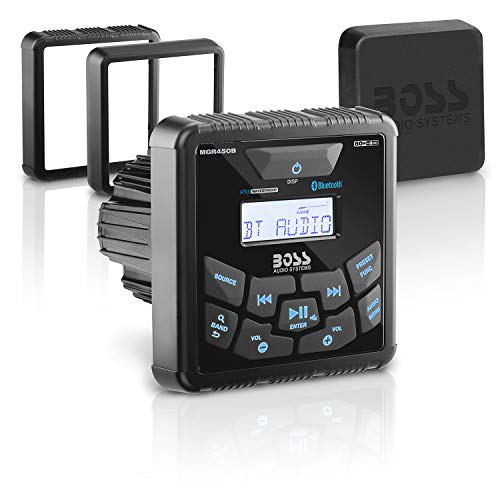
BOSS Audio Systems MGR450B Marine Boat Stereo
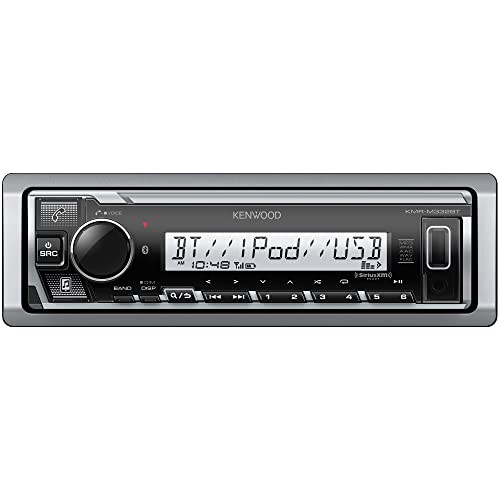
KENWOOD KMR-M332BT Car & Marine Stereo

Kicker 46KMC2 Weather-Resistant Gauge-Style Media Center

Pyle Marine Radio Single DIN Receiver

BOSS Audio Systems MCK632WB.6 Marine Bluetooth Stereo and 6.5 Inch Speakers

KENWOOD KMR-D382BT Single Din Car/Marine Stereo Head Unit
More Details On Our Top Picks
That single-DIN format makes this Sony easy to place in tighter helm spaces, and the marine tuning keeps the focus on straightforward playback rather than flashy extras. For a boat that sees regular weekend use, that kind of no-nonsense layout can feel like a calm dock line in choppy water.
Bluetooth covers the phone side of things, while the SiriusXM-ready note gives you another listening path for longer runs. The trade-off is simple, you’re choosing a media-centric receiver rather than a feature-packed control center, so it suits you best when clean audio matters more than a long menu of sources.
What We Like
- Single-DIN sizing helps in compact dash openings.
- Bluetooth keeps phone streaming and calls in one place.
- SiriusXM readiness adds flexibility for long days on the water.
- Marine-focused design fits the use case better than a car-only deck.
Points To Note
- Digital media focus means no CD slot for physical discs.
- You’ll want to confirm the dash opening before planning the install.
Feature Rundown
Who It Suits Best
Weekend boaters with a tight dash opening and a phone-first listening habit get the most from this layout.
Where A Sibling Pick Shines
KENWOOD KMR-D382BT fits you better when you still want Bluetooth but also want CD playback and a more varied source mix.
The NOAA weather band is the hook here, because boaters spending long hours offshore often want access to weather updates without juggling another device. Compared with the Sony DSXM55BT, this BOSS model leans more toward situational awareness than polished media flexibility.
The honest read is that this kind of unit makes sense for practical helm setups, not luxury dashboards. You get a marine stereo that aims at the basics, which helps keep the learning curve low for captains who want to get underway without fuss.
Highlights
- NOAA weather band adds a useful listening source for boat trips.
- Marine stereo focus keeps the layout centered on daily use.
- Simple controls suit quick adjustments at the helm.
Small Caveats
- Weather-band focus is more practical than flashy.
- You may want a separate source plan for music variety.
Quick Facts
Made For
Boaters who want weather-band access alongside everyday audio will get the clearest benefit here.
Look Elsewhere When
Kenwood KMR-M332BT suits you better when Bluetooth, USB, AUX, and AM/FM matter more than a weather-band tuner.
This Kenwood leans hard into source flexibility, and that matters on boats where different people bring different habits to the helm. Bluetooth, USB MP3, AUX, AM/FM, and SiriusXM readiness give you several ways to keep the audio moving, which is a real plus for mixed-use days.
Compared with the BOSS MGR450B, this one gives you more listening paths without feeling crowded on the dash. The weatherproof note and multicolor illumination also make it a better fit for installs that need a bit more visibility after sunset, though the extra feature set does mean you’ll probably spend more time choosing your preferred setup.
Best Bits
- Bluetooth, USB, AUX, AM/FM, and SiriusXM readiness cover many setups.
- Single-DIN design stays manageable in tighter dash spaces.
- Weatherproof construction suits regular marine exposure.
- Multicolor illumination helps the faceplate feel easier to read at night.
Areas To Watch
- More options can mean a little more setup time.
- Multicolor lighting may matter less in bright daytime use.
Feature Snapshot
Right Fit For
Boaters who want a flexible, source-heavy deck for shared use will appreciate this model most.
Skip It When
Pyle’s simpler marine radio fits you better if you want a more basic setup with a lighter feature list.
Open-helm boats often need gear that reads clearly at a glance, and this gauge-style Kicker is built around that reality. The round mount gives it a different feel from the rectangular Sony and Kenwood units above, so it can suit dash layouts where space is shaped more like an instrument cluster than a traditional stereo bay.
It also leans into hands-on control with a rotary encoder, which is a knob that lets you scroll or adjust settings by turning it instead of tapping tiny buttons. Add in the easily readable screen and over 200 watts of total peak power across four channels, and you get a media center that makes sense for open boats with multiple listening spots.
Reasons To Buy
- Gauge-style form fits round dash openings cleanly.
- Rotary encoder is easier to work with while moving.
- Readable screen helps in bright, open helm conditions.
- Four-channel output supports a fuller boat audio layout.
- Peak power rating gives it more room for system planning.
Trade Offs
- Gauge-style mounting is less universal than single-DIN decks.
- The layout suits open helms more than enclosed cabins.
Technical Sheet
Built With In Mind
Captains with open helms and round dash cutouts will get the most natural fit from this Kicker media center.
Another Choice May Suit
KENWOOD KMR-M332BT is the safer bet for you when a standard single-DIN receiver and a wider mix of audio sources matter more.
This Pyle model keeps the feature set focused on the basics you actually use on a boat, which can be a relief in a category full of extras. Bluetooth streaming, AM/FM, USB, AUX, hands-free calling, a remote, RGB buttons, and a splash-resistant build make it feel practical without getting complicated.
Compared with the Kicker 46KMC2, it’s less specialized and easier to imagine in a wider range of dash layouts. The honest read is that it suits straightforward repowers and weekend craft where the main goal is reliable everyday audio, not a highly tuned cockpit centerpiece.
Positives
- Bluetooth streaming keeps daily playback simple.
- Hands-free calling helps reduce phone handling at the helm.
- USB and AUX inputs give you backup ways to play audio.
- Remote control adds convenience from another seat.
- RGB buttons make the faceplate easier to personalize.
Worth Noting
- Splash-resistant design is helpful, but you’ll still want sensible mounting.
- Feature mix is practical rather than premium-feeling.
Core Details
The Right Fit
Boats needing a simple, versatile stereo upgrade with everyday features belong here.
Reach For A Different Pick When
BOSS Audio Systems MCK632WB.6 makes more sense for you when you want a receiver-and-speaker bundle instead of a lone head unit.
Bundle kits matter when you’re starting from scratch, and this BOSS package solves more than one problem at once. You get the marine Bluetooth stereo plus 6.5-inch speakers, so the install can feel more complete than buying a deck alone and piecing the rest together later.
The detachable front panel is a useful touch for dockside storage, since a removable face can make the unit easier to stash when the boat sits unattended. Compared with the Pyle radio above, this is the more system-minded choice, though you’ll want to plan installation a bit more carefully because you’re dealing with both receiver and speakers.
Upsides
- Receiver and speakers arrive as a matched set.
- Bluetooth, USB, and aux inputs cover common playback habits.
- Multicolor illumination helps the dash feel less plain at night.
- Detachable front panel supports easier storage when not in use.
- Dipole antenna inclusion simplifies part of the install plan.
Softer Spots
- Bundle installs take more planning than a standalone head unit.
- Speaker placement matters, so the setup takes a little more care.
Details At A Glance
Whose Shelf It Belongs On
Boat owners setting up a whole audio system, not just swapping a faceplate, will get the most from this package.
Swap It Out When
Pyle’s single receiver is the easier choice for you when you only need a simpler deck and already have speakers in place.
Some boat setups still need a CD slot, and that keeps this Kenwood relevant in a way many newer decks do not. Bluetooth, hands-free calling, USB, AM/FM radio, SiriusXM readiness, and all-weather in-dash design make it flexible enough for boat use and still familiar for anyone who likes physical media.
Relative to the more source-heavy KENWOOD KMR-M332BT, this unit trades a little of that modern input breadth for the added CD player, which can matter in older family boats or mixed-use vehicles. The 50W x 4Ch note also points to a setup that can be paired with a broader speaker plan, though you’ll still want to think through the rest of your system before installing.
Strong Points
- CD playback remains useful for stored music collections.
- Bluetooth and hands-free calling keep phone use simple.
- USB and AM/FM give you everyday source coverage.
- SiriusXM readiness adds another listening option.
- All-weather in-dash design suits boat and car use.
Areas To Watch
- CD support adds value only when you still use discs.
- Single-DIN layouts can still need careful fit checks.
Core Details
Best Suited To
Boaters who still want CDs alongside modern streaming features will feel right at home with this Kenwood.
A Better Fit Elsewhere
KENWOOD KMR-M332BT suits you better if you want more emphasis on weatherproof audio inputs and no interest in the disc drive.
How To Choose The Right Boat Head Units
Match the unit to your dash
Single-DIN units fit many standard openings, which makes them the easiest route for older boats and straightforward replacements. Gauge-style media centers, like the Kicker, suit round cutouts and open helms better than a boxed-in cabin dash.
That shape choice matters more than many people expect. A unit can look great on the product page and still feel awkward at the helm if the mounting style fights the space around it.
Pick features you’ll actually use
Bluetooth is the common starting point, because phone streaming and hands-free calls cover a lot of everyday listening. USB, AUX, CD playback, SiriusXM readiness, and weather-band support each solve a different problem, so you don’t need all of them unless your boat use really calls for it.
A good way to think about it is source balance. The more people use the boat, the more helpful flexible playback becomes, but a solo angler or weekend cruiser may be perfectly happy with a simpler deck.
Think about visibility and control
Bright sunlight changes everything, which is why readable screens, rotary knobs, and clear button layouts earn their keep on the water. Multicolor illumination can help at dusk, while a knob is often easier than tiny keys when the boat is moving.
There’s a trade-off here, because the more visual polish a unit has, the more you should check how the controls look in real dash conditions. A clean faceplate beats a crowded one when you want quick adjustments without losing focus.
Plan the whole system, not just the deck
A head unit is only part of the story. Speaker bundles, detachable faceplates, and output ratings matter once you think about the boat as a whole audio setup instead of a single box in the dash.
That’s why some shoppers land on a receiver-only model, while others prefer a kit like the BOSS MCK632WB.6. Your best fit depends on whether you’re replacing one piece or rebuilding the entire sound system.
What To Weigh Before You Decide
Common Shopping Slip Ups
A lot of people start with features and forget mounting. That’s how a promising unit becomes a frustrating install, especially on boats with shallow space or unusual dash cutouts.
Another common miss is overbuying source options. A long list of inputs looks impressive, but it only helps when you actually use those sources on the water.
What The Higher Tier Buys
Higher-priced marine audio usually pays for better layout, more flexible connections, or a more complete install package. Bundles, weather-focused controls, and more refined faceplates tend to cost more because they solve more of the setup in one shot.
That upgrade makes sense for bigger boats, shared family use, or systems that need speakers and controls matched from day one. For a simple weekend rig, a straightforward receiver often makes more sense.
Frequently Asked Questions
Are Boat Head Units hard to install?
Some are straightforward, especially single-DIN models that match an existing opening. Gauge-style units and full bundles ask for more planning.
Do you need Bluetooth in a marine stereo?
Bluetooth is the easiest way to stream from a phone without extra cables. It also keeps everyday use simpler for most casual boat setups.
Is a weather band tuner useful on a boat?
It can be useful when you want another source of marine-related updates. That matters most on longer outings or open-water trips.
What size head unit fits most boats?
Single-DIN is common because it works in many compact dash openings. Still, your actual dash opening should guide the final choice.
Why choose a bundle instead of a receiver alone?
A bundle can save you from piecing together the rest of the system later. It fits best when you want a more complete audio refresh.