
Setting up a five-channel system can feel straightforward on paper, then turn messy once you sort out power, sub control, and fit. The right amplifier keeps front speakers and a sub working together without making your dash or trunk layout feel cramped.
This roundup focuses on models that suit daily drivers, weekend upgrades, and home setups with a different kind of signal chain. You’ll see where a compact Class D design helps, where a heavier Class AB option makes sense, and which picks fit more specialized installs.
The Shortlist At A Glance

Rockville dB55 5-Channel 2-Ohm Car Amplifier
Skar Audio SK-M9005D Compact Full-Range Class D 5 Channel Car Amplifier

Denon AVR-S970H 7.2 Channel 8K UHD AV Receiver
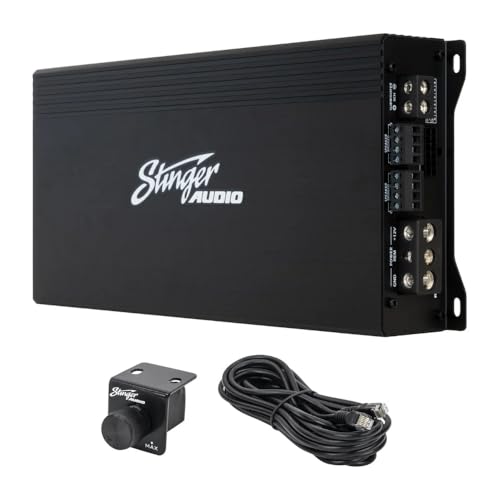
Stinger Audio MT-1000.5 Compact Digital Class D 5-Channel Car Audio Amplifier

Recoil RED1800.5 Class-D Car Audio 5-Channel Amplifier

Pyle 100W 5 Channel Audio Amplifier

NVX VAD11005 v2 Model 5-Channel Class D Amplifier
The Rockville dB55 suits a car audio build that needs more shaping than a barebones amp can offer. Its 2-ohm support, adjustable crossover, subsonic filter, and bass EQ point you toward systems that need a little hands-on tuning rather than a set-it-and-forget-it install.
Compared with the leaner Skar Audio option later in this list, this one feels more old-school in how it approaches control, especially with the separate sub knob and RCA input and output path. You’ll notice the trade-off in size and complexity, but for mixed speaker-plus-sub systems that’s often the point.
Strong Points
- Class AB plus Class D design helps split the workload between speaker channels and sub duty.
- High-speed MOSFET switching supports responsive power delivery, which matters in lively music playback.
- Adjustable crossover and subsonic filter give you more control over how the system blends.
- RCA input and output connections make it easier to expand an existing signal chain.
- Remote bass control helps you trim low-end output from the driver seat.
Things To Consider
- The feature set rewards careful setup, so casual installers may spend more time dialing it in.
- Its more involved control layout can feel busy in a compact trunk or under-seat space.
- The tuning tools are useful, but they also add another layer of adjustment to keep tidy over time.
Feature Snapshot
Who It Suits Best
Car audio hobbyists who like tuning their own sound profile will get the most from this one, especially in a sedan or hatchback with a dedicated sub.
A Better Fit Elsewhere
For a simpler, smaller footprint install, the Skar Audio SK-M9005D makes more sense for commuters who want less setup fuss.
The Skar Audio SK-M9005D keeps the focus on a compact Class D footprint, which is useful in vehicles where space is tight and cable routing already feels crowded. That full-range design matters because it can handle the whole five-channel job without asking for a bulky chassis.
Compared with the Rockville dB55, this one sounds like the cleaner choice for a simpler build, not the most elaborate one. You may find that appealing in a daily driver where you want solid function, not a weekend’s worth of adjustment knobs.
Highlights
- Compact body suits tight mounting spots under a seat or in a narrow trunk panel.
- Full-range Class D design usually runs cooler than heavier analog-style alternatives.
- Single-unit five-channel layout keeps a front stage and sub system organized.
- Low-profile approach makes wiring cleaner in vehicles with limited room for extras.
Room For Improvement
- The product details are lean, so you may want to double-check fit and connection needs before install.
- Its compact design leaves less room for the kind of deep tuning some hobbyists want.
- Owners who enjoy separate control sections may prefer a more feature-heavy alternative.
At A Glance
Who Will Love This
Drivers with a neat, space-conscious install plan will appreciate this model most, especially in cars where every inch under the seat counts.
Look Elsewhere When
The Stinger Audio MT-1000.5 fits better for you if you want a more adjustment-friendly car amp with a remote bass knob and extra crossover tools.
The Denon AVR-S970H shifts the conversation from car audio into home theater, and that matters because it brings five-channel shopping logic into a room that needs more than raw output. Wi-Fi, Bluetooth, HEOS multi-room streaming, and HDMI 2.1 make it a strong fit for a living room that doubles as a gaming and movie space.
Compared with the car-focused picks above, this one is the clear outlier, but that’s useful here because it covers a different kind of setup. The honest read is that you’re paying for versatility and source handling, not a compact chassis.
Upsides
- 7.2-channel layout gives you room to build a more layered surround setup.
- 8K UHD support and HDMI 2.1 matter for newer displays and gaming gear.
- Wi-Fi and Bluetooth add easy music streaming without extra boxes.
- HEOS multi-room support helps tie the receiver into a larger home audio plan.
- HDR10+, Dolby Vision, Dynamic HDR, Dolby Atmos, and DTS:X broaden format support.
Points To Note
- This is a home receiver, so it’s not the match for a vehicle sound upgrade.
- The wider feature set can mean more menu time during setup.
- It makes the most sense in a room with the rest of the theater gear already in place.
Core Details
The Right Fit
Home theater owners who want a receiver that handles gaming, streaming, and film nights in one box will get the most from this model.
Another Choice May Suit
Pyle PFA540BT.6 fits better for a simpler media room or casual listening space where wireless playback and basic hookup options matter more than advanced video support.
The Stinger Audio MT-1000.5 feels built for drivers who want cleaner control over bass and crossover points without jumping into a bulky rack-style setup. Its digital Class D design, HEXFET MOSFET stage, bass boost, and high/low-pass crossover tools create a focused package for modern car audio.
Relative to the Rockville dB55, this one leans more toward compact power management than broad, old-school tuning flexibility. In a hatchback or sedan with a sub in the mix, that tighter design can be the easier lane to live with.
Best Bits
- Compact digital layout helps keep installation tidy in smaller vehicle spaces.
- Bass knob remote gives you quick control over sub output from the cabin.
- High- and low-pass crossover tools help separate usable frequencies with less guesswork.
- Subsonic filter can trim unwanted ultra-low content that muddies the system.
- HEXFET MOSFET design points to a responsive, control-oriented amp stage.
Minor Gripes
- All the tuning options reward careful setup, which adds a little work at install time.
- The compact format is convenient, though it leaves less physical room for casual tinkering.
- It makes the most sense for car audio use, not broader home or marine plans.
Details At A Glance
Built With In Mind
Drivers who like to shape their own sound and keep the install neat will get the most from this amplifier, especially in a daily-use car with a subwoofer.
Where Shoppers Go Wrong
If you want a simpler setup with fewer adjustment points, the Skar Audio SK-M9005D makes the cleaner choice for a space-limited build.
Recoil’s RED1800.5 is aimed at systems that lean hard on the sub channel and still need five-channel flexibility up front. The mono 1-ohm stable design stands out, because low-impedance support gives more wiring options for a sub-heavy build.
Compared with the Stinger Audio MT-1000.5, this one sounds more force-forward than tuning-forward, especially once the remote bass knob enters the picture. That makes it attractive for a trunk setup where the bass section is the main event.
Bright Spots
- Mono 1-ohm stability gives you wider sub wiring flexibility.
- Remote bass knob makes level changes easier from the driver seat.
- Five-channel layout keeps front speakers and sub control in one enclosure.
- Class D construction usually suits tighter installs and lower heat output expectations.
Softer Spots
- The stronger sub focus may be more than you need for a modest speaker upgrade.
- Because the listing leans toward power talk, setup details may take extra time to sort through.
- A tidy install still matters here, since a bass-heavy system can get messy fast without good cable management.
Technical Sheet
Whose Shelf It Belongs On
Car audio fans building a sub-first system with room to grow will appreciate this one most, especially in a sedan or SUV with a dedicated enclosure.
Skip It When
The Rockville dB55 makes more sense for you if you want deeper crossover control and a more adjustable front-stage setup.
Pyle’s PFA540BT.6 moves the five-channel idea into a home theater receiver with Bluetooth, HDMI, AUX, FM antenna support, and a subwoofer speaker input. That mix makes it appealing for a casual living room setup where you want a single box that can handle TV sound and music without fuss.
Unlike the car amps in this roundup, it’s built around household AV use, and that difference matters more than the wattage label alone. For most media rooms, the convenience of simple source options matters more than chasing a bigger install footprint.
Reasons To Buy
- Bluetooth makes wireless playback straightforward for music and casual streaming.
- HDMI support helps connect a TV or media device with less cable clutter.
- AUX and FM antenna inputs give you more everyday hookup options.
- Subwoofer speaker input helps round out a basic home theater setup.
Worth Noting
- Its home audio focus means it is not a fit for vehicle use.
- The feature mix is practical, but not as deep as more theater-heavy receivers.
- In a larger room, you may want to think carefully about speaker matching and placement.
Quick Facts
Made For
Home theater beginners and casual streamers will get the most from this model, especially in a smaller room or apartment living space.
Hidden Buying Traps
The Denon AVR-S970H fits better for a room where you want richer video support and a more advanced receiver path.
NVX built the VAD11005 v2 for setups that need flexibility across more than one vehicle type, since it’s positioned for car, truck, marine, UTV, and motorcycle use. The 2/4-ohm stable design, high and low pass crossover, bass boost, and remote subwoofer knob give it a broad tuning range for people who like to dial in their own system.
Compared with the Recoil RED1800.5, this one feels more adaptable across vehicle categories, not just a trunk-based bass build. That broader fit is useful for you if the install environment changes often, like a truck today and a side-by-side tomorrow.
Standout Traits
- 2/4-ohm stability adds wiring flexibility across different speaker plans.
- High and low pass crossover controls help shape the full system more carefully.
- Remote subwoofer knob gives quick bass adjustment from the seat.
- Vehicle-type versatility makes it useful for more than one kind of ride.
Areas To Watch
- The broad vehicle fit is useful, though it can mean extra attention during installation.
- More tuning options usually means more time spent balancing the system.
- Owners with a simple everyday commute may not need this much flexibility.
Spec Overview
Built With In Mind
This suits you best when the audio project needs to move between different vehicles or mounting styles, especially for off-road and mixed-use builds.
Where A Sibling Pick Shines
The Stinger Audio MT-1000.5 is the better match for a more traditional car audio install that puts compact digital control ahead of broad vehicle versatility.
How To Choose The Right 5 Channel Amplifiers
Match The Amp To The Space
Cabin space matters more than many specs sheets suggest. A compact Class D unit suits under-seat or hidden-trunk installs, while a larger chassis can make sense in a roomy sedan or home rack where airflow and access are easier.
Look at the mounting surface, cable path, and where the bass knob will live. A tidy install usually ages better because it’s easier to inspect, secure, and adjust later.
Think In Terms Of The Whole System
A five-channel amp has to cover front speakers, rear fill, and a sub without making the system feel lopsided. That means crossover control, load stability, and bass adjustment matter as much as peak output claims.
Car audio setups with a separate sub often benefit from a remote level knob and adjustable filters. Home AV setups care more about source inputs, surround formats, and the receiver side of the chain.
Balance Control With Simplicity
More knobs and filters help seasoned installers fine-tune a system, but they can also slow down a first-time install. A leaner design is easier to live with in a daily driver, especially one that already has limited space for wiring and access.
That’s the trade-off in this category: flexibility usually brings setup work, while simpler units keep ownership calmer. You get the best fit by deciding whether your priority is quick installation or deeper tuning.
Look Past Raw Power Figures
Power numbers matter, but they don’t tell the whole story. Stable impedance support, crossover range, and sub control often make a bigger difference in how the system feels day to day.
A model that handles your speaker load cleanly and stays easy to tune can sound more balanced than a louder unit that fights your layout. For most mixed builds, that practical balance is worth more than chasing the biggest headline number.
A Quick Reality Check Before You Choose
Mistakes Worth Dodging
One common misstep is matching the amp to the sub and forgetting the rest of the system. Front speakers, wiring space, and the type of vehicle or room all shape how well the setup works.
Another easy miss is overlooking the controls. If the amp lacks the crossover or bass tools you need, the install can feel fixed in place even after the wiring is done.
What The Higher Tier Buys
Higher-end five-channel amplifiers usually cost more because they give you stronger control, better load flexibility, and more polished signal handling. The extra money often goes into remote controls, deeper filtering, and a build that fits a more complex system.
That upgrade pays off when you plan to keep the vehicle or theater setup for a while and want fewer compromises. For a simple daily commute or a modest living room, a midrange model often covers the job just fine.
Frequently Asked Questions
What Does A 5 Channel Amplifier Do?
A five-channel amplifier powers multiple speakers and a sub from one unit. That keeps the setup simpler than using separate amps for every section.
Is Class D Better For Car Audio?
Class D designs are usually favored for compact installs because they stay efficient and easier to place. That makes them a common fit for cars, trucks, and other tight mounting spots.
Do You Need A Remote Bass Knob?
A remote bass knob helps you adjust sub output from the seat instead of reaching into the trunk. That’s handy in daily driving, where music styles change from track to track.
Can A Five-Channel Amp Work In A Home Setup?
Some five-channel units are made for home audio, while others are meant for vehicles only. Check the product page closely, because the use case matters as much as the channel count.
What Matters More, Peak Power Or RMS?
RMS tells you more about continuous output, while peak numbers often sound bigger than they behave. For a practical install, the rest of the feature set matters just as much as the headline wattage.