


Clean practice tones demand more than a bright label on the box. For apartment setups, dorm rooms, and small rehearsal corners, the better fit usually comes down to speaker size, control layout, and whether Bluetooth, headphone output, or a rechargeable battery matches the routine.
This roundup focuses on compact amp choices that keep clean tones usable in real daily scenarios, from quiet late-night playing to short warmups before a lesson. Bigger stage-style options appear here too, because some setups start with practice and then need more room to grow.
Quick Look At The Shortlist

Rockville G-AMP 10 Guitar Amplifier 10W RMS

Mini Guitar Amp 10W, Rechargeable Guitar Amp

JOYO 5W Mini Guitar Amp (JA-02 II Black)
Leo Jaymz 20W Electric Guitar Amplifier 6.5" Black

Fender Rumble 100 V3 Bass Amp 100-Watt

MOOER GE150 Pro Guitar Multi Effects Processor
More Details On Our Top Picks
The Rockville layout keeps things straightforward, with Bluetooth, clean and distortion modes, a 6-inch speaker, and front-panel bass and treble controls. That mix fits a bedroom practice corner or a first amp for a new guitarist who wants simple tone shaping without a larger cabinet.
The gain knob helps add edge without turning the whole setup into a complicated menu hunt, and the headphone output suits quiet sessions after hours. Compared with the LEKATO headphone amp, this one feels more like a small room amplifier than a silent practice tool, which matters for home use.
Strong Points
- Bluetooth support adds playback flexibility for backing tracks or casual listening.
- Clean and distortion modes cover practice sessions without a separate pedal right away.
- Bass and treble controls make basic tone shaping easy to understand.
- Headphone output helps keep late practice contained in shared spaces.
Points To Note
- Compact size keeps the output sensible, so larger rooms may want more headroom.
- The 6-inch speaker suits practice better than full-band rehearsal.
- Bluetooth adds convenience, though wired playing still feels more straightforward for many setups.
Feature Snapshot
Who It Suits Best
Beginners and casual home players get the most value from the simple control set and compact format.
Where A Sibling Pick Shines
LEKATO Guitar Headphone Amp suits apartment practice more cleanly for anyone who needs a fully silent setup.
Rechargeable power changes the rhythm of daily practice, especially in rooms where outlets sit awkwardly behind furniture. This Mini Guitar Amp keeps the footprint small and adds Bluetooth plus a clean-overdrive voice, so short sessions stay quick to set up.
Compared with the Rockville G-AMP 10, this one leans harder into portability than physical controls. That trade-off suits travel bags, desk practice, or a guitar corner that gets moved around often.
Bright Spots
- Rechargeable design reduces dependence on a wall socket.
- Bluetooth makes quick playback pairing convenient for practice tracks.
- Clean overdrive tone covers basic sound variety without much setup.
- Small format stores easily beside a guitar case or desk gear.
Softer Spots
- Portable construction usually means less room-filling projection than larger combos.
- The compact body may feel limited for players who want more physical controls.
- Rechargeable gear benefits from regular charging, especially before longer sessions.
Core Details
Made For
Traveling guitarists and space-conscious home players benefit most from the rechargeable layout and small footprint.
Another Choice May Suit
Leo Jaymz 20W Electric Guitar Amplifier fits stationary practice rooms better, thanks to its larger cabinet and stronger room presence.
The JOYO JA-02 II Black sits at the quiet end of the category, where a 5-watt output and headphone use matter more than room volume. Bluetooth 5.0, AUX input, and a rechargeable battery make it easy to build a small practice setup without extra clutter.
That slimmer profile makes it a tidy follow-up to the rechargeable POGOLAB amp, but the JOYO feels even more focused on desk-top sessions and late-night repetition. The honest read is simple: compact gear like this trades breadth for convenience, and many apartment players will accept that without hesitation.
Upsides
- Headphone output supports silent practice without disturbing the room.
- Bluetooth 5.0 offers newer wireless playback support.
- AUX input adds a straightforward wired option for practice audio.
- Rechargeable operation suits small setups and quick warmups.
- Clean and overdrive channels cover basic tone changes.
Small Caveats
- Five watts keeps the amp aimed at practice rather than group playing.
- The small format may feel light for players who prefer a more traditional combo.
- Rechargeable gear needs periodic charging, which is easy to overlook before a session.
Details At A Glance
Whose Shelf It Belongs On
Apartment players, desk-practice guitarists, and anyone who values quiet operation get the clearest benefit here.
Swap It Out When
Rockville G-AMP 10 suits players who want a larger speaker and more straightforward front-panel controls in a small room.
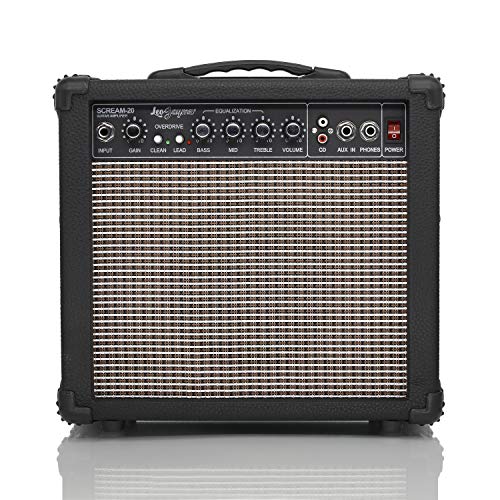
The Leo Jaymz amp steps up in size, and that extra cabinet space usually helps clean tones feel less pinched during practice. A 20-watt output, 6.5-inch speaker, clean and distortion channels, plus three-band EQ make it a sensible fit for rooms that need more presence than the smaller 5-watt and 10-watt picks.
CD line input gives it a slightly old-school utility angle, which still matters in rehearsal rooms and casual recording corners. Compared with the Rockville G-AMP 10, this model offers more output and a larger speaker, though the added bulk is the trade-off.
Reasons To Buy
- 20-watt output brings more room presence than the smaller practice amps here.
- 6.5-inch speaker helps clean parts sound fuller in a small studio.
- Three-band EQ gives more tonal control than two-knob layouts.
- CD line input broadens playback options for backing material.
Areas To Watch
- Larger size takes up more shelf or floor space than the mini units.
- The extra volume can be more than needed for a very quiet apartment.
- More controls mean a little more setup time before a session.
Technical Sheet
Who Will Love This
Home recording corners, practice rooms, and casual jam spaces get the most from the extra output and EQ control.
Look Elsewhere When
JOYO 5W Mini Guitar Amp suits players who need a smaller footprint and silent practice tools first.
The Fender Rumble 100 V3 shifts the conversation from small guitar practice to bass-specific power. A 100-watt combo with a 12-inch Eminence speaker, overdrive circuit, tone voicing, effects loop, and direct XLR output gives bass players a far broader toolset than the smaller amps in this roundup.
That size jump matters in a rehearsal room or a home setup where bass needs to stay articulate instead of swallowed by the cabinet. Compared with the Leo Jaymz 20W, this is a much stronger fit for larger spaces, though it’s clearly more amp than a quiet corner needs.
Highlights
- 100-watt output gives bass parts enough room to breathe.
- 12-inch Eminence speaker supports fuller low-end response.
- Effects loop opens the door to more pedal routing options.
- Direct XLR output helps with straightforward connection into a larger setup.
- Tone voicing and overdrive circuit add useful shaping options.
Worth Noting
- Size and output are more than a casual bedroom practice setup needs.
- Larger bass combos usually ask for more floor space and careful placement.
- Players after a tiny practice box will find this format too much amp.
Feature Rundown
Built With In Mind
Bass players in rehearsal rooms, larger practice spaces, and home studios get the strongest match here.
Skip It When
Rockville G-AMP 10 makes more sense for guitarists who want a compact combo instead of a bass-focused cabinet.
The MOOER GE150 Pro lives in a different lane from the combo amps above. With 200 presets, 170 effects, 55 amp models, 26 cab sims, 20 impulse response slots, USB OTG recording, four footswitches, a looper, and an expression pedal, it suits players who want a full signal chain in one floor unit.
That level of control is useful in a home studio or for players building a repeatable clean sound that needs to travel from practice to recording. Compared with the Fender Rumble 100 V3, this unit is about editing and routing rather than raw speaker volume, and the trade-off is more menu-style complexity.
Best Bits
- Large preset and effect counts support detailed tone organization.
- NAM and MNRS support broaden the unit’s modeling flexibility.
- USB OTG recording fits modern practice-to-record workflows.
- Four footswitches and a looper help with hands-free control.
- Expression pedal support adds useful real-time control.
Minor Gripes
- The learning curve is heavier than a basic combo amp.
- Players wanting a simple plug-in-and-go box may find it overbuilt.
- Preset-heavy gear usually asks for more setup time and file organization.
Core Details
Right Fit For
Players who want programmable tones, recording-friendly features, and deep editing control will get the most from it.
Reach For A Different Pick When
Rockville G-AMP 10 suits guitarists who want a simpler combo with less setup and fewer layers to manage.
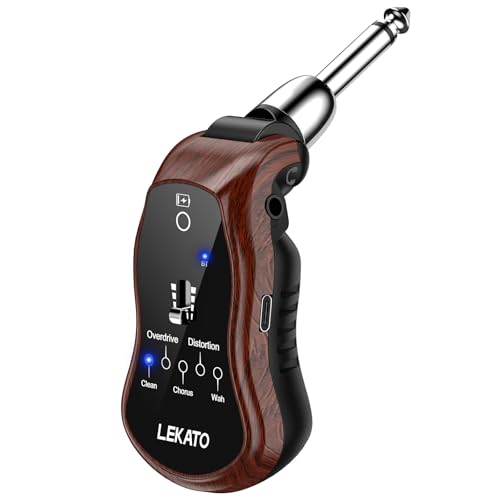
The LEKATO headphone amp is built for silence first. Clean, chorus, overdrive, distortion, and wah give it enough variation for private practice, and the rechargeable design keeps it ready for quick sessions with an electric guitar or bass.
For late-night work, that focused setup often makes more sense than a small combo like the JOYO or Rockville. The trade-off shows up right away, since headphone amps are about private monitoring and not room sound.
Positives
- Headphone format keeps practice contained to a private listening setup.
- Rechargeable power helps cut down on cable clutter.
- Five effects create practical tone variety for warmups and drills.
- Support for both guitar and bass broadens the use case.
Room For Improvement
- Headphone-only use means no room-filling amp sound.
- The narrow format makes sense for silence, not for larger jam settings.
- Rechargeable gear works best with a charging routine.
Key Specs
The Right Fit
Apartment musicians and late-night practice setups get the clearest benefit from this silent, battery-powered format.
Consider Something Else When
Rockville G-AMP 10 fits better for players who want to hear a small speaker in the room instead of using headphones only.
How To Choose The Right Clean Tone Amps
Match Output To The Room
Output wattage sets the ceiling for usable volume, but the room matters just as much. A 5-watt or 10-watt amp works cleanly for bedrooms and late practice, while 20 watts starts to make more sense in a rehearsal room or home studio. The Fender Rumble 100 V3 sits outside the small-amp lane entirely, which is why bass players usually think in terms of space first and wattage second.
Pick The Right Control Layout
Simple EQ knobs keep clean tones easy to dial in. Bass and treble controls, like the Rockville G-AMP 10, suit players who want a quick adjustment before a session, while three-band equalization on the Leo Jaymz 20W gives more shaping room. Modelers like the MOOER GE150 Pro go much deeper, but the trade-off is more menu work and preset management.
Decide How Quiet Practice Needs To Be
Headphone outputs and headphone amps matter in shared housing, late-night practice, and travel setups. The LEKATO headphone amp solves that need most directly, while combo amps with headphone out, such as the Rockville, sit in the middle with both room sound and private practice covered. Silent practice is a convenience feature, not a tone upgrade, so the right fit depends on how often volume has to stay low.
Think About Portability And Power Source
Rechargeable amps help when practice moves between rooms, and Bluetooth cuts down on cable clutter for backing tracks. The POGOLAB and JOYO mini amps lean into that use pattern, which makes them useful for desks, bags, and weekend travel. Larger combos feel steadier in place, but they ask for more storage space and a fixed outlet.
A Quick Reality Check Before You Choose
Common Shopping Slip Ups
Clean tone amps often look interchangeable until the room size and output level enter the picture. A compact practice amp can sound tidy in a bedroom and underpowered in a studio corner, so the cabinet and wattage should come first.
Another common miss is overlooking headphone use or input options. Quiet practice and backing-track playback matter for daily ownership, and a simple control set usually ages better than an overcomplicated layout.
Where The Extra Money Goes
Higher-tier gear usually pays for larger speakers, more detailed EQ, and broader connectivity. The MOOER GE150 Pro adds presets, amp models, cab sims, and recording support, while the Fender Rumble 100 V3 spends its value on speaker size, output, and bass-specific routing.
That upgrade makes sense for players who already know the sound they want or need the amp to cover more than one role. For casual home practice, a smaller combo with Bluetooth or headphones can be easier to live with day to day.
Frequently Asked Questions
What makes a clean tone amp useful for practice?
A clean tone amp gives clear note detail before adding drive or effects. That makes it easier to hear fretting, timing, and picking changes during practice.
Is Bluetooth actually useful on a guitar amp?
Bluetooth helps when backing tracks or practice audio need to play from a phone or tablet. It’s a convenience feature, not a tone feature, so it matters most in casual home use.
Do headphone amps replace regular combo amps?
Headphone amps serve silent practice very well, but they do not fill a room with speaker sound. A combo amp still fits better for shared spaces or small jam sessions.
How much power suits a small room?
Five to ten watts usually covers quiet practice and bedroom use. Twenty watts or more brings extra headroom for a studio corner or louder home setup.
Why do some amps add line inputs or effects loops?
Line inputs make backing audio easier to bring in, which helps with practice routines. Effects loops help place pedals in a more controlled part of the signal path.
Closing Thoughts
Clean tone amps split into two clear camps here, compact practice boxes and fuller-featured units that give more room to grow. The best fit depends less on brand and more on the daily setting, whether that means silent apartment work, desk practice, or a small room that needs extra headroom. Rockville, JOYO, and LEKATO handle quiet use well, while Leo Jaymz, Fender, and MOOER move farther toward larger setups and deeper control. Matching the amp to the room keeps the choice simple, and that usually matters more than chasing extra features.