


Your 26 Group Battery search usually comes down to fit, starting power, and how much electrical load your vehicle carries. That matters for daily commuting, start-stop traffic, and weekend driving with extra accessories hanging off the system. The picks below focus on the details that actually change ownership, from AGM sealing to LiFePO4 layout and terminal polarity.
The Shortlist At A Glance

Polaris Heavy Duty AGM Battery 4081481

SDULIBITIY LiFePO4 Lithium Car Battery 12.8V Group 26
Phnixino Lithium Car Battery 12V Group 26 600CCA

TPE Car Start Stop System BCI Group26 LiFePO4 Battery 12.8V 600A

SDULIBITIY Lithium Car Battery 12V Group 26 600CCA

Wuldnmar BCI Group 26 LiFePO4 Lithium Car Battery 12.8V 600A
Mighty Max Battery MM-G26R BCI Group 26R 12V 45AH
More Details On Our Top Picks
Accessory-heavy vehicles ask a lot from a battery, and this Polaris AGM option is built around that reality. AGM, or absorbed glass mat, keeps the electrolyte held in a glass-fiber separator, which is useful in rougher service and tighter mounting situations. The sealed, leak-resistant design makes it a steadier match for off-road rigs and machines that see more shake than a weekday sedan.
The trade-off is that a tough AGM shell can be less about lightweight efficiency and more about dependable containment. That makes it a sensible fit for drivers who care more about stable electrical support than shaving every ounce. Compared with the lithium entries below, this one stays closer to familiar lead-acid behavior, which some owners still prefer for simplicity.
Strong Points
- Sealed AGM construction helps contain electrolyte during rough use.
- Vibration resistance suits vehicles that live with constant road shake.
- Made for higher accessory loads, which matters for lights, winches, and add-ons.
- Faster charging behavior can help in stop-and-go service.
Worth Noting
- AGM batteries usually feel heavier than lithium alternatives of similar size.
- The fit-first nature of the design means you still need to confirm mounting space.
- It suits rugged use better than ultra-light builds.
Feature Snapshot
Who It Suits Best
Drivers with ATVs, side-by-sides, or other accessory-loaded machines will get the most from this style of battery.
A Better Fit Elsewhere
SDULIBITIY LiFePO4 Lithium Car Battery 12.8V Group 26 suits you better when lower weight and deeper cycling matter more than a sealed AGM build.
LiFePO4, short for lithium iron phosphate, changes the feel of a battery setup because it keeps weight down while supporting starter use and deeper cycling. That combination is handy for start-stop commuting, especially in cars that spend a lot of time idling, restarting, and feeding electronics. Compared with the Polaris AGM above, this one leans more modern and less traditional.
The 60-month warranty note stands out, though the real value still depends on correct fit and the car’s charging system. Some vehicles are happier with lithium than others, so you’ll want a clean installation plan and a clear sense of compatibility. For drivers who want a lithium path without jumping to a highly technical setup, this is a strong place to look.
What We Like
- LiFePO4 chemistry keeps weight in check for easier handling.
- Starter and deep-cycle behavior suits cars with stop-start demands.
- 12.8V output aligns with common automotive electrical systems.
- The longer warranty window adds calm for everyday ownership.
- Works well for drivers who keep lots of electronics active.
Points To Note
- Lithium fit can be more sensitive than standard lead-acid replacement work.
- You’ll want to confirm charging-system compatibility before a swap.
- It asks for a bit more planning than a familiar AGM replacement.
At A Glance
Who Should Grab It
Commuters with stop-start vehicles and a clean Group 26 fit will get the most from this lithium setup.
Another Choice May Suit
Polaris Heavy Duty AGM Battery 4081481 fits better for drivers who want a more familiar sealed AGM construction and tougher vibration tolerance.
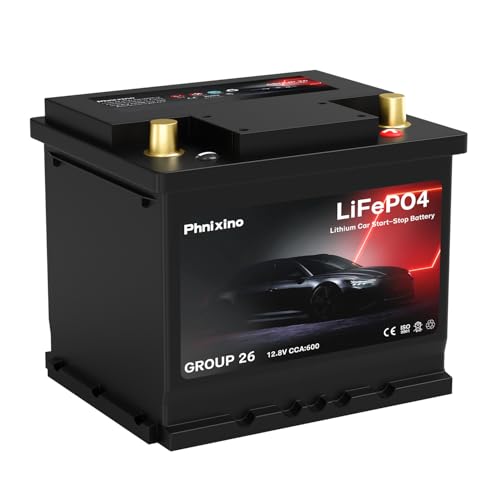
Size matters more than people think during a replacement, and this Phnixino model makes the footprint easier to picture with its listed dimensions. At 8.14 inches long, 6.88 inches wide, and 7.08 inches high, it gives you a straightforward reference before you pop the hood. That clarity is especially useful in tighter engine bays where a battery can look close enough until it’s actually sitting in the tray.
The 600CCA figure is another practical anchor. CCA means cold cranking amps, a measure tied to starting effort in cool conditions, so the number helps you compare this battery against other Group 26 options. Compared with the SDULIBITIY lithium battery above, this one leans harder on fit clarity than on broader use claims.
Highlights
- Listed dimensions make fit planning easier before installation day.
- 600CCA gives you a clear starting-power reference.
- LiFePO4 construction keeps the design in the modern lithium lane.
- Good match for compact engine bays that still need a Group 26 footprint.
Small Caveats
- Precise sizing helps, but tray and terminal checks still matter.
- The listing leans on fit data more than accessory-focused extras.
- Lithium swaps can call for more compatibility homework than AGM replacements.
Technical Sheet
Built With In Mind
Drivers working with a snug battery tray and a standard Group 26 opening will appreciate the clear size callout.
Where A Sibling Pick Shines
TPE Car Start Stop System BCI Group26 LiFePO4 Battery suits you better when you want a display and explicit terminal orientation for quicker installs.
The TPE option feels aimed at people who want a little more guidance from the battery itself. Its level display and left-negative, right-positive layout help reduce guesswork during replacement, which can be a real comfort in a busy garage or a driveway job with limited daylight. Compared with the Phnixino pick, this one shifts more attention toward install clarity than simple size notes.
Its lightweight LiFePO4 build should also make handling less awkward than a heavier AGM unit. That said, a lighter battery is still only half the story, because terminal orientation and vehicle compatibility need to line up cleanly. For hands-on installers, the extra visual cues can save time and reduce second-guessing.
Bright Spots
- Battery level display gives you a quick read on state of charge.
- Left-negative, right-positive layout helps avoid terminal mix-ups.
- Lightweight construction makes carrying and placement easier.
- 600A rating gives the listing a clear starting reference.
Areas To Watch
- Display features help, but they do not replace fit checks.
- Terminal orientation still needs to match your vehicle exactly.
- The extra features are useful, yet they add little for plain replacement jobs.
Details At A Glance
Whose Shelf It Belongs On
DIY installers who like clear terminal cues and a visible battery level will get the most out of this model.
Swap It Out When
Phnixino Lithium Car Battery 12V Group 26 600CCA works better for you when exact dimensions matter more than onboard display features.
This SDULIBITIY battery sits close to the Phnixino option in spirit, but it keeps the presentation a bit cleaner by focusing on the Group 26 fit and 600CCA starting figure. That makes it easy to compare for standard replacement jobs where you want a familiar form factor without extra bells and whistles. In a typical commuter vehicle, that kind of directness is often enough.
The listed dimensions help you sanity-check tray space, and the LiFePO4 build keeps the weight story in the lithium camp. You may find it especially useful for a straightforward swap where the old battery is already out and you just want a neat replacement path. The honest read is that it’s less about feature drama and more about sensible fit.
Positives
- 600CCA gives you a clear, usable starting-power figure.
- Group 26 sizing keeps replacement matching straightforward.
- LiFePO4 chemistry keeps handling lighter than many AGM units.
- Dimension data helps with tray and hood clearance checks.
Trade Offs
- It is more about fit and basics than added convenience features.
- Lithium replacement work still rewards careful compatibility checks.
Core Details
Best Suited To
Commuters and weekend drivers who want a clear Group 26 lithium replacement will find this model easy to place.
Look Elsewhere When
TPE Car Start Stop System BCI Group26 LiFePO4 Battery suits you better when a battery level display and terminal orientation matter more.
Wuldnmar takes a direct route with this Group 26 battery, and that plain structure can be a relief during routine replacement work. The left-negative, right-positive arrangement is spelled out clearly, which helps you avoid the sort of terminal mismatch that turns a simple swap into a longer afternoon. Compared with the SDULIBITIY lithium model above, this one feels even more stripped back.
Lightweight construction gives it the handling advantage you’d expect from LiFePO4. That matters most in garages where you’re lifting the old battery out by hand and lining up the new one alone. For most standard start-stop cars, it’s a practical, no-frills fit.
Best Bits
- Clear Group 26 label makes replacement matching easier.
- Left-negative, right-positive layout helps with faster installation.
- Lightweight build is friendlier during hand installation.
- 12.8V and 600A give you familiar automotive reference points.
Room For Improvement
- The listing keeps extras to a minimum.
- Fit checks still matter, even with a clear battery group.
- Lithium setup work can ask for more care than a basic AGM swap.
Feature Rundown
Right Fit For
Hands-on owners replacing a standard Group 26 battery in a start-stop car will appreciate the straightforward layout.
Where Shoppers Go Wrong
Mighty Max Battery MM-G26R BCI Group 26R 12V 45AH fits you better when you need the 26R variant and prefer AGM format over lithium.
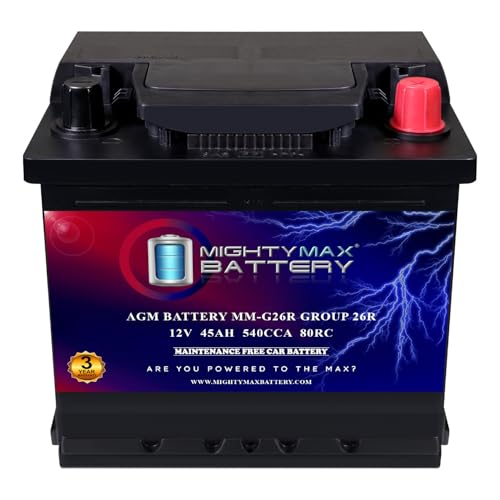
The Mighty Max model shifts the list back to AGM, and that can be a comfort for drivers who want a more familiar battery style. Its Group 26R fit, 12V rating, 45AH capacity, 80RC reserve capacity, and 540 CCA starting figure give you a solid set of old-school replacement markers. Compared with the lithium options above, this one feels more conventional and easier to picture in a standard car setup.
Reserve capacity is the one spec here worth slowing down for, because it tells you how long the battery can support accessories and electrical load before needing a recharge. That makes the battery useful for cars that sit with lights, infotainment, or other draws active while parked. The trade-off is that AGM still brings the usual lead-acid weight and handling profile.
Reasons To Buy
- AGM format suits drivers who want a familiar replacement style.
- Group 26R size helps match the right tray orientation.
- 45AH and 80RC give you useful capacity markers for accessory use.
- 540 CCA offers a clear starting reference for routine driving.
- Good fit for cars that need a practical, conventional battery path.
Softer Spots
- It is less modern than the lithium choices in this list.
- AGM construction usually means more weight than LiFePO4.
- You still need to confirm 26R orientation before ordering.
Core Details
Made For
Drivers who want a conventional AGM replacement in a 26R layout will find this battery the easiest to understand.
Reach For A Different Pick When
Wuldnmar BCI Group 26 LiFePO4 Lithium Car Battery 12.8V 600A suits you better when lighter weight and a lithium setup matter more than AGM familiarity.
How To Choose The Right 26 Group Battery
Start With Fit, Not Hype
Group size is the first gate, because a battery that sits wrong in the tray creates problems no marketing line can fix. Check length, width, height, and terminal layout before anything else, especially in compact engine bays where a small mismatch becomes a bigger hassle.
Polarity matters too, since left-negative and right-positive layouts are not interchangeable in practice. That’s why the Wuldnmar and TPE lithium models stand out for installers who want those details spelled out clearly.
Match Chemistry To Your Driving
AGM suits rougher service, accessory-heavy vehicles, and drivers who want a sealed, familiar setup. LiFePO4 usually makes more sense for lighter handling and modern stop-start use, though it asks for better compatibility checking.
In everyday driving, the chemistry choice shapes maintenance feel as much as performance. Polaris and Mighty Max stay closer to conventional battery habits, while the lithium picks lean toward lower weight and cleaner package design.
Look At Starting Power And Reserve
CCA, or cold cranking amps, helps you compare how strongly a battery can start an engine in cooler conditions. Reserve capacity tells you how long the battery can support loads when the engine is off, which matters for parked accessory use and short idle windows.
Those two numbers should be read together, not separately. A battery with strong starting power but thin reserve capacity can still feel limited in a car packed with electronics.
Think About Real Installation Life
Battery swaps sound simple until the tray is tight, the terminals are awkward, or the old unit weighs more than expected. A clear dimension listing, like the Phnixino model gives, reduces guesswork and makes planning easier before the old battery comes out.
For a daily driver, that kind of practical detail often matters more than a long feature list. The right battery is the one that fits, connects cleanly, and suits the way you actually drive.
Things Worth Knowing First
Common Shopping Slip Ups
Many people focus on voltage and forget the group size, which is how a battery can look right online and still miss the tray by a little. Terminal orientation gets skipped just as often, and that mistake can slow installation or force awkward cable routing.
Another common miss is choosing chemistry before checking the vehicle’s charging setup. Lithium looks appealing on paper, but a clean match matters more than the headline spec.
When Paying More Pays Off
Higher-tier options usually cost more because they use more specialized materials, clearer fit cues, or extras such as display panels and refined battery management. That can be worth it for cars with start-stop systems, accessory loads, or tight engine bays where ease of installation matters.
It also matters for ownership rhythm. A battery that reduces hassle during replacement or gives you better visibility into its status can feel worth the extra step-up, especially in a vehicle you rely on every day.
Frequently Asked Questions
What does Group 26 mean?
Group 26 is a battery size standard that helps you match physical dimensions and terminal placement. It’s the first thing to confirm before comparing chemistry or starting power.
What is the difference between AGM and LiFePO4?
AGM is a sealed lead-acid style that suits many conventional vehicle setups. LiFePO4 is a lithium iron phosphate battery that usually weighs less and can fit start-stop use better.
Why does CCA matter?
CCA stands for cold cranking amps, which helps show how strongly a battery can start an engine in cooler conditions. It’s one of the most useful numbers for comparing car batteries.
Do terminal positions really matter?
Yes, because left-negative and right-positive layouts must line up with your vehicle’s cables. A mismatch can turn a simple install into extra work.
Should you choose lithium for an older car?
Only with a careful compatibility check, because older charging systems may be a poor fit for some lithium setups. AGM often feels simpler for classic replacement work.
Final Thoughts
The right 26 Group Battery comes down to fit, chemistry, and the kind of driving your vehicle sees most. Polaris is the steadier choice for accessory-heavy use, while the lithium group makes more sense for lighter handling and stop-start driving. Mighty Max keeps things familiar for a 26R AGM replacement, and the sizing details on Phnixino and the polarity cues on TPE help remove guesswork. Once you match the tray, terminals, and electrical needs, the shortlist gets much easier to sort.