

Marine audio has a different set of demands than a cabin stereo or a dashboard unit. Salt air, spray, glove-friendly controls, and awkward mounting spaces all matter, especially on boats that see weekend runs, dockside lounging, or long afternoons at anchor.
This roundup focuses on marine radios with Bluetooth that suit different setups, from compact gauge-style units to full single-DIN receivers and bundled speaker kits. Each pick earns its place through practical fit, control layout, input options, and the kind of installation it suits best.
Quick Look At The Shortlist

Sony DSXM55BT Bluetooth Marine Digital Media Stereo Receiver
BOSS Audio Systems MGR450B Marine Boat Stereo
KENWOOD KMR-M332BT Car & Marine Stereo

Kicker 46KMC2 Weather-Resistant Gauge-Style Media Center

Pyle Marine Radio Single DIN Receiver

BOSS Audio Systems MCK632WB.6 Marine Bluetooth Stereo and 6.5 Inch Speakers

Pioneer MVH-S110BT 1-Din Digital Media Car Stereo
More Details On Our Top Picks
The Sony DSXM55BT fits neatly into a clean retrofit path, especially for boats that already use a single-DIN opening. Bluetooth keeps phone playback simple, and the SiriusXM-ready design adds another source path without turning the dash into a crowded control panel.
That restraint is the appeal, really, though the trade-off is less visible than on a bundled system like the BOSS MCK632WB.6. For daily dock runs, small center consoles, or a helm that needs tidy wiring, the layout makes sense and keeps the upgrade focused.
What We Like
- Single-DIN format suits many older dash cutouts.
- Bluetooth streaming keeps phone playback straightforward.
- SiriusXM-ready support broadens source options for long cruises.
- Digital media focus keeps the face uncluttered.
Points To Note
- Digital-media layout means no built-in CD path.
- Accessory integration matters more than speaker count here.
- Best results depend on a clean dash install and sound wiring.
Feature Snapshot
Who It Suits Best
Boat owners replacing a standard single-DIN deck with a cleaner digital setup get the most from this model.
A Better Fit Elsewhere
Kicker 46KMC2 Weather-Resistant Gauge-Style Media Center suits open-helm boats that need a smaller, round dash format rather than a classic slot mount.
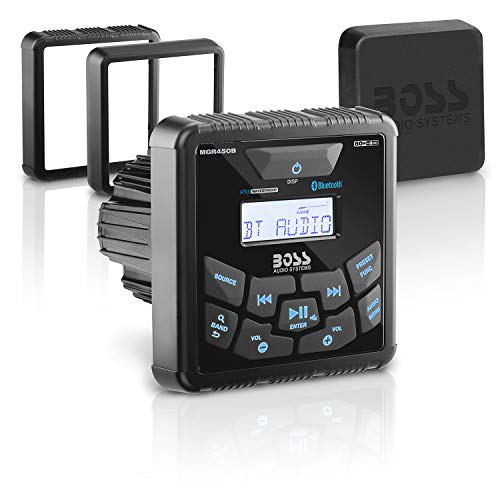
The MGR450B leans into straightforward marine use, with NOAA weather band support standing out more than flashy styling. That matters on smaller boats and day cruisers, where fast weather updates can be more useful than extra visual drama.
Compared with the Sony unit, this one points harder toward boating-first priorities than broad in-dash media flexibility. The honest read is that it suits practical setups best, especially where radio access and simple playback matter more than an expansive feature sheet.
Highlights
- NOAA weather band support adds a boating-focused layer of utility.
- Compact marine stereo format keeps the helm arrangement simple.
- Bluetooth playback covers everyday phone listening.
- Good fit for casual boats that need basic control, not a busy interface.
Worth Noting
- The feature set stays modest beside the KENWOOD KMR-M332BT.
- Owners of larger systems may want more input variety.
- Weather band usefulness depends on route and local coverage.
Details At A Glance
Who Will Love This
Weekend boaters who want a lean stereo with weather-band awareness will find the fit strongest here.
Look Elsewhere When
KENWOOD KMR-M332BT suits owners who want more source flexibility, including USB, aux input, and wider radio support.
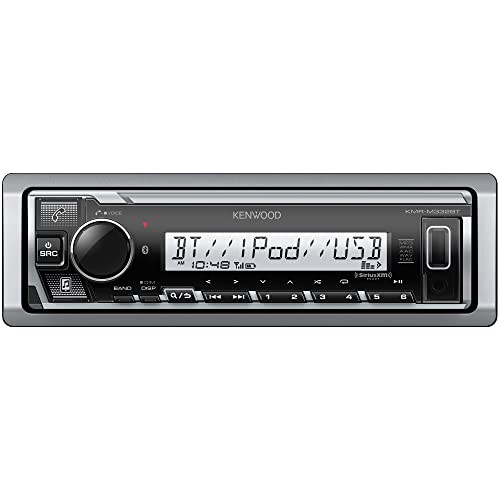
KENWOOD packs a broader source set into the same basic single-DIN footprint, which helps on boats that still use USB sticks, aux cords, and radio as often as Bluetooth. Multi-color illumination also gives the face a more adaptable look after sunset, without changing the install size.
Against the simpler BOSS MGR450B, this model reads as the more adaptable everyday deck. The trade-off is a slightly busier control surface, so it suits helm spaces that can handle a little more functionality without feeling cramped.
Strong Points
- Bluetooth, USB, aux, and AM/FM support cover several listening habits.
- SiriusXM-ready support adds a premium source path.
- Weatherproof build language makes sense for marine duty.
- Multi-color lighting helps match different dash styles.
- Single-DIN size keeps installation familiar for many refits.
Small Caveats
- More features can mean a busier first setup.
- Multi-source users may need a little time to map controls.
- Open-cockpit owners should still plan for regular wipe-downs.
Core Details
Right Fit For
Owners who want one stereo to cover streaming, plugged-in media, and traditional radio will get strong mileage from this model.
Another Choice May Suit
Pioneer MVH-S110BT works better for a simpler digital-media setup that stays focused on Bluetooth, USB, and compact controls.
Gauge-style layouts are a different conversation entirely, and the KMC2 speaks that language well. Its round form suits open helms, center consoles, and smaller dash spaces where a full rectangular receiver would feel out of place.
The screen, rotary encoder, and source flexibility make it feel more like a compact control center than a stripped-down radio. Compared with the more traditional Kenwood or Sony units, this one makes the most sense where dash shape and weather exposure are the main constraints.
Bright Spots
- Gauge-style body fits round openings cleanly.
- IPX66 rating points to stronger water exposure tolerance.
- Bluetooth, USB, RCA, and AM/FM inputs cover several source paths.
- Rotary encoder is useful on a moving boat.
- Over 200 watts of total peak output gives it healthy headroom for a compact unit.
Areas To Watch
- Round-dash fit narrows the installation match.
- Open-helm owners still need sensible mounting and wiring care.
- The interface is compact, so large hands may prefer a bigger control face.
Feature Rundown
Whose Shelf It Belongs On
Boats with a gauge opening and a more exposed helm benefit most from this format.
Swap It Out When
Sony DSXM55BT is the more natural choice for standard single-DIN dashboards that need a familiar receiver shape.
The Pyle unit aims at the practical middle ground, with Bluetooth streaming, USB and AUX playback, hands-free calling, and a remote in the mix. RGB buttons also help the face feel less plain, which matters in dim helm lighting after sunset.
Relative to the KENWOOD, this deck feels a little more focused on core convenience than on broader source flexibility. That makes it appealing for a simple refit, especially in a boat that needs a functional radio without a complicated learning curve.
Upsides
- Bluetooth, USB, AUX, and AM/FM cover everyday media needs.
- Hands-free calling adds convenience in a marina or on a trailer.
- Remote control can help from a side seat or helm bench.
- RGB button lighting gives the face some visibility and style.
Room For Improvement
- Feature depth stays simpler than the KENWOOD KMR-M332BT.
- Remote use adds one more piece to store and keep track of.
- Splash-resistant design still calls for regular cleaning in salt air.
Technical Sheet
Made For
Budget-minded refits and smaller boats with basic listening needs suit this unit well.
Reach For A Different Pick When
BOSS Audio Systems MGR450B makes more sense for boaters who want NOAA weather-band support alongside Bluetooth.
This bundle stands apart because it packages the head unit with 6.5-inch speakers, which helps a new build feel more complete from day one. The included dipole antenna also makes the kit more self-contained than the single-unit choices above.
For smaller boats, a starter restoration, or a console that needs a matched set rather than a piecemeal setup, the convenience is obvious. The trade-off is size and complexity, so it suits a project space better than a barebones dash swap.
Reasons To Buy
- Radio and speakers arrive as a matched set.
- Bluetooth, USB, and aux support cover common playback sources.
- Detachable front panel can help with storage discipline.
- 50W x 4 output offers solid channel power on paper.
- Multicolor illumination improves visibility and dash coordination.
- Dipole antenna inclusion reduces separate accessory hunting.
Honest Caveats
- Bundle format takes more planning than a single receiver.
- Speaker placement matters as much as the head unit.
- More parts mean more attention during installation and cable routing.
Core Details
Built With In Mind
Boat owners starting from scratch or replacing a tired factory setup will get the most from this bundled approach.
A Better Fit Elsewhere
Pioneer MVH-S110BT suits a cleaner, more minimal media-only install that does not need included speakers.
Pioneer keeps this one stripped to the essentials, which suits a helm that needs a compact digital-media receiver rather than a feature pile. Bluetooth, USB input, and the 50W x 4 output structure give it a clean path for modern playback without taking over the dash.
Compared with the more source-heavy KENWOOD, the Pioneer feels simpler and easier to live with in a small space. The honest read is that it works best for straightforward audio setups where iPhone or Android playback, radio, and a tidy front panel matter more than extra extras.
Best Bits
- Compact single-DIN size suits tight installs.
- Bluetooth and USB cover the most common playback habits.
- iPhone and Android compatibility broadens day-to-day usefulness.
- Front and subwoofer RCA outputs help with later system growth.
- AM/FM radio support keeps standard listening in play.
Minor Gripes
- No bundled speakers, so system planning remains on the installer.
- Minimalist layout trades away some convenience extras.
- More advanced audio builds may want the KENWOOD KMR-M332BT.
At A Glance
The Right Fit
Small boats and simple upgrade projects suit this receiver best, especially where dashboard space is tight.
Where A Sibling Pick Shines
BOSS Audio Systems MCK632WB.6 suits larger starter builds that want speakers included in the same package.
How To Choose The Right Marine Radios With Bluetooth
Match The Layout To The Helm
Mounting style matters before almost anything else. A single-DIN receiver fits a standard rectangular opening, while a gauge-style media center like the Kicker 46KMC2 suits round dash spaces on open helms.
That choice affects wiring, controls, and how clean the finished dash looks. Boats with limited panel space often benefit from a compact face, while larger consoles can carry a fuller unit without feeling crowded.
Choose Inputs For Real Use
Bluetooth covers the everyday phone-streaming role, but source flexibility changes how long the unit stays useful. USB, aux input, AM/FM, and SiriusXM-ready support expand listening options for trips where mobile service is weak or the crew brings different devices.
Simple digital-media receivers work well for quick music access. A boat that sees longer runs or mixed passengers tends to benefit from more than one playback path.
Think About Water Exposure And Controls
Marine use brings spray, glare, and motion into the equation. Weather-resistant wording, IPX ratings, rotary controls, and a readable screen all matter because a helm rarely feels as calm as a car cabin.
Controls that are easy to operate by touch help more than fancy menus. A compact face can still work well, but the interface should stay usable with wet hands and changing light.
Decide Between A Bare Receiver And A Bundle
Some setups only need a head unit, while others need speakers and a more complete refresh. Bundled kits like the BOSS Audio Systems MCK632WB.6 reduce separate shopping, but they also demand more planning during installation.
Solo receivers fit replacement jobs and incremental upgrades. Full kits suit owners rebuilding a helm from the ground up and wanting the components to arrive as a matched set.
Things Worth Knowing First
Where Shoppers Go Wrong
A common miss is choosing for Bluetooth alone and ignoring the mount style. A unit can be a strong spec match and still feel wrong in a round opening or an already cramped dash.
Another slip is underestimating how often other sources matter. On water, USB, aux, AM/FM, or weather-band support can matter as much as the wireless connection.
What The Higher Tier Buys
Higher-tier marine radios usually spend the extra cost on better water resistance, more refined controls, stronger display visibility, and more flexible source support. Bundles also add speakers, antennas, or mounting hardware, which changes both convenience and install effort.
The upgrade makes sense for boats that see regular spray, longer seasons, or more passengers. For short trips and sheltered lakes, a simpler unit often covers the job without excess.
Frequently Asked Questions
What makes a marine radio different from a car stereo?
Marine radios are built for water exposure, brighter conditions, and helm mounting needs. Car stereos often lack the same layout choices and weather tolerance focus.
Does Bluetooth matter on a boat?
Bluetooth makes phone playback simple and keeps the dash less cluttered. It also cuts down on cable swapping during a busy day on the water.
Is NOAA weather-band support useful?
NOAA weather-band support gives access to broadcast weather information on compatible units. That matters most on boats that run farther from shore or spend long periods outside the slip.
Should a bundle be chosen over a head unit only?
A bundle helps when the boat needs both a radio and speakers in one project. A head unit alone fits replacement jobs where the speaker side is already sorted.
What matters more, power rating or layout?
Layout usually comes first because the unit has to fit the dash and stay easy to use. Power rating matters after that, especially when the boat has multiple speakers or a larger open helm.