
Tint choice changes the feel of a car fast. The right film can calm harsh sun, protect the cabin from fading, and make daily driving feel less exposed, whether you commute in stop-and-go traffic or park outside all day.
Your best match depends on more than shade alone. Coverage area, precut fit, signal friendliness, and install difficulty all matter, especially for DIY work in a driveway or garage.
The Shortlist At A Glance
IAQWE 20% VLT Ceramic Car Window Tint Film 20 in x 20 ft Roll
MotoShield Pro Auto Window Tinting Kit 5% – 75% Nano Ceramic Precut Tint Film

TOYOCO Ceramic Car Window Tint Film 35% VLT, 24" x 15FT

Mandark 18PCS Car Window Tint Tool Kit with Squeegees and Knife
TRUE LINE Automotive Precut Window Tint for Single Windows
Autotek DIY Car Window Tinting Kit Customize Shade 5%, 10%, 20%, 35%, 50%, 70%
More Details On Our Top Picks
That 20% VLT shade gives you a darker cabin feel without going into the most extreme territory. The 20 in by 20 ft roll makes sense for a multi-window job, especially for someone handling a full sedan or a few smaller side windows in the driveway.
The ceramic build is the main draw here, since ceramic films are commonly chosen for heat control without the signal headaches some metalized films can bring. The trade-off is straightforward, though, a roll asks more of your measuring and cutting, so it suits hands-on DIY work better than a first timer who wants everything pre-trimmed.
Strong Points
- 20% VLT offers a noticeably darker look for extra privacy.
- Roll format gives you room to cover several panes.
- Ceramic construction fits drivers who want cleaner signal behavior.
- Scratch resistance helps the film hold up during normal handling and cleaning.
Things To Consider
- You need to measure and cut with care, since this is not precut.
- Installation takes more patience than a kit made for exact vehicle shapes.
- The dark shade can feel too closed-in for some night drivers.
Feature Snapshot
Who It Suits Best
You get the most out of this roll when you want flexible coverage and you do not mind trimming to fit your own vehicle.
A Better Fit Elsewhere
MotoShield Pro Auto Window Tinting Kit is the cleaner match for someone who wants precut front-window coverage and more shade choices already built into the order.
Precut front-window film makes life easier, and this MotoShield Pro kit leans hard into that convenience. The shade range from 5% to 75% gives you room to match privacy needs with local rules and personal taste, which is handy for someone comparing a softer look with the darker IAQWE roll above.
The nano ceramic film is also a strong fit for warm climates, since the listing points to strong infrared and UV blocking. One thing worth considering, though, is the install note about a heat gun, because thicker ceramic film usually asks for more care during shrink and placement.
What We Like
- Precut sizing helps trim down guesswork for the front windows.
- Wide shade range lets you tune privacy and visibility more precisely.
- UV and infrared blocking suit hot, sun-heavy commutes.
- Vehicle-specific ordering makes the fit more controlled than a general roll.
- No extra trimming is needed after the cut is made.
Points To Note
- The thicker ceramic film can take more effort to shrink cleanly.
- A heat gun and install kit are strongly recommended for smoother handling.
- The kit covers two front windows, so it is not the right choice for a full-car setup.
Technical Sheet
Right Fit For
You suit this kit best when you want a precut front-window solution and you are comfortable following a more careful install path.
Where A Sibling Pick Shines
AUTOTEK DIY Car Window Tinting Kit suits you better when you want precut coverage for all side and rear windows instead of just the front pair.
Thirty-five percent VLT lands in that middle zone many drivers prefer for side and rear glass, since it softens glare without turning the cabin into a cave. The 24 inch by 15 foot roll also gives you a usable amount of material for a focused DIY job, and it pairs neatly with the broader IAQWE roll if you want a more moderate shade.
TOYOCO also calls out no signal interference and scratch resistance, which matters on cars packed with sensors, phone mounts, and normal daily wear. The honest read is that this is still a cut-and-fit roll, so you should expect the usual measuring and patience that comes with non-precut film.
Upsides
- 35% VLT keeps visibility more open than darker tints.
- Mid-shade balance works well for rear and side windows.
- Roll length gives useful coverage without feeling oversized.
- No signal interference suits modern daily driving setups.
- Scratch-resistant film helps during handling and routine cleaning.
Room For Improvement
- You still need to measure and trim carefully.
- The roll format is less convenient than a true precut kit.
- Drivers wanting maximum privacy will likely want a darker shade.
Core Details
Who Will Love This
You get strong value from this roll when you want a more open look on rear or side windows and still care about sun protection.
Another Choice May Suit
MotoShield Pro Auto Window Tinting Kit fits better for you if you want precut two-window coverage and more shade control from the start.
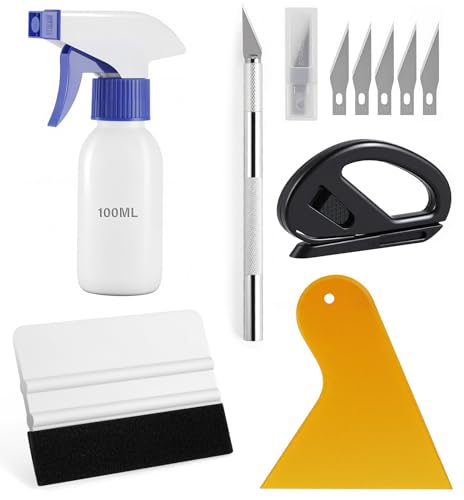
This is the support kit you reach for when the tint film is already sorted and you just need the right hand tools. The five-piece setup covers the basic install workflow, including scraping, smoothing, cutting, and spraying, which makes it handy for a garage project where you want the essentials in one place.
Compared with the tint rolls above, the value here sits in preparation rather than coverage. That means it suits first-time tint installers who need the right accessories more than they need another sheet of film.
Bright Spots
- Basic tool mix covers the main tinting steps.
- Soft cloth and felt pieces help reduce surface scuffing.
- Spare blades add convenience for repeated trimming jobs.
- The 100 ml spray bottle is useful for routine wet install work.
Small Caveats
- Tools only support the job, they do not replace the film itself.
- The kit is simpler than the larger Mandark set.
- Knife work still asks for care and steady hands.
Details At A Glance
Made For
You fit this kit best when you already have film and need a simple starter tool set for a home tint job.
Skip It When
Mandark 18PCS Car Window Tint Tool Kit is the better match for you if you want more tool variety and a wider mix of squeegees for curves.
The larger Mandark kit makes sense once you want more control over smoothing and trimming. With plastic, rubber, and metal parts in the mix, it covers curved glass more comfortably than the simpler SINGARO kit, and that extra variety can matter on complex windows.
The trade-off is a little obvious, though, more pieces mean more to sort and store. Still, for someone handling multiple cars, wrap work, or a fuller garage setup, the wider tool spread usually pays off in convenience.
Reasons To Buy
- 18-piece layout gives you more tool options for different jobs.
- Plastic pieces are easier to shape around curved glass.
- Metal parts add the firmness needed for trimming and scraping.
- Several squeegee styles help with corners and broader panels.
- Good match for repeated tint or vinyl work around the home garage.
Areas To Watch
- The tool count is larger, so storage takes a little more space.
- Metal parts call for careful handling near finished surfaces.
- Beginners may need a moment to learn which squeegee fits each step.
Feature Rundown
Who Should Grab It
You suit this kit best when you want one set that can handle smoothing, cutting, and cleanup across several tint projects.
Look Elsewhere When
SINGARO Car Window Film Kit 5PCS is the simpler fit for you if you only need a compact starter tool bundle for one basic install.
This is the most focused choice in the group, since it is built for a single window instead of a full set. That makes it useful for a replacement job, a damaged pane, or a small privacy tweak where a larger kit would simply be more than you need.
You will still need to use the Customize Now path to match your vehicle and shade, so the convenience sits in the precut fit rather than a universal one-size package. For someone who only wants one exact piece, that narrow scope is a strength, not a limitation.
Highlights
- Single-window format keeps the scope tight and practical.
- Precut sizing reduces the amount of trimming work.
- Useful for repair jobs or one-window updates.
- Vehicle and shade selection help guide the fit.
Worth Noting
- The package is only for one window, so it is very narrow in purpose.
- You need to use the customization step for the right match.
- Drivers planning a full vehicle tint should look at broader kits instead.
Quick Facts
The Right Fit
You fit this option best when you need one exact window covered and do not want to buy a larger package.
Where Another Pick Suits Better
MotoShield Pro Auto Window Tinting Kit is the better match for you if you want a precut set for two front windows with a wider shade range.
Autotek goes wide instead of narrow, which helps when you want side and rear coverage in one shot. The shade menu runs from very dark to more moderate, so you can match different glass positions and keep a consistent look around the car.
The package note is also clear about coverage, since it handles all side and back windows but skips the windshield, sunroof, and sun visor strip. That makes it a strong fit for a full side-and-rear refresh, though not the right answer for someone chasing a single-window fix.
Positives
- Broad coverage suits more complete vehicle tint plans.
- Several shade choices help you tailor privacy and visibility.
- Works well for all side and back windows.
- Useful when you want one matched look across multiple panes.
Softer Spots
- It does not include the front windshield, sunroof, or visor strip.
- The broader kit can be more than a small repair job needs.
- Vehicle matching still matters, so setup should stay careful.
Spec Overview
Best Suited To
You suit this kit best when you want a coordinated tint setup for the side and rear glass of a daily driver.
Swap It Out When
TRUE LINE Automotive Precut Window Tint for Single Windows is the better fit when your job is limited to one pane and you do not need a full set.
How To Choose The Right Precut Ceramic Window Tints
Shade, Visibility, And Daily Driving
Shade is usually the first decision, and VLT, or visible light transmission, tells you how much light passes through the film. Lower numbers mean a darker look and more privacy, while higher numbers keep the cabin brighter and make night driving easier.
For commuters who park outside, a darker shade often feels more comfortable in afternoon sun. For family cars or vehicles used after dark, a mid-shade option usually strikes a better balance.
Ceramic Film And Real-World Comfort
Ceramic film is popular because it is built for comfort-focused tinting without relying on metal layers. That matters in a car full of phone signals, toll transponders, and daily electronics.
The trade-off is usually install complexity and price direction, since ceramic film often asks for more careful handling than basic dyed material. Drivers who want easier application may prefer a simpler film, while frequent commuters tend to value the comfort payoff more.
Precut Fit Versus Roll Flexibility
Precut kits save time because the shapes are already matched to the vehicle or window type. That helps most on front windows, rear glass, or one-window replacements where cutting from scratch would feel tedious.
Roll film offers more flexibility for custom work, but it also asks for cleaner measurements, sharper trimming, and a steadier hand. For someone new to tinting, a precut set usually feels less stressful.
Tools, Installation, And Cleanup
A good tool kit matters as much as the film itself. Squeegees, knives, blades, and a spray bottle all affect how neatly you can position the film, press out moisture, and trim edges.
Keep storage and upkeep in mind too, since extra blades and mixed-material tools need a home between projects. A compact kit suits occasional use, while a larger set works better for repeated jobs in a garage space.
Things Worth Knowing First
Common Shopping Slip Ups
One easy mistake is buying the wrong coverage shape, especially when a kit is only for two front windows or a single pane. Another is overlooking shade level, which can leave you with a look that feels too dark for night driving or too light for the privacy you wanted.
Vehicle matching matters as well, since precut film still depends on the right car details. Taking a minute to confirm the window count and fit type saves a lot of frustration later.
What The Higher Tier Buys
Higher-end kits usually pay for stronger material, tighter precut matching, and more dependable install behavior. In this category, that can mean cleaner edges, better comfort in hot weather, and less fiddling during application.
The upgrade makes sense for daily drivers, leased vehicles, and anyone who wants a cleaner finish on the first pass. Basic options still work, though, for occasional use or single-window jobs where full-feature material is not necessary.
Frequently Asked Questions
What does VLT mean?
VLT means visible light transmission, which shows how much light passes through the tint film. Lower VLT numbers create a darker look, while higher numbers keep more light inside.
Do precut ceramic tints help with electronics?
Ceramic film is often chosen because it avoids the signal concerns linked to some metalized films. That can matter in cars with phones, navigation gear, and other connected devices.
Are precut kits easier than roll film?
Precut kits usually reduce measuring and trimming, so the install feels more guided. Roll film gives more flexibility, but it also asks for more cutting skill.
Can you use one kit for every window?
Not always, since some products cover only front windows, one window, or side and rear glass. The listing scope should match the windows you want covered.
What should you check before ordering?
Confirm your vehicle details, the exact window count, and the shade level you want. That keeps the kit aligned with both your car and your driving habits.