

Deep bass starts with the enclosure, not just the sub. The right box changes how a system loads a cone, how much space it asks for, and how cleanly it fits a trunk, behind-seat layout, or a daily driver’s cargo area. The seven Q Power picks below cover vented, sealed, side-ported, and truck-friendly shapes for different installs. That mix matters more than raw size alone.
Quick Look At The Shortlist

Q Power Q Bomb Series 15″ Dual Ported SubwooferSpeaker Enclosure
QPower QBASS Dual 12″ Car Audio Subwoofer Box

QPower Single Triangle Car Audio Ported Subwoofer Box


QPower HD112VL Single 12 Inch SPL XL Heavy Duty Side Ported Subwoofer Box Enclosure

QPower 12 Inch Heavy Duty Dual Sealed Carpet Covered Car Audio Vehicle Subwoofer Enclosure

QPower Single 10in Sub Enclosure
More Details On Our Top Picks
A dual-ported 15-inch enclosure like this leans toward strong low-end output in larger vehicle setups. The black bed-liner style finish also suits daily cargo use, where scuffs and handling marks tend to matter more than showroom gloss.
The trade-off is size, since a 15-inch vented box asks for real room in the trunk or cargo area. That said, drivers chasing deep bass in a full-size sedan, SUV, or dedicated audio build usually get the most out of a box with this much air movement.
What We Like
- Dual ports support stronger vented output.
- 15-inch format suits larger sub builds.
- Bed-liner finish is practical for rough use.
- Vented design helps the system feel less cramped.
Points To Note
- Size can limit placement in smaller vehicles.
- Ported layouts usually favor output over tight sealed control.
- Installation space needs a careful check before ordering.
Feature Card
Who It Suits Best
Full-size vehicle owners planning a dedicated bass setup will get the clearest fit here.
Where A Sibling Pick Shines
QPower QBASS Dual 12″ Car Audio Subwoofer Box suits compact trunks and shoppers who want a smaller footprint without stepping away from Q Power.
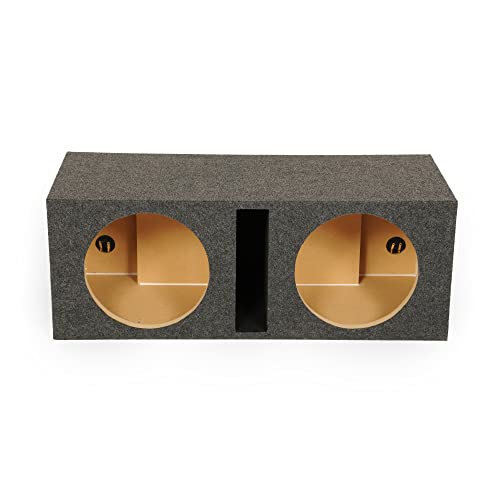
Two 12-inch subs in separate chambers give this box a more structured layout than a single large cavity. In a truck or sedan with enough depth, that split design helps each woofer get its own working space, which can keep the low end from feeling loose.
The charcoal carpet finish keeps the look restrained, and it tends to blend into darker interiors better than glossy enclosures. The main limitation is straightforward, the dual setup still needs enough room and the right amplifier match to make sense.
Upsides
- Dual chambers support two 12-inch subwoofers.
- Each side uses 1.6 cubic feet of air space.
- Separate spaces can help maintain cleaner channel balance.
- Carpeted exterior fits neatly in many interiors.
Small Caveats
- Needs more room than a single-sub box.
- Best results depend on matching the pair to the rest of the system.
- Carpet can collect dust in busy vehicle interiors.
At A Glance
Who Should Grab It
Drivers building a two-sub system with a practical, low-profile look will get the best match here.
Swap It Out When
Q Power Q Bomb Series 15″ Dual Ported SubwooferSpeaker Enclosure makes more sense for shoppers chasing larger-scale output in a roomier vehicle.
The triangle profile gives this enclosure a different footprint from the rectangular Q Power boxes above it. That shape can matter in a tighter trunk or cargo area, where an angled cabinet leaves room around the edges instead of blocking the whole floor.
Its 3/4-inch MDF build, spring-loaded terminals, and 2.2 cubic feet of air space point to a more conventional sound-focused enclosure with tidy wiring access. The tuning detail is fairly specific, so this pick suits a shopper who pays attention to setup rather than treating every sub box as interchangeable.
Bright Spots
- Triangle shape can ease placement in tight spaces.
- 3/4-inch MDF gives the cabinet a firmer feel.
- Spring-loaded terminals simplify wire hookup.
- 2.2 cubic feet gives a useful internal volume.
- Bed-liner finish fits rougher vehicle use.
Areas To Watch
- Angled shape may not match every cargo floor.
- Fit depends on the subwoofer dimensions used.
- Bed-liner surfaces still need occasional wipe-downs after hauling gear.
Details At A Glance
Built With In Mind
Compact installs that still need a vented, sub-focused enclosure are the strongest match.
A Better Fit Elsewhere
QPower 12 Inch Heavy Duty Dual Sealed Carpet Covered Car Audio Vehicle Subwoofer Enclosure suits listeners who want a more controlled sealed style instead of a ported layout.
Small-footprint builds usually need a box that keeps the install simple, and this 10-inch vented enclosure fits that brief. The 1.1 cubic feet of air space makes it easier to plan around a modest sub setup, especially in daily cars where cargo room still has to do double duty.
Compared with the bigger Q Power picks above, this one is the more straightforward route. The honest read is that it suits listeners who want an entry-level enclosure shape without giving up the vented style that often helps bass feel fuller.
Strong Points
- 10-inch format keeps the cabinet manageable.
- Vented design supports fuller bass output.
- 1.1 cubic feet is easier to place in smaller vehicles.
- Simple layout works well for basic upgrades.
Room For Improvement
- Smaller size means less total output potential than larger boxes.
- Works best with a 10-inch sub, not larger models.
- Minimal size also limits how much system growth it can support later.
Core Details
Right Fit For
First-time audio upgrades and smaller cars are the clearest match.
Where Another Pick Sits Better
QPower QBASS Dual 12″ Car Audio Subwoofer Box suits shoppers who already know a dual-sub layout will better fill a larger cabin.
This side-ported enclosure leans harder toward output-focused systems than the sealed Q Power box later in the list. A heavy-duty shell and carpet covering make it the sort of cabinet that belongs in a car audio setup meant to stay installed, not shuffled in and out every week.
That extra mass and porting style can be a plus in SPL-oriented builds, where impact matters more than compactness. The catch is that side-ported cabinets usually ask for more installation planning, especially in trunks that already feel tight.
Reasons To Buy
- Side-ported layout supports aggressive bass emphasis.
- Heavy-duty construction suits regular vehicle use.
- Carpet covering softens the look inside the cabin.
- Single 12-inch format leaves room for system simplicity.
Things To Consider
- Port placement needs room to breathe.
- Heavier cabinet may be less convenient to move.
- Best results depend on pairing it with the right 12-inch sub.
Spec Overview
The Right Fit
Drivers building a louder single-12 setup with room to spare will get the strongest match here.
Look Elsewhere When
QPower 12 Inch Heavy Duty Dual Sealed Carpet Covered Car Audio Vehicle Subwoofer Enclosure suits listeners who prefer a tighter sealed response over this side-ported layout.
A sealed box usually appeals to listeners who want bass that feels more controlled than exaggerated. Against the vented and side-ported Q Power options in this roundup, this one is the calmer choice for a system that needs definition rather than sheer boom.
The charcoal carpet finish keeps it visually simple, which helps in a family car or any trunk that doubles as storage. One practical note, sealed cabinets tend to reward careful placement and solid mounting, because loose fitment can take away from the clean character.
Positives
- Sealed layout supports tighter low-end behavior.
- Dual 12-inch format offers useful capacity for larger systems.
- Carpet cover helps it blend into the vehicle.
- Spring-loaded terminals simplify the hookup process.
Honest Caveats
- Sealed designs usually feel less airy than ported boxes.
- Dual-sub size needs a fair amount of cabin room.
- Carpeted surfaces can pick up lint and debris over time.
Technical Sheet
Whose Shelf It Belongs On
Weekend cruisers and daily drivers that value steadier bass over maximum vented output fit this enclosure well.
Another Choice May Suit
Q Power Q Bomb Series 15″ Dual Ported SubwooferSpeaker Enclosure suits shoppers who have more cargo room and want a larger ported cabinet.
Truck owners tend to care about depth behind the seat as much as bass output, and this shallow-mount enclosure speaks directly to that need. The downfire layout keeps the sub aimed downward, which can help the box feel less exposed in a work truck or daily hauler.
Compared with the larger cargo-area boxes in the list, this one is the practical space saver. One thing worth considering is compatibility, since the fit is aimed at certain GMC, Chevy, and Ford truck layouts rather than every cabin on the road.
Best Bits
- Shallow-mount format helps in tighter truck spaces.
- Downfire placement suits behind-seat installations.
- Compatible with many GMC, Chevy, and Ford trucks.
- Smaller footprint leaves more usable cabin room.
Soft Spots
- Truck fit is more specific than a universal cargo box.
- 10-inch format naturally limits output versus larger enclosures.
- Downfire setups need enough clearance beneath the cabinet.
Feature Rundown
Perfect Match For
Pickup drivers who need bass without surrendering cabin space are the best fit.
Reach For A Different Pick
Q Power 10″ Single Subwoofer Box suits sedan or hatchback owners who want a basic vented enclosure instead of a truck-specific design.
How To Choose The Right Subwoofer Boxes For Deep Bass
Start With Box Style, Not Just Size
Ported and vented boxes usually favor stronger output, while sealed enclosures lean toward tighter control. That difference matters in real use, especially in a compact car where bass character can change fast with cabin size.
Deep bass shoppers often focus on sub diameter first, but enclosure design shapes the result just as much. A 12-inch driver in a sealed cabinet can feel very different from the same driver in a vented one.
Match The Cabinet To The Vehicle
Trucks usually benefit from shallow, behind-seat layouts, while sedans and SUVs can take larger cargo-area boxes. Space behind the enclosure matters too, because ports and terminals need room to work properly.
That’s why the Q Power Q Bomb Series 15-inch box suits bigger installs, while the QPower Single 10in Sub Enclosure fits tighter truck cabins. The right answer is the one that leaves room for wiring, airflow, and normal cargo use.
Check Material, Terminals, And Finish
MDF, or medium-density fiberboard, is common in sub enclosures because it offers a dense cabinet structure. Spring-loaded terminals are handy for faster wiring, and carpet or bed-liner finishes help the box hold up better in everyday use.
These details are less flashy than port shape, but they influence ownership. A rough cargo area, repeated loading, or a truck that sees job-site gear can make finish quality matter more than many shoppers expect.
Think About Bass Style, Not Hype
For SPL-style emphasis, heavier side-ported designs tend to make more sense. For music with clearer kick drum definition, a sealed box usually feels more settled.
Most everyday systems sit between those extremes, which is where balanced picks like the QBASS dual 12 or the sealed dual 12 can make sense. The best match depends on how much space can be spared and how aggressive the bass target really is.
Things Worth Knowing First
Common Shopping Slip Ups
Many setups go wrong because the box is chosen before the vehicle measurements are checked. A cabinet that looks reasonable on a listing can still crowd a trunk lid, block rear storage, or leave no room for wiring bends.
Another common miss is pairing a big enclosure with a modest sub or amp. The result usually feels mismatched, not magical.
What The Higher Tier Buys
More expensive enclosures usually bring thicker material, more specialized shaping, and a finish that holds up better to daily handling. That extra cost also reflects design work, since port placement and internal volume need to line up with the intended sound profile.
The upgrade makes sense for drivers who want a system to stay installed and perform consistently. For a basic commute system, a simpler box often does the job without adding complexity.
Frequently Asked Questions
Do ported boxes always hit harder than sealed boxes?
Ported boxes usually feel louder and more open at the low end. Sealed boxes often sound tighter and a bit more controlled.
What size enclosure works best for a daily driver?
Smaller 10-inch and compact 12-inch boxes usually fit daily use better because they leave cargo room. Larger 15-inch options suit drivers with more space to spare.
Why does MDF matter in a subwoofer box?
MDF is dense engineered wood that helps a cabinet feel solid. That stiffness matters because a sturdier box is better suited to handling bass pressure.
Is a truck-specific box worth choosing over a universal one?
Truck-specific boxes are easier to place in behind-seat areas. Universal cargo boxes make more sense for sedans, SUVs, and larger open trunks.
What matters more, the sub size or the enclosure design?
Both matter, but the enclosure design often changes the final sound more than expected. A good match between size, style, and available space usually gives the cleaner result.