
One belt spins the alternator, water pump, and power steering pump, while the other keeps the camshaft and crankshaft synchronized. Confusing them can turn a routine belt swap into a repair you didn’t budget for.
Below, the focus is on how each belt works, what failure looks like, and why service timing matters for daily commuters, family SUVs, and older trucks.
Two Belts, Two Very Different Jobs
That split shows up the moment the hood opens. One belt handles external accessories, while the other keeps internal engine parts moving together.
Accessory Drive Runs The Front-End Equipment
The drive belt sits at the front of the engine and powers the accessory drive. In many vehicles, a serpentine belt loops around several pulleys and drives the alternator, power steering pump, air conditioning compressor, and sometimes the water pump.
That setup matters because one belt can replace several separate belts, which keeps the front of the engine simpler. Ford, GM, Toyota, and Honda all use versions of this layout across many engines, though pulley routing and accessory placement still vary by model.
Timing Control Stays Inside The Engine
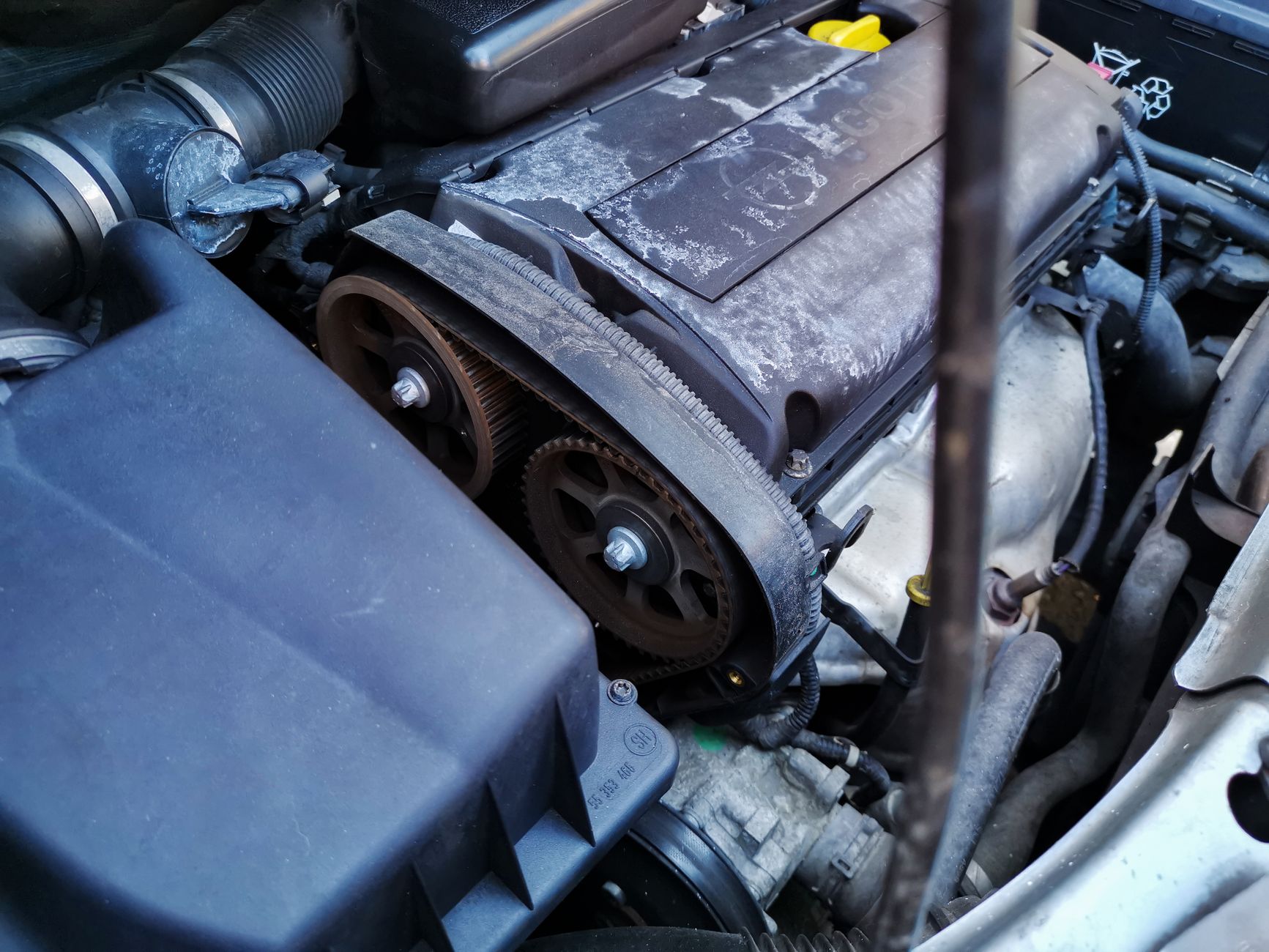
The timing belt lives under a sealed engine cover, where it synchronizes the camshaft and crankshaft. That synchronization keeps valves opening and closing at the right moment relative to piston movement.
Some engines use a timing chain instead of a timing belt. Chains usually last longer and follow different service plans, while belts need tighter mileage or time intervals from the start. That difference shapes the maintenance choice that comes next.
That difference in wear patterns explains why one belt services accessories while the other guards engine timing.
What Each Belt Powers Inside the Car
A squeal at idle often points to the belt you can see, while rough engine behavior can point to the one you can’t. The drive belt vs timing belt split starts with where each part works and what it keeps moving.
Accessories Rely On The External Belt
Crankshaft motion moves engine accessories through the external belt, keeping the battery charged, steering assist light, and cabin cooling working. On a serpentine setup, one belt can handle several loads at once.
That job is mechanical, not timing-related. The belt grips smooth or grooved pulleys and sends motion outward. It can slip, glaze, or fray and still leave the engine running for a while, though accessory output can drop fast.
Valve Timing Depends On The Internal Belt
The internal belt keeps the camshaft in step with the crankshaft so valves open and close at the right point in the four-stroke cycle. In plain terms, it acts like the metronome inside the engine.
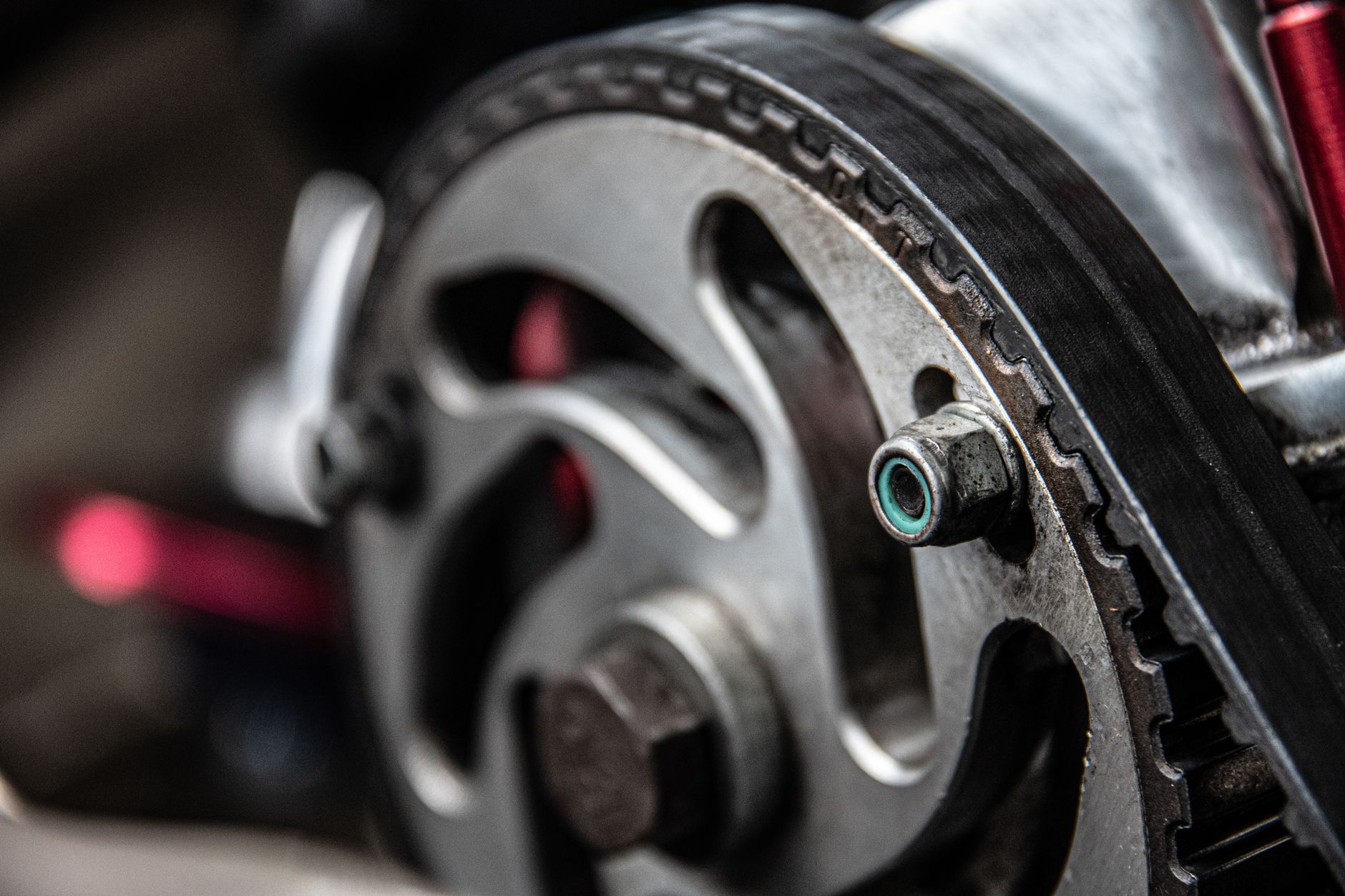
Timing belts use teeth molded into the belt face so the belt and sprockets stay locked in position. That toothed design gives much better precision than a grip belt, because valve timing tolerances can be tight enough to matter by a single tooth. Gates and Continental both build replacement belts around that need for positional accuracy.
Because timing tolerances run so tight, even small symptoms can reveal a belt that deserves attention.
One tooth out on a timing belt can change how an engine idles, starts, and breathes. The accessory belt can tolerate a little slip; the timing belt has far less room for error.
The Warning Signs That Call for Attention
Drive belt trouble usually shows up in sound and appearance long before a breakdown. Timing belt wear is harder to see because the part is hidden, so the clues show up in how the engine behaves.
Drive Belt Wear Shows Up Clearly
- Squealing at startup often points to a worn or slipping belt.
- Glossy glazing and cracked ribs usually mean the rubber has aged.
- Visible fraying can signal edge wear or pulley misalignment.
- Dark rubber dust near the pulley path often means the belt is slipping.
- Noise that worsens with A/C use or steering input can point to load-related belt stress.
Heat, oil seepage, and aged rubber speed that wear. A belt that has lost flexibility can chatter against an idler pulley or belt tensioner, and that noise often gets louder with the air conditioning switched on or the steering wheel turned.
Timing Belt Trouble Shows Up In Engine Behavior
Ticking, rough idle, hard starting, and misfires can all point to a timing belt that has stretched or jumped position. Poor power at low speed can also appear because valve timing no longer lines up cleanly with engine demand.
Because the timing belt sits behind covers, diagnosis depends more on symptom patterns and service history than on a quick visual check. A mechanic may inspect cover debris, verify timing marks, or listen for a dry, rhythmic tick from the belt path. That distinction matters because the next failure mode is far more expensive.
When those signs appear, the real concern is whether the engine can suffer internal damage.
Failure Modes And Engine Damage Risks
A broken accessory belt strands you with dead charging or no steering assist, but the engine internals keep their relationship intact. A failed timing belt can stop the engine instantly, and in some designs it can damage valves, pistons, or both.
Accessory Belt Failure Stays Outside The Engine
Drive belt failure usually means the alternator stops charging, the power steering pump loses assist, or the water pump quits if it is belt driven. The engine may still run for a short time, but each mile becomes less certain as heat and battery drain rise.
That is why a shredded serpentine belt can leave you on the shoulder without warning, yet it rarely causes internal collision damage. You still want a quick repair, but the stakes differ from a timing failure.
Timing Belt Failure Can Harm Interference Engines
Many modern engines are interference designs, which means the piston and valve paths share space at different times. A broken timing belt can let those parts occupy the same space at the same instant.
In that case, valves can bend and cylinder heads can take damage in seconds. Honda, Toyota, Ford, and GM have all built interference engines in various families, so the service history of your exact engine matters more than the badge on the hood.
That risk makes the engine’s design and service record the biggest drivers of repair cost and timing.
Once a timing belt snaps on an interference engine, repair cost can climb past the belt itself by a wide margin. You’re looking at labor, inspection, and sometimes cylinder head work.
Replacement Costs And Service Intervals
Drive belt service is usually lighter on time and parts. Timing belt service takes longer, costs more, and follows a stricter schedule because the engine depends on exact synchronization.
| Item | Typical Service Pattern | Main Labor Factor |
|---|---|---|
| Serpentine belt | Inspect at service visits, change at wear or cracking | Easy front-of-engine access |
| Timing belt | Change by mileage or time interval from the manual | Deep access behind covers |
| Belt tensioner | Changed with the belt on many high-mileage engines | Spring load and pulley wear |
| Idler pulley | Checked for noise, wobble, or rough bearings | Bearing condition |
A drive belt often costs less to fit because the job is straightforward. A timing belt service can add labor for covers, alignment checks, and related hardware, which is why the invoice rises fast even before extra parts enter the picture.
The schedules are not interchangeable. A serpentine belt may need attention at one interval while the timing belt follows a different clock entirely, even during the same hood-open visit. Your owner’s manual should set the cadence, and engine design should set the urgency.
Why Timing Belts Follow Time As Well As Miles
Rubber ages even in low-mileage cars. Heat cycles, oil vapors, and ozone attack the belt material, and that aging can weaken tooth roots long before the tread looks ugly.
That is why some makers specify replacement by years, not just miles. A low-mileage commuter that sits outside in hot sun can age differently from a work truck that racks up steady highway miles. The schedule is about material life, not just odometer reading.
Environmental stress changes the math, since heat, mileage, and use patterns all age belts differently.
Choosing The Right Maintenance Plan
The owner’s manual settles the interval, and the engine family settles the parts list. A 2010 Toyota Camry V6, a Honda Odyssey V6, and a Ford V8 can all ask for different timing service even if they wear similar belts.
Follow The Exact Service Interval
That interval matters because timing belt failure can arrive without much warning. Mileage, calendar age, and engine design all weigh into the decision, so a blanket rule from a friend or forum can miss the mark.
Most owners do better by writing the belt interval into the same file as oil changes and tire rotations. The belt doesn’t care that the rest of the car still feels fine.
Change Related Parts During Timing Service
Water pumps, tensioners, and idler pulleys deserve attention during timing belt work because they live in the same area and age alongside it. A worn pulley bearing can take out a fresh belt, which wastes labor and leaves the same cover back on the engine.
Many technicians also inspect seals for seepage. Oil on a rubber belt shortens service life fast, and a slow cam seal leak can turn a routine job into a repeat repair. That is the kind of detail that separates a sound plan from a short-term fix.
- Check the manual for the exact interval tied to your engine code.
- Inspect the belt path for cracking, glazing, or wet spots from fluid leaks.
- Listen at idle for chirps, ticks, or bearing noise near the pulleys.
- Replace related hardware during timing service when wear shows up.
- Use belt condition as preventive maintenance, not an afterthought.
That last point matters because delay can turn a planned service into an emergency tow. Drive belt vs timing belt is not just a naming issue, it is a repair strategy issue, and the wrong delay can cost far more than the belt itself.
Taken together, the choice comes down to planning early, before a cheap belt becomes an expensive repair.
Bottom Line
The accessory belt keeps the car functional, while the timing belt keeps the engine coordinated. Treat them as two separate systems with separate risks, separate intervals, and separate repair logic. A small rubber part on the outside of the engine can be annoying; the one inside can be unforgiving.
FAQ
What is the difference between a drive belt and a timing belt?
A drive belt powers accessories such as the alternator, power steering pump, and air conditioning compressor. A timing belt stays inside the engine and keeps the camshaft and crankshaft synchronized so valve timing stays correct.
Is a serpentine belt the same as a timing belt?
No. A serpentine belt is a type of drive belt that can run several accessories at once. A timing belt has toothed surfaces and works inside the engine to control valve timing.
Can I drive with a bad drive belt or timing belt?
A worn drive belt can let you drive only briefly before charging, cooling, or steering assist problems grow. A failing timing belt is far more urgent, because a break can stop the engine and damage internal parts in some engines.
How do I know if my belt needs to be replaced?
Squealing, cracking, glazing, fraying, ticking, rough idle, misfires, and hard starting all point toward belt trouble. A visual check helps with the drive belt, but timing belt service should follow the mileage or time interval in the manual.
What happens if a timing belt breaks while driving?
The engine can stall instantly, and an interference engine can suffer bent valves or piston damage. Even without internal damage, you are left with a car that will not run until the belt and related parts are repaired.