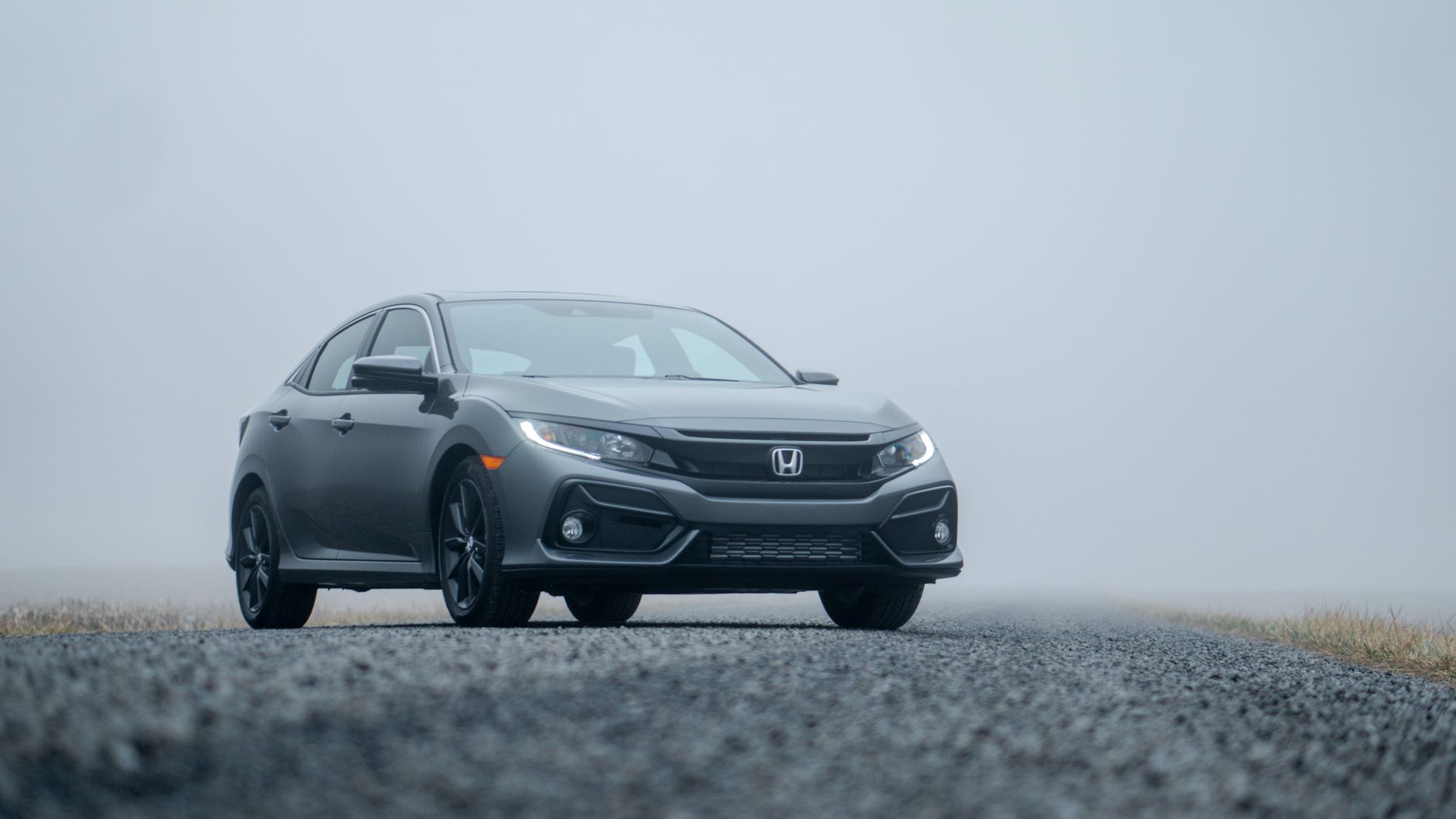

In tight city parking lots, a smaller car can be easier to park while a roomier compact often feels calmer on the road. The Fit is the better squeeze-in city car, while the Civic gives you more rear-seat space, a quieter cabin, and a steadier highway ride.
This overview covers parking, comfort, fuel economy, reliability, and used-car value for anyone weighing a daily commuter, a family runabout, or a smart used buy.
Sizing Up the Fit and Civic
The Fit is the smaller car, and you notice it the second you slide into a narrow curb lane or a packed garage. Its short body and tight turning circle make low-speed moves simple, while the Civic’s longer footprint gives you more shoulder room and a less cramped back seat.
That size gap matters in daily life, not just in spec sheets. A subcompact like the Fit asks less from your parking spot, but a compact car like the Civic gives your passengers a calmer ride and a cabin that feels less busy on longer trips.
Street Parking Favors the Fit
In dense neighborhoods, the Fit behaves like a well-cut jacket, snug where it needs to be and easy to slide into a small opening. The Civic still parks easily by normal-car standards, yet the extra length and width are harder to hide in a garage with columns or a tight parallel slot.
Honda Fit compared to Civic size comparison usually matters most during those small daily moves: backing out of a driveway, threading past delivery trucks, or squeezing between two crossovers. The Fit makes those moments simpler, and that ease is part of its appeal.
Rear Room Changes The Cabin Mood
The Civic pays you back with a more settled cabin and better rear-seat space for adults. A longer wheelbase, wider body, and more stretched seating layout give passengers room to sit without their knees brushing the front seatbacks.
That difference shows up on school runs, airport drops, and grocery trips with four people aboard. The Honda Fit or Civic choice starts here, because the Civic feels like a small car that learned how to breathe.
Once the cabin feels more settled, cargo space becomes the next thing worth weighing.
That extra utility matters because a good sedan has to make every square inch count.
| Area | Honda Fit | Honda Civic |
|---|---|---|
| Parking | Smaller footprint helps in tight spaces | Still manageable, but needs more room |
| Rear-seat space | Fine for short trips, tight for taller adults | More legroom and a calmer feel |
| Cabin feel | Light, upright, efficient use of space | More mature and relaxed |
Cabin Space, Cargo Tricks, and Everyday Practicality
The Fit’s best trick is the way its rear seats fold flat into a long, usable load floor. A bicycle, a plant shelf, or several flat boxes can fit in ways that surprise you the first time, and that packaging is the car’s strongest practical advantage.
The Civic takes a different route. You get a more natural seating position, a wider armrest area, and a cabin that feels designed for longer time behind the wheel. The Fit is clever for its size, but the Civic wins the comfort contest for people and their elbows.
Magic Seat Layout Adds Real Utility
Honda’s Magic Seat setup in the Fit changes how you use the rear of the car. The cushion flips up, the backrest folds down, and the cargo bay grows tall enough for awkward items that would never fit cleanly in a sedan trunk.
That matters for errands, side jobs, and weekend hauling. A laundry basket stands upright, a flat-pack box lies level, and a small houseplant rides without tipping over. The Civic hatchback comparison makes the Fit feel more like a tiny utility tool than a plain commuter.
Comfort Still Belongs To The Civic
The Civic’s seats are more supportive over time, and the ride position feels less perched. You sit lower, the dash feels more spread out, and the car gives your body a bit more room to settle in on a long stretch of highway.
That difference matters after an hour, not just after five minutes. A Fit can do the same job, but the Civic does it with less knee bend, less shoulder crowding, and less sense that every inch was negotiated.
Lower cabin drag usually helps at the pump, but comfort and roominess can soften that advantage.
Use the Fit for odd-shaped cargo and the Civic for long days with people aboard. That simple split explains most Honda Fit vs Civic decisions better than any brochure line.
Fuel Economy and the Tradeoff Between Efficiency and Ease
Both cars have a strong record for fuel economy, and that keeps the comparison close for commuters. EPA estimates across different model years have placed each car in an efficient bracket, so the gap is often smaller than you expect once you factor in driving style and transmission choice.
Short errands tend to favor the Fit because its lighter body and smaller footprint make it feel frugal in stop-and-go traffic. The Civic gives you economy too, but with more polish, so you spend less time thinking about the car and more time just using it.
Short Trips Suit The Fit
Stoplight-to-stoplight driving is where the Fit feels thriftier in spirit. It warms up quickly, weighs less, and asks less energy to get moving from a dead stop, which fits a life built around school drop-off, pharmacy runs, and quick office trips.
That budget-friendly feel is not only about miles per gallon. The smaller body also makes errands feel shorter because you spend less effort finding space, turning around, and slipping through crowded lots.
The Civic Adds Refinement With The Economy
The Civic gives you a better blend of fuel economy and quietness. Higher-grade cabin materials, a more stable ride, and stronger insulation from road noise make the car feel more grown-up without giving away much at the pump.
Honda Civic fuel economy has long been a reason it stays popular with commuters who want a compact car that does not feel thin or tinny. That balance is where the Civic separates itself from a pure urban runabout.
Efficiency matters most when the car still feels composed once the pavement starts changing.
- Choose the Fit for short errands, tight parking, and an upright hatchback layout.
- Choose the Civic for a quieter commute and a more settled cabin.
- Check the transmission because gearing can change the feel of daily efficiency.
- Match the trim to your route, since bigger wheels can trade comfort for appearance.
City Streets, Highway Miles, and How They Drive
The Fit feels right at home in crowded neighborhoods because it turns sharply and tucks into spaces that make larger cars hesitate. You notice that advantage every time a narrow alley, busy apartment lot, or crowded curb lane forces a quick move.
The Civic is the better road car. Its longer wheelbase calms the ride, and that extra stability matters once speeds rise and the pavement gets rougher. Honda Fit vs Civic reliability gets attention, but drivability is where your choice becomes obvious on the road.
Urban Use Rewards The Smaller Body
Dense traffic favors a car that can change direction without drama. The Fit’s light steering and compact size make U-turns, angled parking, and quick lane changes feel easy, which helps in cities with old street grids and limited space.
That agility has a practical side too. Your mirrors feel less exposed, your front end is easier to place, and the car gives faster feedback at parking-lot speeds than a larger compact.
Highway Travel Rewards The Civic
At 65 to 75 mph, the Civic settles down in a way the Fit cannot quite match. Road noise stays lower, the suspension has more room to absorb expansion joints, and the car tracks straighter over long distances.
Physics explains part of that feel. A longer wheelbase reduces the pitching motion that shorter cars feel over bumps, so your body gets less vertical shake and your hands make fewer steering corrections. That is why the Civic feels calmer on interstate runs.
A settled ride often hints at the long-term polish that shoppers notice after the test drive.
Road shape changes the verdict. Tight city blocks highlight the Fit, while long freeway miles expose the Civic’s steadier ride and quieter cabin.
Reliability, Resale Value, and Ownership Costs

Honda Fit and Civic reliability both carry strong reputations, and that shared reputation matters more than small trim differences. Consumer Reports and J.D. Power have long treated Honda as a brand with solid durability, and that reputation helps both cars hold a place in the used market.
The Civic usually benefits from wider resale demand because more people want one, from first-time drivers to commuters and small families. The Fit can be cheaper up front, but the Civic often keeps value better over time because its market is broader.
Maintenance Costs Stay In Reasonable Territory
Routine service for either car stays straightforward: oil changes, brake work, tires, and fluid service are standard compact-car chores. The Fit can cost less to own in some cases because smaller tires and simpler packaging sometimes keep parts and labor lighter.
J.D. Power ownership surveys and Consumer Reports reliability reports both point in the same direction for Honda nameplates, which is that neither model is a gamble compared with many small cars. The main difference is not fear of repairs, but how the car ages in the market after the novelty wears off.
Resale Demand Tilts Toward The Civic
Used car value tends to follow demand, and the Civic has a larger pool of shoppers looking for a compact sedan or hatchback. That larger pool helps the car move faster and keeps pricing firmer in many markets.
The Fit still makes sense for a careful used-car shopper who wants space efficiency over curb appeal. But for long-term value, the Civic usually has the stronger story because more people understand its role and want the same thing.
That market difference gets even clearer once trims and powertrains enter the picture.
Those strengths and compromises only matter if the ownership math supports them over time.
Where The Civic’s Broader Range Changes The Equation
The Civic comes with more trims and more powertrain choices, and that matters because your needs may not stop at basic commuting. Honda has offered sedans, hatchbacks, turbocharged engines, and hybrid versions in different markets and years, giving you room to match the car to the way you drive.
The Fit was discontinued in the United States after the 2020 model year, which changes new-car shopping but not the used market. That makes the Civic the easier fresh-customer choice, while the Fit stays alive as a compact used-car specialist with unusual cargo flexibility.
Trim Variety Expands The Civic’s Reach
The Civic can move from plain transportation to a more polished setup without leaving the model line. Lower trims keep costs in check, while higher trims bring stronger audio, more driver aids, and in some years, more powerful engines.
That range matters because it lets you stay inside one nameplate as your needs shift. A college commute, a long freeway route, and a family-hauling phase do not always require the same car, and the Civic can stretch across those stages.
The Fit Stays Relevant On The Used Market
A discontinued model can still be a smart purchase when the package solves a specific problem well. The Fit does that with compact size, tall cargo space, and low-effort parking, so it keeps a loyal following among people who value usefulness over image.
Honda Fit vs Civic becomes a clearer recommendation at this point. Choose the Fit for compact practicality and city ease, and choose the Civic for a more complete all-around package that serves longer trips, more passengers, and broader resale demand.
Taken together, the numbers and the feel point toward a car that suits more than one kind of buyer.
What To Remember
The Fit wins on tight-space ease and cargo cleverness, while the Civic wins on passenger comfort, highway calm, and long-term market strength. Your best choice depends on whether your daily life looks more like crowded streets and quick errands or longer drives with more people and more miles.
For most shoppers, the decision comes down to a simple split: the Fit is the smaller, smarter city tool, and the Civic is the better all-rounder when your week includes more passengers, more highway time, or a longer ownership plan.
FAQ
Is a Honda Fit bigger than a Civic?
No. The Civic is larger in overall footprint, rear-seat room, and cabin stretch, while the Fit is the smaller car that feels easier in parking lots and narrow streets. That size difference is the main reason the Civic feels calmer inside.
Is the Honda Fit as reliable as the Civic?
Yes, both have strong durability reputations, and Honda has a long record of building durable small cars. The Civic has a larger service history and a broader used-car base, but the Fit is not some fragile outlier.
What is the weakness of the Honda Fit?
Its main weakness is passenger comfort, especially for taller people in back and for long highway trips. The Fit is clever with cargo, but it cannot match the Civic for cabin calm, seat support, or overall room.
Why was the Honda Fit discontinued?
Honda ended U.S. Fit sales after the 2020 model year as demand shifted toward crossovers and larger hatchbacks. The car still makes sense as a used choice, but new-car shoppers now land in the Civic or a small SUV more often.
Which is better for fuel economy, the Honda Fit or Civic?
The answer depends on model year, transmission, and route, but both are efficient. The Fit can feel more frugal in short city trips, while the Civic brings similar economy with a quieter, more refined drive.