
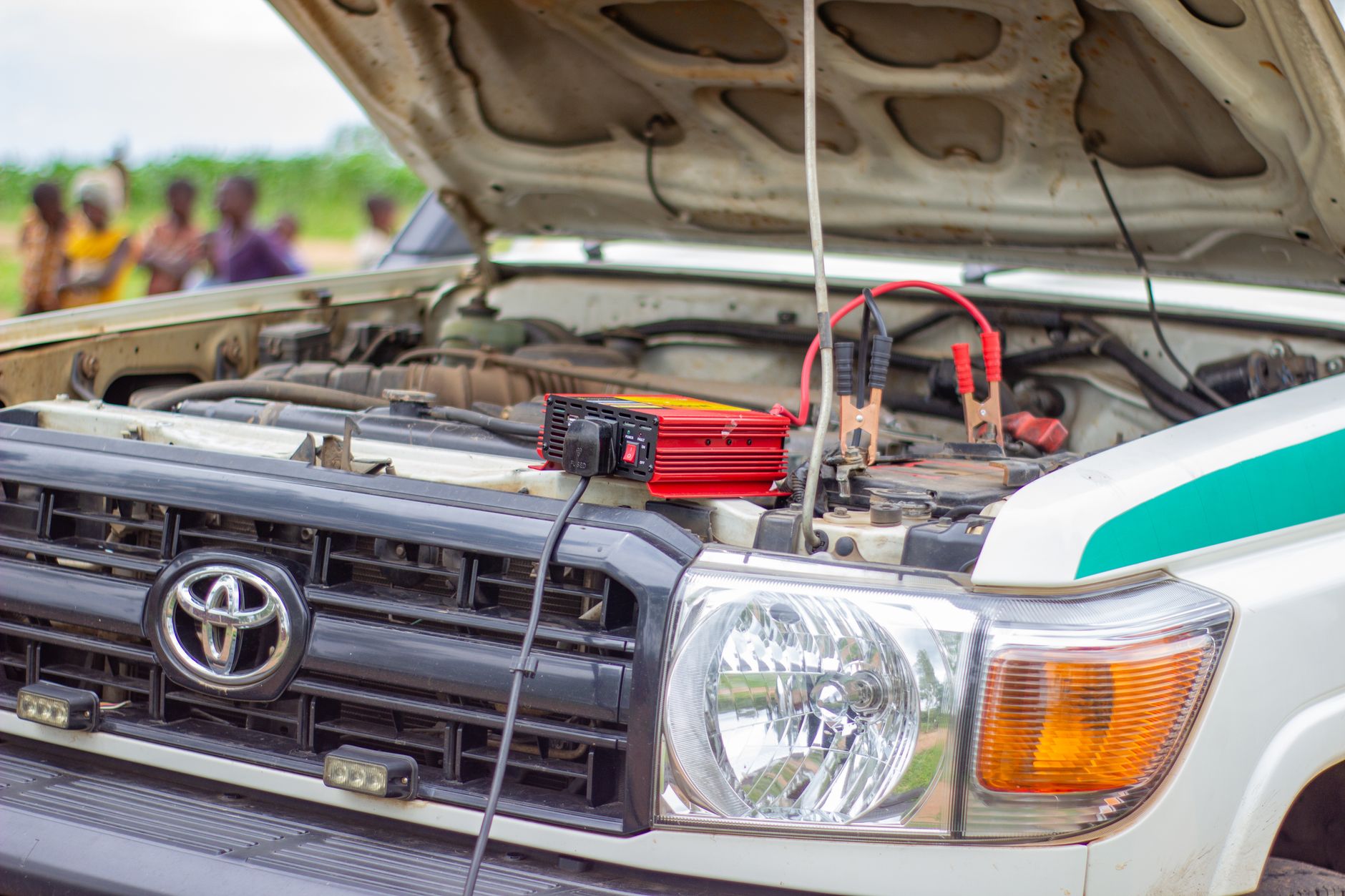

Toyota charging system malfunction means the 12-volt electrical system isn’t getting steady voltage. A weak battery, bad alternator, slipping belt, corroded terminals, or converter fault can trigger the warning, and dim lights, slow cranking, or a no-start often follow.
Here’s what the warning means across gas, hybrid, and EV Toyotas, plus the usual fixes for someone facing a dashboard alert, a dead battery, or a car that won’t hold a charge.
What The Warning Means In A Toyota
Voltage is dropping below normal, and the car is warning you before the failure gets worse. That drop can leave you stranded after a short drive or the next time you shut the engine off.
Two electrical systems serve different jobs
The 12-volt battery powers the starter, relays, control modules, locks, and lights. In hybrids and EVs, the high-voltage traction pack moves the car, but a separate converter feeds the low-voltage side, so a 12-volt fault can still shut down basic functions. That split explains why a Toyota battery warning light can appear even when the traction battery is fine.
In a gasoline Corolla or Camry, the alternator does the charging. In a Prius, RAV4 Hybrid, or bZ4X, power electronics handle that job instead of a belt-driven unit. Catching the warning early matters, because the dash light often shows up before the car fails completely.
A loose connection is only one possibility, and the rest of the system can hide the real culprit.
Dim headlights at idle, slower power windows, or a flickering dash during startup often show the system is falling behind before a hard failure.
The Usual Causes Behind The Alert
A charging warning usually starts with voltage trouble, not a dead battery alone. A Toyota alternator problem, a loose belt, a cracked cable, or corrosion on the battery terminals can stop charging just as fast, and the fault may begin as a small drop before it turns into a no-start.
Gasoline models lean on belt-driven charging parts
On a conventional Toyota, the alternator must spin fast enough to feed the electrical load and refill the battery after startup. A worn drive belt, a slipping tensioner, or a failing voltage regulator can leave battery voltage below normal even while the engine keeps running for a short time.
Wiring faults matter too. A blown fuse, loose ground strap, damaged cable, or internal alternator diode failure can create a Toyota battery not charging complaint that looks like a battery issue from the dashboard. The symptom on the road may stay mild at first, then get ugly fast at night with the blower, headlights, and defroster running.
Battery age and connection problems still matter
The 12-volt battery itself can fail from age, short trips, heat, or parasitic drain. Corrosion adds resistance at the clamp, and that resistance steals current just like a narrow hose cuts water flow. A jump start may get the car going, but it does not prove the charging source is healthy.
Clean terminals and tight hardware matter more than they sound. Green, white, or powdery battery posts can trigger a check charging system light Toyota drivers notice after a cold start, then seem to disappear after the engine shakes the connection enough to make contact again.
Temperature swings can trigger false alarms, which is why electrified models need a different diagnostic approach.
- Failing alternator charges weakly or not at all.
- Loose belt lets the alternator slip under load.
- Corroded terminals add resistance at the battery posts.
- Damaged cables block current flow between parts.
- Weak 12-volt battery cannot hold charge after a drive.
- Blown fuse or ground fault interrupts the charging path.
Why Hybrids And EVs Diagnose Differently
That split between low-voltage and high-voltage systems changes the diagnosis fast. Hybrid and electric Toyotas do not rely on a classic alternator, so the warning points in a different direction. A DC-DC converter steps high-voltage energy down to 12 volts, and a fault in that unit can look like a charging system failure even though the traction battery still has plenty of energy.
The converter replaces the alternator role
In a Prius or other Toyota hybrid, the converter keeps the 12-volt bus alive while the car is ready. In a bZ4X, the same job is handled through power electronics tied to the high-voltage system. A converter fault can trigger a Toyota charging system warning because the car can no longer keep the low-voltage side stable.
This is where a quick assumption goes wrong. A traction-battery fault and a 12-volt charging fault are different problems, even though both can light up the dash. The traction pack may still be healthy while the converter, its control circuit, or a relay has stopped feeding the vehicle electronics.
Voltage behavior gives the clue
A healthy low-voltage system should sit near 12.6 volts at rest and rise higher once the car is in READY mode, though exact values vary by model and load. Drops under load, or a system that never climbs past battery level, point toward the converter, wiring, or the 12-volt battery itself.
That difference helps you avoid the wrong repair. A weak auxiliary battery on a hybrid can mimic a converter issue, while a converter fault can make a fresh battery look bad. The next step is code reading, because the car computer often has more to say than the dash light does.
Those differences make the warning less straightforward, but scan data can still reveal the source.
The Diagnostic Codes That Point The Way
OBD-II codes can cut diagnosis time from guesswork to a short list of likely failures. A code read from a scanner may point toward alternator output, battery voltage, belt-related undercharge, wiring loss, or converter performance, and that clue matters before parts get swapped.
Codes narrow the suspect list
An OBD2 scanner can show whether the problem leans toward charging output, sensor feedback, or a control circuit fault. Toyota and Lexus models also store data in modules beyond the engine computer, so a shop scan can reveal the difference between a battery sensor complaint and a true alternator failure.
That helps with cases like a Camry that cranks slowly after sitting overnight, a Highlander that shows low voltage after a jump start, or a Prius that goes READY but drops accessories within minutes. Each pattern points to a different part of the system, not the same fix.
| Code pattern | What it can point to | Why it matters |
|---|---|---|
| Low battery voltage data | Weak 12-volt battery or bad connection | Shows the car may not hold charge even before startup |
| Charging output fault | Alternator, belt, or regulator issue | Points at low charging during engine operation |
| Converter or inverter fault | Hybrid or EV DC-DC unit | Explains a warning in cars without a belt alternator |
| Voltage sensor mismatch | Wiring, fuse, or ground loss | Shows the problem may be in the circuit, not the part |
Physical checks still close the case
Codes alone do not prove the fault. A technician still needs to inspect the belt, battery terminals, cable ends, and grounds, then measure battery voltage under load and with the engine running. A corroded clamp can throw off data just enough to send diagnosis in the wrong direction.
That mix of scan data and voltage testing is the fastest way to separate a cheap fix from a real hardware fault. Once the fault is pinned down, the repair path gets much clearer.
A code alone is not the whole story, yet it often points straight to the failing component.
Repairs That Usually Solve The Problem

The fix should match the failed part, not the warning light. A Toyota charging system malfunction can end with a battery swap, terminal cleaning, cable repair, belt replacement, alternator work, or hybrid converter diagnosis, depending on what the voltage numbers and codes show.
Common repairs on gasoline Toyotas
A weak 12-volt battery is the easiest repair path. Battery replacement makes sense when the unit fails a load check, cranks slowly after a full charge, or cannot hold voltage overnight. Clean battery posts and cable ends matter too, because corrosion can make a fresh battery act weak.
Other fixes land on the charging hardware itself. A frayed serpentine belt, a noisy tensioner, a bad alternator diode, or a failed voltage regulator can all create a no-charge condition. In those cases, the battery is the victim, not the source, and a new battery alone will not solve the problem.
A battery that keeps dying after a jump start often points to a charging source fault, not a battery problem by itself.
Hybrid and EV repairs need a different path
On hybrid and electric Toyotas, the DC-DC converter and its control wiring deserve close attention. A converter that cannot step voltage down to the 12-volt system can leave the car in a weak-start or no-start state even with a healthy traction battery, so replacement may be needed after proper diagnosis.
Fuse checks, ground testing, and module communication checks matter here too. A bad fuse or a break in the control circuit can mimic a failed converter, and that is why a parts-cannon repair is a bad bet. The right repair is the one that matches the measured failure.
Practical steps help before any shop visit:
Once the likely repair is known, the bigger question becomes whether it is safe to keep driving.
- Check terminals for looseness, corrosion, or heat damage.
- Measure voltage with the car off and in READY mode.
- Inspect the belt for cracks, glazing, or slack.
- Scan codes with an OBD-II tool before swapping parts.
- Watch symptoms like dim lamps, slow cranking, or warning clusters.
Driving Decisions And When To Stop
A car can run for a short stretch on battery reserve alone, but that reserve is thin. Once voltage drops far enough, the engine can stall, modules can reset, and the next restart may fail completely, leaving you with a Toyota charging system warning and no easy exit.
Signs that mean the trip should end
Headlights that dim at idle, a cluster that flickers, power steering that feels heavy, or a blower that slows down are signs the electrical load is outrunning supply. Those symptoms mean the system is not keeping up, and every mile can shorten the time before shutdown.
A jump start can buy a short move to a shop, but repeated jump starts on the same day point to a deeper fault. A Toyota battery warning light that comes back after restarting, or a car that dies after the radio and lights are left on for only a few minutes, needs hands-on diagnosis right away.
Roadside help makes sense when the car will not hold voltage, the dash goes dark, or the transmission control and engine control modules start dropping out. Short drives are fine only when the voltage stays stable and the warning does not return; anything less is a tow candidate.
That threshold matters because a warning that comes and goes can quickly turn into a no-start situation.
Wrap Up
The warning isn’t a mystery once you separate the 12-volt side from the traction system. A weak battery, bad alternator, slipping belt, corroded cable, or failed DC-DC converter can all cause a Toyota charging system malfunction, and the right fix comes from voltage checks plus code data, not a guess.
FAQ
What does the Toyota charging system malfunction warning mean?
It means the 12-volt electrical system is not staying charged the way it should. The cause may be a battery, alternator, belt, cable, fuse, or converter fault depending on the model.
Can I keep driving with a Toyota charging system malfunction?
Short driving may be possible, but the car can stall once battery reserve drops. Dim lights, flickering gauges, or repeated warning returns mean you should stop driving farther.
Is a charging system malfunction caused by the alternator or battery?
Either part can cause it. A weak battery can trigger the warning, but a bad alternator, belt problem, wiring loss, or hybrid converter fault can create the same dash light.
How do I reset the charging system warning on a Toyota?
You do not fix it by clearing the light alone. The warning clears only after the fault is repaired and the system voltage returns to normal, so a scan tool and voltage check come before any reset.
How much does it cost to fix a Toyota charging system malfunction?
Cost depends on the failed part. A battery or terminal service is far cheaper than alternator, wiring, or converter repair, so diagnosis matters before any estimate makes sense.