
A typical unit contains a small amount, from less than a gram to several grams, depending on the exact model and make. That amount still matters for scrap value because palladium sits with platinum and rhodium, and the payout can shift quickly with the part and the market.
This guide covers the factors that shape palladium content in catalytic converters and what that means when you’re pricing a used part, sorting gasoline versus diesel units, or preparing one for recycling.
Palladium’s role inside modern catalysts
Inside the ceramic substrate, palladium helps turn carbon monoxide and unburned hydrocarbons into cleaner exhaust. In gasoline converters, exhaust gas moves across the coated honeycomb, where the reaction happens on the surface.
Most modern gasoline units don’t rely on palladium alone. OEM formulas often blend it with platinum and rhodium because each metal supports a different reaction path, and manufacturers balance that mix to meet Federal Emissions Standards without using more metal than necessary.
That balance shifts with engine size, cylinder count, and calibration. A small sedan, a turbocharged pickup, and a hybrid all run different exhaust temperatures and air-fuel behavior, so the catalyst loading changes to fit the job instead of the shell size.
Why the metal mix changes
At the light-off point, conversion efficiency rises fast after a cold start. Palladium works well for gasoline oxidation, while rhodium is prized for reducing nitrogen oxides, so the blend reflects both chemistry and cost control.
Vehicle family matters as much as model year. A direct-injection engine can send a different soot and hydrocarbon pattern through the brick than a port-injected engine, and that changes the precious metal content the supplier chooses.
Why appearance tells you little
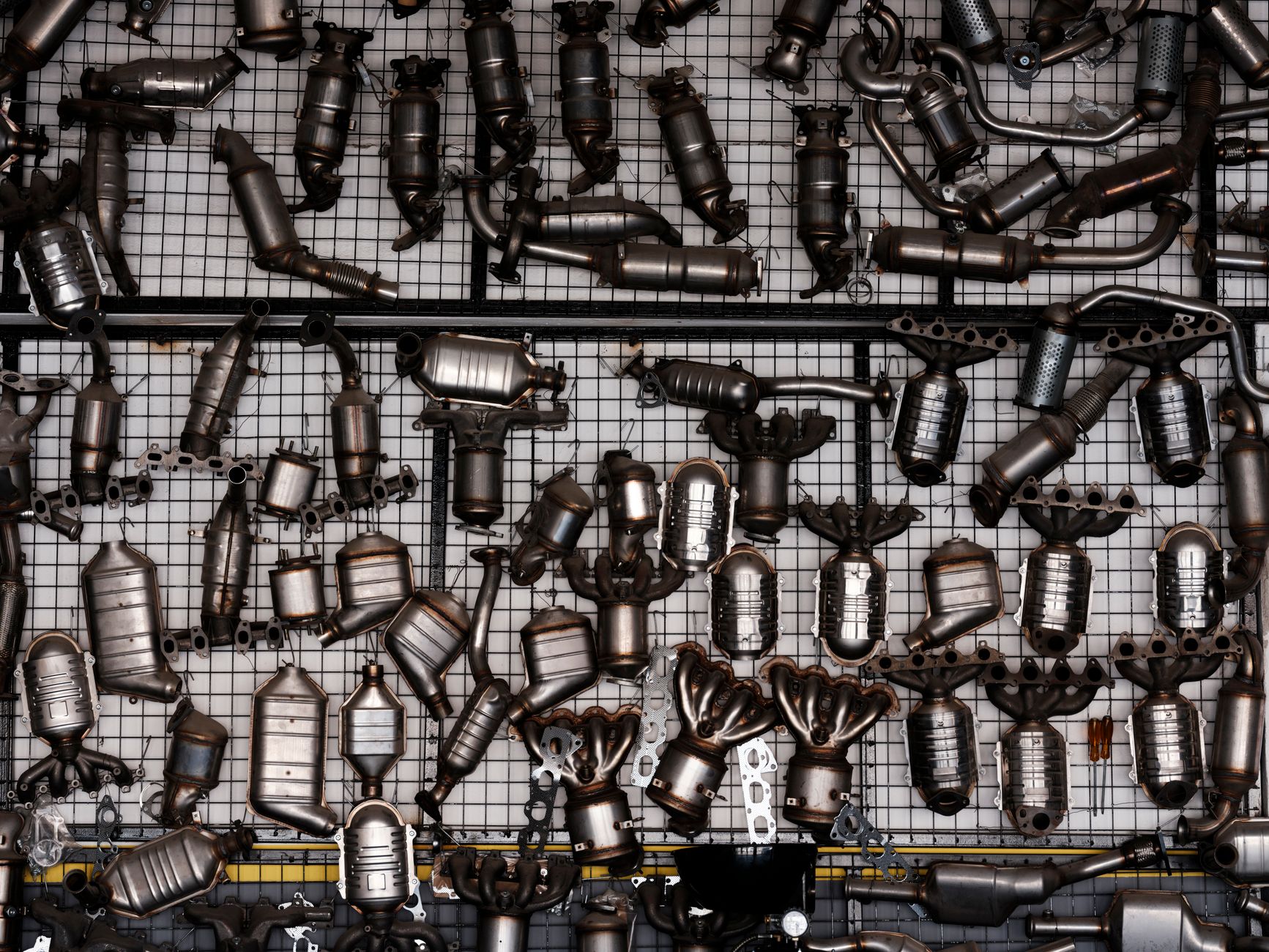
A long, rusted shell can hold less palladium than a smaller unit with a denser washcoat. The outside shape tells you about packaging, not the amount of catalytic converter precious metals packed into the substrate.
That gap between looks and content is where scrap guesses go wrong, and it leads straight into the range you can actually expect.
Visual estimate alone can mislead, because actual returns depend on several market and material factors.
The range you can actually expect
As the design varies, the amount of palladium stays small, and the load can be less than a gram in some units or several grams in others. A passenger car from one model line can sit near the low end, while a larger OEM unit from another emissions package can carry a richer metal charge.
How much palladium is in a catalytic converter changes with vehicle type, model year, and engine family. Older systems, small gasoline cars, light trucks, and diesel setups don’t share one fixed recipe, so the same-looking part can sit far apart in value.
That spread is why a converter from a 2008 compact hatchback can land far below a heavy-duty pickup part, even before platinum and rhodium enter the count. Size alone gives a rough shell weight, not the precious metal content that matters for scrap.
Common ranges by vehicle type
- Small gasoline cars: These can carry very light palladium loads, sometimes under 1 gram.
- Mid-size gasoline vehicles: Many land in a low single-gram range with palladium, platinum, and rhodium mixed in.
- Older systems: Earlier designs can differ sharply because emissions targets and catalyst formulas changed over time.
- Diesel units: These often use different precious-metal compositions, so palladium content can be far lower or arranged differently.
- Heavy-duty trucks: Larger exhaust volumes and different duty cycles can push loadings away from passenger-car norms.
That spread is why a scrap quote from a visual guess can miss badly. The next step is to look past the shell and ask what drives payout in the first place.
Payout hinges less on appearance than on the metals and construction hidden inside the shell.
What drives scrap value more than size
Scrap catalytic converter value follows metal loading, not the physical dimensions of the can. A short unit with a dense washcoat can pay more than a larger shell that carries less palladium, platinum, and rhodium inside the ceramic honeycomb.
Recyclers care about the expected recovery yield after grinding, sampling, and refining. Palladium in scrap converters is only part of the story, because a small rise in rhodium loading can move the payout more than a much larger shell would suggest.
Theft also follows that math. Converter thieves target units with valuable precious metal content because the market value comes from the recoverable metals, not the steel housing that looks bulky from the curb.
The payout follows the chemistry
Recovered value starts with assay data from the part family and ends with refining loss. Metal recovery firms estimate how much palladium, platinum, and rhodium a unit may yield after processing, then subtract the cost of collection and separation.
That is why two converters from the same truck can still differ in price. One may belong to a different emissions package or a different calibration family, and the load can shift with that detail alone.
Keep the shell intact and the identification marks visible. A scratched or cut converter can still be sampled, but the missing part number makes pricing slower and less certain.
The metal mix changes again when you compare gasoline, diesel, and heavy-duty units, and that contrast explains a lot of the confusion around truck parts.
These variations matter most when different engine types place very different demands on the catalyst.
Comparing gasoline, diesel, and heavy-duty units
Modern gasoline converters are the usual home for palladium-rich formulas, while older or diesel systems can lean on different precious metals and different aftertreatment hardware. Some diesel vehicles also pair oxidation catalysts with a diesel particulate filter, so the converter is only one piece of the exhaust path.
Pickup trucks and heavy-duty applications can carry very different loadings than compact passenger cars. The duty cycle, heat level, and emission target all shape the precious metal mix, so a work-truck part family can sit in another price band from a commuter-car part even before recycling starts.
Why truck families matter
Ford F-250 units are a good example of part-family variation. A gasoline F-250 with one emissions setup can use a different platinum and palladium mix than another F-250 with a different engine, and the scrap value follows the exact converter family rather than the badge on the tailgate.
That is where part numbers and emissions calibration matter. A Super Duty converter tied to a particular OEM family can contain a richer load than a light-duty passenger-car unit, but the only reliable way to sort that out is the exact identification stamp.
A practical truck reference point
A Ford F-250 converter tied to a gasoline emissions package can carry a mix that leans on platinum and palladium together, with rhodium added for nitrogen oxide reduction. Diesel-adjacent hardware on other trims can shift the mix again, so vehicle name alone does not settle the question.
That difference leads straight to identification, because a recycler cannot price a mystery part with confidence.
Without a positive ID, even a well-made part stays hard to price and harder to recycle.
Identifying the exact part before recycling

The part number is the strongest starting point for valuation and replacement. It links the shell to the OEM catalyst family, which gives a recycler a usable clue about precious metal content before any sampling starts.
Buyers and recyclers often ask for the exact converter ID because vehicle make and model do not tell the full story. Two units from the same year and badge can carry different loadings, and one wrong assumption can send the quote off track.
Guessing from the vehicle alone is where problems begin. A muffler shop may see one set of emissions equipment, while the recycling yard sees a different family code, and that mismatch can change the scrap offer in a hurry.
What to gather before you quote it
- Part number: This is the cleanest link to the correct catalyst family.
- Vehicle details: Year, make, model, engine, and emissions package narrow the search.
- Shell photos: Clear images of the stamp and shape help confirm identification.
- Removed condition: A broken, gutted, or cut unit can change how a recycler samples it.
Once the part is identified, the last variable is market value, and that is where palladium price starts to shape the final payout.
Once the component is confirmed, current metal markets become the biggest lever on what it brings.
Reading palladium prices against converter payouts
Palladium spot price sets the backdrop for scrap converter pricing, but the embedded amount in one unit is tiny compared with an ounce of refined metal. One ounce is 31.1035 grams, and a converter with less than a gram or even a few grams of palladium contains only a fraction of that ounce.
That gap matters because scrap price is not raw metal value in a jar. Recyclers absorb sampling loss, refining cost, and market risk before they issue an offer, so the number you hear is always below a simple ounce-by-ounce metal calculation.
How much is palladium worth in a catalytic converter depends on both content and recovery math. A unit with 2 grams of palladium, plus a trace of rhodium and platinum, can pay far more than a low-content shell, yet still sit well below the value of the same metal sold as clean bullion.
Raw metal value versus scrap offer
Refiners work from estimated yield, not a perfect assay of every brick. A converter that looks rich can still lose value through contamination, poor identification, or a family code that doesn’t match the expected load.
That difference is why a polished scrap quote can hide a lot of process cost. You are paying for metal recovery, not for the theoretical content alone, and the gap grows wider as the amount of palladium gets smaller.
A simple way to think about the math
A few grams of palladium in one converter might sound small until you compare it with the spot market. The same unit can still carry platinum and rhodium, and those metals can swing the quote even more than the palladium line item.
So the real answer to how much palladium is in a catalytic converter is not a single number. It is a range tied to part family, engine design, and emissions setup, and the scrap payout follows that same chain.
That makes value a moving target, shaped by design, use, and the broader scrap market.
What to remember
Palladium content is a function of emissions design, not converter size, and the same shell shape can hide very different loads. Once you have the part number and the vehicle family, you have a real basis for valuation, which is far better than a guess from the outside.
FAQ
How much palladium is in a catalytic converter?
Most converters contain a small amount, often less than a gram in light units and several grams in richer ones. The exact load depends on vehicle make and model, engine design, and emissions package, so appearance alone never gives a clean answer.
How much is palladium worth in a catalytic converter?
Its value depends on the palladium price, the amount inside the part, and how much platinum and rhodium are present with it. Scrap offers stay below raw metal value because recyclers account for sampling, recovery, and refining costs.
How much are scrap catalytic converters worth?
Scrap catalytic converter value varies by precious metal content, part number, and current market pricing. Two units that look similar can land in very different price bands because the internal loading, not the shell, drives the payout.
How much platinum is in a catalytic converter?
Platinum loadings also vary by catalyst family, and many gasoline units use it alongside palladium and rhodium. Some units carry little platinum, while others use enough that it changes the final scrap quote in a meaningful way.
How do you identify the metals in a catalytic converter?
The part number is the strongest clue, followed by the vehicle year, engine code, and emissions setup. Recyclers may also sample the brick or use family data to estimate palladium content in catalytic converters before they finalize a quote.
What affects the value of a catalytic converter?
Metal loading, part identification, vehicle family, and market price drive the value. The same unit can change in worth as palladium, platinum, and rhodium prices move, so the offer can shift even when the part itself has not changed.