
At a stoplight, the engine choice comes down to how you want the car to feel. The K20 is a 2.0-liter four-cylinder that likes revs and top-end pull, while the K24 is a 2.4-liter four-cylinder with stronger low-end torque and easier launch response. That difference shapes street manners, track pace, and boost behavior.
This article covers the Honda K20 and K24 for builders weighing a swap, comparing output characteristics, tuning tradeoffs, durability, and which setup suits street, track, or turbo projects best.
The Core Differences Between K20 And K24
The first clue is displacement. K20 engines are 2.0-liter inline-fours, while K24 engines are 2.4-liter inline-fours, so the larger motor moves more air per cycle and usually makes stronger low-speed torque. Both belong to Honda’s K-series family, share DOHC construction, use chain-driven timing, and many versions use VTEC or i-VTEC.
Because they share so much hardware, the real separation comes from bore, stroke, and the way each engine breathes. A K20 feels quick and eager, while a K24 feels broad and easy to drive hard without working as much. That contrast sets up the rest of the comparison.
Shared K-Series Architecture
Honda built both engines around an aluminum block and head, a timing chain, and a four-valve-per-cylinder layout. That matters because chain drive cuts out belt-service intervals, and the head design leaves room for strong airflow in naturally aspirated builds or turbocharged setups.
Honda and Acura used many K-series variants in compact performance cars and family models, so parts knowledge runs deep. K20A and K24A labels mark different versions, but the same family logic still guides the decision. Once that’s clear, rev range becomes the real separator.
Displacement Changes The Personality
The K24’s extra 0.4 liter helps cylinder filling at lower engine speed, so it makes more torque before the tach climbs high. That added shove helps a heavier chassis leave from a stop with less clutch slip and fewer downshifts in daily driving.
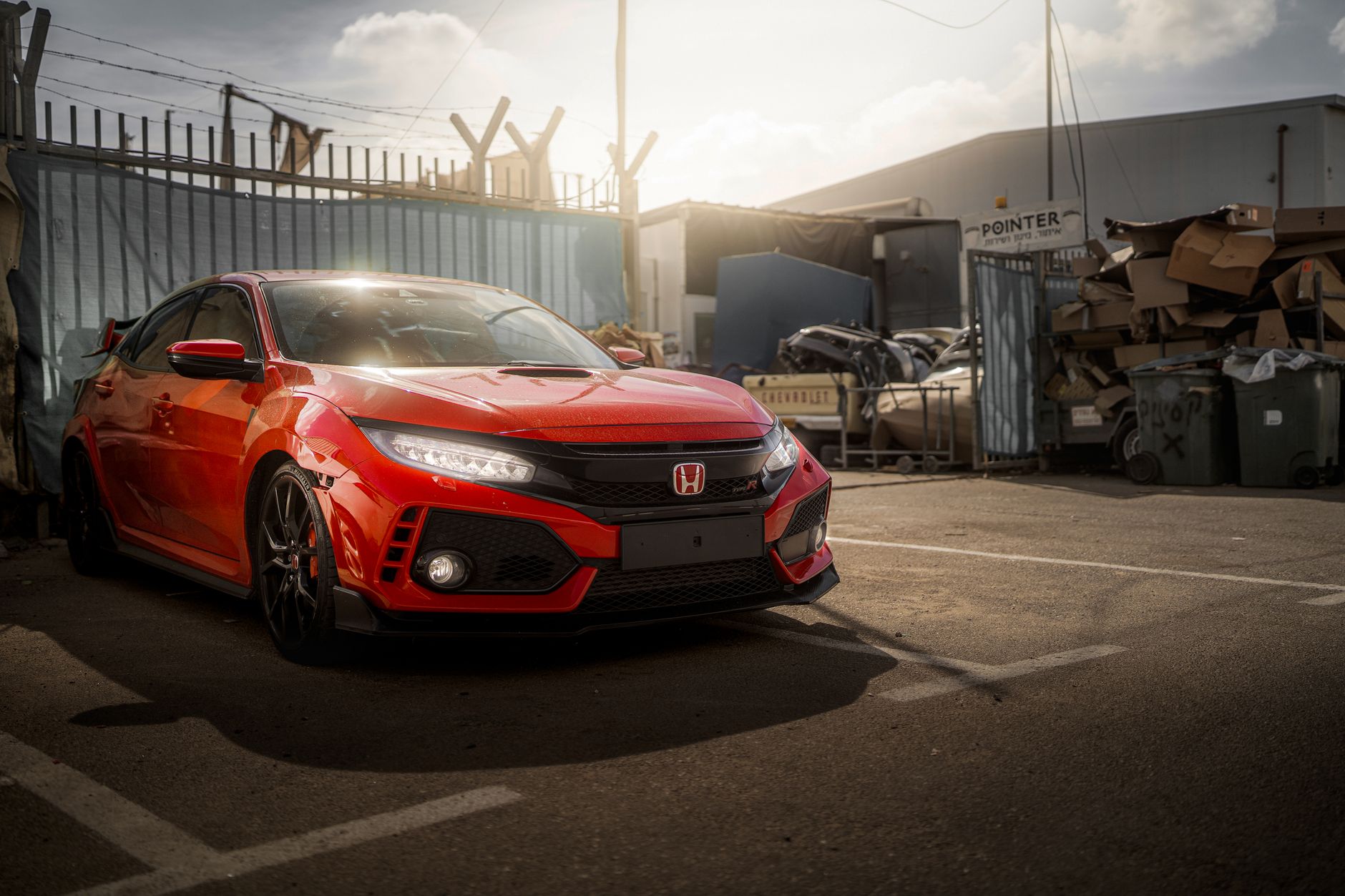
The K20 leans the other way. Its smaller displacement and shorter stroke tend to favor quicker piston motion at high rpm, which is one reason it earned a spot in cars like the Civic Type R. That difference leads straight into how each engine feels on the road.
That split in character sets up a clearer comparison of how each engine puts power to the pavement.
How Power Delivery Separates Them On The Road
A short freeway merge makes the split obvious. The K24 pulls harder at 2,500 to 4,500 rpm, so the car responds with less shifting. The K20 wants more revs, then comes alive as the needle climbs and the cam profile, VTEC crossover, and airflow work together.
Power delivery is more than a horsepower number. It’s about where the torque lands, how hard the car leaves a stop, and whether you spend your time rowing gears or holding one long pull. Honda K20 vs K24 engine debates usually start here because the difference is easy to feel.
| Trait | K20 | K24 |
|---|---|---|
| Displacement | 2.0 liters | 2.4 liters |
| Road feel | Sharper above the midrange | Stronger below the midrange |
| Rev behavior | Happier near redline | More relaxed at lower rpm |
| Common use | Track, high-rpm builds | Street, heavier swaps |
| Power character | High-rpm horsepower | Broad torque delivery |
Why The K24 Feels Stronger Low In The Revs
More displacement lets each cylinder move a larger air charge without relying on rpm alone. That gives the K24 a thicker midrange, and it matters in traffic, on hills, and any time you want the car to answer with little delay.
Picture a CR-V or Accord with a K24. The engine doesn’t need to feel frantic to move the car cleanly, and that calm shove is part of the appeal. For daily driving, that relaxed torque curve often matters more than a big dyno peak.
Why The K20 Pulls Harder Near Redline
The K20 rewards speed. As engine rpm rises, airflow and cam timing line up in a way that gives the engine a lively top end, which is why high-rpm horsepower figures usually look better than the raw torque shape suggests.
A Civic Type R makes good use of that character because the chassis and gearing keep the engine in its sweet spot. The result is a car that feels eager and light on its feet, even though the smaller displacement gives up some grunt down low. That balance shapes which builds fit each engine best.
Because the delivery feels so different, certain chassis and driving styles suit one engine more than the other.
Performance Uses That Favor Each Engine
Track work exposes weakness fast. A long straight rewards the K20’s appetite for rpm, while tight street driving and tall gearing favor the K24’s easier pull. Once those use cases are sorted, the best choice looks less like a rivalry and more like a tool selection.
Factory examples make the split easy to see. Honda put K20 variants in performance-minded models like the Civic Type R, while K24 versions showed up in the Accord and CR-V, where drivability and torque mattered more than a high-rpm chase. That factory intent still maps well to swaps.
Track-Focused And High-RPM Builds
The K20 shines in a setup that stays above 6,000 rpm for long stretches. Its strong aftermarket support for cams, valve springs, intake manifolds, and forged internals makes it a familiar base for a naturally aspirated build or a track car that needs stable oiling and quick response.
You can also keep gearing tighter and let the engine live near redline without feeling lazy between shifts. That’s why many time-attack and autocross-style builds still lean toward the smaller motor, especially where throttle response matters more than low-speed shove.
Street Cars, Heavier Chassis, And Torque-First Plans
The K24 suits a heavier shell or a car that sees traffic, steep grades, and short trips more than lap records. In that setting, the stronger midrange saves shifts and makes the car feel less strained, which helps in an Accord swap or a daily-driven Civic with taller gearing.
For a weekend car that leaves from low rpm and spends time on public roads, that extra displacement can feel like a shortcut. The engine doesn’t need to scream to move fast, and your right leg feels the difference every time you roll into the throttle.
That split also points straight to reliability and tuning, because the way you drive decides which parts take the biggest hit.
Those usage patterns also determine which weaknesses show up first when reliability and tuning come into play.
Reliability And Tuning Differences That Matter
Stock durability on both engines is strong, but the stress points change with use. K20 and K24 engines both like clean oil, healthy cooling, and sane ignition timing, yet the smaller engine often gets pushed harder to chase the same output, which raises wear on the valvetrain and bottom end.
K20 vs K24 reliability questions usually come down to how you plan to drive. The K24 can feel easier because it makes useful torque without needing as much rpm, while the K20 can stay happy for a long time when you respect the rev ceiling and keep valve control in shape.
Common Weak Points By Variant
Oil level matters on both. Some K-series variants can use oil over time, and hard cornering or long highway pulls with a low oil level can expose that quickly. Chain tensioner wear and aging mounts also show up as noise or roughness that has nothing to do with the tune.
- Oil level checks – Keep the dipstick habit, since low oil hurts bearing life and VTEC operation.
- Valve train care – Strong springs matter sooner on a K20 that lives near redline.
- Cooling system health – A tired radiator or thermostat can shorten tuning margin under heat.
- Mount wear – Broken mounts change shift feel and add vibration in swapped cars.
- Chain noise – Rattle on startup can point to wear in the tensioner path.
That list matters because the weak points are practical, not mysterious. A clean base engine gives you far more room for tuning than chasing power on a tired one. From there, the aftermarket shapes the path you choose next.
Aftermarket Support Shapes The Build Path
The K20 has long enjoyed deep support for high-rpm parts, especially in racing circles that chase head flow and valvetrain control. That makes it easier to build a motor that stays stable at high speed, and it helps explain why K20 vs K24 horsepower talk so often favors the smaller engine in spec sheets.
The K24 benefits from huge swap knowledge and plenty of intake, exhaust, ECU, and turbo parts, even if the head flow story is different. That means your parts list depends more on the goal than on the badge on the valve cover. The next question is what happens once you add boost.
From there, attention shifts to how far each setup can be pushed once boost enters the picture.
Set the tune around your real shift point, not a number from a forum thread. An engine that lives at 7,800 rpm needs different spring pressure, fueling, and oil control than one that shifts at 6,200.
Boost Builds And The Case For Each Swap
Turbocharging changes the whole argument because displacement and airflow work together. A K24 usually spools quicker and fills the midrange harder, so it suits street cars that want easy torque. A K20 can still make serious power, but it rewards a cleaner top-end setup and more attention to head flow, compression ratio, and turbine sizing.
That’s why the K20 or K24 for turbo build choice depends on character as much as peak output. One wants to hit hard early; the other likes to keep pulling up high. Your swap budget and packaging space matter too, because those pieces shape the final result.
K24 Turbo Builds For Street Pull
The K24’s extra displacement helps the turbine light sooner, and that quick spool gives the car a fuller midrange without needing a huge compressor. In a front-drive chassis, that often feels easier to live with because you’re not waiting for the power to show up.
A mild turbo K24 in an Accord shell or a sleeper Civic can feel almost oversized in the best way. Add forged internals, sensible compression ratio choices, and a safe fuel system, and the motor can make broad power without needing a knife-edge tune.
K20 Turbo Builds For High-RPM Control
The K20 remains the favorite where the goal is a sharp top end and a narrower, more focused powerband. The smaller displacement can help keep heat and load in check at equal boost, and that gives you more room to chase a high-rpm pull without making the package feel heavy.
That profile suits serious track turbo setups, drag builds, and cars with strong intercooling and precise engine management. The engine still asks for careful tuning, but the reward is a car that pulls cleanly when the tach climbs and the load rises.
Swap Cost And Packaging Shape The Final Car
Engine swap work is never just about the long block. Oil pan shape, mount kits, wiring, ECU choice, transmission fit, and driveshaft geometry all affect how the car behaves once the hood closes. A K24 swap can feel easier in a torque-first build, while a K20 swap may suit a more focused high-rpm plan.
For a Civic or RSX, the lighter-feeling K20 can keep the car agile, while a K24 in the same shell can add punch that changes launch feel and in-gear roll. That final character is the real reason the Honda K20 vs K24 engine question stays alive among builders.
Once you match the engine to the chassis, the last step is choosing the one that fits your build plan instead of your favorite forum argument.
When the hardware and chassis finally line up, the real decision becomes which engine best matches the build’s purpose.
Choosing The Better Honda K-Series For Your Build
Start with what your car needs, not what sounds coolest. Torque, revs, budget, and parts availability all push the choice in different directions, and the right answer changes with how much street time, track time, or boost you plan to run.
For daily use and heavier chassis work, the K24 is the easier fit because it feels strong without much effort. For weekend abuse, high-rpm naturally aspirated work, and a car that lives near redline, the K20 makes more sense. That split gives you a clean way to decide.
- Choose K24 for torque – It suits street cars, taller gears, and heavier shells that need stronger pull.
- Choose K20 for revs – It fits track use, aggressive shifting, and builds that stay near the top of the tach.
- Choose K24 for turbo street cars – Quicker spool and a fuller midrange make everyday driving easier.
- Choose K20 for high-rpm turbo work – Strong head flow and high-speed breathing reward a focused setup.
- Choose by parts access – The engine you can source cleanly and support well beats a theoretical favorite.
Pick the one that matches your driving pattern, not the one with the louder reputation. A commuter with occasional pulls usually fits the K24, while a track car or a high-strung naturally aspirated build often benefits more from the K20.
That same logic answers the swap question too. The better Honda K-series for your car is the one that matches chassis weight, gearing, boost plans, and the rpm band you actually use. Honda K20 vs K24 engine debates get simpler once you choose the job first and the engine second.
That logic matters most when the swap is judged by budget, goals, and the rpm range you actually use.
What To Remember
The bigger engine wins on torque, and the smaller engine wins on rev-happy character. That single split explains most of the real-world difference between them, whether you’re building a daily, a track car, or a turbo swap. Pick the engine that fits your powerband and the car will feel right sooner.
FAQ
Is a K24 faster than a K20?
A K24 can feel faster in normal driving because it makes stronger low-end torque and leaves harder from low rpm. A K20 can outrun it in the right setup, especially at high rpm or on a track with gearing that keeps it in the power band.
Should I get a K20 or K24?
Choose a K24 for street torque, heavier cars, and easier turbo spool. Choose a K20 for high-rpm driving, lighter chassis balance, and builds that live near redline.
Why is the K20 head better than the K24?
The K20 head is often praised because it supports strong airflow and high-rpm operation with the right valvetrain and cam setup. That gives it an edge for top-end horsepower, while the K24 block gives you the bigger displacement and stronger low-speed pull.
Which engine is better for boost, the K20 or the K24?
The K24 is usually the easier street turbo choice because it spools sooner and makes broader midrange torque. The K20 still works well for boost, especially in high-rpm or specialty builds that care more about top-end flow.
Which is more reliable, the K20 or K24?
Both can be durable with good maintenance, clean oil, and a safe tune. The better choice is the one that stays within its comfort zone, since a K20 pushed hard at high rpm and a K24 run lean under heat both invite trouble.