


Road noise, panel vibration, and heat transfer all show up fast in a daily driver, a work van, or a weekend project car. The right material depends on where the sound comes from, how much surface area needs coverage, and whether the priority is damping, foam padding, or extra thermal control. This roundup keeps that split clear, so the comparison stays practical instead of abstract.
Quick Look At Our Top Picks

KOIKEY Car Sound Deadening Mat 8.7 sqft
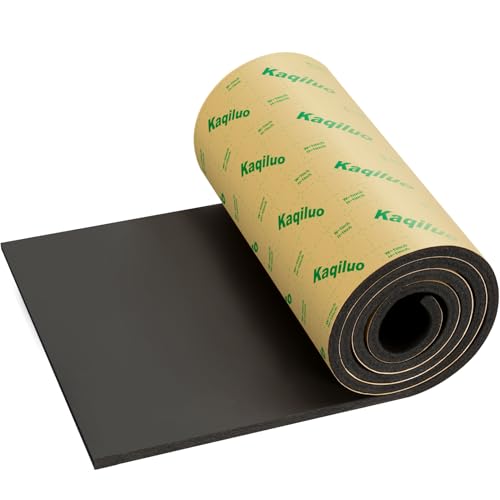
Kaqiluo High Density Self-Adhesive Sound Insulation Foam 5.8 sqft

VOISEN Sound Deadening Material for Cars 36 sqft

Storystore Car Sound Deadening Mat 16.5sqft

dojobkinb Sound Deadening Material for Cars 6sqft

Tsurpcao Heat Sound Deadening Insulation Mat 16.36sqft
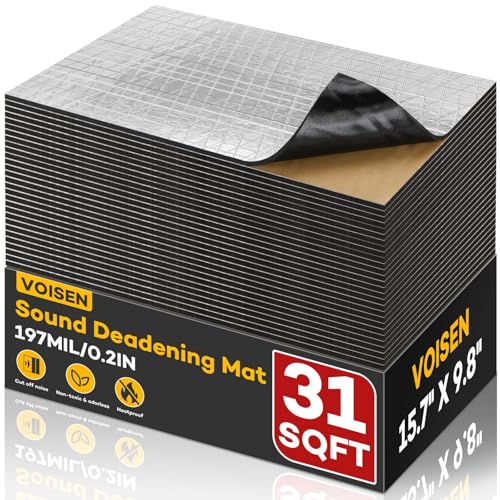
VOISEN Sound Deading Material for Cars 31 sqft
More Details On Our Top Picks
KOIKEY leans into a layered build, with aluminum foil facing and a foam backing that suits doors, trunks, and smaller cabin panels. That combination makes sense for daily drivers where heat from sun-baked metal and low-frequency road noise show up together.
The trade-off is simple, the 8.7 square feet coverage keeps the job focused rather than broad. For compact repairs or a first pass at a noisy door panel, that limited footprint is easier to manage than the larger sheets from VOISEN or Storystore.
Strong Points
- Foil plus foam construction supports both heat control and damping.
- Smaller coverage suits targeted interior work without much waste.
- Useful for doors, trunks, floors, and general cabin touch-ups.
- Aluminum-facing materials tend to suit warm parking conditions.
Points To Note
- The smaller sheet area suits patching more than full-vehicle coverage.
- Layered material usually takes careful trimming around clips and curves.
- Bulk jobs may need multiple sets, which adds planning time.
Feature Snapshot
Who It Suits Best
Car owners fixing a noisy door, trunk liner, or small hot zone get the cleanest fit here.
A Better Fit Elsewhere
Storystore Car Sound Deadening Mat suits larger interior plans better, especially for drivers who want a denser sheet and an installation roller in the box.
Kaqiluo is the most foam-forward pick in the group, with a closed-cell build, self-adhesive backing, and a dense 50+kg/m³ rating. Closed-cell foam, meaning the internal pockets are sealed rather than open to airflow, usually suits trim areas where a cleaner padding layer matters more than raw mass.
That makes it a natural fit for studio-style acoustic treatment and car panels that benefit from neat, compressible padding. Compared with KOIKEY’s foil-faced sheet, this one reads more like a specialty insert than a heat-first insulation layer, so trim work and placement matter more.
What We Like
- Self-adhesive backing simplifies placement in trim-heavy areas.
- Closed-cell structure suits moisture-prone or enclosed spaces.
- Dense foam profile works well as a padding layer.
- Thicker foam helps fill awkward gaps cleanly.
Minor Gripes
- Small coverage makes it a specialty piece rather than a broad solution.
- Foam-only construction puts less focus on heat reflection than foil-backed sheets.
- Adhesive installs reward careful surface prep and patient alignment.
Core Details
Who Should Grab It
Audio hobbyists, trim-focused installers, and anyone needing dense foam padding in a tight space will get the most from it.
Swap It Out When
VOISEN Sound Deading Material for Cars 36 sqft is the smarter match for larger coverage needs and more all-around cabin work.
VOISEN stands out for surface area first, then the three-layer build behind it. The sheet combines 4 mm closed-cell foam, adhesive backing, and liner paper, which makes it a sensible match for doors, hoods, trunks, and firewall sections where coverage matters as much as thickness.
For a long commute or a family car that picks up engine and road noise, that broader roll is easier to plan around than the smaller KOIKEY or Kaqiluo options. One detail worth noting, the source material says it is not suited to floors, so placement discipline matters.
Highlights
- Large 36 sqft coverage supports bigger interior projects.
- Three-layer construction balances foam, adhesive, and backing paper.
- Useful on doors, hoods, trunks, and firewall areas.
- Closed-cell foam works well in damp or enclosed spaces.
Areas To Watch
- Not meant for floor use, so layout planning matters.
- Large rolls need careful measuring to avoid awkward leftovers.
- Broad coverage can add install time in tight garage spaces.
Details At A Glance
Built With In Mind
DIY installers working through several cabin zones at once get the most practical value here.
Look Elsewhere When
Tsurpcao Heat Sound Deadening Insulation Mat fits better for hood and roof work that leans harder on heat shielding.
Storystore reads like the most installation-friendly sheet in the set, thanks to its strong self-adhesive backing and included roller. A roller helps press material into contours and seams, so the finished result usually looks cleaner on curved inner panels and broad door skins.
The 394 mil thickness gives it a denser feel than the 197 mil picks, and that extra body tends to suit owners chasing a more substantial cabin treatment. The trade-off is straightforward, the coverage sits below VOISEN’s larger roll, so full-vehicle work may still require more than one package.
Upsides
- Included roller helps with firm, even application.
- Strong adhesive backing suits detailed installation work.
- 394 mil profile gives a more substantial layer.
- Odorless and water-resistant claims make it easier to live with in a cabin.
Small Caveats
- Coverage is moderate, not expansive.
- Denser sheets can take more care around tight bends.
- Heavier build may feel more involved on large install days.
Feature Rundown
Perfect Match For
Cabin refresh projects, especially doors and broad interior panels, suit this sheet very well.
Reach For A Different Pick When
VOISEN Sound Deading Material for Cars 31 sqft suits larger coverage plans better, especially when a broader roll is more useful than a roller in the box.
dojobkinb keeps the footprint small, which suits localized fixes in vans, trucks, and compact car panels. The 4 mm closed-cell foam format gives it the sort of tidy, controlled profile that works well where space behind trim is limited.
Compared with Storystore’s denser, more installation-focused sheet, this one feels simpler and lighter in scope. That makes it a sensible pick for patch jobs, though larger cabin projects can outgrow six square feet quickly.
Best Bits
- Compact coverage suits local repairs and targeted panel work.
- Closed-cell foam helps keep the profile tidy behind trim.
- Adhesive backing keeps the install straightforward.
- Useful in vans and trucks where small zones matter.
Worth Noting
- Coverage is modest, so broader cabins may need more material.
- Small sheet size leaves less room for mistakes on cuts.
- Single-roll format fits patching better than whole-vehicle projects.
Quick Facts
Whose Shelf It Belongs On
Shoppers doing small repair jobs in utility vehicles or compact cars will find the scale easy to manage.
A Better Fit Elsewhere
Storystore Car Sound Deadening Mat suits drivers who want a denser sheet plus an installation roller for broader panel work.
Tsurpcao is aimed at hot zones, and the 394 mil closed-cell mat with aluminum facing reflects that focus clearly. It suits hood, engine-adjacent, roof, and trunk areas where heat management matters as much as sound damping, especially in cars that sit in strong sun or see long highway runs.
The working range from -40°F to 300°F adds a practical temperature span for vehicle environments, though the exact fit still depends on surface shape and install space. Compared with Storystore, this one leans harder into insulation for heat-prone surfaces rather than a general cabin refresh.
Reasons To Buy
- Thick 394 mil build supports stronger panel coverage.
- Aluminum face helps with surface heat reflection.
- Good match for hood, roof, and trunk areas.
- Wide temperature range suits demanding vehicle locations.
Room For Improvement
- Coverage is middle-sized, so larger vehicles may need more than one mat.
- Heat-first design makes it less specialized for broad trim padding.
- Thicker material can take more effort around tight curves.
Core Details
Right Fit For
Owners dealing with hot roof panels, hood metal, or engine-area warmth get the clearest use case here.
Another Choice May Suit
KOIKEY Car Sound Deadening Mat is easier to place for smaller door and trunk repairs that do not need as much thermal focus.
VOISEN’s 31 square feet format strikes a middle ground between the smaller patch kits and the larger 36 square foot roll. The 197 mil, 5 mm construction gives it enough body for general cabin work, while the aluminum foil face adds the usual heat-reflective advantage that helps on sunny commutes.
That balance is useful for owners who want one sheet to cover several doors, a trunk, or selected floor-adjacent panels without jumping to the heaviest option. Compared with Tsurpcao, this version feels broader in use but less focused on heat-heavy locations.
Best Bits
- 31 sqft coverage suits several interior zones.
- 197 mil thickness gives a familiar mid-heavy feel.
- Aluminum face supports heat reflection on sun-exposed panels.
- Good balance between coverage and sheet manageability.
Softer Spots
- Not as expansive as the 36 sqft VOISEN roll.
- Less specialized for hood or roof heat management than Tsurpcao.
- Large single-sheet jobs still call for careful measuring.
Feature Card
Built With In Mind
Drivers planning a broader but still manageable interior project will find the format useful.
Where A Sibling Pick Shines
VOISEN Sound Deading Material for Cars 36 sqft suits larger coverage jobs better, especially where the extra roll length matters more than piece count.
How To Choose The Right Car Soundproof Foams
Match The Material To The Noise Source
Panel vibration calls for denser sheets, while trim rattles often respond better to foam padding. Aluminum-faced mats, such as KOIKEY and Tsurpcao, make more sense where heat and resonance overlap, while Kaqiluo leans toward cleaner acoustic filling in tighter spaces.
Road noise also behaves differently from engine roar. A large roll like VOISEN 36 sqft handles broader coverage, but the material still has to land on the right surfaces, not just cover more square inches.
Focus On Thickness And Coverage Together
Thickness helps with mass and damping, but coverage decides how far the job goes. A 394 mil sheet generally feels more substantial than a 157 mil option, yet a smaller piece can still be the smarter choice for one door, one trunk liner, or one roof section.
This is where ownership needs matter. A daily commuter with a noisy rear door may only need a smaller mat, while a van or hatchback project tends to reward the larger VOISEN sheets.
Check Installation Realism Before The Order
Self-adhesive backing helps, but install shape still matters more than most listings suggest. Curves, seams, and access around clips can slow the process, so a roller like the one bundled with Storystore has real value.
Closed-cell foam, meaning the internal cells are sealed rather than open, usually behaves better in compact or moisture-prone areas. That does not make it universal, it just makes the fit more predictable for doors, trim inserts, and enclosed panels.
Think In Terms Of Use Case, Not Just Size
A roof or hood job needs different priorities than a small trunk repair. Tsurpcao is the clearer heat-first pick, while dojobkinb and Kaqiluo make more sense for tight patches and controlled padding.
For most garage projects, the easiest path is to map the problem area first, then match material type and sheet size to that exact zone. That keeps waste down and avoids buying more coverage than the job can absorb.
A Quick Reality Check
Hidden Buying Traps
The easiest mistake is matching the material to the car instead of to the exact panel. Small foams can work well in one zone and feel awkward everywhere else, especially when the install area has clips, bends, or shallow clearance.
Another common miss is underestimating how quickly square footage disappears. A sheet that looks large on paper can vanish across two doors and a hatch before the job feels complete.
The Upgrade Payoff
Higher-tier mats usually cost more because of thicker construction, denser foam, included tools, or larger usable coverage. Storystore adds the roller, Tsurpcao adds stronger heat-oriented structure, and VOISEN gives more surface area to spread across a bigger cabin.
That extra spend makes sense for owners planning a broad install or aiming for fewer seams. For a single noisy door or a small patch job, the simpler KOIKEY or dojobkinb options stay easier to justify.
Frequently Asked Questions
What does closed-cell foam do in car soundproofing?
Closed-cell foam uses sealed pockets, so it stays firmer and resists soaking up moisture more than open-cell foam. That makes it useful for trim, panels, and places where a neat backing layer matters.
Is thicker material always better?
Thicker material usually adds more body and can help with damping, but thickness alone does not solve a poor fit. Surface coverage, panel shape, and placement still matter just as much.
Which pick suits a first interior project?
KOIKEY and dojobkinb are both easier to start with because their coverage stays limited and their use cases are straightforward. Smaller areas help keep cutting and placement manageable.
Which option makes the most sense for large coverage?
VOISEN Sound Deading Material for Cars 36 sqft is the broadest coverage in this group. That makes it the cleaner choice for multiple doors or wider cabin sections.
What matters more, heat shielding or noise reduction?
That depends on the location in the car. Hood, roof, and sun-exposed panels lean toward heat shielding, while doors and trim often benefit more from damping and padding.
Closing Thoughts
Car Soundproof Foams work best when the match is specific, not generic. A dense small sheet suits trim fixes, a broader roll suits cabin-wide planning, and a heat-focused mat belongs near the hood or roof. The cleanest results usually come from choosing the panel first and the material second. That simple order saves frustration and keeps the job closer to what the car actually needs.