
Car stereo auxiliary inputs still matter because not every dashboard needs a full touchscreen overhaul. Some setups need a simple 3.5mm path for music and calls, others need a direct factory-port replacement, and a few drivers want a full receiver refresh with Bluetooth and USB built in. The seven picks below cover those use cases without padding the list with near-duplicates.
Quick Look At The Shortlist

UGREEN Aux to Bluetooth 6.0 Car Adapter with LDAC
Aux Port Input Auxiliary Jack Adapter for to-yota

Sony DSX-A410BT Single Din Bluetooth Front USB AUX Car Stereo Digital Media Receiver

Wistrue Single Din Car Stereo with Type-C/USB
MOTOKU Audio Auxiliary AUX USB Port Adapter Jack for Toyota RAV4 Highlander

3.5mm AUX Cable Compatible with BMW E85 Z4 E39 E53 X3 X5 Mini Cooper

Single DIN Car Radio Stereo with Wireless CarPlay and Android Auto
More Details On Our Top Picks
Head units that still rely on a 3.5mm input get a cleaner transition with this adapter than with a full stereo swap. LDAC support points to higher-resolution Bluetooth audio, and the built-in microphone keeps hands-free calling in the same small box as the audio link.
For a commuter car, that combination trims cable clutter without asking for dash work. The trade-off is simple, since a dongle like this depends on the existing auxiliary port and a stable Bluetooth connection, so it suits older vehicles more than a total infotainment overhaul.
Strong Points
- Turns a wired aux setup into wireless playback.
- Built-in microphone supports call handling in daily traffic.
- LDAC adds a higher-tier Bluetooth codec path.
- Small format keeps storage and cable routing simple.
Room For Improvement
- Depends on an existing aux input, so it is not a universal fix.
- Bluetooth pairing quality still depends on the source device and vehicle environment.
- A compact adapter can be easy to misplace during cleaning or transfer between cars.
Feature Snapshot
Who It Suits Best
Daily drivers with a working aux port and a phone-centered listening habit get the most from this layout.
A Better Fit Elsewhere
Sony DSX-A410BT Single Din Bluetooth Front USB AUX Car Stereo Digital Media Receiver suits shoppers who want a full receiver change instead of an adapter add-on.
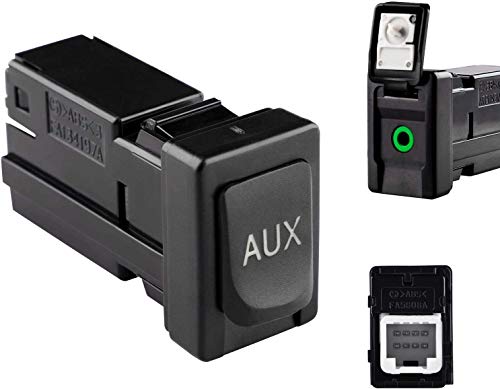
Factory-port replacements like this make sense for aging Toyota interiors where the original jack has worn out or gone intermittent. It stays close to the factory layout, so the dashboard keeps a familiar look instead of introducing extra hardware.
That direct fit angle is the main appeal, especially for owners who want the console to feel original after the repair. The catch is compatibility, since the listing is tied to specific model years and a vehicle-specific installation path matters more here than with universal adapters like the UGREEN unit.
What We Like
- Targets a known replacement use case instead of a general retrofit.
- Helps restore aux access without changing the whole radio.
- Works well for drivers who want the cabin to stay visually stock.
Points To Note
- Vehicle fit has to match the exact application.
- Installation may take more care than a simple plug-in accessory.
- A replacement jack solves port wear, not broader stereo feature limits.
Technical Sheet
Right Fit For
Owners of supported Toyota models who need a straightforward jack repair get the clearest benefit here.
Another Choice May Suit
MOTOKU Audio Auxiliary AUX USB Port Adapter Jack for Toyota RAV4 Highlander fits shoppers who want a similar replacement path with Toyota coverage centered on other models.
Single-DIN receivers like this suit dash openings that still leave room for a proper media upgrade. Front USB and aux access reduce the usual fumbling, and the Bluetooth layer gives the cabin a more modern rhythm without adding a touchscreen footprint.
That balance makes sense for commuters who stream from a phone but still want a wired fallback in the dash. Compared with the UGREEN adapter, this Sony unit changes the head unit itself, so the result is broader but also a bigger installation job.
Upsides
- Combines Bluetooth, USB, and aux in one receiver.
- Single-DIN sizing works with many older dash layouts.
- No disc mechanism keeps the layout focused on digital media use.
- Front access is convenient for quick cable changes.
Softer Spots
- Needs a full receiver install, not a drop-in fix.
- No CD player, so disc-based libraries will not carry over.
- Front ports can collect dust in daily use.
Core Details
Whose Shelf It Belongs On
Drivers replacing an older radio with a compact digital media hub are the clear match here.
Where A Sibling Pick Shines
AINAVIGO Single DIN Car Radio Stereo with Wireless CarPlay and Android Auto suits shoppers who want a bigger leap into app-based navigation and phone integration.
This Wistrue unit leans hard into connector variety, which helps in cars where different phones, drives, and older music sources all need a place to plug in. The FM and AM radio support is useful in long commutes or in areas where local stations still matter, and the 30 preset memory gives the radio side some convenience.
Compared with the Sony DSX-A410BT, it keeps more focus on legacy listening options alongside Bluetooth rather than trimming the panel down to just digital media. The trade-off is that more functions can mean a busier front panel, so it suits drivers who want options close at hand.
What We Like
- Includes USB-C, USB, AUX, and SD access.
- FM and AM support covers a broad range of everyday listening.
- 30 preset slots make station switching more efficient after setup.
- Single-DIN size keeps it compatible with many standard dash openings.
Minor Gripes
- A feature-heavy face can feel crowded in small dashboards.
- Preset use depends on correct wiring and saved settings.
- More ports usually mean a little more cable management.
Details At A Glance
Built With In Mind
Shoppers who want a central dash unit with multiple ways to play audio, charge, or switch stations fit this layout well.
Skip It When
Sony DSX-A410BT Single Din Bluetooth Front USB AUX Car Stereo Digital Media Receiver makes more sense for a cleaner panel with fewer front-facing options.
This Toyota-focused adapter sits in the same repair lane as the Reeoutdoor part, only with a broader model list that stretches across several common Toyota nameplates. That makes it useful for dashboard refresh jobs where the goal is to restore a worn aux or USB point without moving away from the original interior style.
Owners usually look at this kind of part after the factory jack gets loose, silent, or plain inconvenient to use. The honest read is that it rewards careful fit checking, because a vehicle-specific adapter only helps when the trim and port layout line up.
Best Bits
- Targets a wide set of Toyota applications.
- Helps restore dash connectivity without a full radio swap.
- Matches original-style interiors better than a universal add-on.
Areas To Watch
- Fitment has to be matched to the correct vehicle and trim.
- Replacement jobs can take patience around tight dashboard spaces.
- Like most port parts, it solves connection access, not sound tuning.
Feature Rundown
The Right Fit
Toyota owners who want an OEM-style port repair with broad model coverage are the clearest match.
Where Shoppers Go Wrong
Reeoutdoor Aux Port Input Auxiliary Jack Adapter is the stronger first stop for Corolla, Tacoma, and Tundra applications that match its listed fitment exactly.
BMW retrofits tend to reward tidy, low-drama parts, and this extension cord follows that logic closely. A female aux adapter extension keeps the connection point accessible in the cabin, which helps in older cars where the original routing is awkward or buried.
Compared with the Bluetooth adapter at the top of the list, this one stays purely wired and more straightforward. That simplicity suits drivers who value stable analog playback over extra pairing steps, though the connection path is only as flexible as the vehicle it’s built for.
Positives
- Simple plug-and-play layout keeps setup uncomplicated.
- Female extension style can improve access to the aux point.
- Vehicle matching is clear for several BMW and Mini applications.
Small Caveats
- Wired-only use leaves out Bluetooth convenience.
- Extension routing may need careful placement to stay neat.
Core Details
Best Suited To
Drivers who want a straightforward aux extension for supported BMW or Mini interiors are the clear match.
Look Elsewhere When
UGREEN Aux to Bluetooth 6.0 Car Adapter with LDAC fits better for commuters who want wireless playback and call handling in the same small unit.
This is the broadest step up in the group, since it pushes past basic auxiliary access into a touchscreen receiver with wireless phone integration. The 6.36-inch Linux IPS panel gives the dash a more modern look, and the USB-C plus USB setup keeps charging and media access close at hand.
For drivers who spend long stretches in traffic or rely on map and music apps, that wider interface can make daily use feel much smoother. The trade-off is install scope, because a full receiver swap asks for more planning than the simpler aux adapters above.
Highlights
- Wireless CarPlay and Android Auto expand phone integration.
- Touchscreen format improves visibility over a basic port solution.
- USB-C and USB ports cover more modern accessory needs.
- Single-DIN sizing still fits many standard dash openings.
Worth Noting
- More installation effort than a simple aux or adapter product.
- Touchscreen layouts can ask for a short learning curve.
- A larger interface leaves less room for a minimalist dash look.
Feature Card
Perfect Match For
Drivers ready to replace a plain stereo with a connected, app-friendly head unit fit this category well.
Swap It Out When
Sony DSX-A410BT Single Din Bluetooth Front USB AUX Car Stereo Digital Media Receiver is the lighter-touch alternative for shoppers who want a simpler media upgrade.
How To Choose The Right Car Stereo Auxiliary Inputs
Match The Input To The Dash
Auxiliary inputs split into two camps: add-on adapters and full receiver swaps. Factory-style replacement jacks, like the Reeoutdoor and MOTOKU parts, suit vehicles with a worn port and a known fitment path, while wireless adapters such as the UGREEN unit work better for older stereos that still have a healthy 3.5mm input.
Installation complexity matters just as much as the connector type. A plug-in aux adapter is easy to store and replace, but a dash-mounted port or single-DIN unit needs more time, more access, and a cleaner plan for cable routing.
Think About Daily Use
Commuters tend to benefit from Bluetooth, front USB, or a phone-friendly touchscreen. That points toward the Sony, Wistrue, or AINAVIGO units, depending on how much screen space and control depth feels comfortable in the car.
Drivers who mostly want one stable music source may prefer a simpler 3.5mm solution. Less hardware usually means fewer moving parts to clean around, and it keeps the cabin closer to stock.
Check Connection Flexibility
USB-C, USB, AUX, and Bluetooth each solve a different ownership problem. Bluetooth cuts cable clutter, USB helps with charging or media access, and AUX remains the plainest route for older audio gear.
The right mix depends on the phone in use and the age of the vehicle. A broad-input receiver can be useful in a shared family car, while a single-port replacement is often enough for a commuter who already has a preferred setup.
Things Worth Knowing First
Hidden Buying Traps
Fitment errors are the most common slip-up in this category. Vehicle-specific parts look simple, but a Toyota replacement for one model family will not help much in another, and a BMW extension cord still needs the right chassis match.
Another common miss is buying more connectivity than the dash can comfortably support. A feature-heavy stereo can feel crowded in a compact interior, while a tiny adapter can be the right answer for a clean, low-clutter setup.
The Upgrade Payoff
Higher-tier options usually cost more because they add display hardware, more input paths, or a broader operating system. The AINAVIGO and Wistrue units carry more front-panel complexity, while the Sony receiver gives a more polished media hub than a basic aux adapter.
That extra spend makes sense for drivers who use maps, calls, and multiple sources every day. For short commutes and older factory systems, a smaller adapter often delivers the cleaner ownership experience.
Frequently Asked Questions
What does an auxiliary input do in a car stereo?
An auxiliary input accepts analog audio from another device through a 3.5mm-style connection. That makes it useful for older head units that still play music well but need a modern source.
Is Bluetooth better than a wired aux connection?
Bluetooth removes cable clutter and works well for hands-free use. Wired aux can stay more straightforward and is often the simpler path for older devices.
Do vehicle-specific aux ports matter?
Yes, because fitment drives whether a replacement part actually matches the dash opening. A Toyota jack replacement or BMW extension only helps when the listed vehicle group lines up.
Is a full stereo replacement worth it?
A full receiver swap makes sense for drivers who want USB, Bluetooth, and screen-based controls in one place. It is less appealing for anyone who only needs a working auxiliary connection restored.
Which option works best for a minimalist dashboard?
A compact Bluetooth adapter or a direct port replacement keeps the cabin cleaner than a touchscreen unit. The simpler the setup, the less visual space it takes up.
Final Thoughts
Car Stereo Auxiliary Inputs cover a wider range than the name suggests, from tiny adapters to full head units. That range matters because the right solution depends on the dash, the device, and how much change the cabin can realistically absorb. A simple repair part keeps an existing system alive, while a feature-rich receiver turns an older car into a far more modern place to spend time. The cleanest choice is the one that solves the actual problem without asking for more than the car needs.