


Car audio upgrades rarely need a huge enclosure or a showroom build. The right compact amplifier can sharpen weak factory sound, add cleaner headroom, and fit into a trunk, under-seat area, or dash-adjacent install without taking over the cabin.
This roundup focuses on affordable options with different channel counts, output styles, and install demands. Some suit simple front-stage upgrades, while others make more sense for multi-speaker layouts, Android-based head units, or tight spaces where size matters more than flash.
Quick Shortlist For Everyday Car Audio Upgrades

BOSS Audio Systems CE102 2 Channel Car Amplifier

Pyle 2 Channel Car Stereo Amplifier PLA2378
Yaeccc 4 Channel Car Amplifier
Facmogu ST-838 2.1 Channel HiFi Stereo Subwoofer Amplifier

GoolRC 4-Channel Full-Range Amplifier

XMSJSIY 12V HiFi Stereo Audio Amplifier
More Details On Our Top Picks
The CE102 takes the plain two-channel route, which suits a modest front-stage upgrade in a commuter car or weekend sedan. The high-pass and low-pass crossover controls matter because they help separate duties between speakers and bass, so the amp can fit cleaner into a simple system.
The trade-off is straightforward, the install notes lean serious and professional fitting is strongly advised. That makes it more appealing for owners who want a compact amplifier with basic signal control, not a project full of extra tuning frills.
Strong Points
- Two-channel layout keeps the setup simple and easy to plan.
- High-pass and low-pass control helps tailor speaker and bass output.
- Compact format suits trunks and tucked-away installs.
- Good match for mild factory sound upgrades.
Things To Consider
- Professional installation is explicitly recommended, which raises the setup burden.
- Feature set stays basic compared with more configurable picks in this roundup.
Feature Snapshot
Who It Suits Best
Drivers replacing a basic factory amplifier with a cleaner, compact two-channel setup are the best match here.
A Better Fit Elsewhere
GoolRC 4-Channel Full-Range Amplifier suits multi-speaker builds that need broader channel coverage and more system shaping.
This Pyle unit leans into flexibility, starting with a bridgeable two-channel layout that can adapt to different speaker plans. Bridgeable means two channels can be combined for a single output path, which matters in small builds where space and wiring options are limited.
The silver-plated RCA input and output language signals a more connection-focused design than the BOSS pick, while MOSFET power handling and bass boost control point it toward bass-friendly tuning. In a daily driver or a simple trunk install, that mix feels practical, though the extra features also make setup decisions a little more involved.
What We Like
- Bridgeable design gives room to adapt the wiring plan.
- MOSFET power section suits a compact audio build with more headroom.
- Bass boost control helps shape low-end presence in a small system.
- Silver-plated RCA connections support cleaner signal routing on paper.
Points To Note
- More controls mean more setup choices, which can slow a first install.
- The feature mix is broader than the BOSS CE102, but not as focused on simple crossover use.
- Owners often prefer careful cable management here, since the layout invites a fuller wiring plan.
Core Details
Built With In Mind
Budget-conscious car audio setups that still need room to reconfigure channels or add bass emphasis are the best fit.
Look Elsewhere When
BOSS Audio Systems CE102 suits shoppers who want simpler crossover handling and fewer tuning choices.
Four channels change the equation here, because this Yaeccc amp fits fuller cabin systems better than the two-channel options above. That layout is handy for front and rear speaker pairs, or for a build that needs more routing flexibility without stepping into a large enclosure.
The full-range framing also matters, since it suggests a broader frequency role rather than a narrow bass-only job. The honest read is that this kind of amp tends to suit owners with a more complete sound plan already in mind, especially in a vehicle where the wiring and head unit can handle a larger signal chain.
Upsides
- Four channels support more complex speaker layouts.
- Full-range design works for broader audio duties.
- Good step up from simple two-channel units for multi-speaker cabins.
- Fits system builders who want room to expand.
Room For Improvement
- More channels usually mean more planning around installation and routing.
- The broader focus can feel like overkill for a simple front-speaker upgrade.
- Compared with Taramp’s TL 500, this choice is less about a tiny footprint.
Details At A Glance
Right Fit For
Drivers building a fuller four-speaker setup or moving beyond a simple stereo replacement are the best match.
Swap It Out When
Taramp’s TL 500 is the cleaner fit for compact installs that value a smaller Class D body over extra channels.
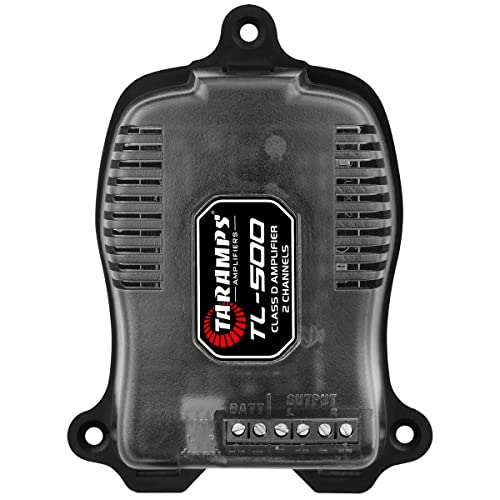
Taramp’s keeps this one small and focused, and that matters in cars where mounting space is tight. The Class D design, which uses efficient switching rather than a bulky old-school layout, helps explain why compact amps like this often appeal to tidy installs and under-seat placements.
The automatic activation system is useful in daily use because it reduces the need for extra hands-on switching, while the 8 to 16 VDC range adds a bit of tolerance for varied vehicle electrical conditions. Compared with the Pyle and Yaeccc units, this amp feels more purpose-built for a clean, minimal footprint than for a long menu of tuning choices.
Best Bits
- Small Class D body suits tight mounting locations.
- Automatic activation keeps operation simpler in daily use.
- 8 to 16 VDC range adds useful electrical flexibility.
- Two-channel output fits modest stereo setups cleanly.
Minor Gripes
- Two channels limit it to narrower system layouts.
- The compact design leaves less room for broad speaker expansion.
- Installing in a cramped dash area can still call for patient cable routing.
Spec Overview
Whose Shelf It Belongs On
Owners who need a compact two-channel amp with simple activation and a small mounting footprint will get the most from it.
Where A Sibling Pick Shines
GoolRC 4-Channel Full-Range Amplifier fits better for installs that need four channels and a broader signal role.
The ST-838 shifts away from the car-first profile of the earlier picks and moves into home speaker territory, which broadens its appeal but narrows its fit for vehicle owners. Its 2.1 channel layout combines two main channels with a subwoofer channel, a setup that makes sense in a compact desktop or bookshelf rig.
The included power supply helps reduce the parts hunt, and the small digital frame keeps the footprint modest. That said, the real advantage comes from its straightforward bass-oriented layout, not from pretending to be a large, room-filling receiver.
Bright Spots
- 2.1 channel layout separates main speakers and subwoofer duty.
- RMS figures give a clearer sense of practical output than marketing fluff.
- Included power supply simplifies a small home setup.
- Compact digital body suits desks, shelves, and secondary rooms.
Softer Spots
- Home-speaker positioning makes it a weaker fit for vehicle installs than the others here.
- Smaller hardware often rewards careful placement to keep cables tidy.
Technical Sheet
The Right Fit
Desk audio, compact shelves, and small home speaker systems benefit most from this layout.
Another Choice May Suit
XMSJSIY 12V HiFi Stereo Audio Amplifier suits car-based stereo use more naturally than this home-focused Facmogu unit.
GoolRC adds a more modern angle than the simpler two-channel units because it pairs four channels with a digital sound processor. A sound processor shapes the audio signal before it reaches the speakers, which can matter in Android-based car systems where tuning and source handling need a bit more control.
That extra processing potential is the hook, and it also explains why this pick feels like a step up rather than a bare-bones amp. Compared with the Yaeccc four-channel unit, this one leans harder into source-side control, so it suits owners who want more shaping built into the amplifier path.
Reasons To Buy
- Four channels suit broader cabin coverage.
- Digital sound processor adds a more adjustable signal path.
- Class A/B design is a familiar route for conventional car audio installs.
- Works well for Android car player setups that need more control.
Areas To Watch
- The extra processing layer can add setup decisions for first-time installers.
- Less suitable for shoppers who only need a simple two-speaker boost.
- Compared with Taramp’s TL 500, it asks for more space and system planning.
Feature Rundown
Best Suited To
Android car player owners and multi-speaker installers who want more signal control fit this pick well.
Where The Extra Money Goes
More channel coverage and processor-style handling usually cost more because the amplifier has to do more work before the music reaches the cabin.
XMSJSIY leans on a compact aluminum alloy shell and a knurled-looking control layout that feels more hardware-forward than the plain black boxes above. The blue LED knob gives it a distinct look, though the real story sits in the separate treble and bass controls, which let a small system be adjusted with more precision.
That matters most in older cars, CD players, or simple speaker chains where a little extra shaping can help. The trade-off is that the styling and control layout may appeal more to hands-on hobbyists than to anyone wanting a purely hidden install.
Highlights
- Aluminum alloy shell gives it a sturdier feel than basic plastic housings.
- Separate treble and bass knobs make quick adjustment easier.
- Compact size suits small audio spaces and simple car setups.
- Blue LED detail adds clear visual identity without changing function.
Worth Noting
- The visual styling may matter more than it does in a hidden install.
- Two-channel format keeps it narrower in scope than the four-channel GoolRC.
- Older source units and speaker wiring can need patient setup to sound tidy.
Core Details
Who Will Love This
Hands-on hobbyists and drivers who like visible controls and compact hardware will appreciate this layout most.
Reach For A Different Pick When
Taramp’s TL 500 is the cleaner option for shoppers who want a smaller, more discreet car amp with automatic activation.
How To Choose The Right Inexpensive Car Amplifiers
Match Channel Count To The Cabin
Channel count is the first practical filter. Two-channel amplifiers suit simple front-speaker upgrades, while four-channel units make more sense in sedans, hatchbacks, or SUVs with front and rear speaker coverage.
Bridgeable models add flexibility because two channels can be combined for a different output arrangement. That helps in smaller builds, but the wiring plan becomes less forgiving, so simpler installs still favor a straightforward two-channel layout.
Look At Power In Real Use, Not Hype
RMS, or continuous power handling, tells more than peak figures about day-to-day output. A modest RMS rating can still feel right in a commuter car or older daily driver, especially with efficient speakers and a sensible head unit.
Higher output is useful for fuller cabins, but only when the rest of the system can keep up. Weak wiring, poor speaker matching, or a cramped mounting spot can erase much of the benefit, which is why clean system planning matters as much as wattage.
Size, Activation, And Placement Matter
Compact Class D designs suit tight installs, under-seat locations, and vehicles with limited cargo space. Automatic activation is helpful for everyday driving because it trims one more step from the listening routine.
Aluminum shells, visible knobs, and larger heatsinks each change the ownership experience in small ways. A tidy hidden install often favors the Taramp’s TL 500 style of packaging, while hobbyists who want direct controls may prefer the XMSJSIY approach.
Source Gear And Tuning Features Deserve Attention
Signal processing, crossovers, bass boost, and treble controls all change how the amplifier interacts with the rest of the audio chain. These are useful in older cars, Android head-unit setups, and systems with mixed speaker sizes.
The catch is that more controls can make setup slower. Shoppers who want a quick install usually do better with a simpler amp like the BOSS CE102, while more involved systems can justify the extra adjustment range found in the GoolRC or Pyle units.
Things Worth Knowing First
Common Shopping Slip Ups
Channel count gets overlooked often. A two-channel amp looks cheaper and easier, then turns out to be the wrong shape for a four-speaker cabin or a plan that needs later expansion.
Mounting space causes trouble too, especially in compact cars. A small chassis helps, but cable access, heat clearance, and future maintenance still matter more than a product photo suggests.
Where The Extra Money Goes
Higher-tier units usually add more control, more channels, or more polished power handling. That means better system matching for mixed speaker setups, Android head units, or vehicles that need more tuning room.
The upgrade makes sense for owners who want fewer compromises and more adjustment headroom. A basic amp still covers simple daily listening well, but the extra cost buys flexibility, not magic.
Frequently Asked Questions
Do inexpensive car amplifiers work with factory speakers?
Many do, especially in simple two-channel or four-channel setups. Speaker condition and wiring quality still shape the result a great deal.
What matters more, wattage or channel count?
Channel count matters first for system layout, then wattage helps determine how hard the amp can work within that layout. A well-matched lower-output amp often makes more sense than a mismatched high-output one.
Are compact amps hard to install?
Compact amps usually fit more easily, but the wiring still needs care. Tight spaces can make routing and grounding more awkward than the chassis size suggests.
Why do some models mention crossover or bass boost?
Those controls shape which frequencies reach each speaker path, which helps in mixed systems. They matter most when the cabin has different speaker sizes or a separate bass section.
Can a home amplifier be used in a car?
Power requirements and signal compatibility make that a poor assumption in many cases. Car-focused models are the safer match for vehicle use because they’re built around automotive electrical conditions.